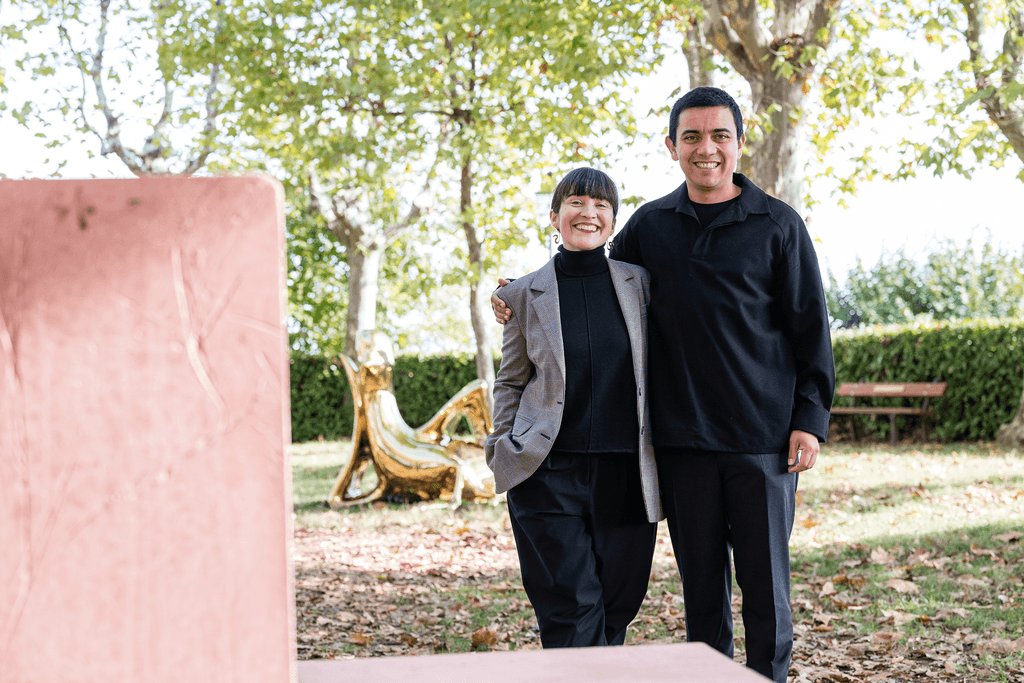
On 11 October 2026, Bene Vagienna, in the province of Cuneo, Italy, welcomes Piazza del Chafleo, a permanent public artwork by Colombian artist Iván Argote, curated by Marta Papini. The project is part of the third edition of Radis, the public-art programme promoted by Fondazione per l’Arte Moderna e Contemporanea CRT in collaboration with Fondazione CRC.
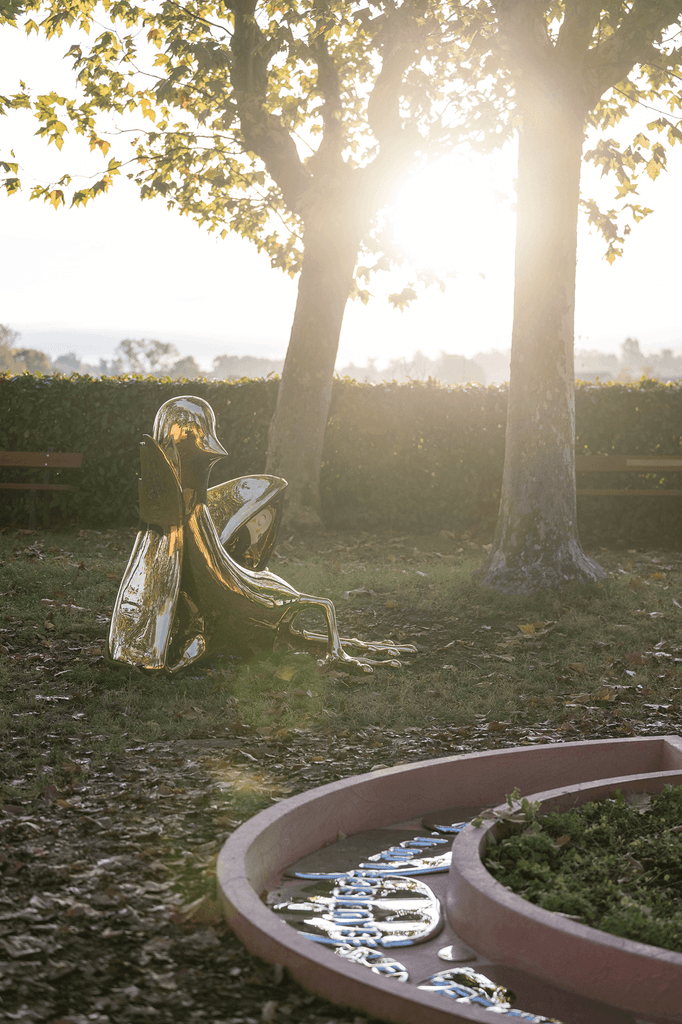
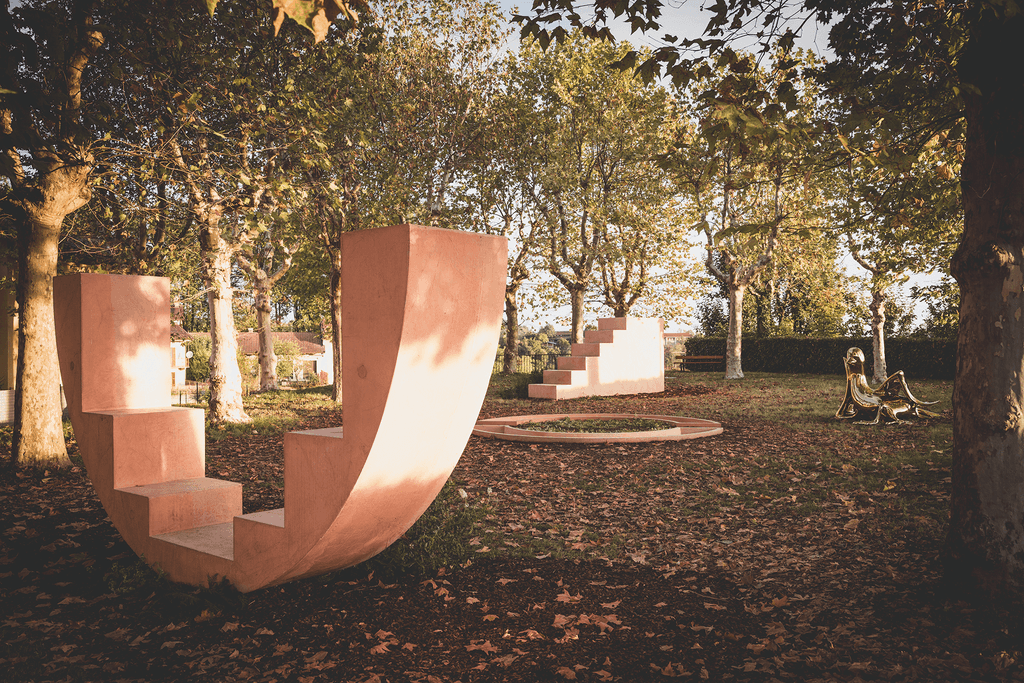
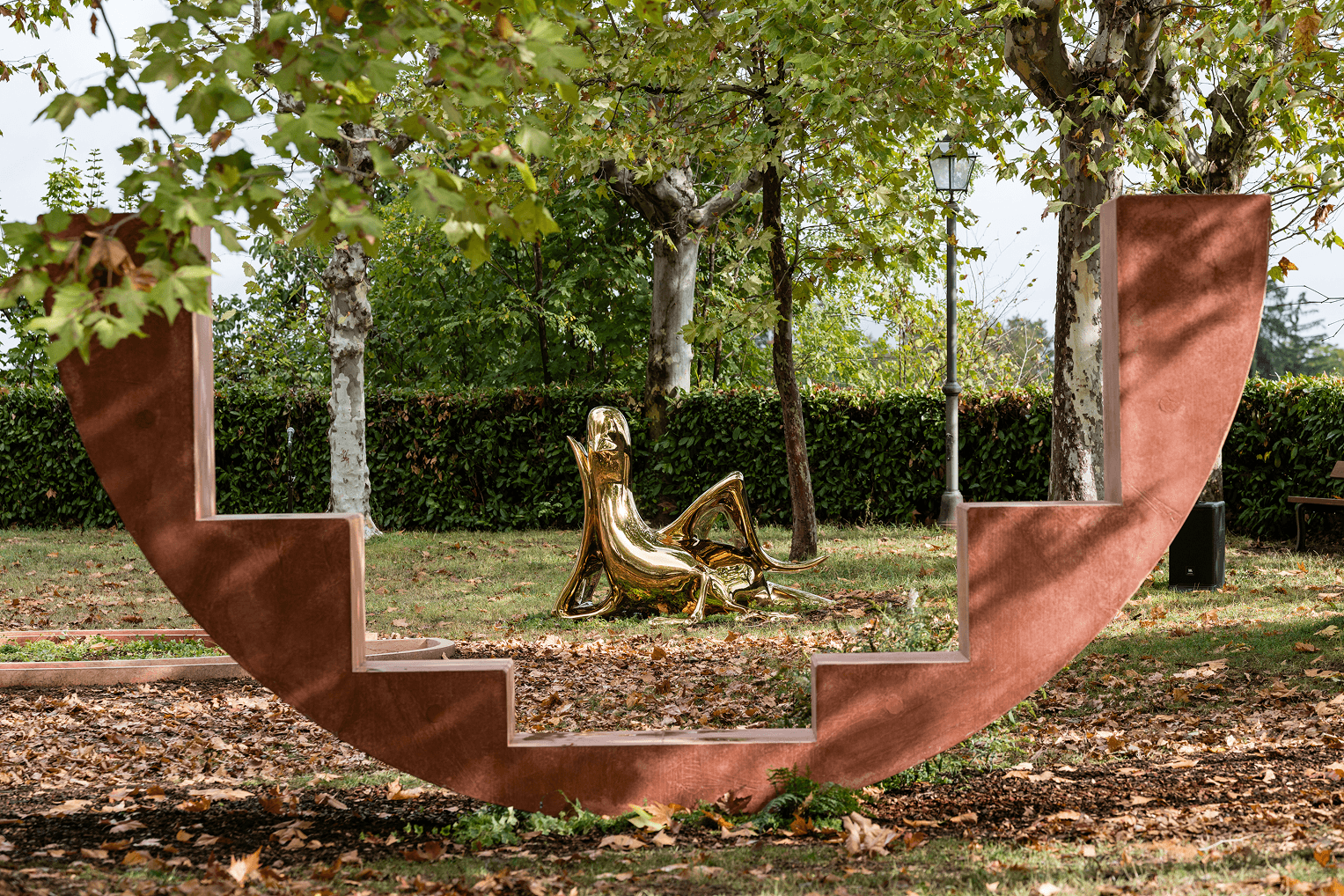
Argote transformed the existing Rotonda into a place for meeting, rest, play and unexpected encounters. The work consists of three monumental sculptural elements in pink-tinted concrete: a staircase that invites visitors to rise and look at the landscape; a curved structure that recalls the nearby Roman amphitheatre; and a fountain of imaginary water, where wishes might come true. A gilded stainless-steel pigeon completes the Piazza, reflecting the sun and its surroundings. “It’s me, it’s my signature”, explains Iván. The pigeon is a familiar presence that people often overlook. Argote wanted to give it the status of a jewel. The artist often features pigeons in his works, connecting them with people who occupy the margins.
The name, Piazza del Chafleo, comes from ‘chafleare’, a word that the artist Iván Argote invented in 2016–19 and deliberately left open to interpretation. In Bene Vagienna, there is now a dedicated place for ‘chafleare’. Rather than assigning a fixed function or meaning to it, the artist invites visitors to define the word through their interaction with the piazza.
The staircase “goes up into the tree” and refers to Italo Calvino’s ‘The Baron in the Trees’: the story of a boy who rejects the rules of his family and society, climbs into a tree and chooses to build a life there. For Argote, the novel suggests “living society and creating your own utopia”. The staircase encourages us to consider alternative ways of inhabiting the world and viewing our surroundings.
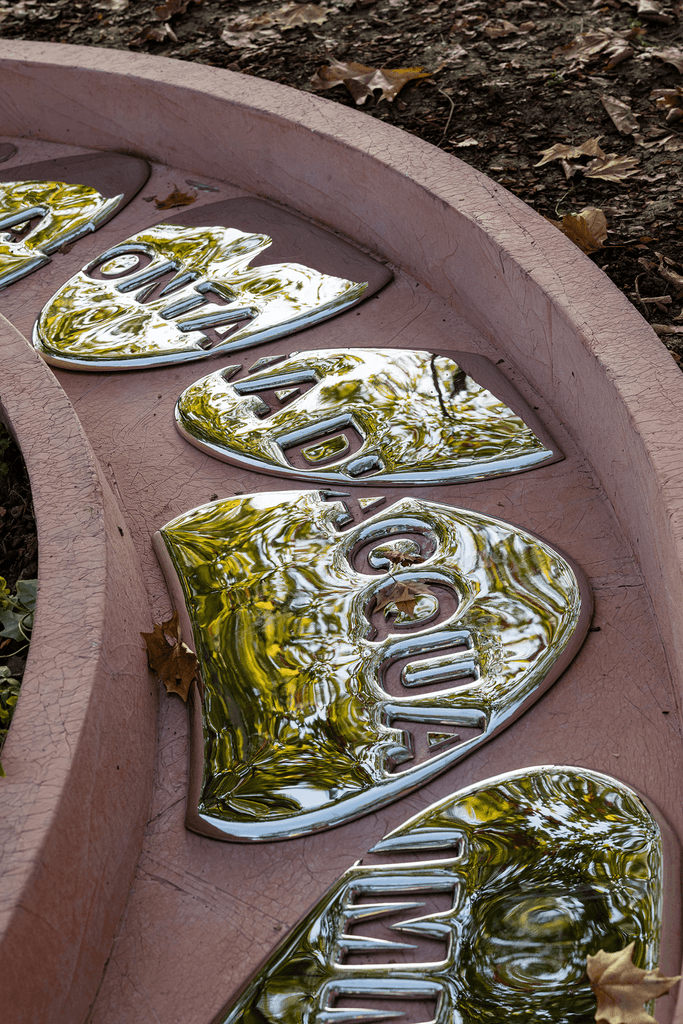
The curved structure draws on the nearby Roman remains and the idea of the theatre; however, Argote wanted it to become a more intimate place for people to meet and face one another. He also describes it as a form of equilibrium and ascension. The project brings together several layers of local history, including the story of a woman remembered for secretly bringing bread to people in need, and the miracle in which the bread was said to turn into roses when she was confronted by her husband. This local legend resonates with the “Bread and Roses” slogan, associated with labour and women’s rights movements. The phrase expresses a demand for fair wages, material security — ‘bread’, and for dignity and access to culture, art and the pleasures of life — ‘roses’. The fountain of imaginary water also reflects Bene Vagienna’s history of efforts to bring water to the town and contemporary questions about water use.
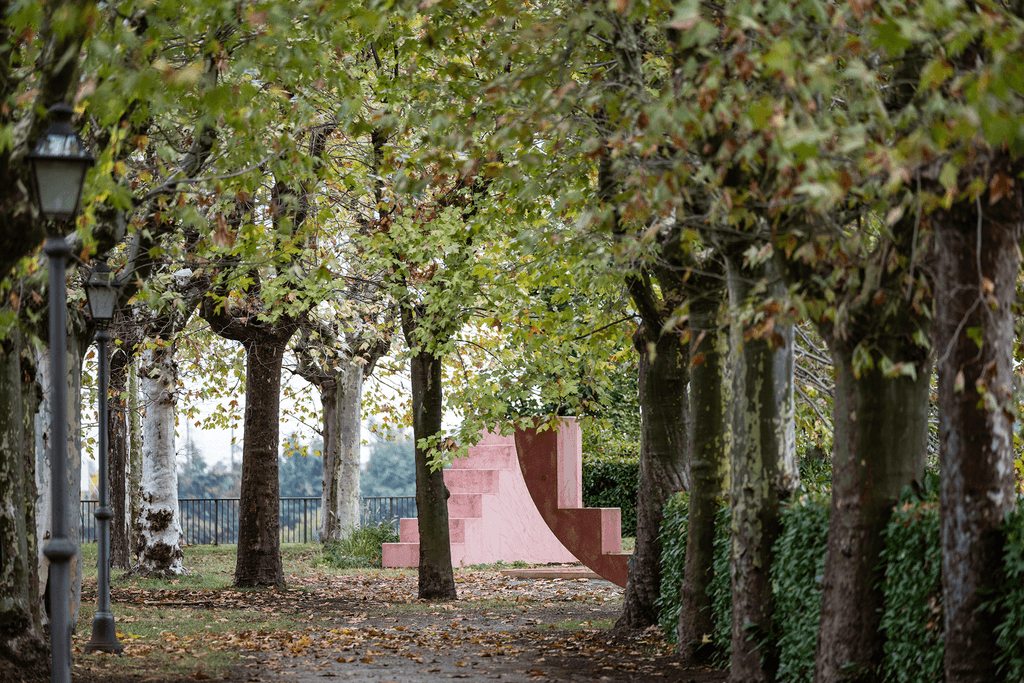
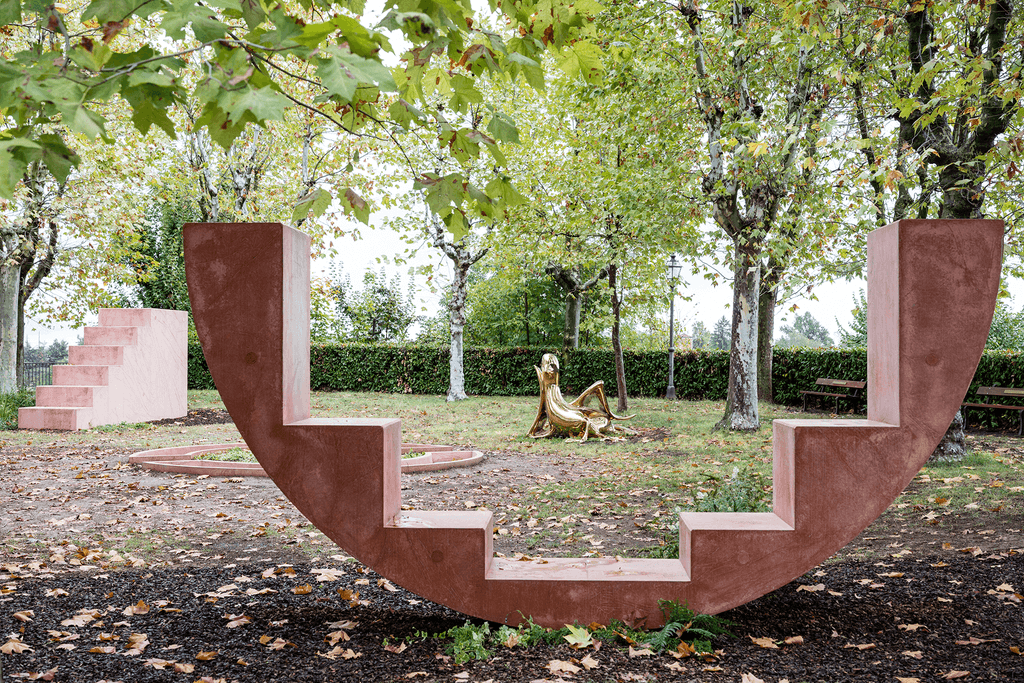
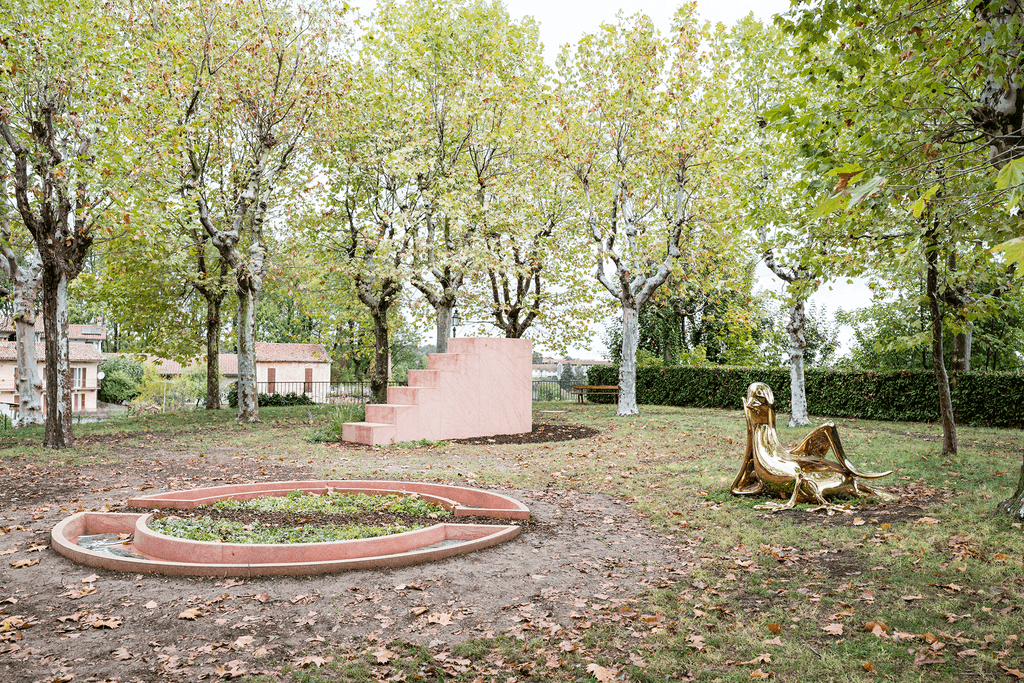
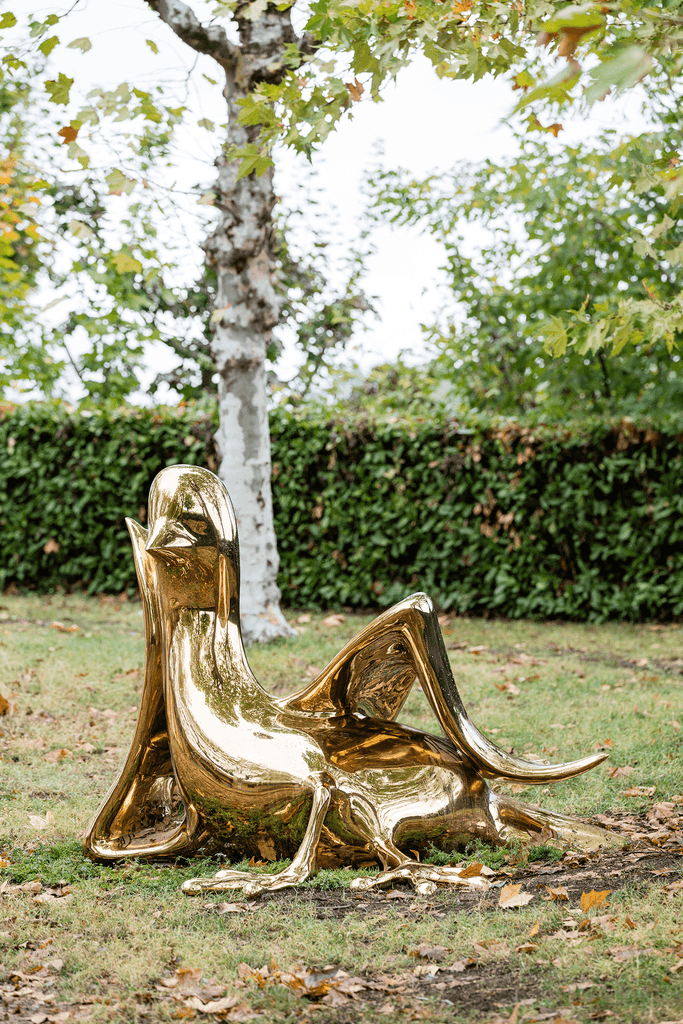
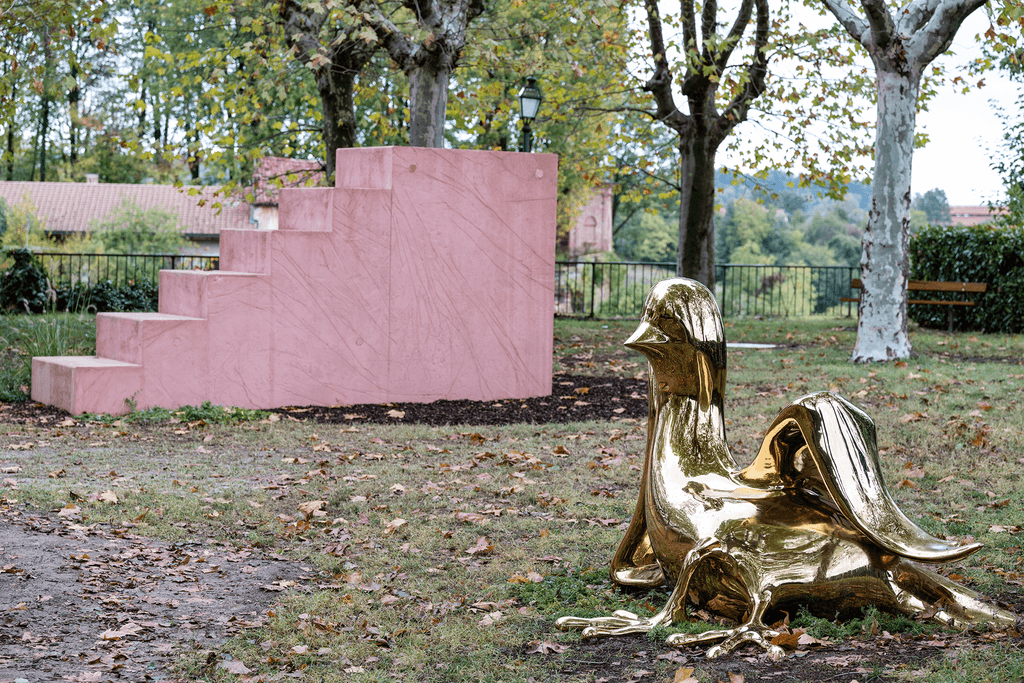
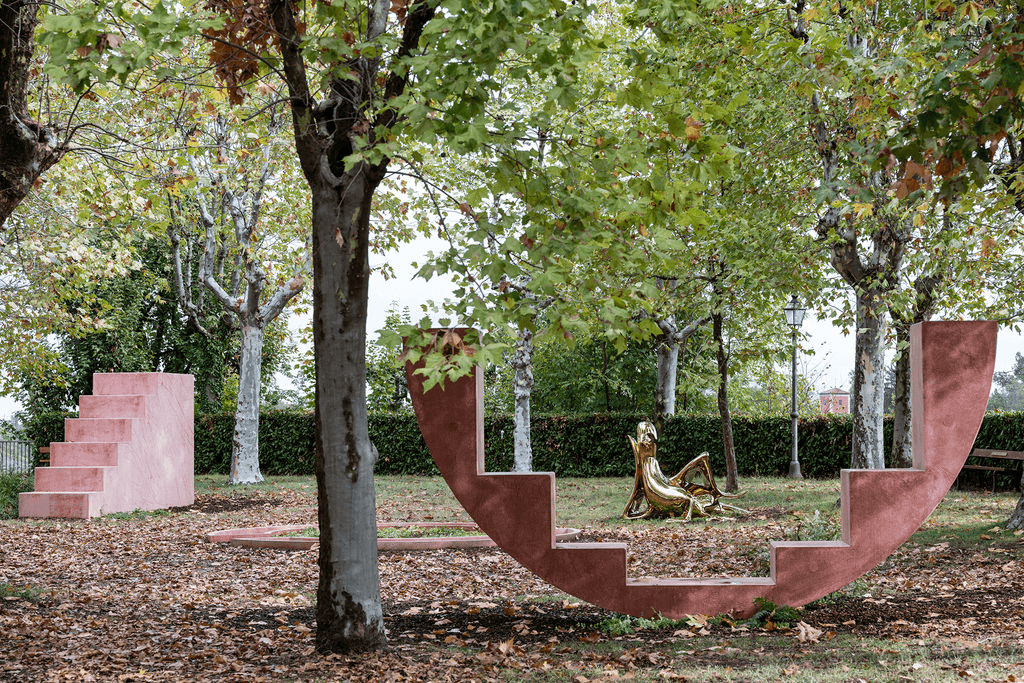
The three main sculptural elements, produced in the region, are made from pink-tinted concrete. Argote worked directly with the makers on the casting and surface treatment. He describes the texture as a kind of “skin”, intended to soften the impression of a heavy material. The minimal forms recall the atmosphere of ancient ruins while remaining contemporary, connecting the past with the present.
Reflecting on the place itself, Iván recalled being told by residents that it was already a spot where teenagers came to meet and kiss. This existing, informal use of the Rotonda helped shape his idea of a space for intimacy, encounter and freedom.
Piazza del Chafleo is an open space to inhabit and let its meaning develop through use: to sit, climb, meet, rest, flirt, imagine or just spend time together. As Argote puts it, ‘chafleare’ can change according to what happens there: if people come to kiss, it might mean kissing; if they come to protest, it might mean protesting. The square’s meaning is left open to the people who make it part of their lives.
The accompanying exhibition, The Left Hand of Darkness, curated by Marta Papini, is hosted at MAB – Museo Civico Archeologico di Bene Vagienna. Taking its title from Ursula K. Le Guin’s 1969 science-fiction novel, the exhibition explores ways of understanding the world beyond fixed categories. Bringing together works by Francesco Cavaliere, Patricia Domínguez, Regina de Miguel, Aleksandra Mir, Isadora Neves Marques and Diego Perrone, it moves between hybrid forms of life, ecological relationships and alternative ways of thinking about identity, nature and technology.
Iván Argote’s works focus on public spaces and shared histories, reimagining them through humour and collective participation. In works such as Strengthlessness and All Here Together, he explores ideas of representation, raising questions about who is remembered, celebrated or given a place in public space. His 2024 Venice Biennale installation, Descanso, also reflects his interest in transforming familiar symbols and creating new relationships between people, history and the urban environment. Across sculpture, film and public interventions, Argote combines playful gestures with questions of power, belonging and the ways we inhabit spaces together.
Radis: art taking root across Piedmont
Piazza del Chafleo, curated by Marta Papini, forms part of Radis, the four-year public-art programme promoting contemporary art across Piedmont, conceived and supported by Fondazione per l’Arte Moderna e Contemporanea CRT in collaboration with Fondazione CRC. Named after the Piedmontese word for “root”, Radis develops permanent works in dialogue with the places that host them, combining public art with exhibitions drawn from the foundations’ collections, educational projects and public programmes.
Papini’s curatorial approach was inspired by Il mondo dei vinti (1977), by Italian writer and historian Nuto Revelli, a collection of testimonies from rural communities in the province of Cuneo, organised around four geographies: the plains, the hills, the mountains and the Langhe. The choice of each site is carefully considered in relation to the artist and the work, connecting the programme to the specific histories and communities of each place. Across its four editions, Radis will bring together four permanent installations in four different geographies.
The first edition, in 2024, took place at Chiot Rosa, in the mountains near Rittana, where Giulia Cenci’s le masche brought hybrid forms of human, animal and plant into the forest, drawing on local folklore and the changing mountain landscape. In 2025, in Borgata Valdibà in Dogliani, Petrit Halilaj’s Abetare (a day at the school) transformed children’s drawings into a permanent sculpture, connecting childhood, memory and history across places and cultures. Iván Argote’s Piazza del Chafleo is an edition of 2026, located in a public square in Bene Vagienna as a space where meaning emerges through collective use.
Beyond a sequence of outdoor commissions, Radis creates a broader encounter between contemporary art and local life, with each work rooted in its setting while opening onto questions that travel across places and communities. The 2027 edition will complete the programme, adding a fourth installation to the network of public artworks across the Cuneo area. “I will miss working on Radis,” says Papini.
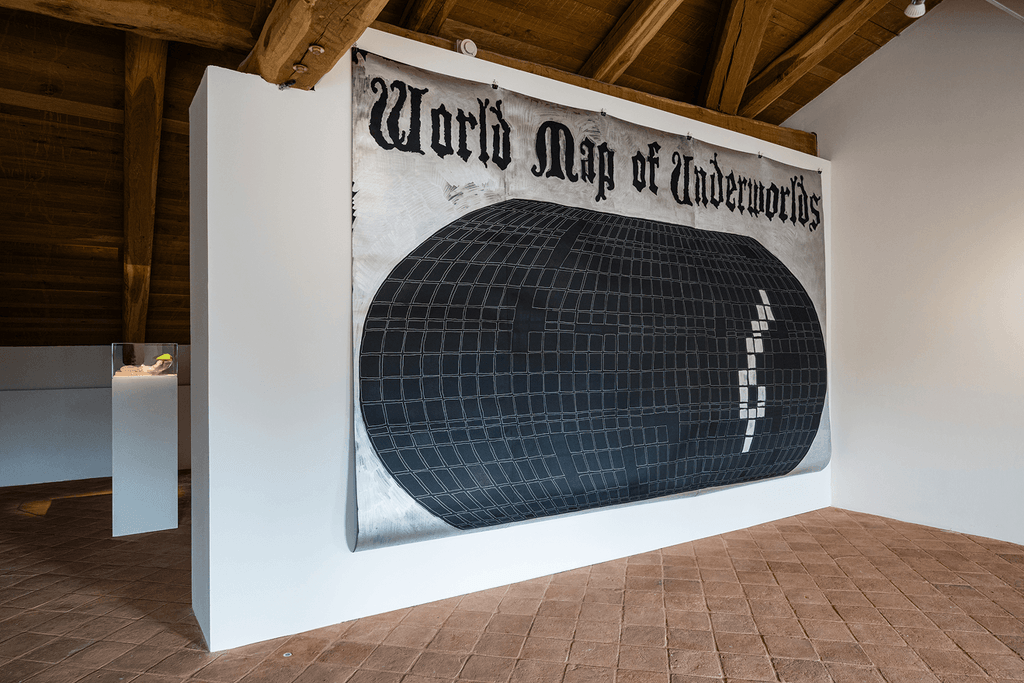
World Map of Underworlds, 2009. White and silver Edding marker on black Fabriano paper; 250 x 380 cm
Property of FONDAZIONE ARTE CRT on loan at GAM – GALLERIA CIVICA D’ARTE MODERNA E CONTEMPORANEA DI TORINO
Courtesy of ALEKSANDRA MIR
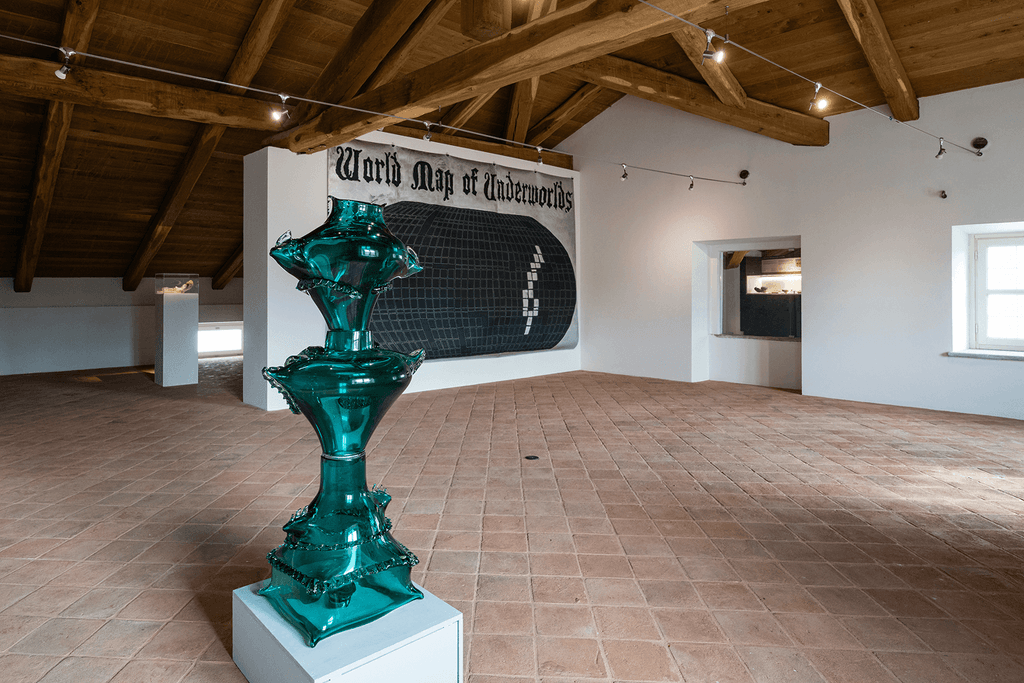
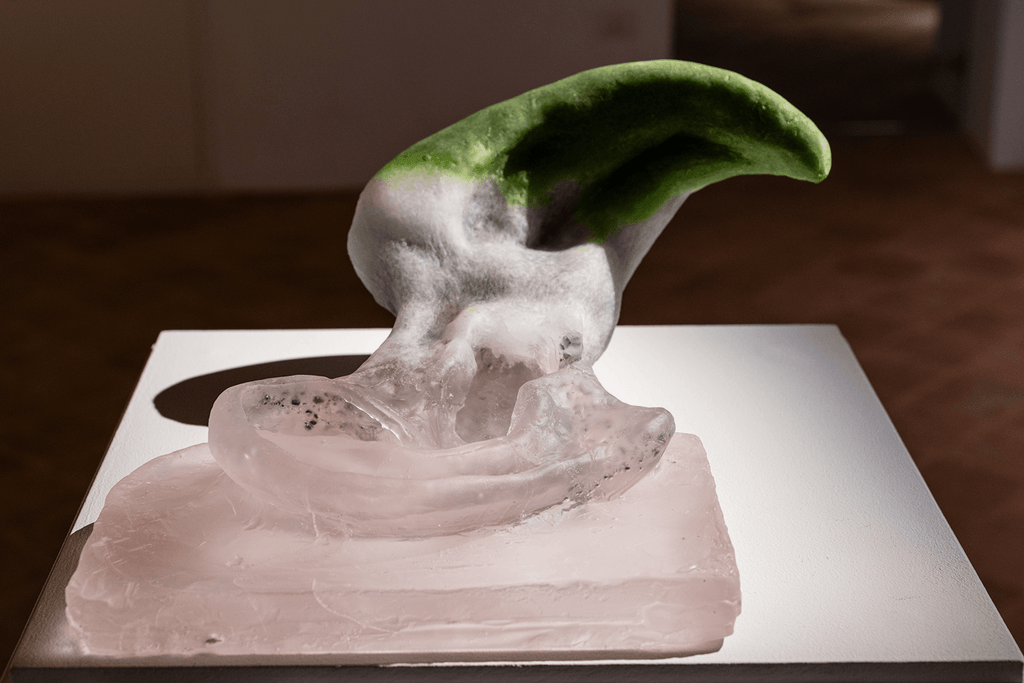
Senza titolo, 2011. Glass casting; 35 x 17 x 29 cm
Property of FONDAZIONE ARTE CRT on loan at CASTELLO DI RIVOLI, MUSEO D’ARTE CONTEMPORANEA
Courtesy of DIEGO PERRONE