Brussels Art Week Evelyn Simons Laure Decock
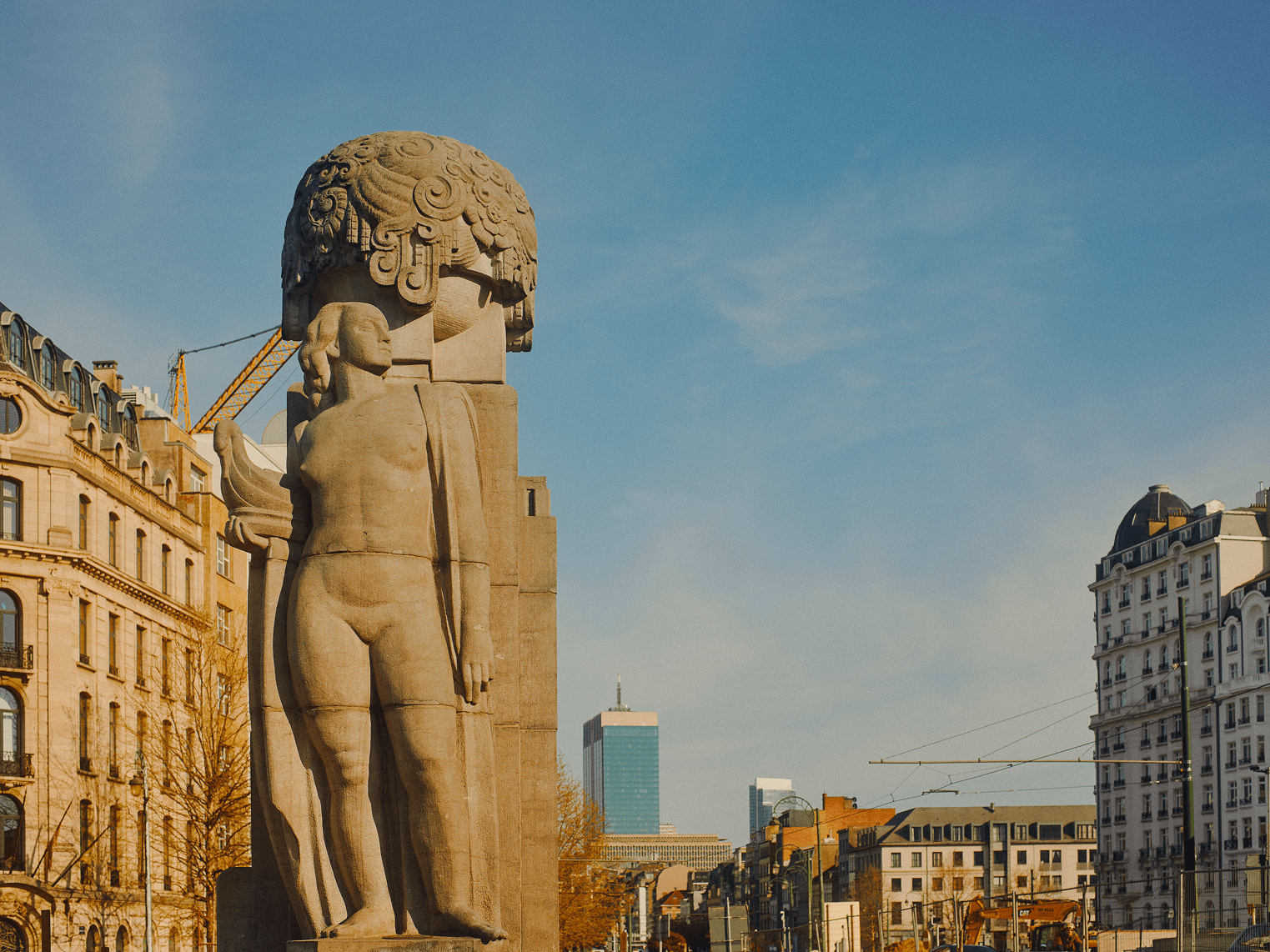
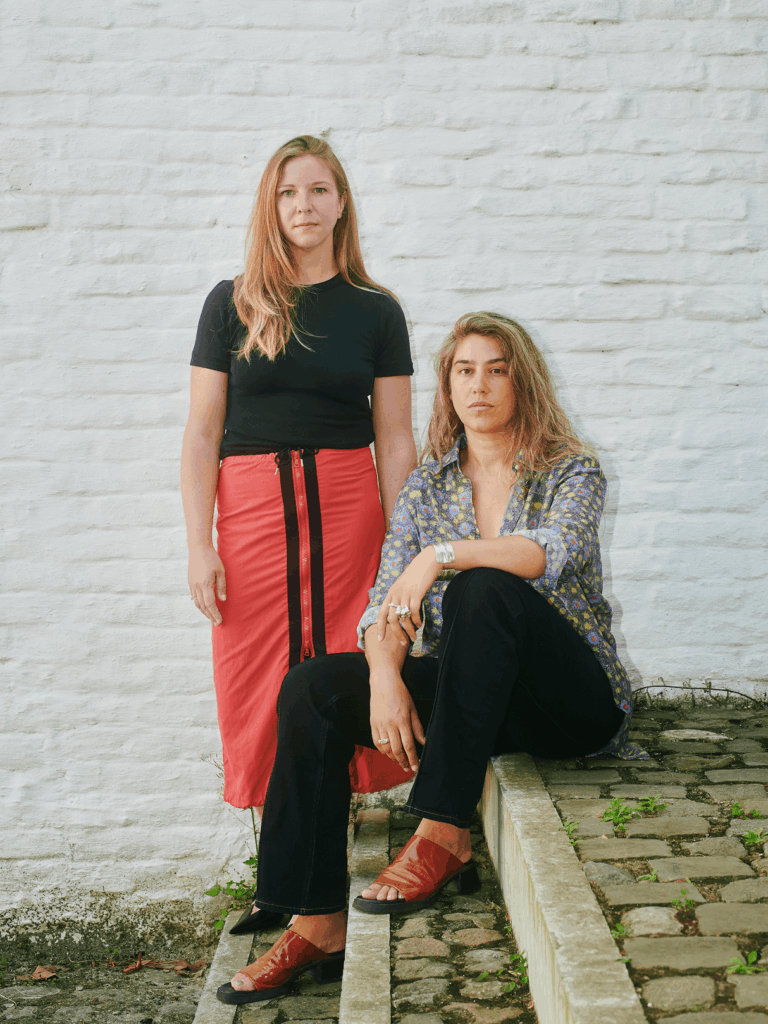
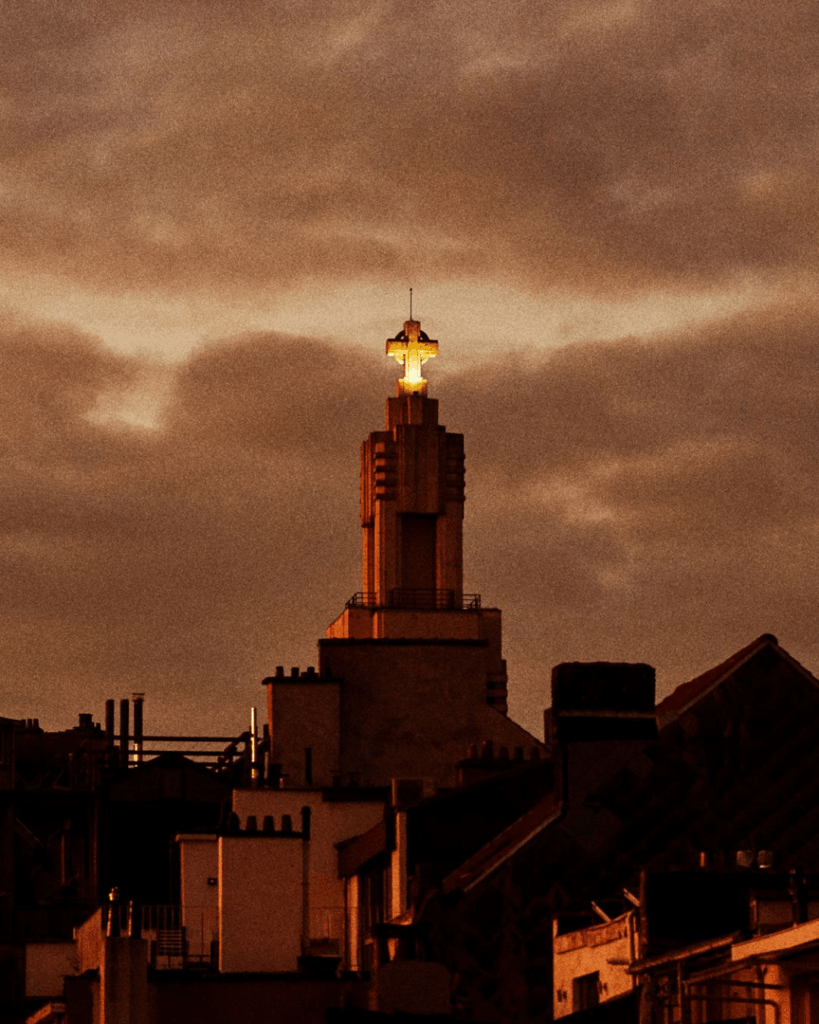
Photography by SANDER HOUTHUYS for RENDEZVOUS - BRUSSELS ART WEEK
Evelyn Simons and Laure Decock: The Making of Brussels Art Week

Brussels Art Week
Evelyn Simons
Laure Decock
EVELYN SIMONS and LAURE DECOCK 
Photography by SANDER HOUTHUYS
Brussels Art Week
Evelyn Simons
Laure Decock
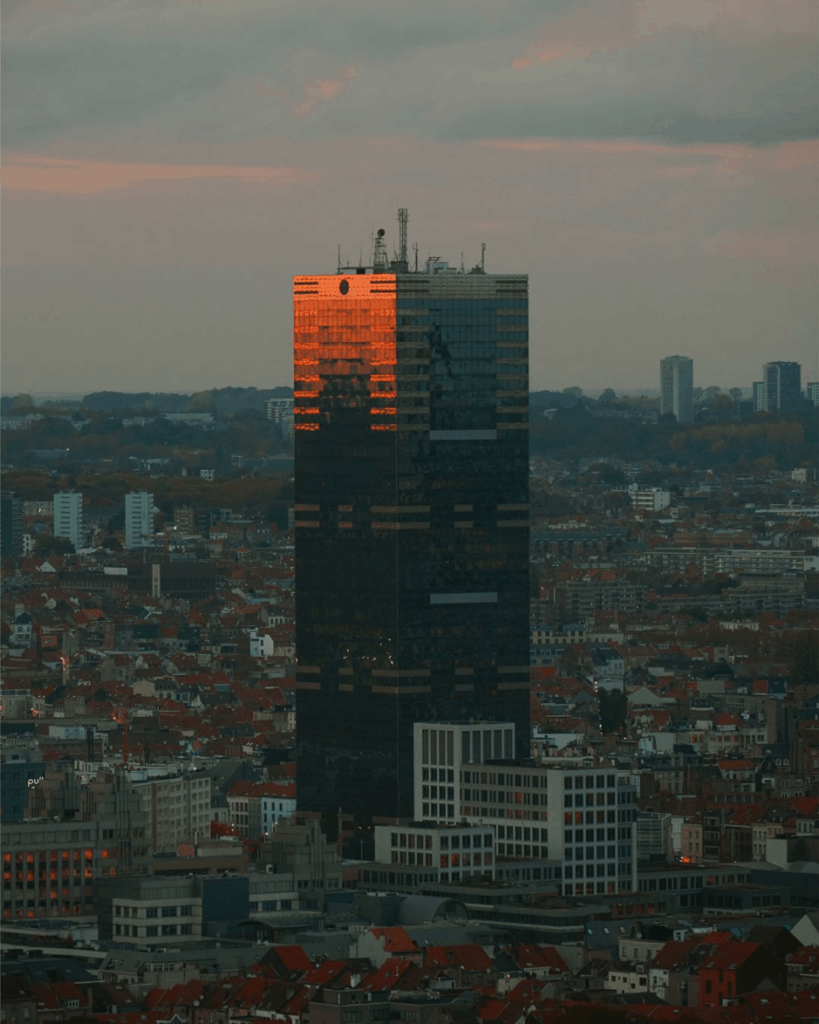
Photography by SANDER HOUTHUYS for RENDEZVOUS – BRUSSELS ART WEEK
Brussels Art Week
Evelyn Simons
Laure Decock
Brussels Art Week
Evelyn Simons
Laure Decock
Photography by SANDER HOUTHUYS for RENDEZVOUS – BRUSSELS ART WEEK

Ahead of this year’s Brussels Art Week, scheduled for 10–13 September, hube catches up with its founders, Evelyn Simons and Laure Decock. The art week’s epithet is RendezVous, a word that perfectly encapsulates its casually confident, exuberant dynamism.

Decock and Simons’ non-profit framework foregrounds community over commerce. Their curatorial eye wanders in search of authenticity and gazes in awe at the uniquely collaborative energy of their beloved city. Their priority is facilitation—the careful creation of opportunities for togetherness through openness. Chance encounters, glances, crossed paths, and coincidences are praised and protected.

hube: Laure, Evelyn, throughout your careers, you have both assumed a variety of roles within the creative industries, from curator to consultant, writer to artistic director. Could you each tell us a little about your backgrounds? How did your respective experiences lead you to found Brussels Art Week? What common ambition unified your trajectories?

Evelyn Simons: I studied Art History in Ghent. It was a very academic course which didn’t really prepare us for a professional career in the art world. I graduated in 2011 and had a lot of difficulty finding a job due to my lack of experience and having no family ties to the art world.

For four years, I worked other jobs whilst doing free gigs in the art world, keeping its exploitative system afloat: mostly writing and manning art booths at fairs. In my free time, I applied to open calls, and one of those was the jackpot. I became one of the laureates of Fondazione Prada & Qatar Museum’s Curate Award in 2017, which allowed me to organise an exhibition in Athens: carte blanche, with a great production budget and guidance from the Prada Foundation. In the meantime, I used my savings for a postgraduate degree in Curatorial Studies at the School of Art in Ghent. After that, I worked for some years at Fondation CAB in Brussels, co-curating shows and setting up a residency programme, whilst freelancing on the side.

From there, I worked at Horst Arts & Music, an arts and electronic music festival on a military site near Brussels, where I ran the visual arts and performance programme for five years. I combined my love for in-situ, commission-led curation and public space with a research focus on protest and club culture—these two avenues still define my curatorial practice today.

After Horst, I wanted to keep working on these two rhythms. Laure and I were together when we found out Brussels Gallery Weekend would end, and we took the leap to launch our own non-profit, rethinking the art week format into RendezVous. We’d bridge the commercial with the non-profit; the established with the emerging; the local with the international. This is very important to us.
Laure Decock: Just like Evelyn, I studied Art History in Ghent. Also very aware of the lack of opportunities afterwards, I focused on organising events with my peers and did several internships. With a group of Art History students, we founded the S.M.A.K. Young Friends: performances, video works, and music. We collaborated with artists in our close circle, many of whom were also residents at HISK, where I was working at the bar. It was an ideal setting for me to discuss my master’s thesis, or anything else.

With my thesis on the Belgian Pavilion in Venice, I got to attend the preview with the S.M.A.K. team. At this opening party, I scored my first real job at Meessen. I moved galleries several times, looking for a better fit. I passed through Almine Rech Gallery, Axel Vervoordt and Albert Baronian before realising that a purely commercial role was not for me.

It’s not so easy to shift from a purely commercial role, but I gradually managed to move to the fundraising side, thanks to my work as a fundraiser for La Loge. I started at WIELS and later worked on a freelance basis with NW [Open House for Film and Contemporary Art], The Cultivist, M Leuven, Horst, and this year’s Belgian Pavilion in Venice with Miet Warlop.

In the meantime, I had been using my experiences to found Elders Collectief, curating two exhibitions with them, before founding RendezVous. Most importantly, throughout this journey, Evelyn has always been by my side. We had been travelling together, confiding in each other, and working together at several moments. This made it a very logical, albeit crazy, jump into this adventure together when the opportunity arose.

h: RendezVous is a non-profit organisation. Beyond the practical aspects and logistics, why was it important for you to adopt this model? Being a non-profit is not just an administrative framework; it’s also a statement about your ideals. What principles does that allow you to uphold?

LD&ES: Brussels Art Week is not an art fair, and doesn’t wish to adopt that model. Instead, we are complementary to what Art Brussels is doing in April. It’s good to have two key moments in the city’s art calendar, and to have enough difference between them so that alternative aspects of the ecosystem can be highlighted.

For Art Week, the point is to promote the variety of the field, including artist-run spaces, private foundations, residency spaces and institutions alongside galleries. By fostering a diversified programme, we hope to attract an international audience consisting of art professionals, curators, museum directors and collectors, whilst also prioritising accessibility for audiences that don’t necessarily have an art background, but who are keen to engage with the city.

On a more practical level, being a non-profit organisation allows us to have a financial plan where we combine different avenues of revenue. Participation fees make up one part of our budget, and are mostly allocated to third-party companies such as PR, on- and offline communication, print, hospitality, and the services we provide for the participating galleries. Parallel to that, we apply for public funding to facilitate the non-profit section of our art week, like our artist-run Salon de RendezVous.

We work like this because we believe that gallerists shouldn’t bear the financial burden of keeping an entire field afloat—I mean, times are tough—and taxpayers are not responsible for indirectly funding the activities of commercial galleries. That’s why we work in these clusters.

h: Both highly polished exhibitions and experimental happenings are given room to breathe. Why is that coexistence important? How do you make room for both careful curation and spontaneity?

LD&ES: It’s the coexistence that makes an art ecosystem interesting. If you only have a market, or, on the other spectrum—a city where there are no collectors—the dynamics become very different. With our organisation, we hope to find common ground, contrasts and alliances between all these different aspects of the sector, so we can push our scene forward in a transsectoral way.

Brussels Art Week
Evelyn Simons
Laure Decock
YOSHIMOTO NARA
Photography by VINCENT EVERARTS. Courtesy of CHRISTIE’S IMAGES LIMITED 2026 
CHRISTIES
Brussels Art Week
Evelyn Simons
Laure Decock
SOPHIE KUIJKEN
C-P.M.E., 2026 
GALERIE NATHALIE OBADIA
Brussels Art Week
Evelyn Simons
Laure Decock
OLGA TOBRELUTS
Hermes, 2026
IN-GATE GALLERY
Brussels Art Week
Evelyn Simons
Laure Decock
MARIA THEREZA ALVES
Mexico, 15,155 pesos (rent from houses and plazas), 2023. Watercolor on paper, 182 x 145 x 5 cm (framed) 
MARTINS&MONTERO
Brussels Art Week
Evelyn Simons
Laure Decock
ALMINE RECH 
HANS OP DE BEECK
Cécile, 2026, life-sized sculpture, mixed media. Seascape, 2022, polyester. ALMINE RECH 
© HANS OP DE BEECK, Courtesy of the Artist and ALMINE RECH
Photography by HANS OP DE BEECK STUDIO
Brussels Art Week
Evelyn Simons
Laure Decock
TONY CRAGG
Must Be, 2012, 240x325x110; bronze. BERNIER-ELIADES GALLERY
Photography by MICHAEL RICHTER
Brussels Art Week
Evelyn Simons
Laure Decock
KRISTOF SANTY
Sorry We’re Closed 
Photography courtesy of HV STUDIO
Brussels Art Week
Evelyn Simons
Laure Decock
Photography by SANDER HOUTHUYS for RENDEZVOUS – BRUSSELS ART WEEK
Brussels Art Week
Evelyn Simons
Laure Decock
Brussels Art Week
Evelyn Simons
Laure Decock
Photography by SANDER HOUTHUYS for RENDEZVOUS – BRUSSELS ART WEEK

h: While Europe’s major art capitals—Paris, London, Venice and Berlin—jostle for our attention, what makes Brussels distinct? What are the defining characteristics of its creative scene?

LD&ES: We’re smaller in scale. Brussels isn’t that big. And it’s also a bit dysfunctional: there are nineteen municipalities, each with their own legislations. It creates this patchwork that makes up the Brussels region, all operating within Belgium’s federal system. This dysfunctionality can be frustrating, especially considering how we didn’t have a Brussels government for the two years of our first two editions. But it also creates gaps and glitches that create possibility and allow us to somewhat self-organise. This is heavily reflected in the creative scene.

We have stellar galleries representing international artists who are based here, Belgian artists based abroad, and a range of experimental artist-run spaces, some of them operating nomadically. All of this creates a lot of opportunity for artists living here. Though we can’t be too celebratory. Budget cuts in culture are increasingly aimed at these grassroots organisations, which substantially puts an entire avant-garde and experimental scene (for which Belgium is so known) at risk.

h: This year, you will be releasing Brussels City Guide for Art Lovers, published by MER. Books. With that in mind, how important is it for the Brussels Art Week programme to reflect the city’s architectural and historical fabric?

LD&ES: Brussels Art Week takes place in the city. With nearly one hundred venues across uptown, downtown and midtown, the city itself becomes part of the experience. We also have partnerships with hotels, and want to highlight and celebrate the city’s independent bookstores, vinyl shops, restaurants, bars, nightclubs, parks and architecture.

Our City Guide, created in collaboration with Glean, takes visitors on walks through the city, pointing you towards interesting art spaces and artworks, and includes tips on where artists love to hang out. Like that, you can organise your own Brussels Art Week throughout the year.

h: You mentioned The Salon de RendezVous, the social epicentre of RendezVous. What does The Salon de RendezVous represent? What kind of energy animates the space? How does it help to galvanise a sense of community?

LD&ES: The Salon is many things. It’s our beating heart. It’s an exciting temporary timespace where people can gather, discuss, have a drink, experience performances, learn and exchange. We definitely wanted to have a programme of our own, but decided against organising another exhibition to be added to the broad offer we already have.

Instead, each year, The Salon offers the opportunity to an artist or collective—a kind of commission that can actually contribute to or hopefully expand an artist’s practice. It is the setting for Salon Encounters, a hybrid space. It is at once an art installation, but simultaneously also a décor for performances, DJ sets, and talks. Salon Encounters is curated by us, but in close collaboration with our various stakeholders. We organise themed conversations for which we invite artists exhibiting elsewhere in the city to collaborate, perform, host a listening session, or something else.

h: RendezVous is only two years young. Each year’s event will never exist in isolation, but will contribute to a collective understanding of Brussels’ scene. With this in mind, what responsibilities do you feel you have to the people of Brussels as curators? What is it like to build a legacy in real time?

LD&ES: We feel the work is never finished. There is so much potential. We constantly think of new connections we can make, people we can introduce to each other, and shared agendas that different organisations might have without realising.

We’re building an organisation from the ground up. We inherited nothing from the previous structure, and we had to do so with no public funding, because there was no government.

We remain faithful, motivated, and encouraged by people’s growing enthusiasm: both from our participating organisations and from the audience—both local and international. It takes a specific kind of stamina to work year-round on a four-day event, but the energy during those days—post-summer, everyone well rested—is magic.

Brussels is also the place we both call home. After having worked for years for other people, we’re confident in the belief that our complementary backgrounds allow us to create a meaningful and exciting platform for a city that’s so often overlooked, but has so much to offer.

h: Reflecting on these first few years, what have the opening editions taught you? Looking to the future, where do you hope to take RendezVous next?

LD&ES: We sometimes have to temper our ambitions, because we’re hungry and impatient to grow. So it’s a constant balancing act between investment and carefulness. On the surface, everything needs to seem impeccable, top-notch, professional—but behind the scenes, it’s a lot of DIY, overextending ourselves and counting on the goodwill of many of our collaborators.

Brussels Art Week
Evelyn Simons
Laure Decock
EVELYN SIMONS and LAURE DECOCK 
Photography by SANDER HOUTHUYS

Words: MARTA TERESA

ISSUE 8

issue no8

Discover the new issue — available now