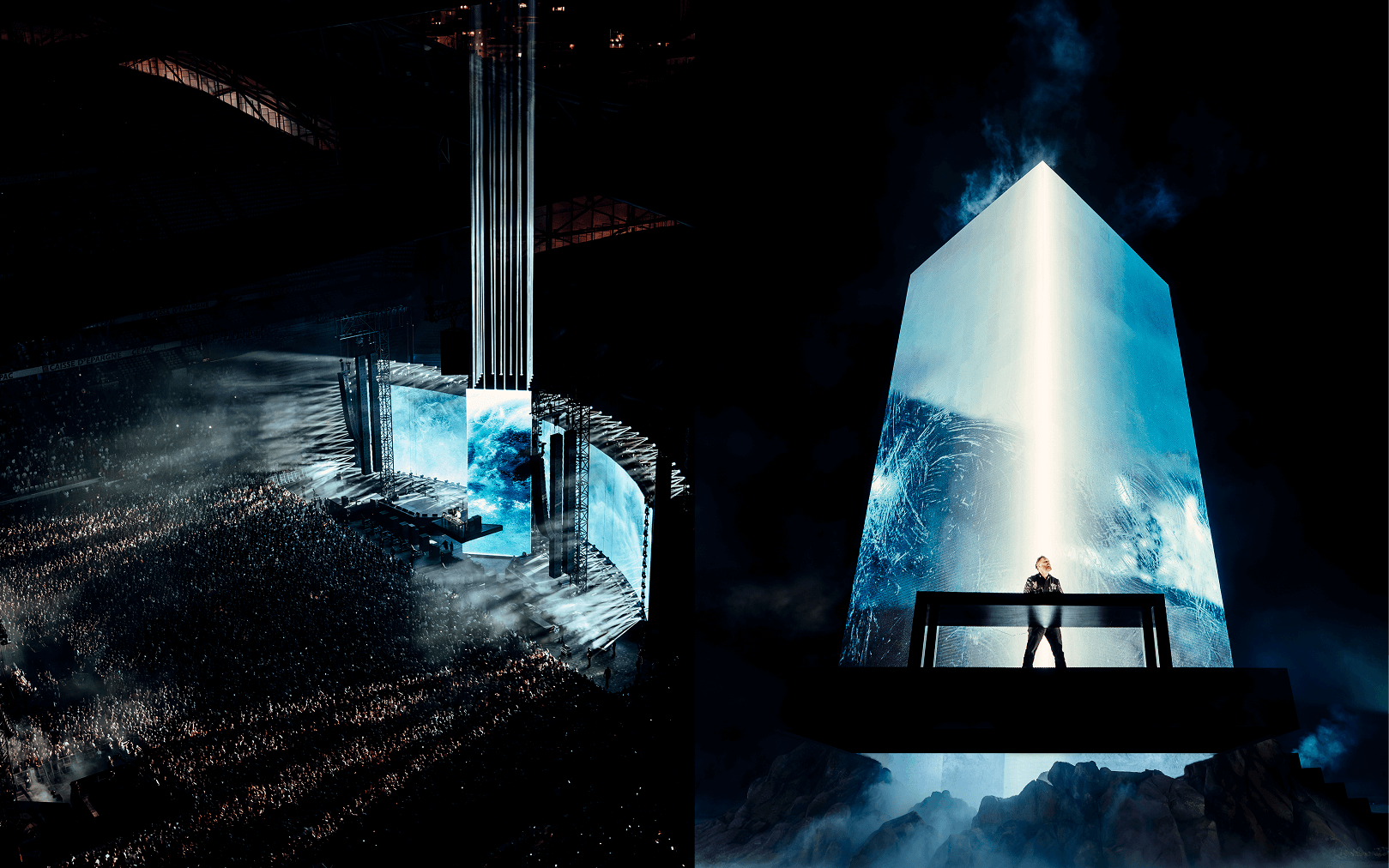
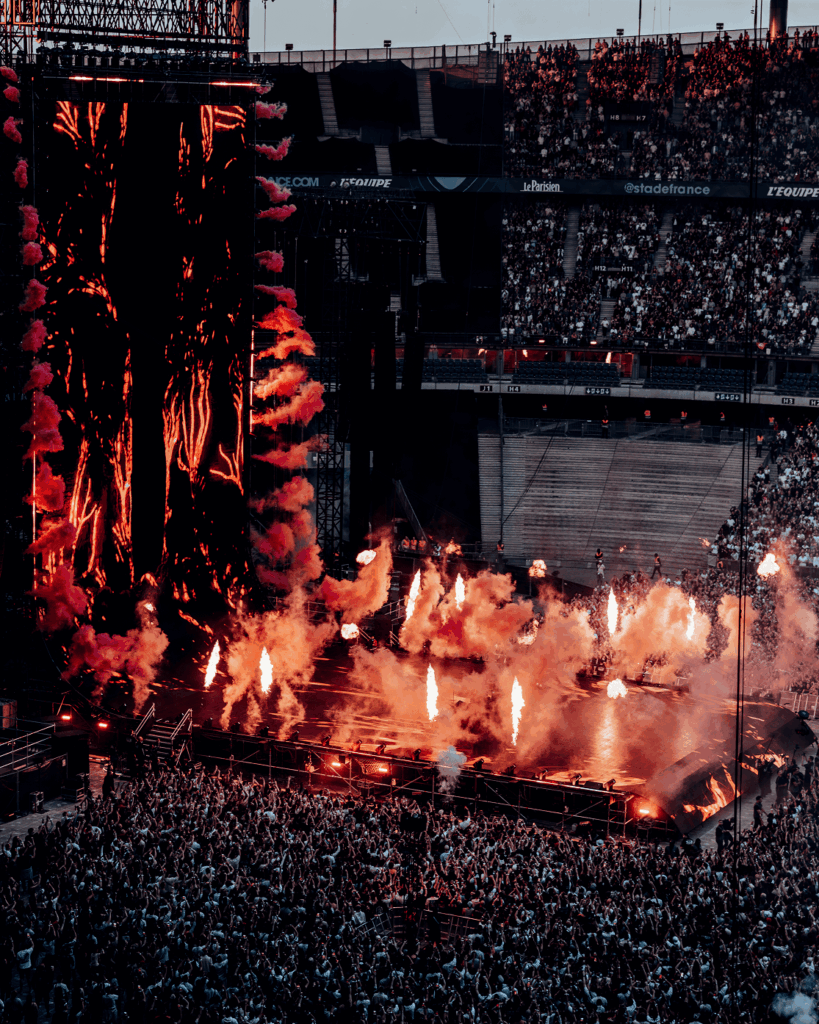
DJ SNAKE, Stade De France
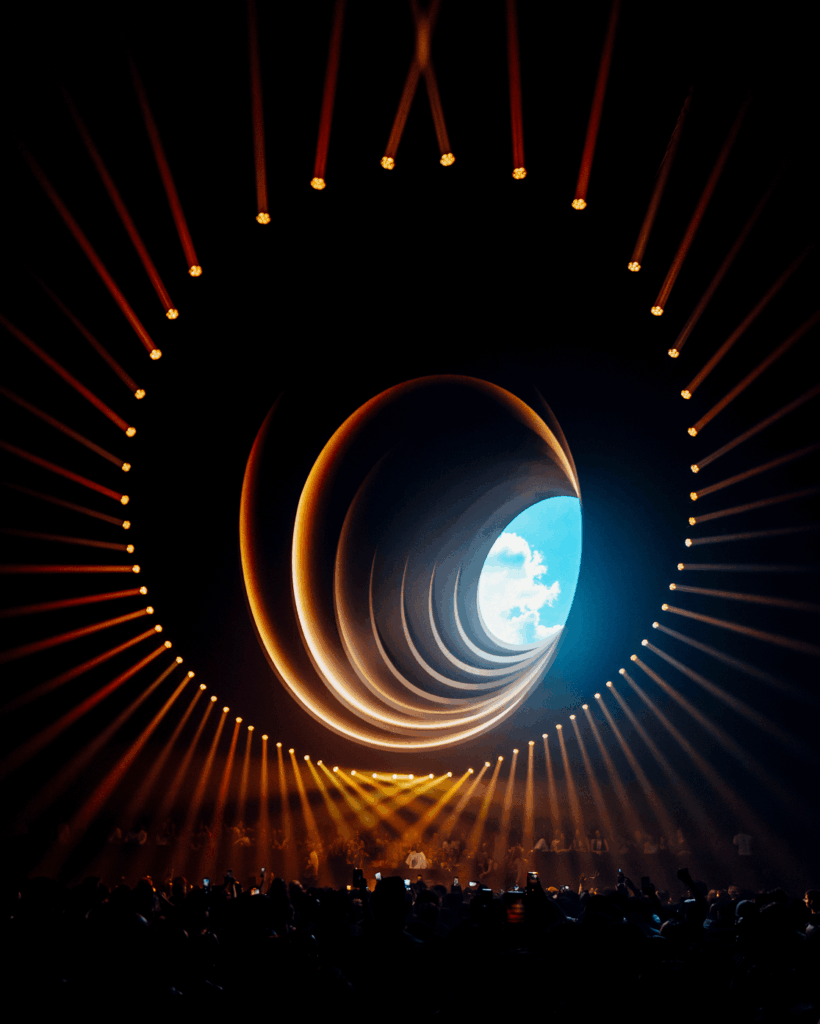
BLACK COFFEE, Rotterdam, 2024
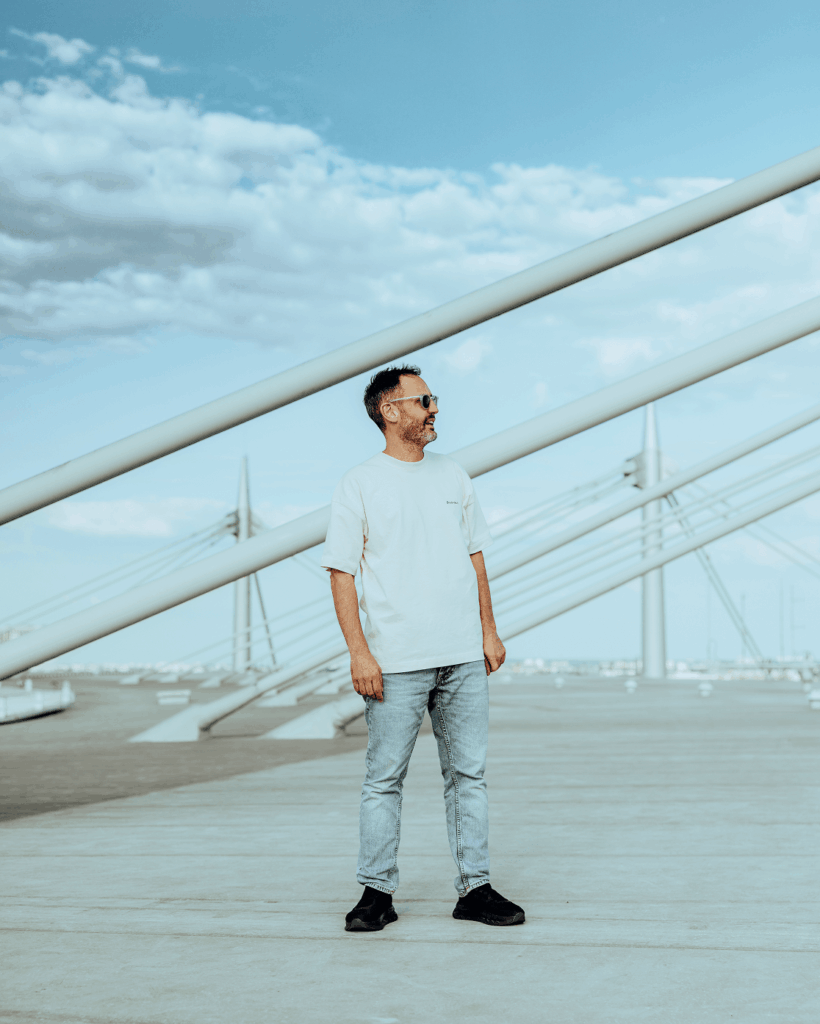
Romain Pissenem designs stages and moments, the kind that live somewhere between memory and sensation, where light, sound and space come together into an emotional experience. As the founder of High Scream, the creative director from north-east France tells stories for millions of people, transforming electronic music, pop and large-scale performance into narratives staged across Ibiza, Dubai, Seoul, Paris, London and the world’s largest stadiums.
Speaking to hube from his office, a glass-walled space, somewhere between urban density and seashore, Pissenem appears exactly as his work suggests: curious and intensely present. Bicycles pass behind him, light shifts. There is no virtual backdrop, no performance for the camera. “It’s all about the show,” he says, smiling.
In this conversation, Roman speaks about his approach, his inspirations, his past, present and an optimistic outlook for a future defined by WOW.
hube: You often reject templates and rebuild each show from the ground up. How do you sustain that rhythm of reinvention without losing your center—and what does “starting from zero” really mean to you today?
Romain Pissenem: It’s always easier, in a way, to build the house from nothing than to take an old one and redo it. So I think when you have to do a show from zero and work directly with the venue and its surroundings, it actually helps you be more creative. Shows and design are about storytelling, and starting from scratch is very exciting. For example, I have paper notes from a previous meeting about a future design. If I had to draw something on top of them, it would be complicated. But if I take a brand-new page, it becomes much easier. It is never really starting from scratch. You always start with a story. And the story, for me, is the most important point. What do we want to say? What is the purpose of the show? What is music? Which artist? What story do we want to tell people?
h: You’ve said that cinema was your gateway to a larger world. Which films or directors continue to shape your imagination now, and how do they influence the way you construct space, rhythm, and emotion on stage?
RP: Yes, a lot, because the reason I’ve always loved movies is that I’m a very energetic person to say the least, sometimes too energetic. And what I love about shows is the rhythm. At High Scream, we work with different artists—electronic, pop, rock, rap—and it’s all about rhythm. What I’ve always loved, especially in American movies, is the action. When I was a kid, coming from a small place in the north-east of France, I watched these films and thought how crazy they were. I always wanted to get the energy and give it back, like in the theater. Imagine if you could make theatre feel like a film, with changes of scenery and scenes. That’s also why I am passionate about stage design, because I’m always thinking about how we can evolve and how we can change. And this rhythm of American films in the ’80s and ’90s was something I was really passionate about. Now it has changed a bit, because technology has evolved a lot. But those super-big ’80s and ’90s blockbusters really made me gasp.
When I was 18, I went to Los Angeles, and when I arrived things didn’t go as planned and I didn’t have anywhere to stay. I had a ticket back but I couldn’t afford to change the departure date, so I was stuck in the US for a few weeks, which then became months. Through a friend of a friend of a friend, I met a woman whose job was to take care of animals for CBS and Disney studios. She said if I helped her to carry the cages to the studio, I could stay at her house for free. I said I would do anything. So I helped her, and I discovered CBS and Disney Studios. Imagine an 18-year-old arriving from the north-east of France, passionate about films and directors. I was impressed for months by how they produced things—how efficient and how fast they were. I thought we needed to apply that to our European way of producing.
What I loved at that time was also the beginning of directors building their own production companies—Quentin Tarantino, Steven Spielberg, all those guys—and I thought I want to do the same. This is why we created High Scream, because I really wanted to be able to direct the shows I was doing. I wanted control of the executive production. Mainly because when I come up with an idea, when I show something to an artist, I need to be able to deliver it. If I only do the design and keep the direction idea, you never really know what the production will do with it. Sometimes the idea is too complex or too expensive. So I thought: I need to be exactly like the directors I’m still a fan of. I need my own production so I can control all the processes. And if I say I’m going to do a 30- or 40-metre-high, crazy monolithic design for David Guetta, I need to know how to produce it.
I surrounded myself with extraordinary people at High Scream, amazing in design, technical direction, production, and more. And with that team, we’ve managed to produce a lot of shows the way we wanted, because we were in control of the production.