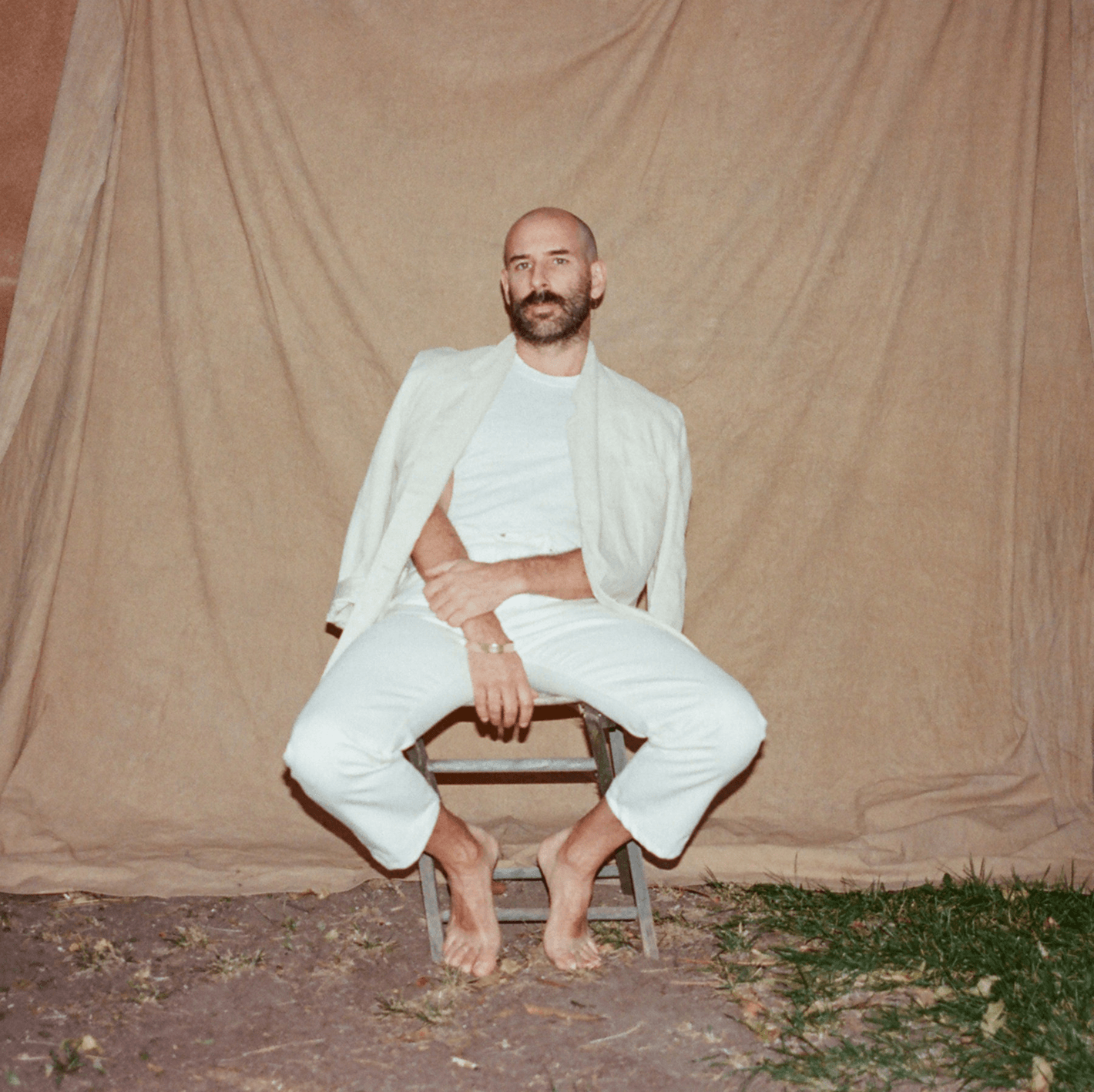
Trained by decades in studios and formed by nights in clubs, choreographer Ryan Heffington makes contemporary dance accessible to everyone. His work for music videos, stage productions, and large-scale communal performances carries a profound sense of freedom and self-expression. He won an Emmy for the dance sequences in Euphoria and has collaborated with numerous musicians—Sia, Harry Styles, Florence and the Machine, and many others. His ambitious, often site-responsive projects blur the line between performance and lived encounter; he approaches the body not as a vessel for technique but as a stubbornly truthful instrument.
He explores how gesture can generate forms of empathy and understanding that outpace intellect, how environments quietly dictate emotional weather, and how the accumulated habits of gender, class, and technology can be gently—or radically—unlearned. In Heffington’s world, choreography becomes a way of testing what the body already knows, and of admitting it more honestly than the mind ever will. In this conversation with hube, he reflects on authenticity, his movement philosophy, and why non-dancers still bring everything.
hube: Can movement become a language of its own—one capable of expressing ideas, emotions, and experiences that words cannot fully contain?
Ryan Heffington: Absolutely. The body holds nuance unlike the literal act of speaking. Handful of meaning per second, every second something new. Where a sentence works hard to define one’s actual point. The body cannot lie; it’s pure and naive, abstract and emotional.
h: Can movement create forms of empathy and connection that go beyond what can be achieved through conversation and spoken language?
RH: Not intellectually. But the idea of physically supporting someone is unique. And reading physical cues of need, or anticipating someone’s need is unspoken, powerful, exhausting, as well as fulfilling.
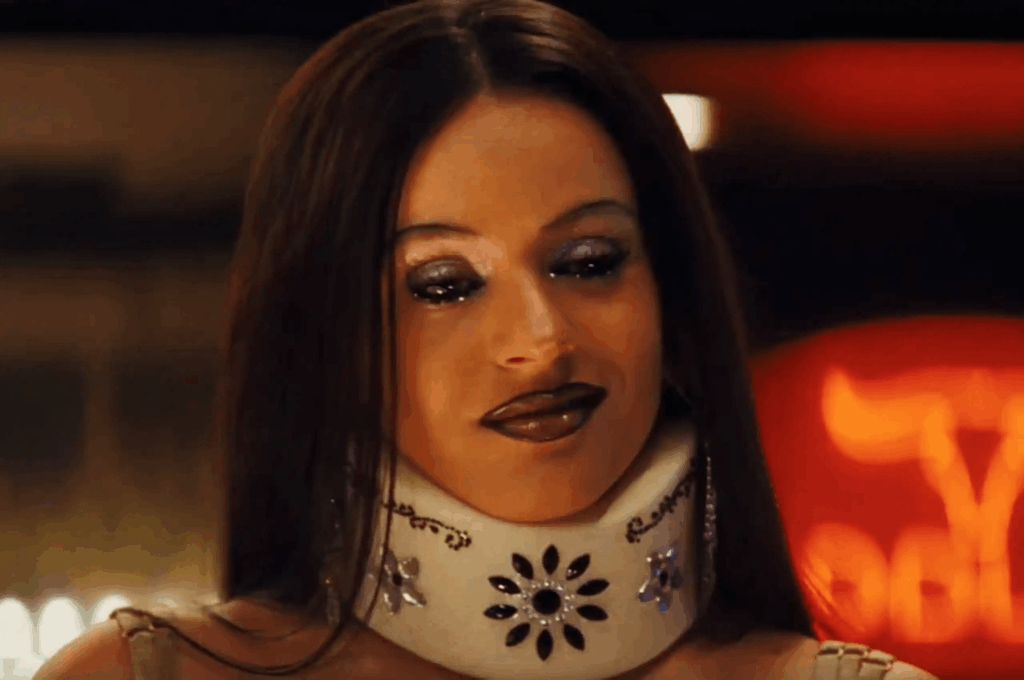
Courtesy of HBO


h: How much of the way we move through the world is truly instinctive, and how much has been unconsciously choreographed by social expectations, gender, class, or technology?
RH: We all have moments of unattached perception. It’s human. And when we layer ourselves with shame or the act of pretending, learned habits become “real.” The number of habits collected is personal and depends on how dense our sponges are, I guess. I’m triggered by gendered gestures and consciously avoid them to portray a more honest sense of self. And witnessing someone truly dancing as themselves—or having a unique walk or tic—has diamond status with me. I find authenticity extremely attractive.
h: Can choreography create emotional understanding before meaning is fully articulated? Do you believe the body sometimes understands things faster than the mind does?
RH: I love this question. Yes, but are we ever fully articulated through speech? That seems unreal. The body can understand truth quickly and can change meaning constantly, with every cell needing to say something. And thought stands so singular. So yes, physical expression can trump intellect in processing, response time, and communication.
Was super interesting: I once was engaging with two friends who were keen on committing adultery with one another. I had them stand across the room from each other and communicate with their bodies what they wanted. Lust got lost; their desire as well.
h: Why do humans feel such a deep need to control how they are perceived physically?
RH: We love to belong and without proper guidance can absorb lies and hold these lies until we let them go. Anyways, as we stray from kindness and compassion for one another, selfishness can manifest in craving more, something different than what is. Lies comfort desperation, discomfort, and loneliness and then we start caring about the absurd—like physical appearance.
I’m curious about non-seeing people—how they feel about being physically perceived.
h: How much does a space dictate emotional behavior in movement—and have you ever experienced a location that completely reshaped the choreography you thought you were making?
RH: In my work perceiving how our body fits in an environment is always somewhere to start. Do I feel captive? Freedom? Held? Non-existent? An environment is a tool that has emotionally forthcoming effects that I process into choreography. I learned this by performing in a site-specific company, at live events and clubs.
With my current work, I request access to the set, the stage, or the tree-lined neighborhood street before choreography starts. I love being surprised by a location and witnessing how that shapes my work both physically and emotionally. It’s turning the limitations into inspiration. A good reminder in life.
h: In projects like your large-scale or communal works, how do you decide what belongs to individual expression versus collective rhythm?
RH: If we’re speaking about my position as a singular artist on a project—at this point it’s a conversation with the team. I step over my definition of choreography because of editing, costume design, DJ experience. I think we all—I assume—have more to propose than what our resumes read. When you’re in the flow, mentally and physically, while the stage lights go up or the camera is rolling, and magic is present, there is nothing more soul-fulfilling. I can find magic with people who trust themselves. They tend to trust others.
If we’re speaking about the orchestration of movement with performers, this changes based on concept. Watching someone improv from the soul is a unique gift because we’re seeing raw expression and get a glimpse of humanity. Whereas watching a crew of movers in unison can stimulate the eye, satisfying the left side of the brain.
In dance, visual stimulation or emotional storytelling can ping-pong every second—and that’s the magic of dance—stimulating the eye and heart simultaneously.
h: When working with non-dancers or untrained performers, what do they often bring into movement that trained dancers tend to lose?
RH: E-V-E-R-Y-T-H-I-N-G. I love witnessing unique walks, gestures, and choices. When we inundate ourselves with technique it becomes DNA—stored in tissue and is sometimes hard to undo. Non-dancers are truly unique and function from authenticity naturally.
About a decade ago I was at a party and found myself face to face with a certain designer. For four hours we sweated and gyrated on the dance floor. Within those four hours, he naturally never fell on the beat, and this was profound. His unabashed freedom redefined who is a dancer for me. He inspired me to dance off beat myself, and I encouraged this in my students—to discover something so anti-technique and to shake the matrix a bit.
h: How does the presence of an audience change the emotional truth of a performance—does it amplify it or distort it?
RH: Funny, just before this interview I was sitting at my dining table creating a solo performance that exists completely devoid of the influence of the viewer. No matter where or who—the movement would be stable. This is not my usual goal—actually never really my goal, but was an exercise in removing the influence of an audience. For I love witnessing the connectivity and energy exchange of performer and audience. Unspoken communication between eyes and the heart.
How would you perform with roaring applause from hundreds of onlookers? How incredible if the emotional truth were amplified or distorted by this exchange. Sounds like living to me.

Photography by GARETH CATTERMOLE, courtesy of GETTY IMAGES

Photography by GARETH CATTERMOLE, courtesy of GETTY IMAGES


