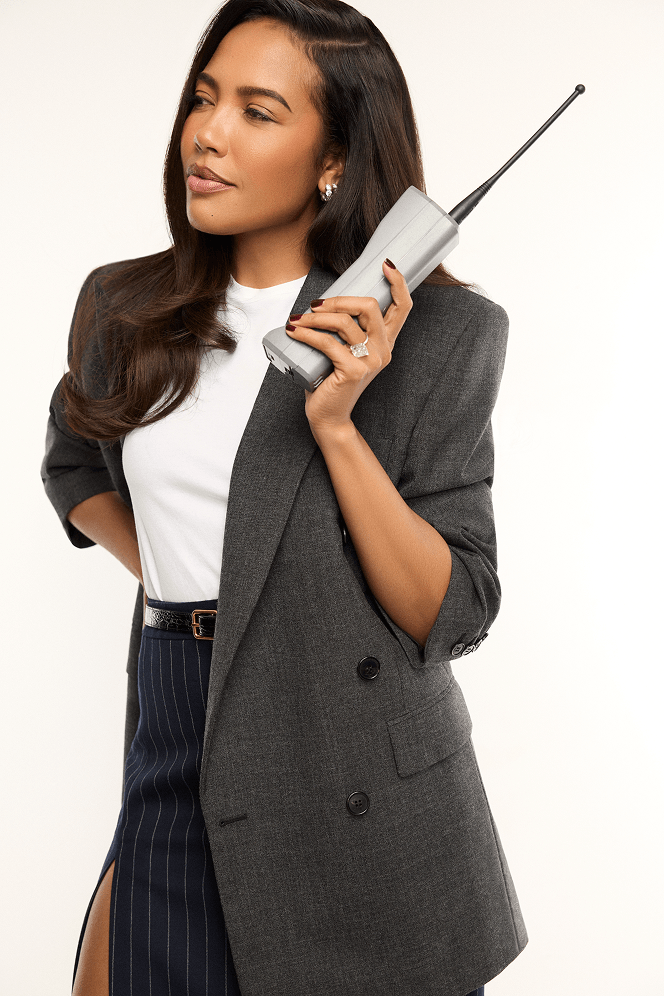
Without hesitation, one could say that Emma Grede has more hours in her day than the rest of us. She is a serial founder and entrepreneur of amazing tenure: co-founder of the denim company Good American, a founding partner and chief product officer of Skims. She is a host of the Aspire with Emma Grede podcast. She is a philanthropist, investor, and mother of four, among many other roles. Emma juggles them with ease, always looking impeccable and inspiring those around her. Everyone wishes to know her secret.
Luckily, Emma is on a mission to encourage others to pursue their dreams. In her new book Start with Yourself: A New Vision for Work & Life, she shares her honest thoughts on success, achievement, balance and offers guidance to those ready to make the most of who they are. In conversation with hube’s editor-in-chief, Sasha Kovaleva, Emma offers a sneak preview of her book, reflects on fear and the importance of saying no, and shares insights into her journey and the future.
Sasha Kovaleva: Fear is universal, even for those who have achieved recognition and admiration in their field. At this stage of your career, do you still encounter fear? If so, could you share some of the professional fears that challenge you today?
Emma Grede: That’s a really great place to start, because, as you say, fear is universal, and specifically for women who are in uncharted territory, doing new things in business and forging new paths, it’s very familiar territory. I definitely still have fear; it’s there. If we go back, the podcast is only seven or eight months old. I was really fearful about doing that, about putting myself in such a spotlight, and then going out on a platform with no followers, no recognition—it was just me.
I have trained myself to look for those moments of fear and lean into them, because I know what’s on the other side. And what I’ve learned in my career is that all the things you are most scared of are probably the things you should be doing. In so many ways, I have learned that you don’t find where you’re really good and competent—where your superpowers are—unless you’re leaning into the things that scare you just a little bit.
I don’t think that anything I’ve done that’s been particularly good—starting any of the companies, or indeed the podcast or writing the book—has been easy or without me feeling trepidation and judgment. But I’ve learned the hard way, so it’s just best to go through it.
SK: Looking back at the early stages of your career, which tools or strategies were most instrumental in helping you get started? Was it building a strong network, leveraging mentors, or another resource that often gets overlooked?
EG: The first one is a sense of naivety, because when you’re young, you don’t know what you don’t know. And so that sense of fearlessness, and just putting yourself in situations where there’s an element of the unknown, was really important for me. I try to keep an element of that—not overthinking everything, not imagining that everybody has a spotlight on me. When I was younger, I would take so many risks, and I would put myself in situations that, quite honestly, I should have known better than to get into—situations that could have been full of danger and the unknown. But when you don’t know, you do.
If I’m really honest, one of the things you can do that is really under-recognised is how you treat people in your work life. Even as I go out on this press tour to promote my book, I’ve had interviews with three journalists who used to work for me. The world is small. The way you behave, the way you make people feel, and the way you treat people are so important. Your reputation is one of your biggest assets. You don’t pay anything for your reputation—it’s entirely based on how you behave, what you do, and how you leave people feeling. It’s an easy thing that anyone can do. You can ensure your reputation is impeccable by simply being mindful of how you behave and how you leave people feeling.