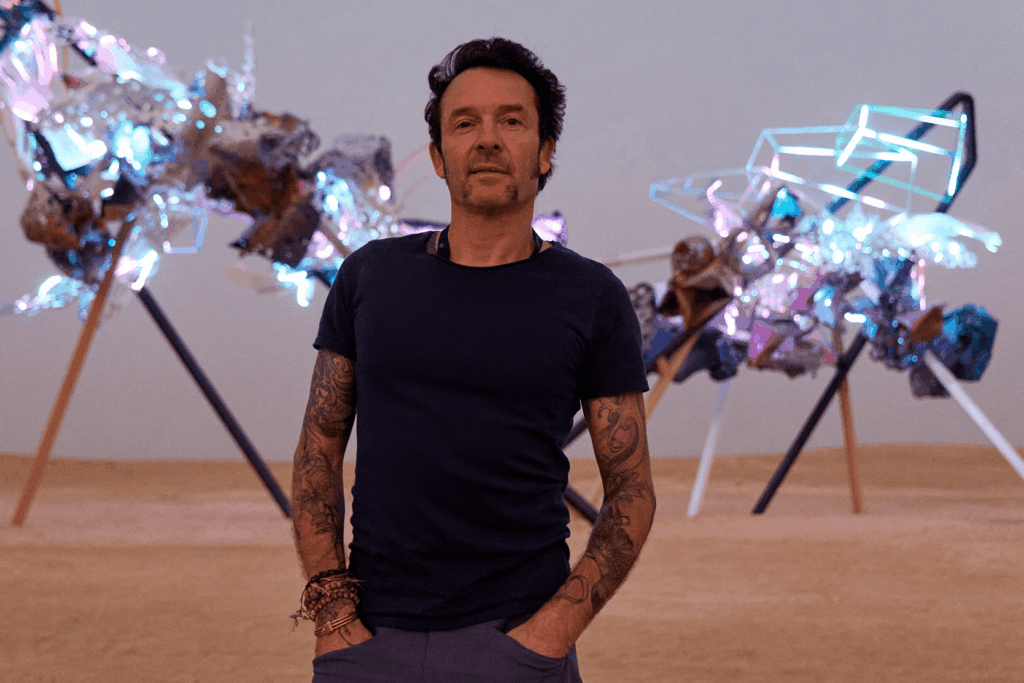
Photography by DAVE BRUEL
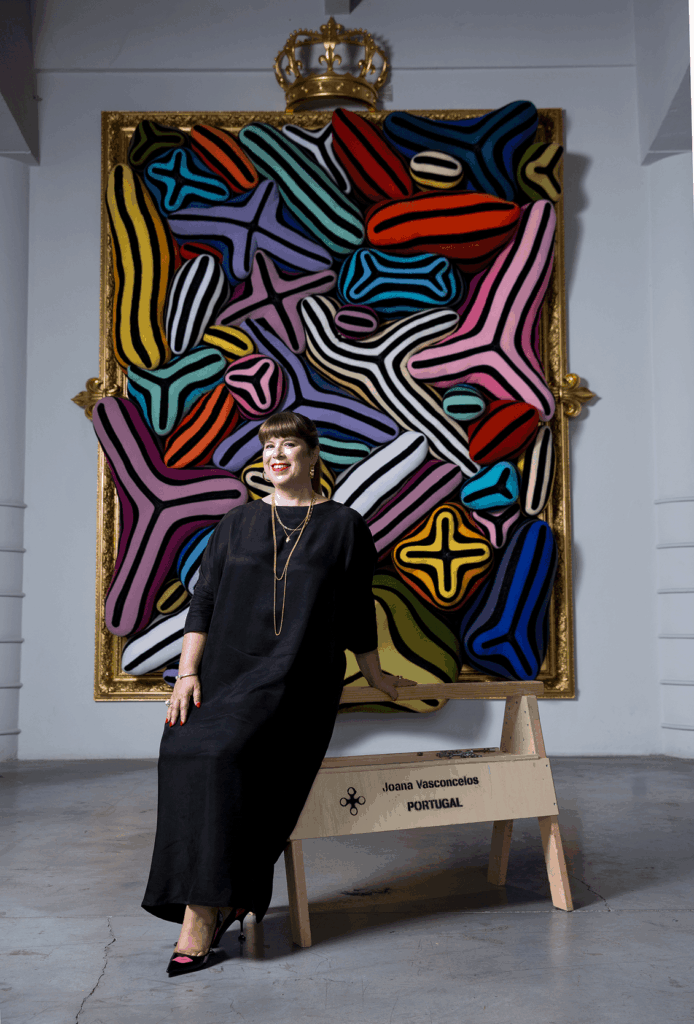
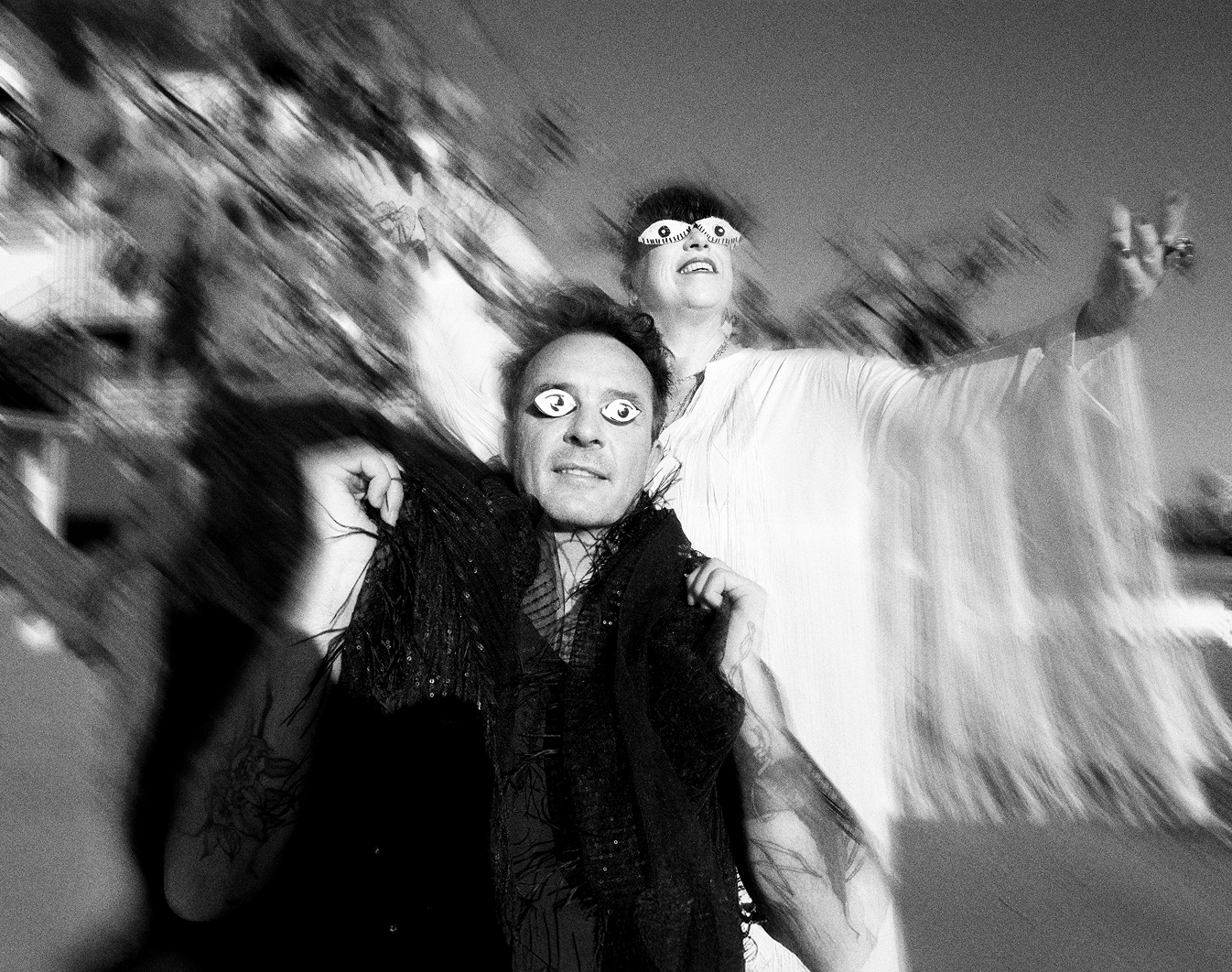
Courtesy of KENTON TATCHER
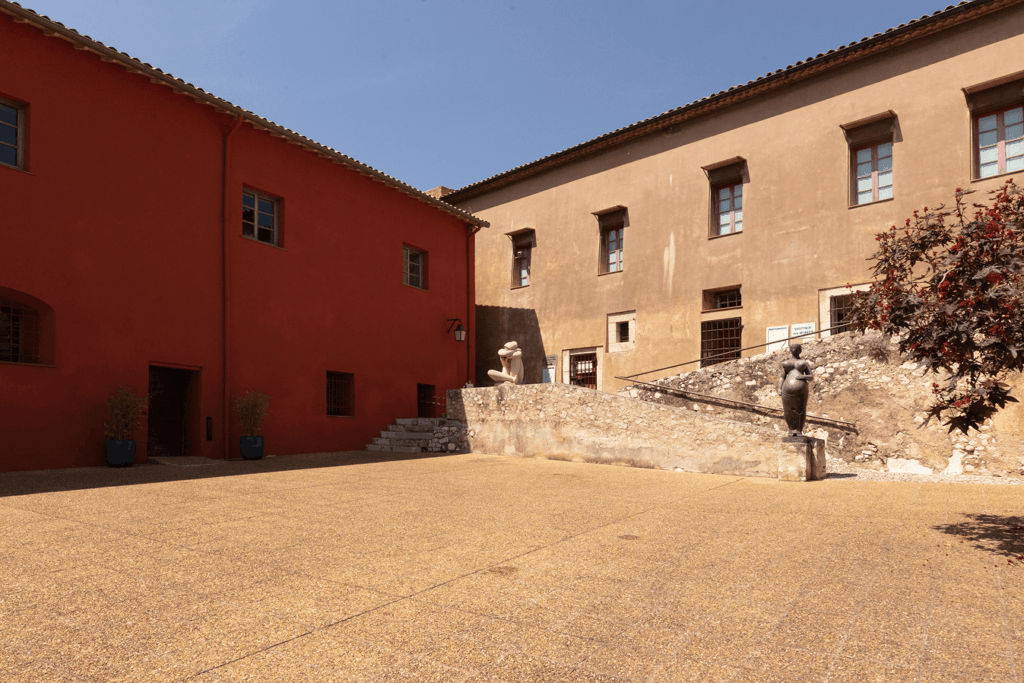


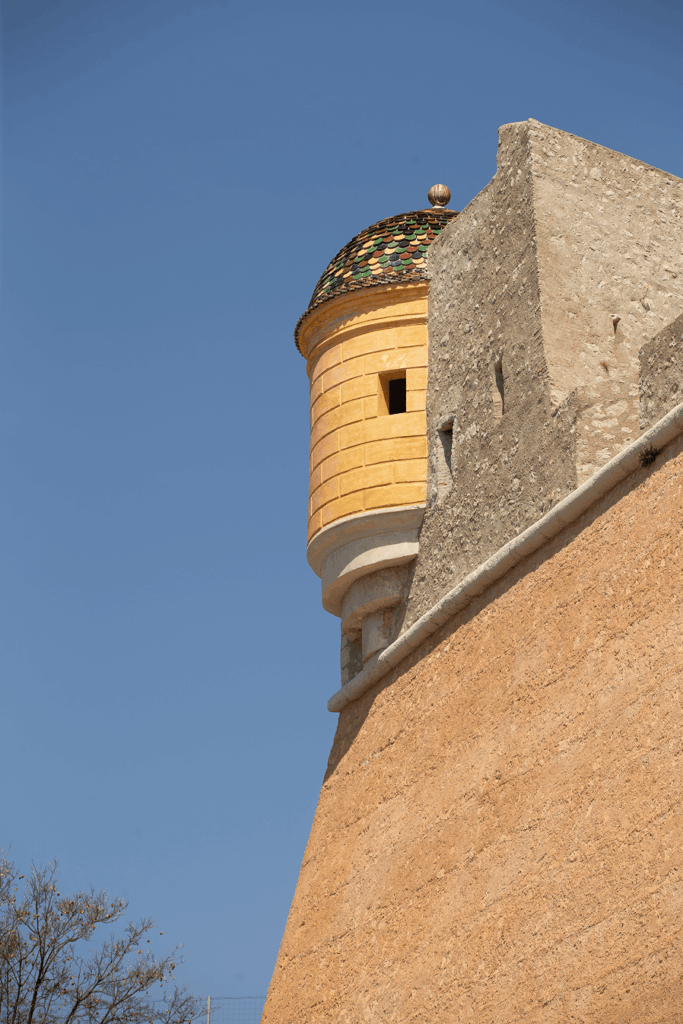
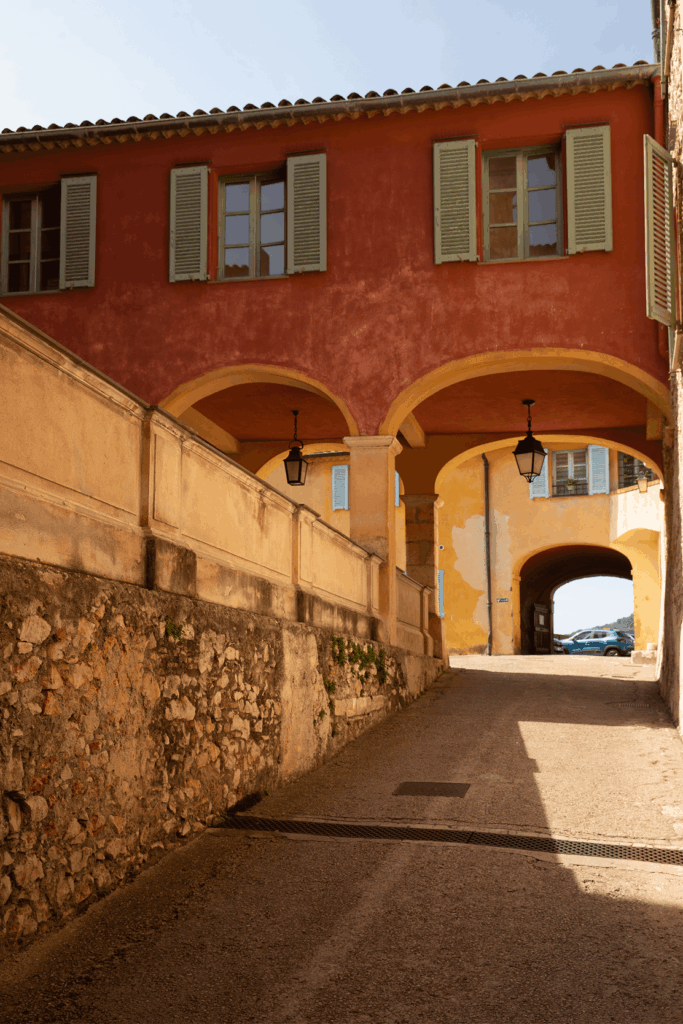
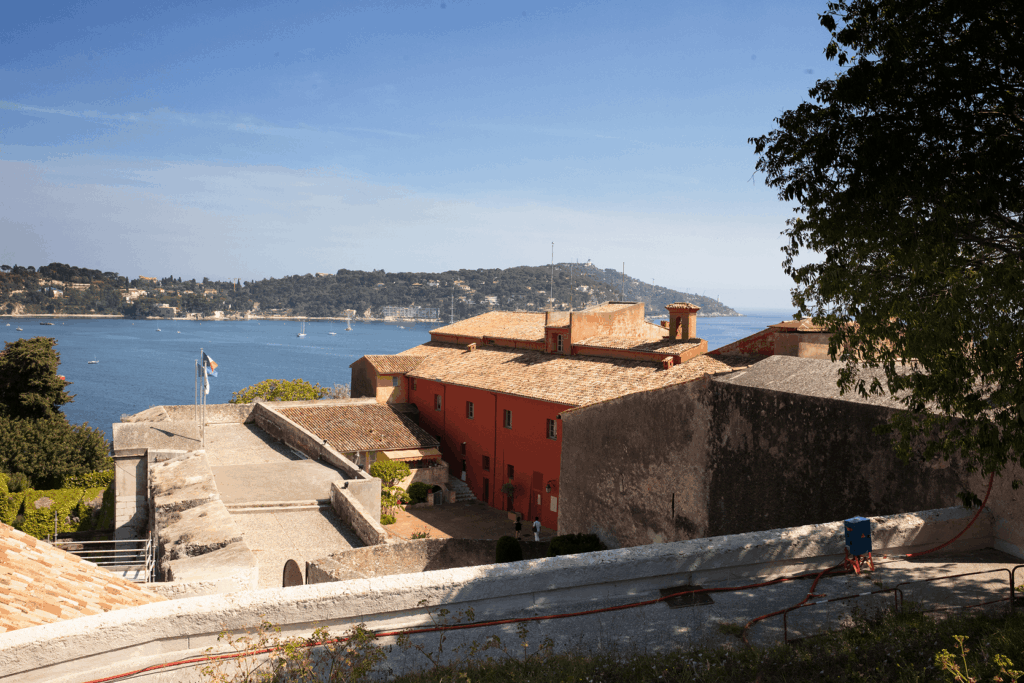
With the turn-of-the 20th century artists across Europe were gathering together in bars and brothels to tear into ideas about pictorial space and the politics of the collective manifesto, as the energies of the individual and the collective were consistently colliding, to set in motion a whole series of movements for the modern world, surreal and super charged. Today, by contrast, we inhabit what might be called the age of the singular and the self: an era in which the artist is so often understood as an autonomous world, a sovereign space dedicated to self. In such a moment, collaboration becomes something more than a practical exchange, it becomes an act of risk. At La Citadelle in Villefranche-sur-Mer the encounter between Arne Quinze and Joana Vasconcelos suggests something more radical still: that the site itself emerges as a third collaborator, perhaps even a third author. Rising above the Mediterranean, with its fortified walls and long histories of defence and enduring memory, the citadel is in no way a neutral container for art, but an active and resistant presence. Here, collaboration unfolds not simply between two distinct artistic sensibilities, but between two artists and a place whose own material and historical force presses back upon them.
It is within this charged space that The Absurd and the Dreamlike, 19 June—31 October 2026, takes shape, less as a harmonious duet than as a field of collision and convergence. Collision, because collaboration at this level necessarily risks friction: between forms, methods, ambitions, and the deep structures of artistic identity. Convergence, because out of that friction something else may emerge, something irreducible to either practice alone. The work is not merely shared; it is tested through contact.
The dreamlike, in this context, is not simply an atmosphere or visual mood. It becomes method. Dream logic permits discontinuity, juxtaposition, displacement, and irrational proximity, precisely the conditions under which collaboration can begin to exceed authorship. As French surrealist André Breton wrote, “the imaginary is what tends to become real.” Here, the dreamlike offers a mode of permission: a way of allowing forms, ideas, and intentions to move beyond the rational ownership of one maker and into a shared zone of transformation. For the artist, surrender is never a simple gesture. Creation is so often bound to authorship, and authorship to ego. As English novelist and art critic John Berger observed, “the relation between what we see and what we know is never settled.” In collaboration, that unsettled condition becomes the work itself. To allow another artist’s language to enter one’s own is to loosen control over meaning, to accept interruption, contradiction, even contamination. One is reminded, too, of American minimal musician John Cage’s remark that “the ego is a narrow room.” Collaboration asks the artist to step beyond that room.
And yet this is perhaps where the contemporary collaboration becomes most compelling: not in the erasure of ego, but in its exposure. Trust, here, is inseparable from risk. To collaborate today, in an age so insistently shaped by the singular voice, the recognisable signature, the cultivated individual, is to risk the dissolution of certainty. It asks what remains of the self when authorship is partially surrendered, and whether the ego can survive without the need to dominate meaning.
Perhaps this is the deeper proposition of the exhibition: not simply the bringing together of two celebrated artists, but the staging of surrender itself. To relinquish authorship, even briefly, is to expose the fault lines between self and other, between intention and accident, between control and emergence. The citadel, with its own weight of history and resistance, becomes not merely a setting but an active interlocutor in this exchange. This conversation begins, then, at the point where trust meets risk: where two practices collide within a site that becomes a collaborator in its own right, and where the dreamlike offers a method through which the individual may, however briefly, yield to something larger, stranger, and shared.
Rajesh Punj: How are you, since I saw you last at your studio?
Arne Quinze: I’m okay, a little overwhelmed. Too many things.
RP: I can imagine. Speaking to your studio manager when I was with you, you really are a ‘force de nature’.
AQ: Thank you. For me, it’s quite exceptional—it feels endless, always going on.
RP: It must be. How do you manage to remember what you’re doing at one moment in relation to one project?
AQ: My son, who is working with me, asks me the exact same question: how do you do that? I have a mind that remembers everything. I know all the projects I’m working on, down to the details, and on top of that I’m already working towards the future, on many other projects, also in my mind.
RP: I imagine perhaps you are one of those people who needs many things happening at once—that pressure.
AQ: Exactly. I have such a busy mind. I am always in the creating process. Even when I’m sleeping, I’m creating; I wake up with solutions, with new creations and concepts. I’m always in that state.
RP: Do you wake up in the night and take notes?
AQ: No, I remember everything I ever imagined or created throughout the day.
RP: Incredible. I can never remember anything in the morning. And when you’re working—a painting, then a sculpture—do you really have a system in your mind?
AQ: Yes. When I am in my painting mood, I really focus on painting.
RP: So, you can dedicate a day to painting?
AQ: Not a day—a period, a block. Sometimes one or two months, and then it is only painting. Of course, sketches for sculpture are always in my mind too, but when I’m in that block, I just paint.
RP: When I visited you, I realised you have so many studios. You are physically in one place and then another, so you are dedicated to a particular set of ideas in one moment.
AQ: My paintings and my sculptures are one thing, even if they are different disciplines. For me, painting is also a kind of ritual: it is like a meditation, but at the same time it is a journey, a challenge, and a moment of peace. There is a duality to it, because although it is a moment of peace, it is at the same time a battlefield—a real battlefield—and you are naked in front of a canvas. Sculpture is completely different. Every stroke needs to be the right one, especially the way I paint; you cannot make mistakes, although sometimes the mistakes are the beautiful part. It is constantly balancing on a sharp edge, and I love that.
RP: It sounds as though painting is in some ways more challenging.
AQ: My sculpture is the same in another way. I am the kind of artist who is in constant evolution. I think of artists like Pablo Picasso—there was always evolution—and what is interesting is the journey you take: to experiment, to create, not to be afraid to fail or to make mistakes. You need to have one hundred percent surrender to your instincts, to your gut feeling; that freedom and surrender is essential. At the same time, your backpack becomes bigger and bigger, with more knowledge and more experience. It is a never-ending evolution, and you grow in it, learning how to dance with the materials.
RP: That becomes interesting, because you are evolving, acquiring skills and knowledge, but then you almost have to let go of everything in order to make the work.
AQ: Exactly. I work with my hands—really with my hands. When I work in glass, I am there in the studio, making it, sculpting with it, and that is the big difference. Most glass works are still glass pieces; mine are not glass pieces, they are sculptures, and that is a huge difference.
RP: Yes, you are really taking it beyond what we conventionally understand as glass.
AQ: Exactly. That is sculpting with glass. The other things are closer to design. Only a few artists really do this.
RP: When I looked at the glass works, I was struck by their fragility and by the possibility that they could break at any moment. And of course, sometimes you push an idea too far.
AQ: Oh yes. Sometimes we can go beyond the limit, and it breaks. But every piece is unique; once it breaks, it is done, gone. Still, you learn a lot from that. The same with ceramics: so many pieces have crashed. The same with paintings. But that is a good thing, because if you do not take risks as an artist, you remain within your own limitations. I work best when I am out of my comfort zone; that is the moment when I am most at peace, and that is where I have fun.
RP: Shall we begin to talk about The Absurd and the Dreamlike exhibition intended for the Citadel in Villefranche, whilst we wait for Joana? I very much wanted to return to some of the ideas you both spoke about in Ghent. You gave such a beautiful conversation there, and I unfortunately failed to record it, so I wanted to pick up again on those ideas of collaboration.
AQ: It happened very naturally. When Selcan Atilgan asked me, “Arne, do you want to do the Citadel?”, of course I said yes. Every time she comes to me with an opportunity, I always say yes because I trust her, and the projects she brings are always interesting. That trust you build with the people around you is important. But when I first went to the Citadel, I immediately understood that this was not a small thing; it is a very significant site. I remembered the exhibition Henry Moore did at the Belvedere in Florence in 1972, which left a big impression on me. When I saw the Citadel, I thought, wow—it carried something of that same feeling. Then I discovered that Jean Cocteau had lived there, and when I began making the drawings and writing the story of the exhibition, I was simultaneously watching The Testament of Orpheus. That film became almost like background music while I was sketching. Because Cocteau had lived there, and because he had in many ways placed Villefranche on the map, that history became part of the work. And because my work is always about defending diversity in life—because we need that—I felt I could not miss the presence of a woman here. So I began thinking: who can work at this scale? Immediately, it was Joana. That is how it happened, very quickly, and even the title emerged from that.

Aecera

Portugal a Banhos, 2010
Courtesy of ATELIER JOANA VASCONCELOS

Royal Valkyrie, 2012
©DAVID PARRY. Courtesy of ROYAL ACADEMY OF ARTS

Lilicoptère, 2012
Courtesy of LUÍS VASCONCELOS

Liquaceram, detail

Aurora Gyza

Chroma Lupine Green
RP: Joana, we were just beginning to talk about collaboration and the Citadel. What interested me when I was with you both in Ghent was this idea of surrendering one’s work to another person—another body, another set of ideas. You are both such singular artists, so present and individual in the way you work, and so complete in the way you carry an idea from beginning to end. How does collaboration function for you?
Joana Vasconcelos: I can tell you that many times in my career I was asked to collaborate, and I never did. Well, I tried once many years ago, and it was horrible. The result was terrible, and I said to myself, I will never do this again in my life. There is a reason for that. When I see my work, I see it completely from beginning to end; there are no loose ends in it. When I see something, it is something I need to do. It is almost spiritual. So ordinarily there is no point in collaboration, because if the other person does not see what I see, what is the point? We do not need to complete each other. I think every artist should exist by themselves, because each gives a different perspective on life, and that plurality is what enriches the world. If you put all artists together, like a huge puzzle, then perhaps you have a fuller view of what the world is today. That is why we have biennales: you bring different visions together in one place. But the artistic process itself remains deeply personal. So, when I was asked to do this collaboration, I have to say it was really Arne’s fault. I thought: who is this guy? How dare he suggest we work together? From my previous experience, I thought this is never going to work. But then I looked more closely at Arne’s work. I knew some pieces, but not everything, and suddenly I realised: I know exactly what to do with this work. That was very strange. I still have no explanation for it, but instantly I knew, and that is why I said yes.
AQ: I think in the end it was the same for me. I knew that before I asked the question. I remember when we were in Seoul together—those three funny days—and it was like ping-pong, ideas moving back and forth. It happened so naturally. What I really love about this exchange is that normally there is competition between artists. We all have our egos, our own signature; we are all competitive. But here, with Joana, the way we are competitive is that we lift each other up, and that is what is so extraordinary. I do not know where it will end, but it is a beautiful process. We are both free minds, and in that freedom, there are no limitations. It is a natural growing process.
JV: We still have to discuss the chapel, though.
AQ: I think we will discuss some things five minutes before the opening.
JV: I’ll do the piece, and then—a new word I just learned—we will ‘gel’ with the Citadel.
AQ: Yes, I think ‘to jam’. When things come together naturally, when something begins to grow of its own accord, I think that is exactly what is happening with us. I am sure that once we begin installing at the Citadel, things will still change. Maybe the team will not like hearing that, but I’m convinced we will continue to adjust and respond to the space.
JV: Completely. I was there last week and thought: my God, this is such a strange place. But then again, any place can become a good place to exhibit. For me, it is not only about the site itself. A citadel, a palace, a chapel, a neighbourhood—every place offers a different possibility. I have worked in palaces, chapels, heritage sites, public neighbourhoods, so in that sense this is another place, but one with an especially powerful history. And it is surrounded by extraordinary nature. The location is beautiful; the boats, the water, the landscape around it—it is all deeply impressive. It is a strong place, a very powerful location.
AQ: When you say that, I get goosebumps, because it absolutely is a strong place. When you think of its history, the Citadel carries centuries—even millennia—of accumulated time. So many things have happened there. And then, of course, there is the Riviera of the 1930s, 1940s and 1950s—that whole cultural moment. So much took place there.
JV: Exactly. In a way, being European also plays a role, because even if you do not know every detail of the site’s history, you instinctively understand what such places have held. These are spaces built in layers. They began as defensive architecture, then became private residences, were inhabited by wealthy families, transformed again and again over time. That accumulation of layers is what makes them so interesting. If a place has enough history and enough space, it can be transformed into contemporary art. I have been working with historical and heritage sites for many years, so I am very used to dealing with the timeline that moves from the past into the future; that is something I know how to do. What is fascinating here is that it feels almost sacred, yet it is not religious. It has a powerful atmosphere, but not one determined by religion.
RP: Yes, and what really struck me when I was there last summer was the inside—outside dynamic. Some works will exist within very confined spaces, while others are in the open air. How have you negotiated that?
JV: We haven’t—not entirely. Arne was doing everything on his own, very proud of himself and very happy to fill the entire Citadel with works. Then I said, well, perhaps I can put something here and there, and somehow, I ended up placing almost as many pieces as he has. But the Citadel allows that. It is so vast, with so many interior and exterior spaces, small places and large places, that it is an incredibly flexible site, and in the end, it became some works here, some works there, and then we begin to create a dialogue.
RP: So, do you already know where each of your works will sit?
AQ: On this scale, some things need to be fixed in advance. I am bringing some very heavy pieces, so cranes, lifting systems, all of that must be carefully scheduled.
JV: He is very happy thinking about the cranes. We were already discussing with my team that this may be the most difficult installation we have ever done, because now we are dealing with another team as well.
AQ: For the really large works, improvisation is almost impossible. Everything has to be calculated in advance. There is an entire team involved, and many of these are truly site-specific pieces. But there will always be a playground during installation. When Joana’s work meets my work, there are moments we cannot fully determine beforehand. We will arrive with a lot of material and begin to build. Those are the beautiful moments, the freer interior spaces where we can still play.
RP: So, am I right in thinking that many of the works are new, specifically for this exhibition?
AQ: Yes, many of them are new. This exhibition really pushes us.
JV: In my case, some are new and some already exist. I am making at least four or five new pieces, but I am also bringing existing works and re-situating them. That is part of the dialogue as well.
RP: Which makes me think about the relationship between softness and hardness in your works. Is that something important here?
AQ: I would not say against—never against, always together. In my work, brutality and fragility are one; they coexist.
JV: Exactly. In my case, I often work with the monumental and the soft at the same time, though not always literally soft. For example, the mask is a very large work, but what it opens is a psychological dynamic—what is hidden, what is in front, what remains behind. It becomes a personal journey. My works often address the intimate; they lead the viewer inward, toward something domestic, something private. What interests me is precisely that ambiguity: between public and private, soft and hard, industrial and crafted, male and female, yin and yang.
RP: It is going to be fascinating to see the works together—to see the collaborative elements, the connections, and how everything finally comes into dialogue.
AQ: We think so too. The most important thing is that we have fun. Fun in life is so important, because our work is already serious enough.
JV: I try not to be very serious. And where are you right now Rajesh?
RP: I’m in Antwerp, between here and London for much of the time, when I am not travelling.
AQ: Antwerp has me then that the director of the Rubenshuis was here recently and said—that my trajectory is somehow similar to Peter Paul Rubens.
RP: Quite a compliment.
JV: If I had to meet somebody, it would absolutely be Rubens, without question.
RP: You would invite him to your dinner party?
JV: In that other dimension where everyone finally meets—yes, and perhaps Michelangelo too.
AQ: For me Caravaggio.
RP: You are both constantly between places, always arriving somewhere or leaving somewhere else. It feels as though movement is permanent.
JV: For us both yes.
AQ: Now I’m in the middle of very large productions, so I really need to be here. That is quite rare. I’ll probably be here for three or four weeks in a row, which almost never happens, though even within that I’m still flying in between.
RP: And then to Venice in May, I assume?
AQ: Yes. I just spent almost two weeks in Venice. Yesterday I posted the moment when the bronze and the glass finally came together. What you usually see are fragments, bits and parts, but you never quite know what everything is becoming. Then suddenly it comes together, and that is the moment when you finally see the whole work. Right now, we are also preparing a work not far from Antwerp; it is the size of a football field.
RP: Where will that be?
AQ: I cannot really say yet, but it is very close to Antwerp and semi-public. It opens in May.
RP: I am very much intrigued.
AQ: We are also working on a large fountain commission for the Prince of Qatar; then, of course, the Venice Biennale, as I mentioned, and a huge work for Oman—again, almost football-field scale—and then an opening near Florence. It just keeps going.
RP: Your mentioning Qatar makes me think of the region more broadly. Riyadh was the first work of yours I saw in person. A press colleague and I drove out into the desert at two in the morning to see it. It was surreal and sensational at the same time.
AQ: Exactly. Like the sci-fi film Dune. Something almost unreal. When we speak again, we can go deeper into the question of sculpture itself. What I am really working on is something that is not done so often—sculpture through mixed materials. Traditionally sculpture is made from one material, but once you begin mixing materials, particularly for outdoor works, it becomes an entirely different discipline, much more difficult. But I like that. I like working right on the edge.
RP: So, there is a real tension that the work could fail, collapse, or transform.
AQ: Exactly. Either it fails or it really succeeds. That tension is essential.

I’ll Be Your Mirror #2, 2019
Photography by LIONEL BALTEIRO/LAMOUSSE. Courtesy of ATELIER JOANA VASCONCELOS

I’ll Be Your Mirror #1, 2018
Photography by LUÍS VASCONCELOS. Courtesy of ATELIER JOANA VASCONCELOS

I’ll Be Your Mirror #1, 2018
Photography by JONTY WILDE. Courtesy of ATELIER JOANA VASCONCELOS

Menu do Dia [Today’s Specials], 2001
Photography courtesy of DMF – DANIEL MALHÃO FOTOGRAFIA, Lisboa. Courtesy of ATELIER JOANA VASCONCELOS


Photography by LIONEL BALTEIRO/LAMOUSSE
Words: RAJESH PUNJ