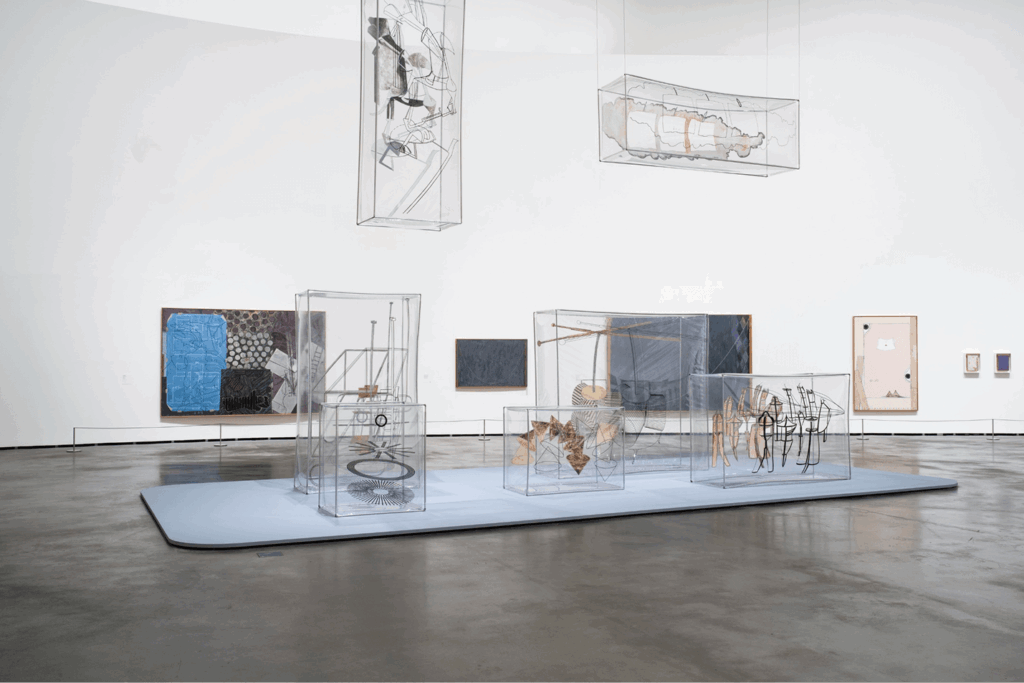
One of the most influential artists of the postwar period takes center stage in Jasper Johns: Night Driver, on view at the Guggenheim Museum Bilbao from May 29th to October 12th, 2026. Bringing together nearly 140 works created across seven decades, the exhibition offers a far-reaching survey of an artist whose impact extends across Pop Art, Minimalism, and Conceptual Art.
A journey through seven decades of artistic innovation
Taking its title from a 1960 drawing that Johns identified as his first deeply personal work, Night Driver follows the evolution of his practice from the 1950s to the early 2000s. Paintings, sculptures, drawings, prints, an artist’s book, and stage design reveal both the breadth and restless curiosity of his career.
Born in Augusta, Georgia, in 1930 and raised in South Carolina, Johns arrived in New York in 1953, where close relationships with Robert Rauschenberg, John Cage, and Merce Cunningham helped shape his artistic direction and the wider cultural landscape of postwar America.
How a Pop-Art pioneer changed the language of art
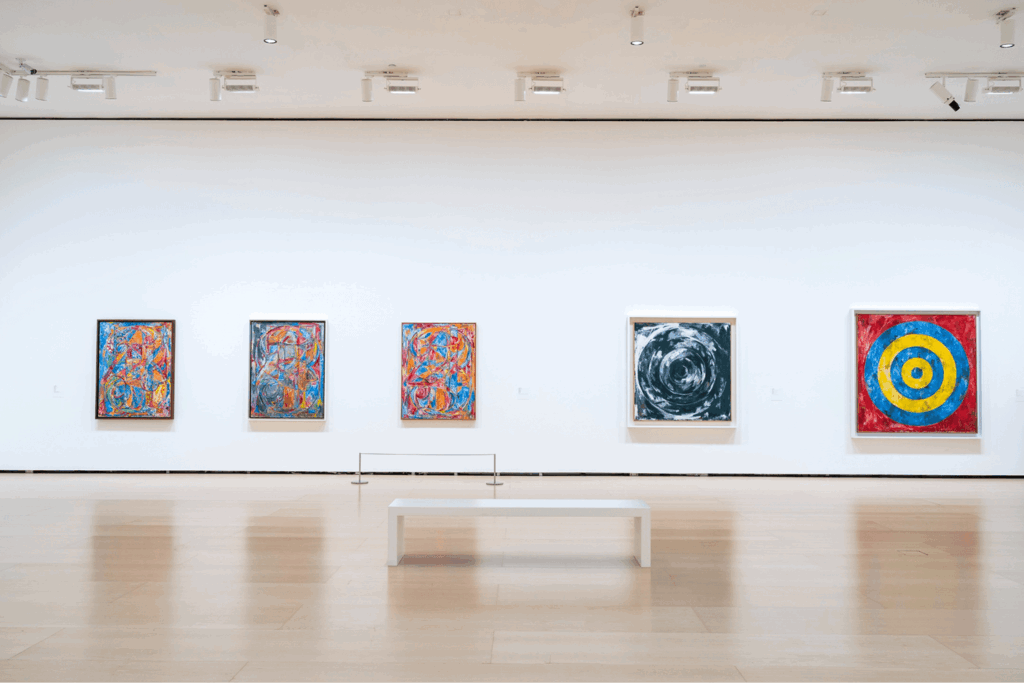
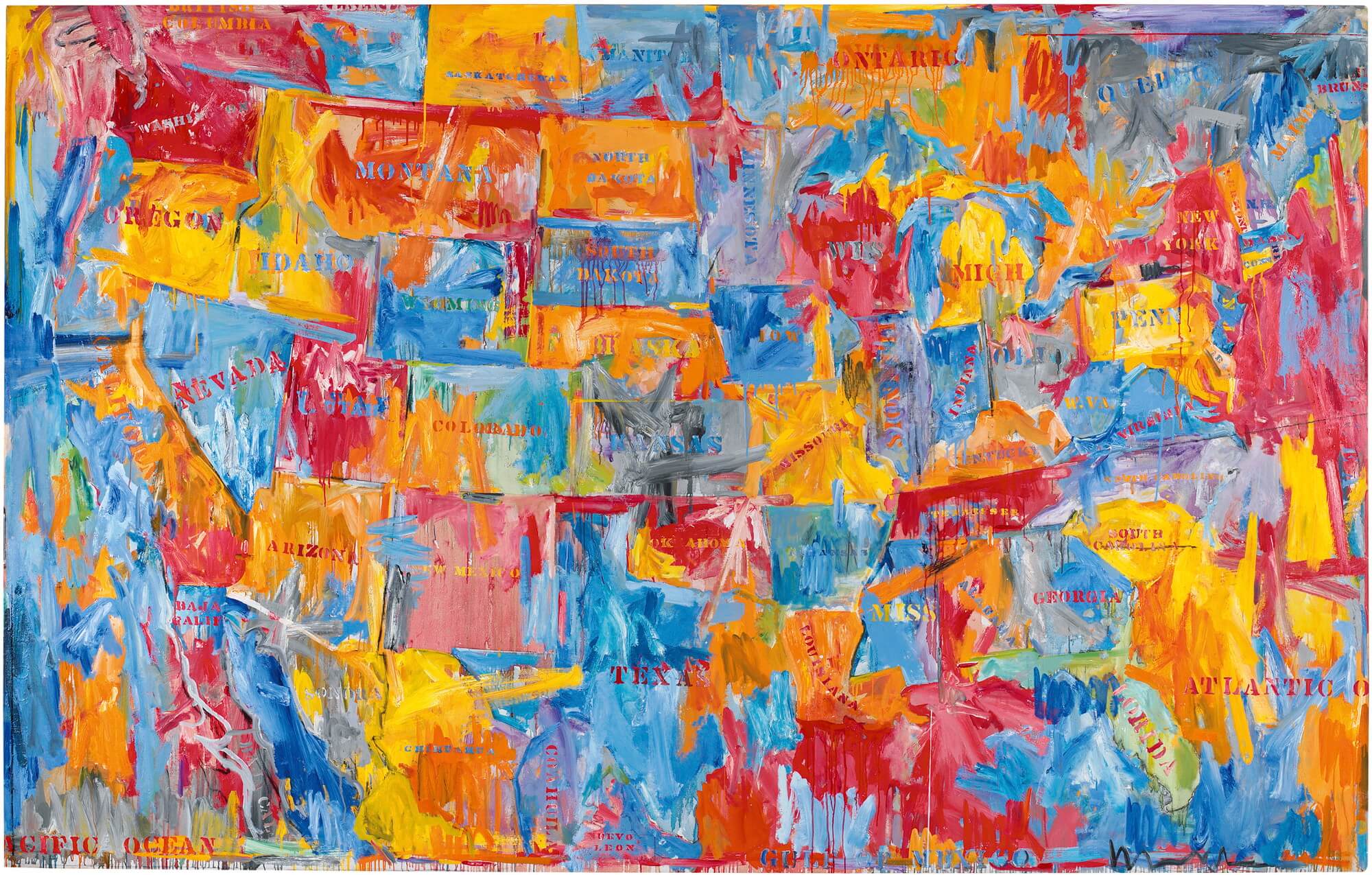
Johns redirected attention away from the emotional intensity of Abstract Expressionism toward familiar symbols drawn from everyday life. His first American flag paintings, created between 1954 and 1955, introduced a visual vocabulary that later expanded to targets, numbers, letters, and maps.
These recurring motifs turned ordinary signs into subjects of inquiry, prompting viewers to question perception, meaning, and representation. First exhibited at Leo Castelli Gallery in 1958, the works brought immediate recognition and helped redefine the course of contemporary art.
Highlights from the Jasper Johns retrospective
Among the exhibition’s highlights are celebrated works featuring flags and other universally recognisable symbols. Johns treated these images not as emblems but as visual facts, creating a productive tension between object and image, reality and interpretation.
The retrospective also examines Johns’s work from the 1970s and 1980s, including his intricate crosshatch paintings. Built from dense networks of repeated marks, these compositions focus on rhythm, perception, and process. Nearby, works inspired by the four seasons weave autobiography, memory, and art-historical references into increasingly complex visual structures.
Several galleries highlight Johns’s later practice, including the acclaimed Catenary series. Inspired by the curve of a suspended string, these works combine physical presence with intellectual inquiry, reflecting his enduring interest in space, perception, and representation.
Layered, elusive, and endlessly rewarding, Jasper Johns: Night Driver offers a rare opportunity to experience the full scope of an artist whose ideas continue to resonate across contemporary culture.