Courtesy of DAVY DENKE
Photography by LAURA ALVAREZ
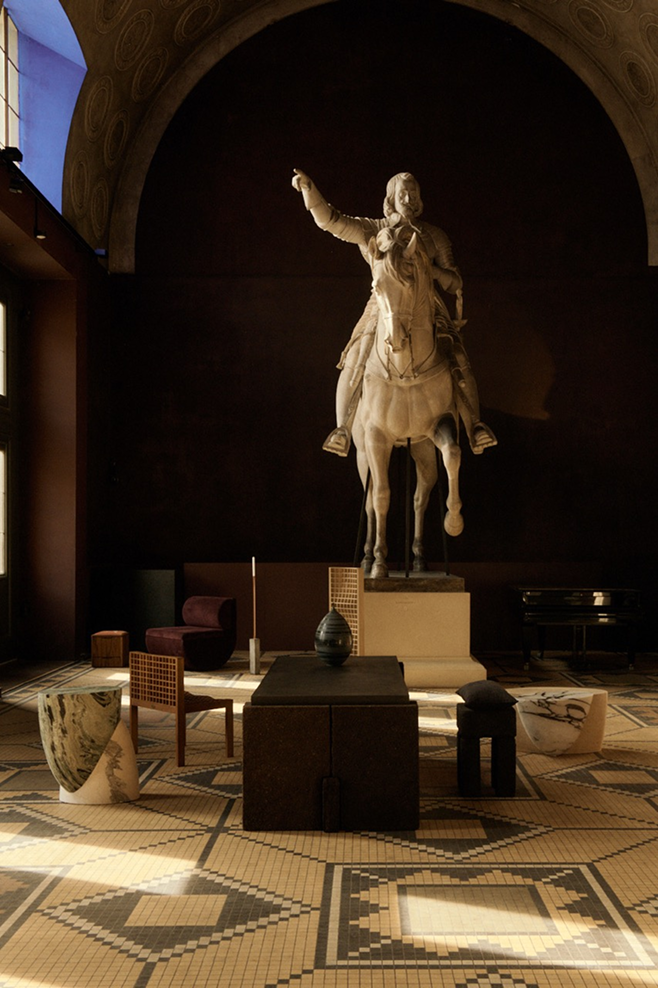
Photography by STEFANIA ZANETTI
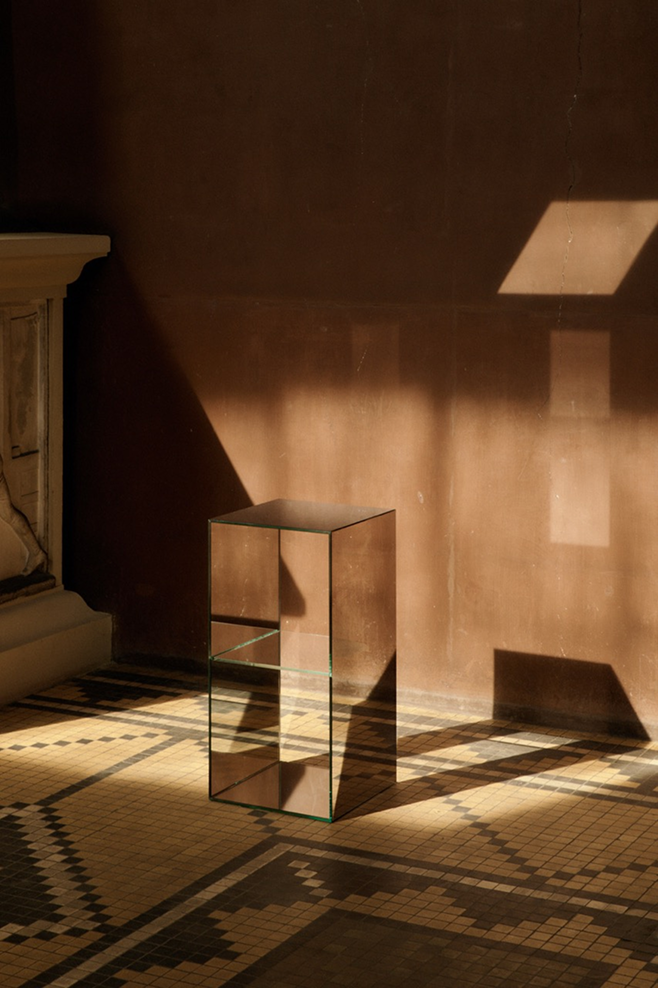

Photography by STEFANIA ZANETTI
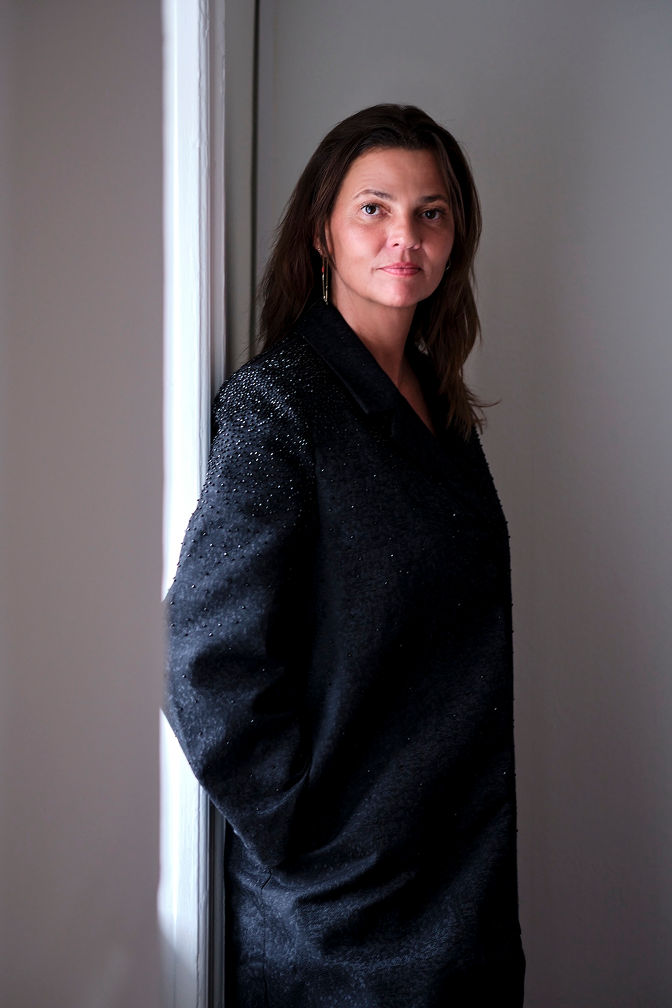
For Signe Byrdal Terenziani, sustainable design is an act of optimism—an ethos that places Copenhagen’s 3daysofdesign at the vanguard of progressive thinking. With next year’s dates already announced, Byrdal reflects on why this moment matters.
Signe Byrdal Terenziani envisions vulnerability, transparency, and trust as central to a more sustainable future. Her words are disarmingly candid; a sense of radical humility suffuses her ideas. She offers us her view on happiness, on wanting things. In a time so obsessed with novelty and quantity, we perpetuate a frenzied, vicious cycle of longing and destructive dissatisfaction. Byrdal seeks to interrupt this pattern. Change, she insists, begins when we value the present.
hube: With 3daysofdesign having just concluded, it feels fitting to begin with this year’s theme: Make This Moment Matter. The word matter seems carefully chosen—it evokes materiality and physical substance, but also emotional weight, intention, and value. Previous editions have been guided by themes such as Keep It Real, Dare to Dream, and Hand, Head and Heart. How do these annual themes come into being? What helps determine the ideas or conversations that deserve our collective attention at a particular moment?
Signe Byrdal Terenziani: Each theme is the evolution of a question we ask ourselves long before we ask it of others. We spend a great deal of time listening to designers, architects, curators, interior designers, artists, artisans, manufacturers, students, and journalists. We keep our finger on the creative pulse and stay attuned to the mood shifts in society.
Every year we notice something, an imperative, that we need to focus on next. Sometimes we need courage. Sometimes we need honesty. Sometimes we need imagination.
While many designers reminisce about the past or speculate about a future unknown, this year we wanted to explore that profound place in between. A place most often overlooked: the present. The richness and the rewards of living in the moment, knowing that a moment only becomes significant when we choose to inhabit it fully. We wanted to empower people with the realisation that we can make moments matter. When we design with intent, our actions will have a ripple effect.
We chose the word matter because it implies to two parallel paradigms. It refers to the substance from which design is made, and it’s also what makes our actions significant. Meaningful design has always lived at the intersection of both.
Our festival themes are invitations. Make This Moment Matter is rooted in the power of now. Ultimately, with all of our themes, we want people to feel emotionally engaged, enlightened, and inspired beyond our three days.
h: The Copenhagen Design Week programme celebrates both emerging designers and established voices: community over competition. Yet behind this openness lies a carefully considered selection criteria. How do you balance curation with inclusivity and accessibility?
SBT: We conceived of Copenhagen Design Week as a meeting place for curious minds. Part of what makes 3daysofdesign unique is that we are an exclusive festival that is inclusive of everyone to attend. We are firm believers in democratic design, and that design should be accessible to everyone.
We provide a global platform of exposure for a diverse cross-section of design disciplines, from upstarts to icons; a platform for the unseen and unknown names, alongside well-established designers. Every iconic brand was once an upstart.
We go out of our way to make Copenhagen Design Week an opportunity for designers to be on equal footing. Even our structure for participating in 3daysofdesign is democratic. A young, upcoming designer and a global brand may have completely different resources, but they can ask equally important questions, resulting in completely different creative outcomes.
Our curation process is very inclusive. It’s about ensuring a cohesive framework for these different voices to be heard. Our selection criteria involve honouring originality, authenticity, integrity, and proven sustainable practices. It creates the conditions for meaningful design that encompasses diverse cultures, disciplines and scales.
Unlike other design festivals or events, at 3daysofdesign we actively advocate for community as opposed to competition. When our exhibitors join together as a collective force, they can see that design has more power as a catalyst for change.
Innovation rarely happens when everyone in the room thinks alike. Design truly thrives when it resists becoming an echo chamber.
h: Good design is often understood to be the perfect union of form and function. Yet 3daysofdesign seems to redefine ‘good’ as a verb rather than an adjective: not simply good design, but design that does good. As curators and hosts, how do you encourage designers to think beyond conventional measures of success?
SBT: Good question. We shape our environment and, in turn, our environment shapes us. When an object is imbued with emotion, it resonates with people beyond its form and function. Design is never neutral. It should be meaningful to the people it’s meant for.
In an era of overconsumption and accumulation, we ask people to consider what makes a design worth keeping. Does it add value to our lives? Does it enhance our wellbeing? Does it foster a sense of belonging? Is it mindful of the planet? All of which begs a fundamental question: what makes a design worth making in the first place?
To find the answer, you have to reverse-engineer the question. It starts by designing with purpose. Knowing the why behind what you create, having the intention to design something good, that does good.
h: In a time when newness and novelty seem to be everything, how do we distinguish true innovation? What does it mean for something to be genuinely innovative?
SBT: Many people confuse the two. You could say that novelty surprises us, while innovation changes us.
Something can look radically different but serve no other purpose. Conversely, it’s also fair to argue that novelty offers a refreshing take on assumptions, questioning the things we take for granted.
However, a quiet improvement in how a design is made, lived with, or repaired may have a far greater impact than an object that simply attracts attention.
Real innovation begins with humility, asking “What if we approached this differently?” rather than, “How do we make something no one has ever seen before?”. The most enduring innovations often seem obvious in hindsight because they solve problems we have now stopped noticing.
h: Throughout the last decade, innovation has become increasingly inseparable from environmental consciousness. Innovative design takes into account the ecological, ethical, social and cultural impacts of a product. Yet we are still only at the dawn of this new mode of practice. What have we yet to learn? Is there anything you feel is being left out of our conversations around sustainability?
SBT: As a festival, it’s a prerequisite for every exhibitor to demonstrate their commitment to sustainable practices. Beyond that, we encourage people to question why we produce, how much we produce, and what we truly value.
We often speak about sustainability as a technical challenge. A question of methods and materials, but it’s also about a mindset.
In my view, happiness isn’t about having all the things we want, but wanting all the things we have.
What I see as missing from the conversation is the need to expand our understanding of sustainability beyond materiality. Relationships are sustainable. Knowledge is sustainable. Artisan techniques, local craftsmanship, repair traditions, and intergenerational learning are all forms of sustainability. Because, they preserve continuity rather than simply reducing damage. It’s about preserving the traditions of people who have paved the path before us.
It’s about making considered choices, accepting responsibility, and considering the consequences of today’s actions on tomorrow. Repurposing waste is an excellent example of changing our mindset. Seeing the potential in something discarded as something worth keeping and reimagining.
h: Speaking of accountability, an acknowledgement of the waste, off-cuts, leftovers and trimmings is integral. Cultivating awareness, more and more designers are choosing to exhibit process as well as product. What can we learn from this renewed emphasis on craft and making?
SBT: When we only see the finished object, we can easily forget that every object has a history. Process reminds us that design is a sequence of choices, experiments and revisions. There is something profoundly human about allowing those traces to be visible.
Craft teaches patience in a culture that celebrates immediacy. It reminds us that value often accumulates slowly. And that we should cherish designs made by humans, for humans. When designers reveal their off-cuts, failures and iterations, they invite respect for materials, for their skills, their labour and their time.
In this context, transparency allows us to appreciate not just what we see, but everything behind the scenes that makes an idea reality.


Photography by MATTEO BELLOMO

Photography by LAURA ALVAREZ

Photography by STEFANIA ZANETTI
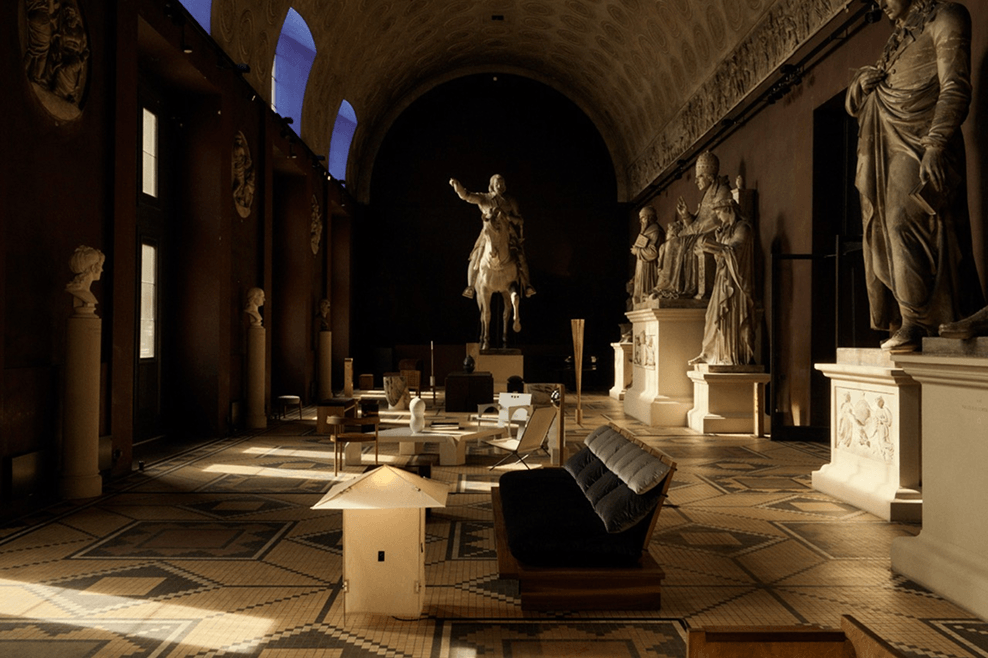
Photography by ANDREAS AICKA THOMSEN

Photography by ANDREAS AICKA THOMSEN

Photography by ANDREAS AICKA THOMSEN


Photography by LAURA ALVAREZ

Photography by LAURA ALVAREZ

Courtesy of DAVY DENKE
h: There is a certain vulnerability in revealing one’s process; the inner workings of the machine, behind the scenes and behind closed doors. How can honesty and transparency encourage creative risk and help us let go of our inhibitions?
SBT: Perfection can often be a barrier to creativity because it leaves no room for discovery. When designers share their process, they remind us that uncertainty is an essential part of creating. Creative projects often start with a blank page. Out of that uncertainty comes clarity.
Yes, there’s a certain degree of vulnerability. But transparency creates trust. When you share the creative challenges you face, you are inviting people to join the journey. Instead of saying “Look what I’ve achieved,” you’re saying, “Come with me while I figure this out.”
Openness and generosity make experimentation less intimidating. It gives people permission to fail, to act without having all the answers. Creativity takes courage. When you take the road less travelled, it may not be the easiest road. But, it’s the right road to take right now.
h: Some things truly feel like they have never been seen or done before. They stop us in our tracks and force us to pause. We often speak about timeless design as something aspirational. In a rapidly changing world, timeliness may be just as valuable. In light of sustainability, should we be striving for timeless design, timely design, or both? How would you describe the difference between the two?
SBT: I don’t think timelessness and timeliness are opposites. In fact, one can often lead to the other. A timely design is a reflection of the conditions of the present. It captures the zeitgeist of current ideas and issues. If the concept and its expression touch something fundamentally human and everlasting, then a timely design could eventually become timeless. Even iconic.
While a timeless design has an enduring appeal that defies trends, it never looks out-of-date. When people talk about sustainable designs, they’re not only referring to aesthetic appeal. They’re also referring to a design’s material durability, is it repairable and long-lasting?
A balance of both timeless and timely design involves creating objects and spaces that feel current and relevant, yet able to stand the test of time.
It would be impossible to create a design that lasts for eternity. Think of all the objects we grew up with that subsequently became obsolete. The future is shaped by the attention we give to the present. Tangibles like technology will continue to advance and evolve. The extra challenge is the intangible: it’s emotional longevity.
h: This year’s festival must still be so fresh in your mind. How does it feel now that it has come to a close? Looking ahead to 3daysofdesign 2027, how do you anticipate the industry evolving over the coming year? Through change and challenges, what values do you feel we should hold on to?
SBT: Right after the festival ends, there is always a curious mix of exhaustion and gratitude. Months of planning dissolve into memories almost overnight. But, what remains are the conversations, the unexpected encounters, the ideas that continue to reverberate long after the exhibitions are over.
I think our industry is entering a period where collaboration will become more valuable than individual brilliance. The challenges we face are too interconnected to be solved individually and in isolation. Design will increasingly become a cross-pollination of influences and disciplines.
As Copenhagen’s Official Design Festival, we want to create opportunities for knowledge-sharing, such as our Symposiums, where we invite thought leaders and industry insiders to share their insights, impressions and findings. We delve into relevant topics with global guest speakers in a format that’s open to dialogue. It’s not a lecture.
It’s part of why 3daysofdesign is more than just a showcase. It’s a discovery-driven, multi-sensory experience designed to be enlightening.
If there is one value I hope we never lose, it’s curiosity. Curiosity asks questions before rushing towards answers. It keeps us open to different perspectives, different cultures and different ways of creating.
As I see it, design is an act of optimism. Every object, every space and every idea carries an implicit belief that tomorrow can be shaped differently from today. Collectively we can help design the future before it arrives, the world we would like to live in. That, in my mind, is something worth protecting.


Photography by MATTEO BELLOMO

Photography by LAURA ALVAREZ

Words: MARTA TERESA