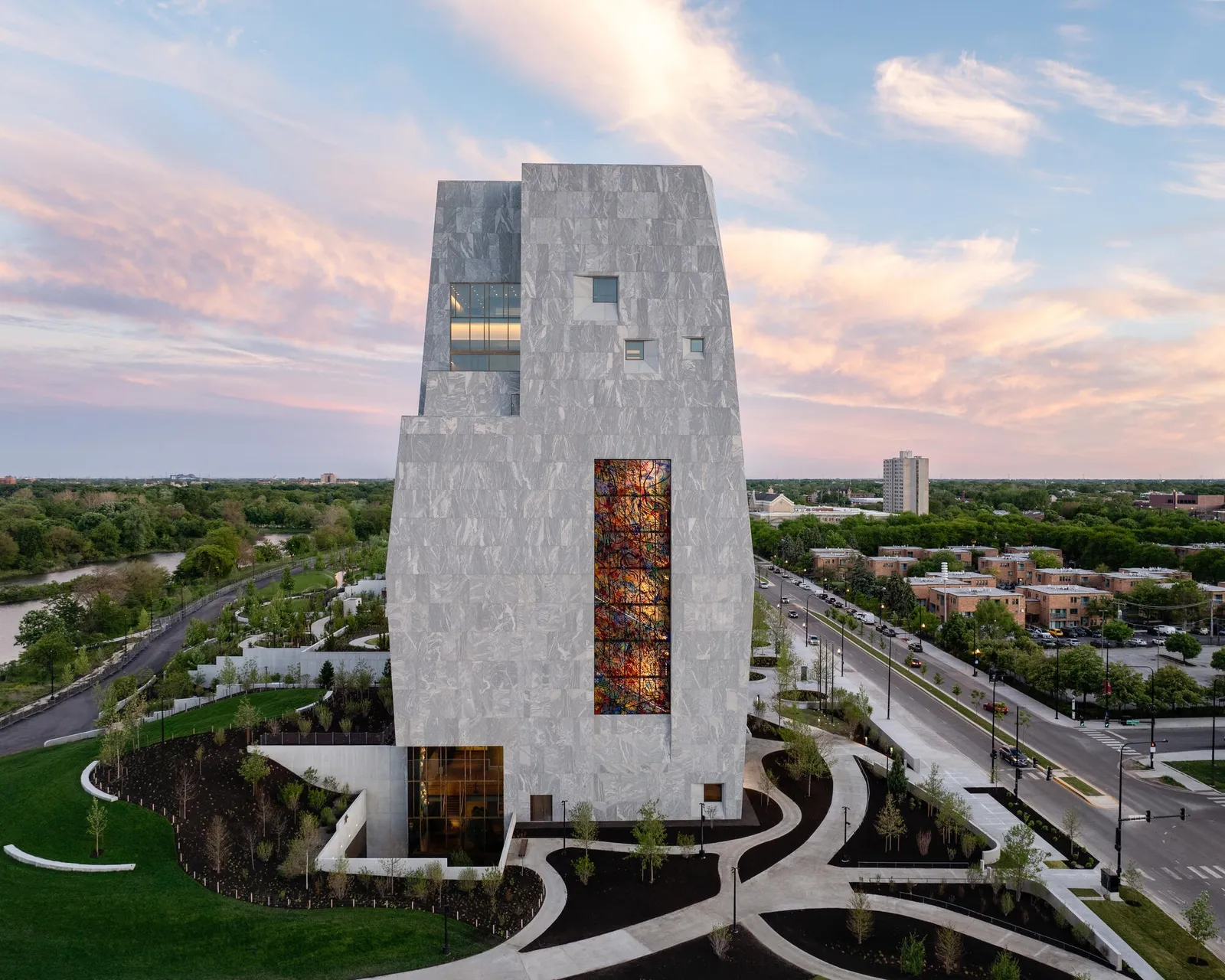
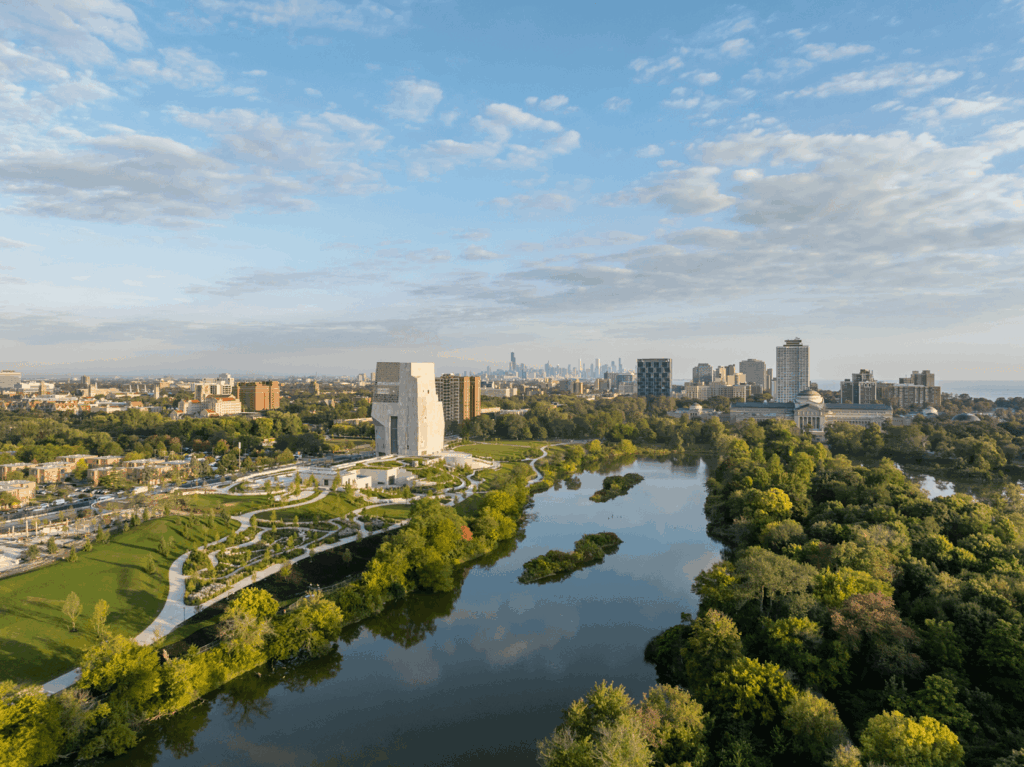
Opening to the public on June 19th, 2026, in Chicago’s Jackson Park, the Obama Presidential Center arrives as far more than a museum. Designed by architects Tod Williams and Billie Tsien, the 19.3-acre campus brings architecture, landscape, art, and civic life into conversation, creating a destination dedicated to participation, dialogue, and community.
Located on the South Side, where Barack Obama began his work as a community organiser, the Center reflects the values that have long defined the Obamas’ public service: opportunity, accessibility, and collective engagement.
A new vision of architecture
For Tod Williams and Billie Tsien, the ambition extended well beyond creating an iconic structure. Their vision was a place where people could gather, learn, exchange ideas, and build connections.
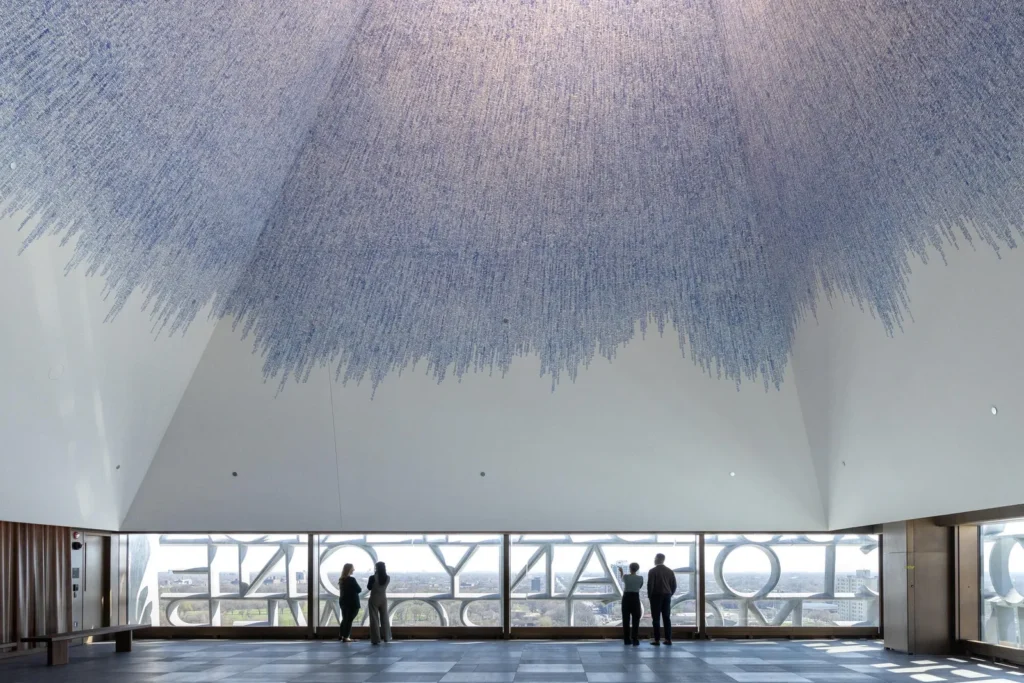
Rising from the center of the campus is an eight-story museum tower clad in hand-finished New Hampshire granite. Inspired by four hands reaching skyward, the building strikes a balance between symbolism and openness. Etched surfaces, carved corners, and a monumental glass artwork soften its presence while guiding visitors toward the Sky Room, an observation space overlooking Chicago’s South and West Sides.
Surrounding the museum is a network of public amenities, including a Chicago Public Library branch, gardens, meadows, a fruit and vegetable garden, a basketball court, a two-acre playground, picnic areas, beehives, and expansive green lawns. Developed with landscape architect Michael Van Valkenburgh, the grounds weave seamlessly into the historic landscape of Jackson Park.
Art as a catalyst for democracy, memory and change
Art is woven throughout the Obama Presidential Center, with more than 28 commissioned works installed across the campus.
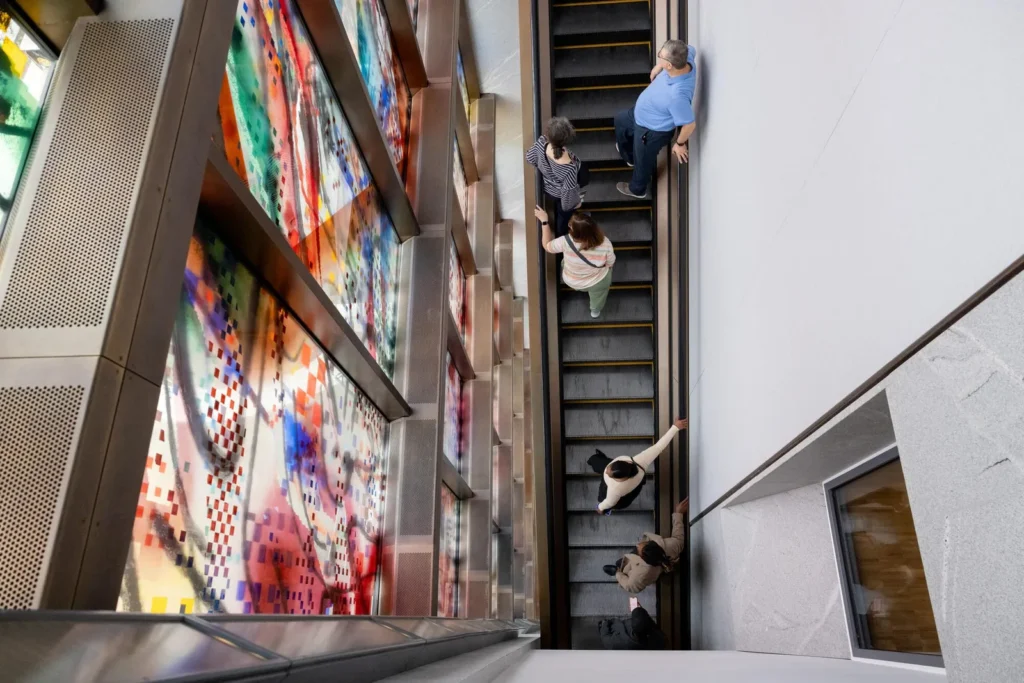
Among the most striking is Julie Mehretu’s Uprising of the Sun, an 83-foot glass work inspired by President Obama’s Selma anniversary address. Visible from within the museum, it floods the visitor experience with light, movement, and historical resonance.
Elsewhere, Mark Bradford’s monumental three-story painting City of the Big Shoulders anchors the public Our Story Atrium, while Jenny Holzer’s Freedom Riders recasts FBI records into a poignant tribute to civil rights activists.
Additional commissions include Nick Cave and Marie Watt’s textile-based This Land, Shared Sky; Rashid Johnson’s mosaic Broken Men; Theaster Gates’ memorial work To See What They Could See; and Carrie Mae Weems’ The Cool Blue Wind, which reflects on Obama’s 2008 election through photography, music, and collective remembrance.
Many of the works occupy outdoor and freely accessible spaces, reinforcing the Centre’s commitment to making art part of everyday public life.
Spaces designed for civic imagination
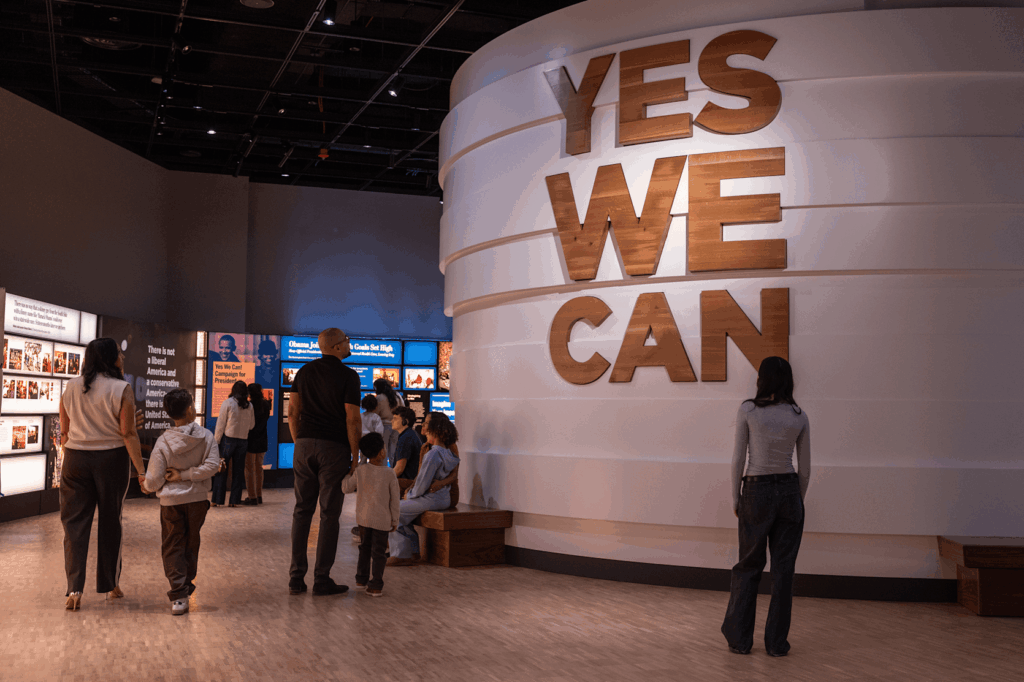
Across four levels, the museum traces the story of Barack and Michelle Obama through interactive exhibitions, personal objects, multimedia installations, and participatory experiences centred on leadership, democracy, and social change.
A highlight is the meticulously recreated 2014 Oval Office, developed with interior designer Michael S. Smith, who also shaped the interiors of the Obama White House.
Beyond the galleries, visitors encounter a rich network of communal spaces, including the Gwendolyn Brooks Auditorium Platform, Steven Spielberg Studio, Oprah Winfrey Courtyard, John Lewis Plaza, Maya Angelou West Dining Terrace, and Eleanor Roosevelt Fruit and Vegetable Garden. Each pays tribute to figures whose influence has shaped culture, public life, and social progress.
A center built around possibility
The Obama Presidential center challenges conventional notions of what a presidential institution can be. Its gaze is directed not only toward history, but toward the future, creating a platform for conversation, creativity, and civic engagement.
As Barack Obama envisioned, the Center stands as “the opposite of all presidential libraries”: not a static archive, but a living civic space that encourages visitors to consider their own role in shaping society.
Opening on 19 June 2026, the Obama Presidential Center ranks among the most ambitious cultural projects in recent American history—a place where architecture, art, and community converge in service of possibility and action.
All images courtesy of OBAMA PRESIDENTIAL CENTER