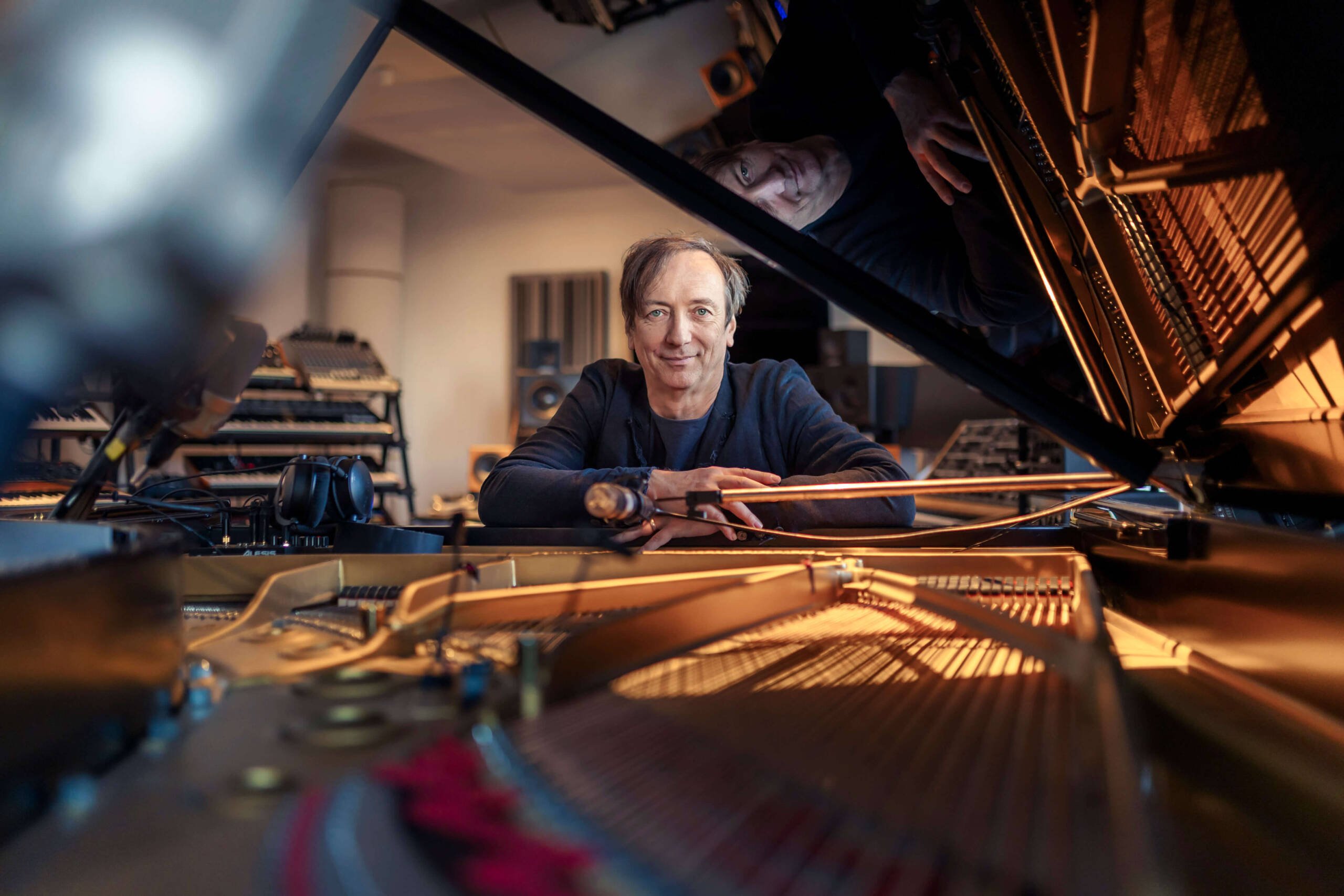
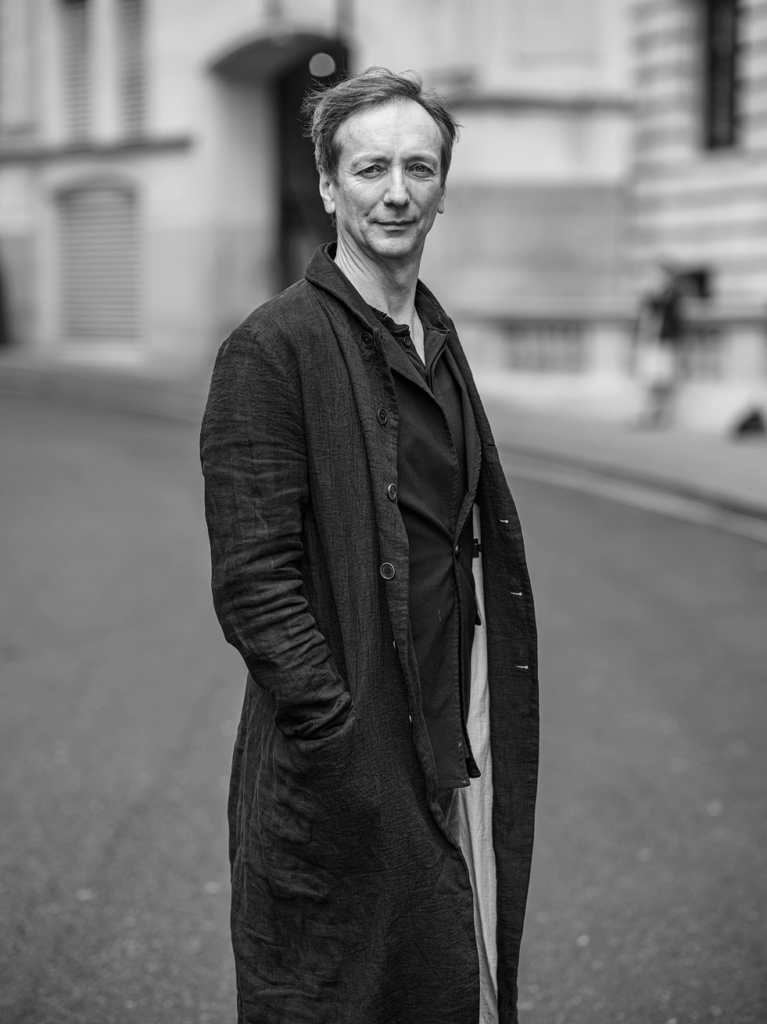
Volker Bertelmann, known as Hauschka, is not easy to categorise. The German composer and pianist has spent decades navigating the different worlds: prepared piano and techno, concert halls and film sets, abstract soundscapes and an Oscar-winning score. His path was never charted toward a specific goal, but instead shaped by a series of questions. Early on, Volker tried his hand at medicine and economics—anything to sidestep music—yet every pursuit drew him deeper into the science of sound.
Through experimental sound design—from objects placed inside his piano to obscure instruments like the Cristal Baschet—Volker consistently invents fresh approaches that elude cliché entirely. His music for All Quiet on the Western Front and Conclave earned global acclaim, but the path there was anything but straight. His curiosity leads him to invent and discover instruments and approaches that are the antithesis of cliché. In this conversation, Volker Bertelmann reflects on independence, improvisation, and why the wrong turn is sometimes the rightest of all.
hube: You’ve mentioned that you’ve spent time trying to figure out your role as an artist and what resonates most deeply with you. How did your diverse musical experiences—from your early experiments to composing film scores—shape your artistic identity?
Volker Bertelmann: It’s important to be independent in your art form and in your expression. Collaboration is also vital to growth, because you work with other art forms and exchange ideas. Making film music is obviously one such collaboration.
At the same time, it’s important to have your own standpoint, your own art, which you can only really experience by making your own records or doing concerts. That gives you a much stronger chance of sharing your perspective with others. Ideally, they have a clear standpoint too. Often, though, people hire you precisely to provide a distinct point of view. For my artistic identity, it is very important to constantly work in different fields: film music, records, ballet, or theatre. That means a constant change of viewpoint and the people I work with.
h: Interestingly, you mentioned that you prefer to work with someone who has a strong viewpoint, because usually, sometimes, we tend to put ourselves in the spotlight. But when strong opinions collide, there is something beautiful that’s being born out of that.
VB: Absolutely. It’s obvious we cannot always cope with each other, but things become much clearer when somebody has an actual idea. Having a firm viewpoint doesn’t mean refusing to compromise. Ideally, you hold a strong opinion while remaining flexible enough to find value in the other opinion as well. You can only do that when you know exactly where you stand and what you’re willing to give up. Otherwise, decisions become emotional rather than rational; you get hurt or defensive. Having a strong opinion and viewpoint makes you more resilient.
h: How does your approach to creating music for film differ from the more personal work you do with Hauschka? Is there an aspect of filmmaking that challenges or enriches your music-making process in a way that your solo work doesn’t?
VB: Collaborating with a strong filmmaker gives you lots of ideas about music. As Hauschka, I have complete freedom. I can do whatever I want—I can even choose to make music with just a bottle and a table, and make a record with that. Film music, however, is always connected to a filmmaker’s vision. As a musician, you support a story, and the spotlight is not only on you. You find a way to give the film another dimension when it’s already powerful. I think that’s a wonderful feeling and a very different approach from creating purely for yourself and making your own record. Filmmaking broadens my experience enormously. I have also learned a lot from others with a different perspective.
h: What does your process of composing for film usually look like? Do you prefer to develop musical themes and concepts before shooting begins, or do you find that key scenes shape your work more after seeing the final cut?
VB: It depends on a couple of things. One is the director’s wish—some prefer to have the music before shooting the film. A lot also depends on the script. I’m a visual person, so I prefer to see what the picture will look like. Even though you can read a story, your interpretation may be completely different from what you see. Ideally, you need to get a sense of the colour and pace.
I usually ask for a first draft of the film, but I try not to get too involved with it at first. It’s nice to take a step back and experiment when you’re not yet too preoccupied with the story. Then you can come up with a couple of scenarios and compositions, and search for instruments or collaborators you want to involve. Very often it’s too late once you’re deep in writing—you simply have to rush to make it work.
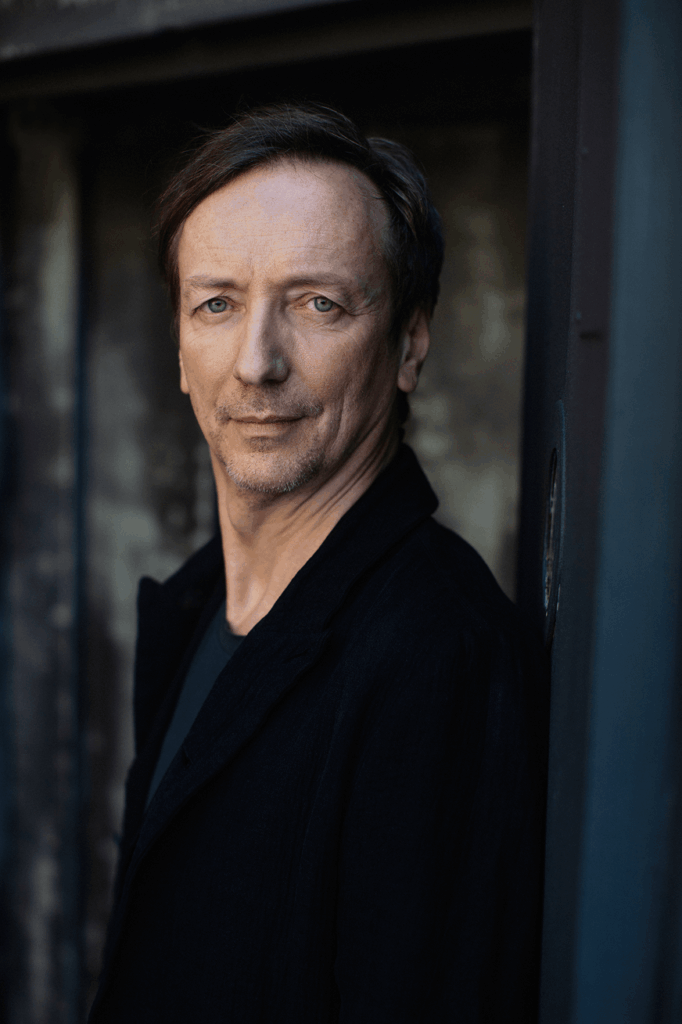
Photography courtesy of HANNES CASPAR
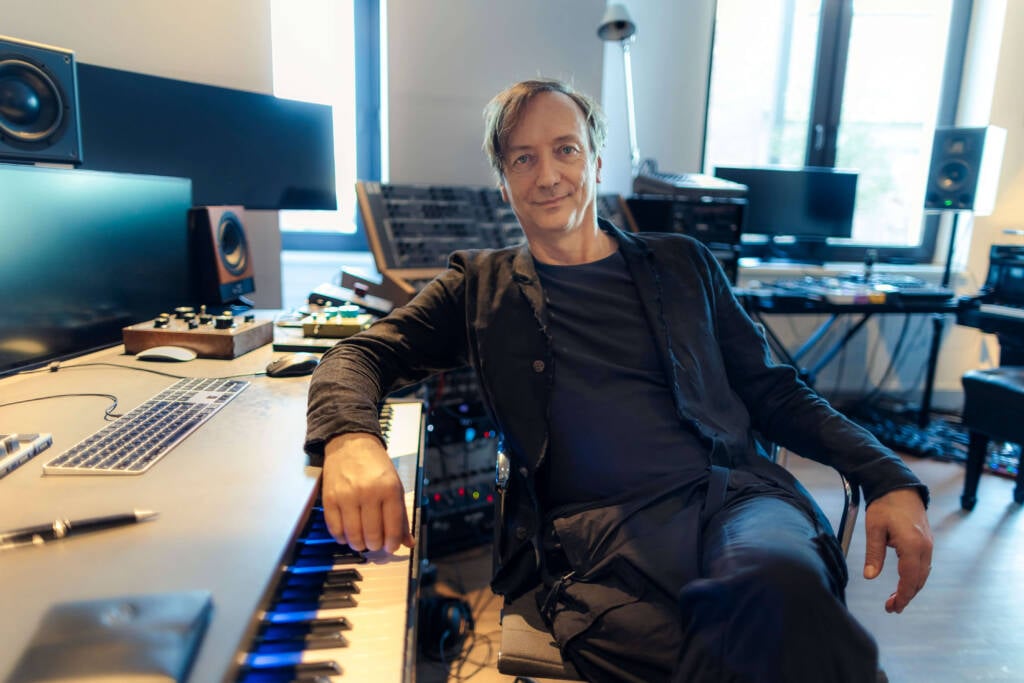
Photography courtesy of EUGEN SHKOLNIKOV STUDIO
Photography courtesy of MISAN HARRIMAN