Roger Gastman beyond the streets graffiti culture street artists

Truths of The Street: a conversation with Roger Gastman

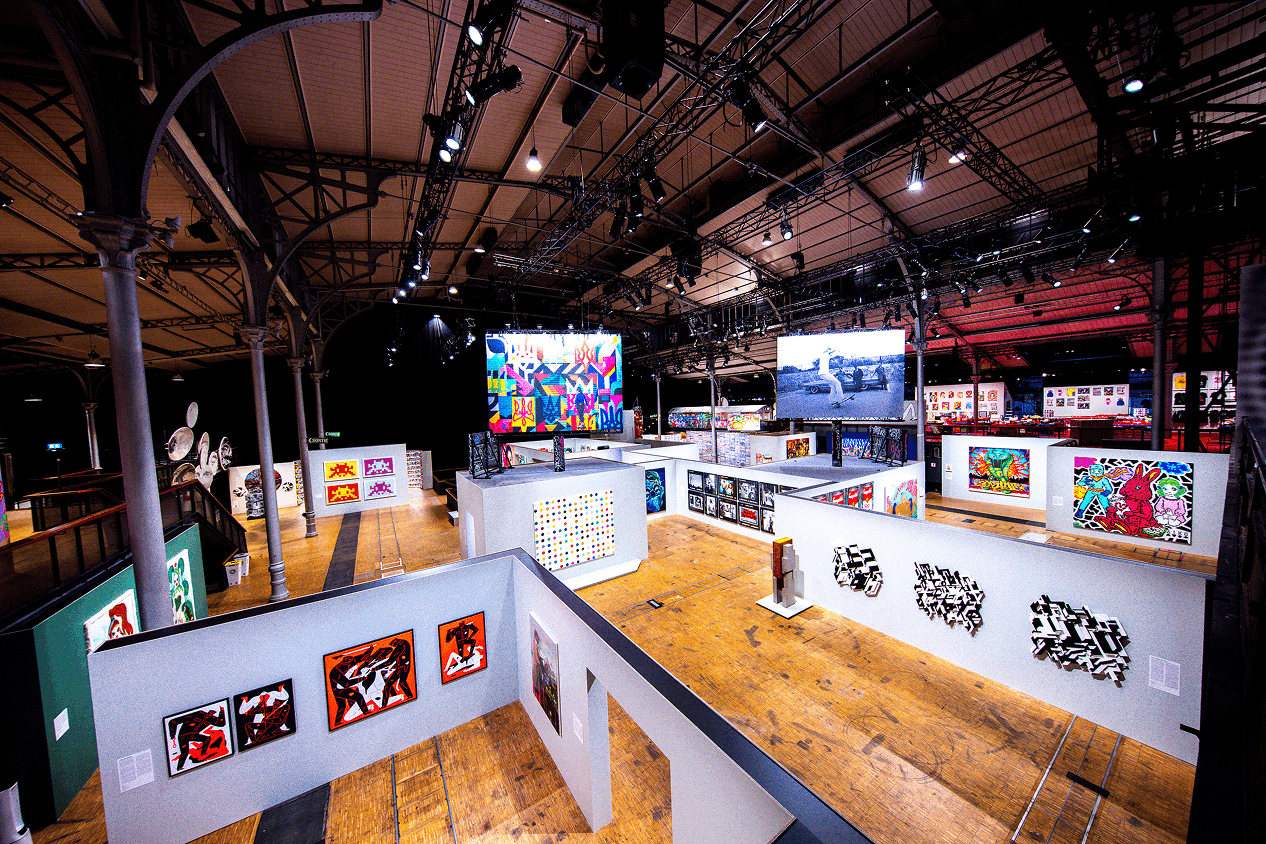
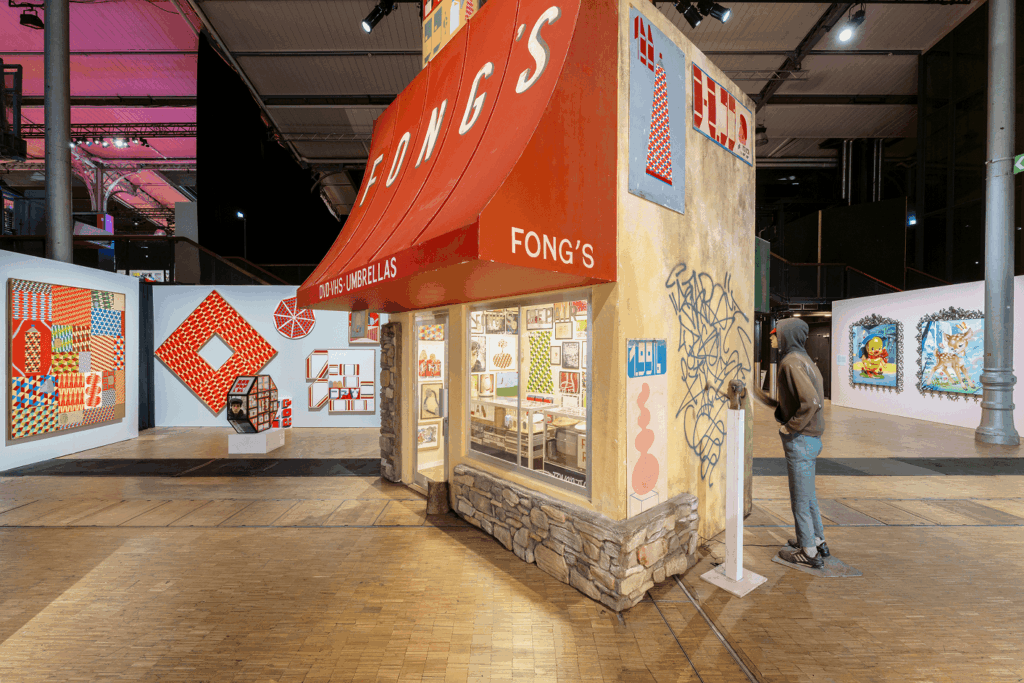
With Beyond the Streets currently on view at Grande Halle de la Villette in Paris—from now until August 23, 2026—Roger Gastman reflects on his life and work as a storyteller, archivist and one of the foremost champions of graffiti culture. Above all, Gastman aspires to educate through entertainment.

In awe of the legendary American street artists of the ’90s, Gastman began taking photographs and trading graffiti prints as a teenager—an obsession that has unfolded into a uniquely multifaceted career spanning curation, anthropology, publishing and more. He recalls those early days as a time defined by community, loyalty, trust and mutual respect. These values would gradually form the foundations of Beyond the Streets.

He refers to himself as a ‘student’ of the streets and their artists. Gastman understands the power of teenage revelry, disruption and defiance. To him, this youthful bravery is sacred—something to be protected and celebrated. Beyond the Streets becomes both a megaphone and a magnifying glass: an attentive celebration of graffiti culture, its communities and the freedom that fuels them.

Gastman’s work speaks to the human need for public self-expression. There is an immediacy to the act of writing on walls: a primal need to say what you want, by any means necessary.

hube: Beyond the Streets is more than an exhibition title—it feels like a statement about movement, freedom, and a culture that refuses to stay in one place. When you started building this platform, what did you want people to understand about graffiti and street art beyond the usual stereotypes?

Roger Gastman: Beyond the Streets was born out of the first show we did at MOCA, in Los Angeles, Art in The Streets (2011). Now, you can see what these artists have gone on to achieve. So many have such incredible studio practices. And of course, a lot of them are still very active on the street.

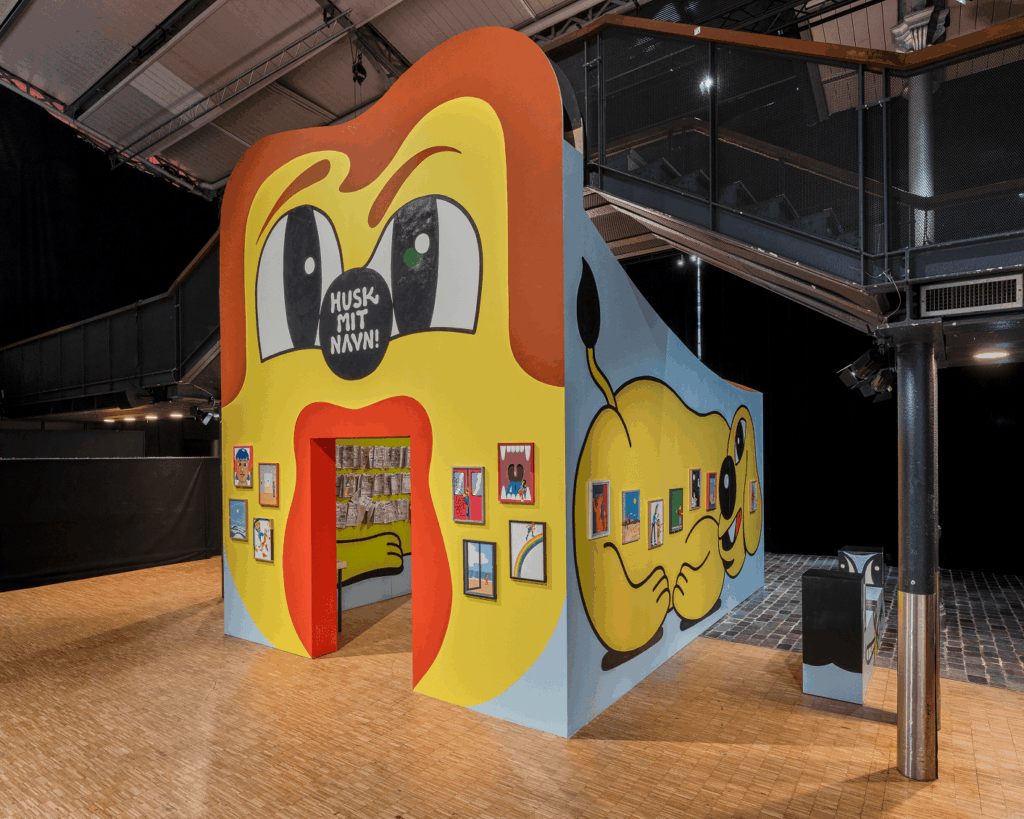
But the goal was never to recreate what was done on the street. The goal was to show the evolution of these artists. Many have gone in completely different directions: from sculpture to pop art, figurative painting and ‘you name it’. Lots of them are still friends, but many of them don’t have a reason to exhibit together anymore. But through Beyond The Streets, they do.

It’s all about education through entertainment. We come up with the most nerdy, historical, ridiculous facts that even the artists in the show don’t know. We have that ‘oh wow’ moment, that ‘I can’t believe you pulled this off!’ moment.

h: Graffiti and street art often exist outside of our existing societal structures. They emerge from places of protest or passion. Many street artists value independence and distance from institutions, some prefer to remain elusive. How do you build trust with artists who may be naturally sceptical of the art world?

RG: I have known most of the artists for almost thirty years. We grew up in the 90s in a community where everyone was active on the streets. You could say I grew up being a student of a lot of them. As an insider, that trust is granted. Actually, I don’t know if I’d call it ‘trust’ as much as mutual respect.

Still, we worked hard for this trust. At different times in people’s careers, their work is completely different, stylistically, et cetera. Our curation has to respect these differences. It’s a large part of the success of the shows: how things are placed, how the work lives in the space.

Roger Gastman
beyond the streets
graffiti culture
street artists
Roger Gastman
beyond the streets
graffiti culture
street artists
Roger Gastman
beyond the streets
graffiti culture
street artists
Roger Gastman
beyond the streets
graffiti culture
street artists
Roger Gastman
beyond the streets
graffiti culture
street artists
Roger Gastman
beyond the streets
graffiti culture
street artists
Roger Gastman
beyond the streets
graffiti culture
street artists
Roger Gastman
beyond the streets
graffiti culture
street artists

h: For more than three decades, you’ve played a pivotal role in broadening the recognition of graffiti culture. What is something that you feel is still misunderstood by the wider public? How do you think the perception of street art has changed since you first entered the field?

RG: Everything has changed. The stories have changed. The public’s interest has changed. Street culture will always be most understood by those who are doing it; getting the right reputation is almost always based in illegal activity. There’s no way around that.

If you want to be a known artist, respected by the community, you have to write on the street. It’s going to be illegal, and you’re going to have to do it for years to get the proper respect.

There’s always going to be that extra rambunctious group of teenage kids that don’t give a crap about the rules, don’t even know the rules, and they just do what they do.

That’s what makes all of these cultures raw and real. This is how they continue to grow. Even the artists who have ‘graduated’ still hear the calling of the streets. They’re continually seeing what’s happening. Those rambunctious kids are inspiring them.

h: It’s a generational thing, and it’s so tied to place and time. Capturing the social and cultural layers of this art form is undoubtedly a challenge. It seems that no single medium can fully communicate these complexities. Why is a multimedia approach so important to Beyond the Streets?

RG: More and more archives come out of the woodwork every year. These continue to tell new histories, which is amazing. We might find a recording of an artist that we thought had never spoken publicly before, who played an important role for six months in the summer of 1973, for example.

If you walk into any traditional art museum, it’s a bunch of paintings on the wall. They haven’t changed their formula in hundreds of years. People come to Beyond the Streets and they see it as a modern museum.

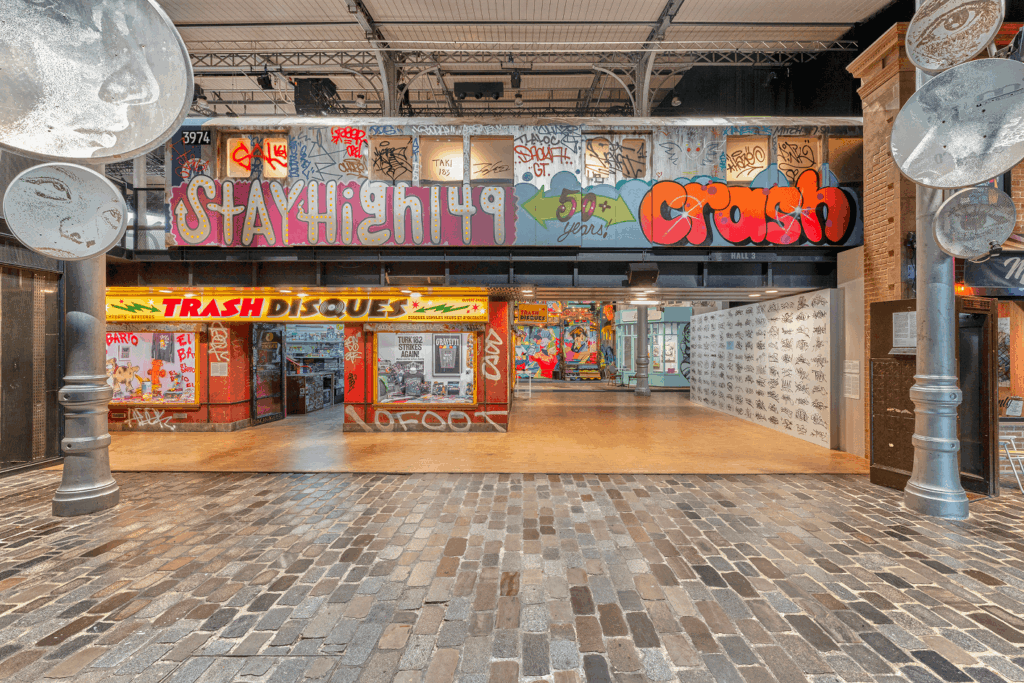
We hold their attention by designing an experiential build-up. We feel it’s very important to keep the audience motivated, energetic, and moving. It’s always education through entertainment. We see people putting their kid in front of a painting and taking a picture. In Trash Records, the mock record store inside Beyond The Streets, we see people explaining to their kids what vinyl records are, playing a record for the first time. It’s a show built for a multi-generational audience to enjoy. That is a rare experience. Beyond the Streets really is for everyone.

h: Beyond the Streets has hosted events and exhibitions around the world, from New York and London to Shanghai. Each city has its own distinct subcultures and underground movements. How do you adapt the exhibition to each location and audience? How does a city itself become part of the exhibition?

RG: We are not calling someone who owns a painting by ‘so-and-so’ and borrowing it for the show. Of course, we include some historical objects and famous works that people know and love, because there are things people expect to see. But artists often create work specifically for our show, and that is not an easy task.

My goal is never to tell a city’s entire history, because everybody has their own version of that history. We work directly with artists to tell localised stories. The graffiti community is a phone call away. If we know a few people, it very quickly opens up and we can start to inhabit the city.

h: You’ve been speaking a lot about change, and how there is never just one version of history. Graffiti and street art have always been connected to the idea of the temporary — murals are painted over, removed, or simply lost beneath the ever-changing surfaces of the city. What does it mean to preserve a culture that was originally built around impermanence?

RG: At a young age, I became interested in the history of the city I grew up in, Washington, DC. It was a small scene. Luckily, there was still a lot of art on the walls at that time. I was lucky to meet a lot of the people that could share its story.

I started trading photos with people. You’d send hard copies of photos that you shot—with a real camera!—to your friend in Chicago, and they’d send photos back to you of what was going on in their city.

I was a student of these histories. I became so fascinated, beyond my city, with the stories of other places. I did what I could to find these histories in books, old newspaper articles, at the library, anywhere. There were some magazines and a couple of films, but there just wasn’t that much out there.

This part of town has one story, this part of town has another story. So you go and talk to people to piece together what the truth is. Sometimes it’s not even just one truth; it’s many truths.

h: Let’s hold on to this phrase, ‘many truths’. It feels like graffiti allows us to hear these alternative truths that other creative institutions don’t let us hear, or choose not to show. Is this how you see it?

RG: Putting your mark on the street is such an immediate thing to do. Whether it’s, you know, ‘Tom loves Sally, Sally loves Tom’, ‘Go sports team’, or a political slogan [laughs]. In the case of graffiti, it’s writing your name over and over again for the sake of fame. In a sense, it’s the art form of advertising anything you want.

When we talk about modern graffiti, this goes back to the mid 60s, and to a few specific cities. But graffiti as an action goes back thousands and thousands of years. It’s the call of the street; it’s the easiest way to communicate any sort of message, anywhere.

And it’s never going to stop, no matter what the laws are. Because people always have reasons to spread their message. And that is something we celebrate, that is something we try to explain. Graffiti at its core is illegal. And that is beautiful, that is hideous—it just depends on who the viewer is. But at least you can leave with a greater understanding.

h: After visiting Beyond the Streets, what else do you hope we leave with?

RG: I don’t look at Beyond the Streets as a graffiti and street art show anymore. I know those are the buzzwords that we constantly keep using. But most people leave Beyond the Streets saying that it was an incredible cultural experience.

People leave feeling inspired and happy. And that’s the idea, to show people a world that they might not have known existed. It’s not just about history and nostalgia. Beyond The Streets is now.

Roger Gastman
beyond the streets
graffiti culture
street artists
Roger Gastman
beyond the streets
graffiti culture
street artists
Roger Gastman
beyond the streets
graffiti culture
street artists
Roger Gastman
beyond the streets
graffiti culture
street artists
Roger Gastman
beyond the streets
graffiti culture
street artists
Roger Gastman
beyond the streets
graffiti culture
street artists
Roger Gastman
beyond the streets
graffiti culture
street artists
Roger Gastman
beyond the streets
graffiti culture
street artists
Roger Gastman
beyond the streets
graffiti culture
street artists
Roger Gastman
beyond the streets
graffiti culture
street artists

Photography by TIM CRAIG for BEYOND THE STREETS

Words: MARTA TERESA

ISSUE 8

issue no8

Discover the new issue — available now