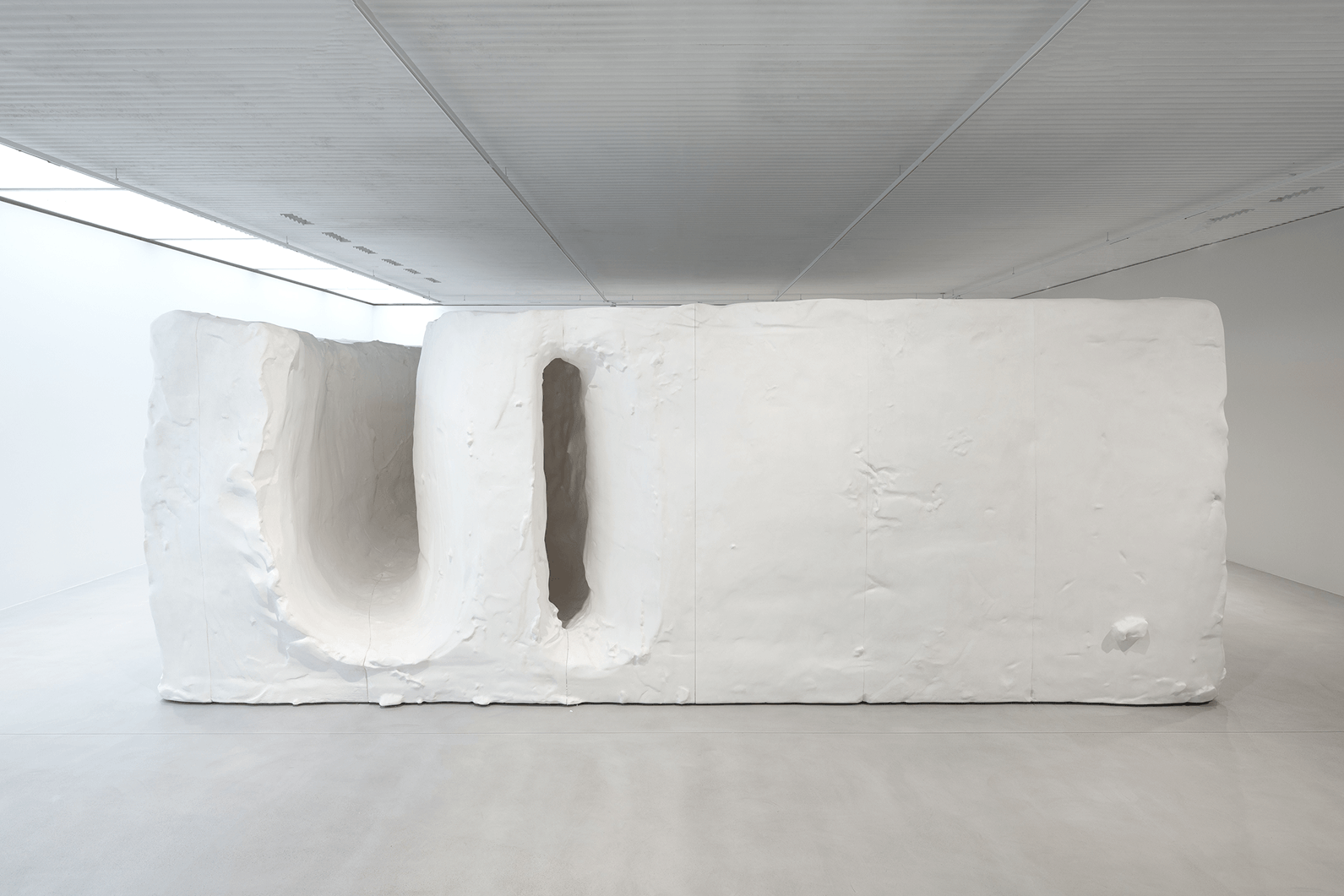
In the deliberate paintings of Francis Bacon and his predecessor Vincent van Gogh, it can feel as if the act of creativity was as much cathartic as it was cataphoric—the brushstrokes and brilliant colours touching while appearing to tear the canvas open like a wound. Their respective portraits and landscapes conjure a sense of foreboding that laces the works with an aesthetic acid. Even Van Gogh’s sunflowers appear charged with a greater intensity. Writing to his brother Theo while suffering from self-doubt, he confessed with characteristic candour: “What would life be if we hadn’t courage to attempt anything?” The light that filled his room, his kitchen, and the corridors of his house became a source of inexhaustible inspiration—something capable of eclipsing darkness and death. Yet those same energies, both decent and devastating, proved essential to the paintings we now recognise as among the most visionary in modern art: forces able to hold the world together even as they threatened to pull it apart. As Van Gogh insisted elsewhere, “though I am often in the depths of misery, there is still calmness inside me.”
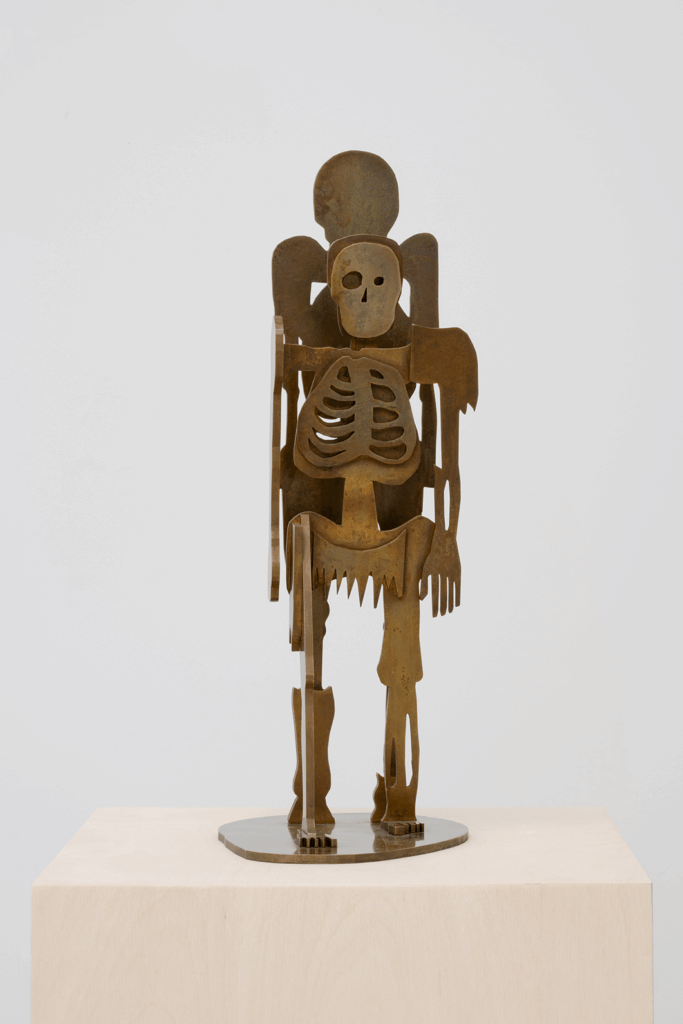
That extraordinary tension—between sorrow and salvation, ruin and originality—fuels the work of the British-born, Los Angeles-based artist Thomas Houseago. For more than three decades he has pursued a practice that buries its demons whilst dancing with them in daylight. Working with materials such as clay, plaster, rebar, bronze and raw pigment, Houseago constructs skeletal frameworks for his monumental figures—forms that appear ancient and authoritarian, as though emerging from the canvases of Picasso rather than from the conventions of sculpture. They carry the weight of the human body, but also its fractures: masks that stare into space, torsos held together by visible seams, surfaces that seem less finished than fought for. Autobiographical or aggressors, they appear like spirits made flesh, haunting his works.
Houseago’s new exhibition Journey at Xavier Hufkens arrives after a period of prolonged personal rehabilitation for the artist. In many ways the exhibition continues a process that began with Recovery Works (3 September – 10 October 2020), Houseago’s previous presentation with the Belgian gallerist. Six years on, the title suggests movement, though not only in a physical sense. Rather, it evokes an internal journey—through uncertainty and the sensations of rebuilding oneself. If the new works appear both monumental and more measured, they carry within them Houseago’s enduring interest in scale and a persistent anxiety that fluctuates between feeling something and fighting against it. Seen together, the sculptures read as evidence of an artist confronting his own incarnations to reveal his fears, manifest as recurring emblems of deep-rooted expression.
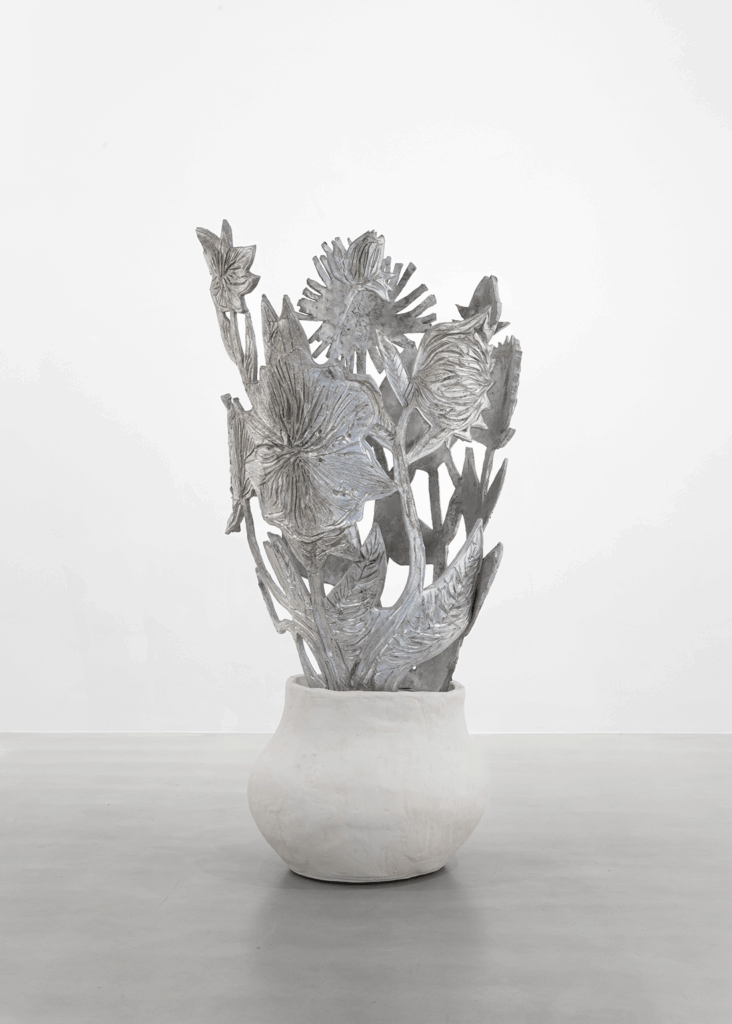
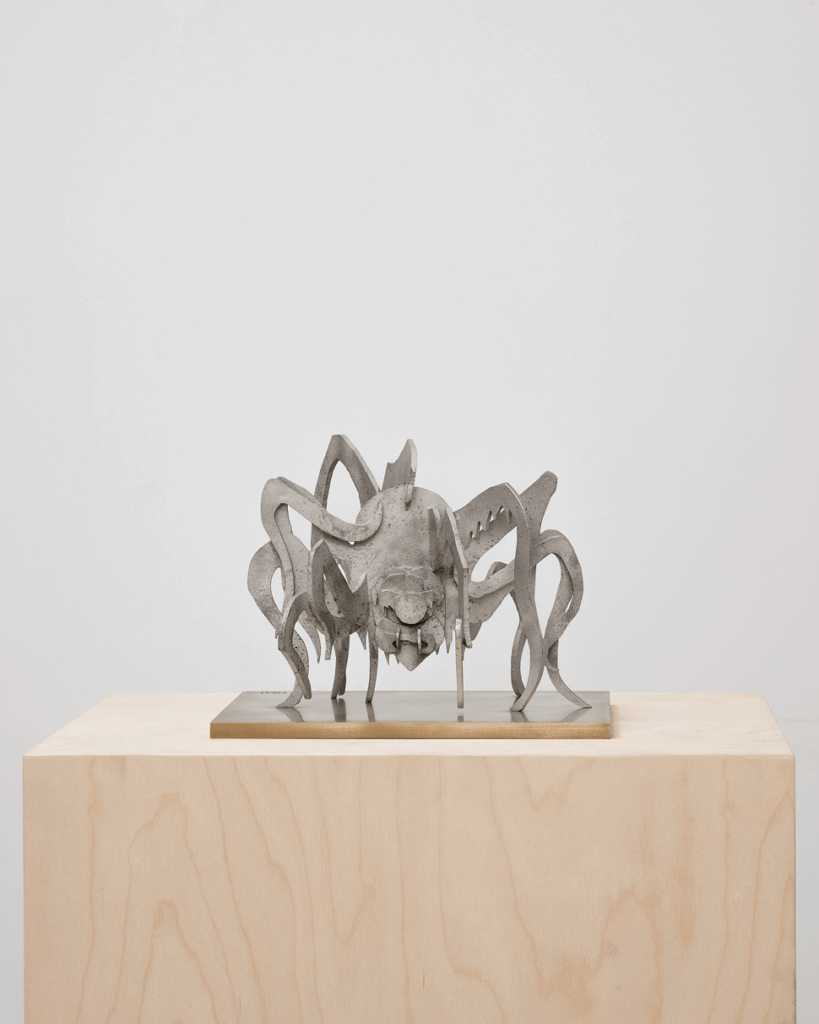
In conversation, Houseago reflects on a journey—as Van Gogh before him—of seeing and explaining everything with such intensity that it bleeds from his heart and hands into these contoured forms: the standing or striding figure, the body as both subject and structure, the Minotaur, the moulding labyrinth, and the twisted flowers. For all their brutal honesty, Houseago’s works still carry an impossible beauty.
Yet any sense of triumph in returning from the darkness remains complicated. As Houseago explains, relief is often followed by what he calls a “vulnerability hangover”—the emotional aftermath that lingers after moments of profound exposure. “It’s that feeling,” Houseago says, “when you’ve opened yourself completely—in the work, in life—and afterwards you’re left with the echo of it.” Like a long shadow tracing the artist’s return to sculpture, that defencelessness persists within the works themselves: figures that appear wounded yet resilient, their surfaces bearing the visible traces of their making. If Journey suggests movement, it is not a passage away from failure but deeper into it—an acceptance that creation itself often begins where certainty ends, and that the artist sometimes has to persist in the wake of such exposure. Impassioned, Thomas Houseago reflects on his passage back into sculpture—and on the forces that have fashioned his art.
Rajesh Punj: Striding Man—can we open with him?
Thomas Houseago: That sculpture really begins at the beginning, because I had stopped sculpting. After my breakdown I didn’t want to be a sculptor anymore—I didn’t want to make art at all. I stopped for years. There was a moment when you were meant to interview me when the works were at the Royal Academy.