A conversation with Woody De Othello is one that has few limits. Having recently become a father, he logs onto our call with his baby in arms. His contemplative energy transpires through the screen. The interview becomes not a series of questions and answers, but a thoughtful meander through Othello’s memories, references, and anecdotes. The candidness with which he analyses consciousness itself catches you off guard; Othello cultivates an earnestly individual approach to spirituality and mindfulness, one that draws from an unusual range of sources.
His most recent exhibition, coming forth by day is now on view at the Jan Shrem and Maria Manetti Shrem Museum of Art in California until the fifth of December. The design of the exhibition offers us the chance to embody Othello’s way of thinking, if only for a moment. coming forth by day is an opportunity to feel grateful, grounded, and present.
hube: Your works often begin with poetic titles that feel like another layer of the sculpture rather than a simple description of it. What role does language play in your practice? Does a title help you discover something about an object, or does it emerge from a feeling you already recognise within the work?
Woody De Othello: The titles give depth to the emotional landscape of the artworks. The artwork, you know, can’t speak for itself. Language gives us a snapshot of what’s going on internally. Language is the thing that makes humans human.
I have a ton of titles that I haven’t used yet because I feel I need to ‘level up’ to be able to use them; I’m not ready. Other times, I’ll sit with an artwork for a while before it titles itself in my mind. Some are just really tricky. It becomes like a game or a puzzle.
h: It feels like language is something that happens mentally or introspectively, whereas sculpture and physical making are things that happen outside of the body.
WDO: Yeah, language is about going within and trying to pull something out, whereas the act of making artwork is an externalisation. There is a little bit of a contradiction here; the titles are also forcing you to go back inside and within.
h: It’s almost like an in-and-out motion, a back and forth between the two realms: the immaterial inside, the material outside. Before an idea begins to take physical form, are there any rituals, habits or moments of preparation that help you open up to the creative process?
WDO: That’s the biggest challenge. I believe that the impetus to create does not necessarily belong to me, per se. It’s like a vibration or a channel. You have to try and tap in. You need to be an open vessel in order to receive it. A huge part of this is finding the time to be bored.
I have a meditation practice. Although, with a newborn, it’s a little shaky [laughs]. It will test my concentration; maybe I’ll become even more skilled. I’m finding ways to do a lot with little chunks of time.
So many of our days are occupied and structured. When do we have time to sit down and ponder, or just close our eyes and tune into our bodies? Getting ready to make work means preparing myself to receive the work. It’s the study of asking questions. I wouldn’t necessarily call it ‘research’. The creative process is one of ‘filling up the vessel’.
Drawing is also very important. I keep telling myself, I’m not drawing enough. Sometimes it’s like automatic doodling. I actually got a bunch of good ideas from attending birthing classes. I would be taking notes, but in the margins, as I’m listening, forms and shapes and utterances would start to emerge.
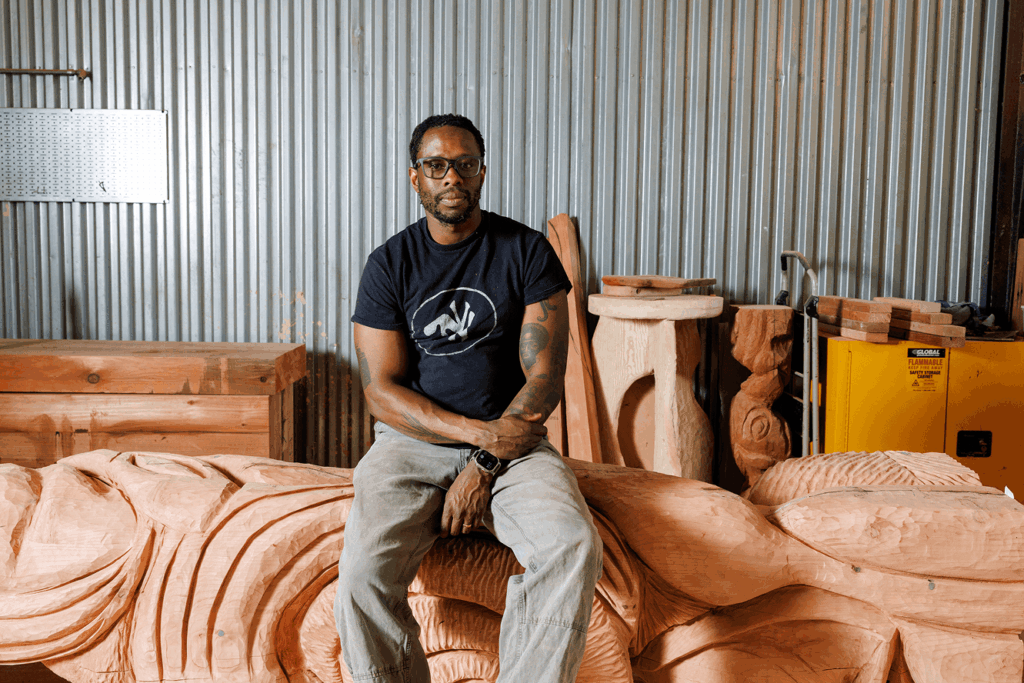
Photography by JONAH REENDERS
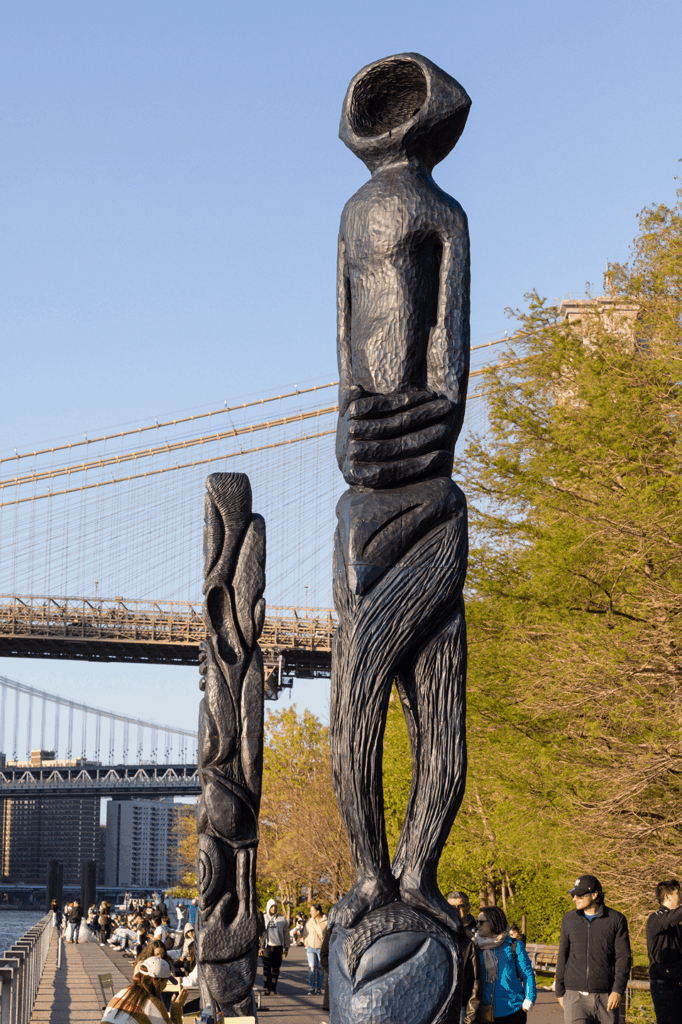
Guardian Spirit, PUBLIC ART FUND @ BBP 58 WOODY DE OTHELLO
Photography by NICHOLAS KNIGHT
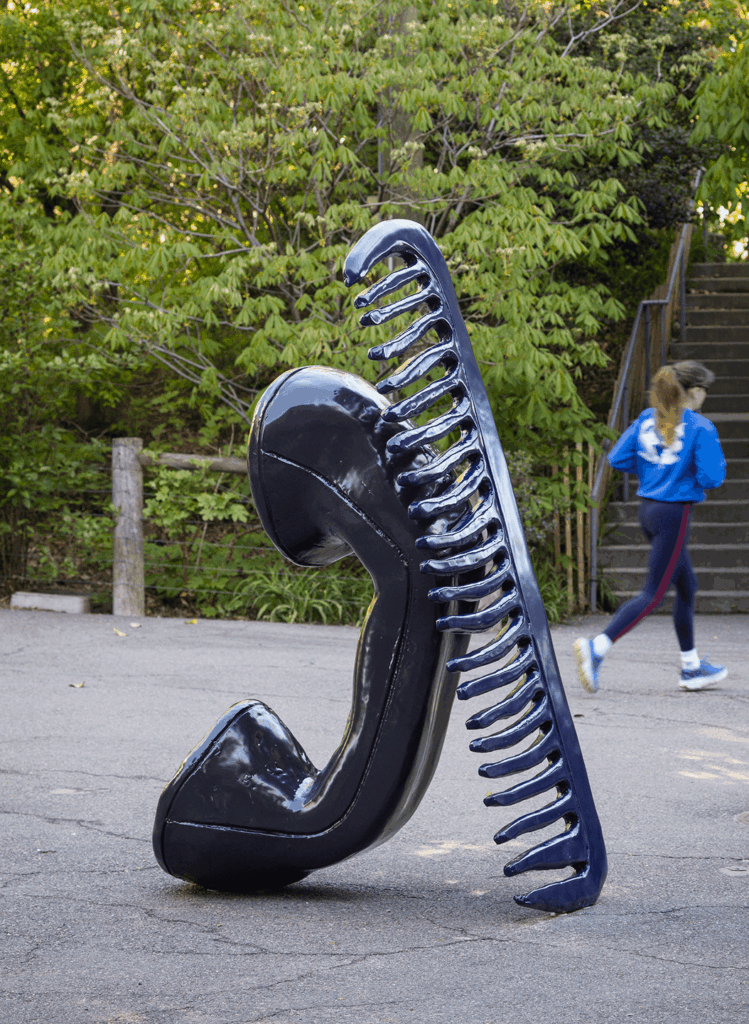
Guardian Spirit, PUBLIC ART FUND @ BBP 58 WOODY DE OTHELLO
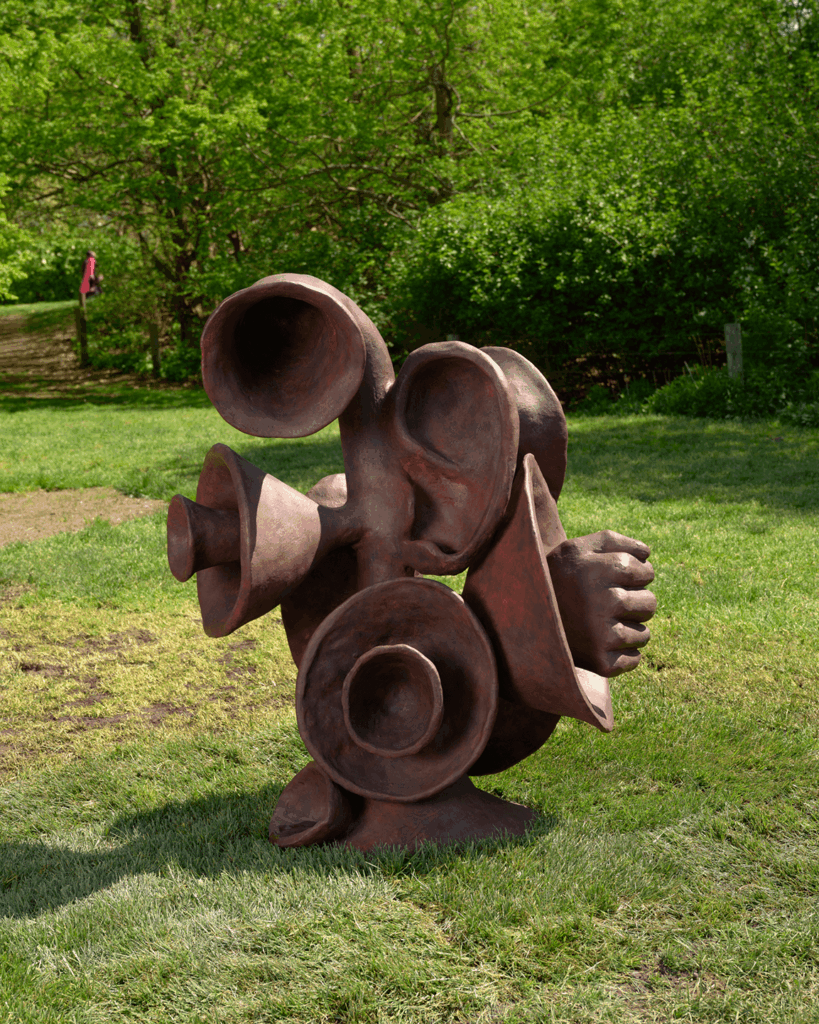
Guardian Spirit, PUBLIC ART FUND @ BBP 58 WOODY DE OTHELLO
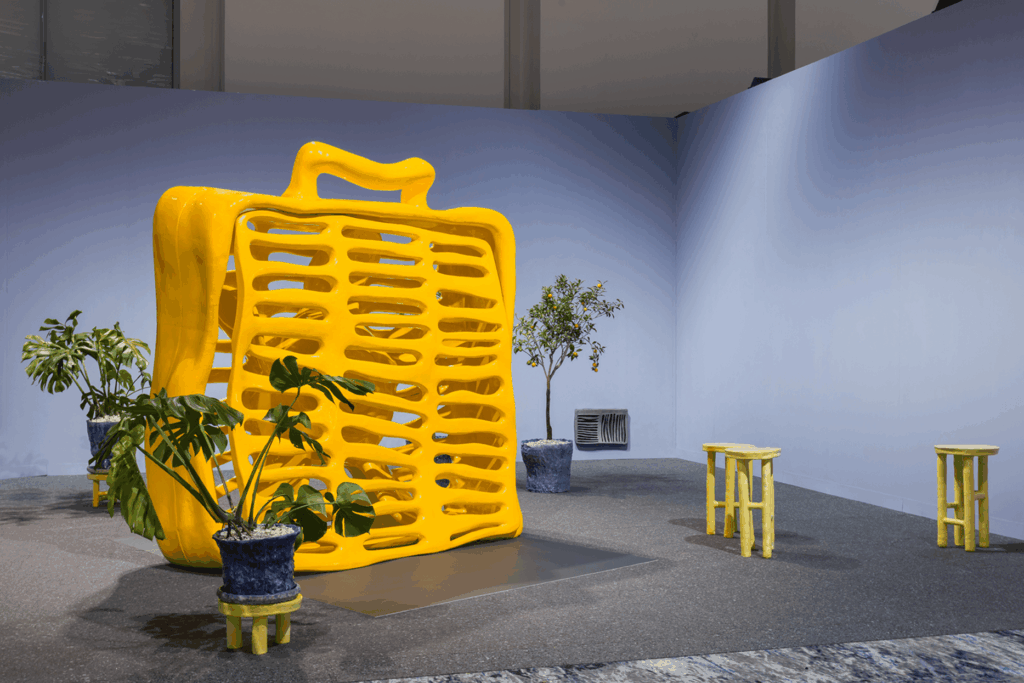
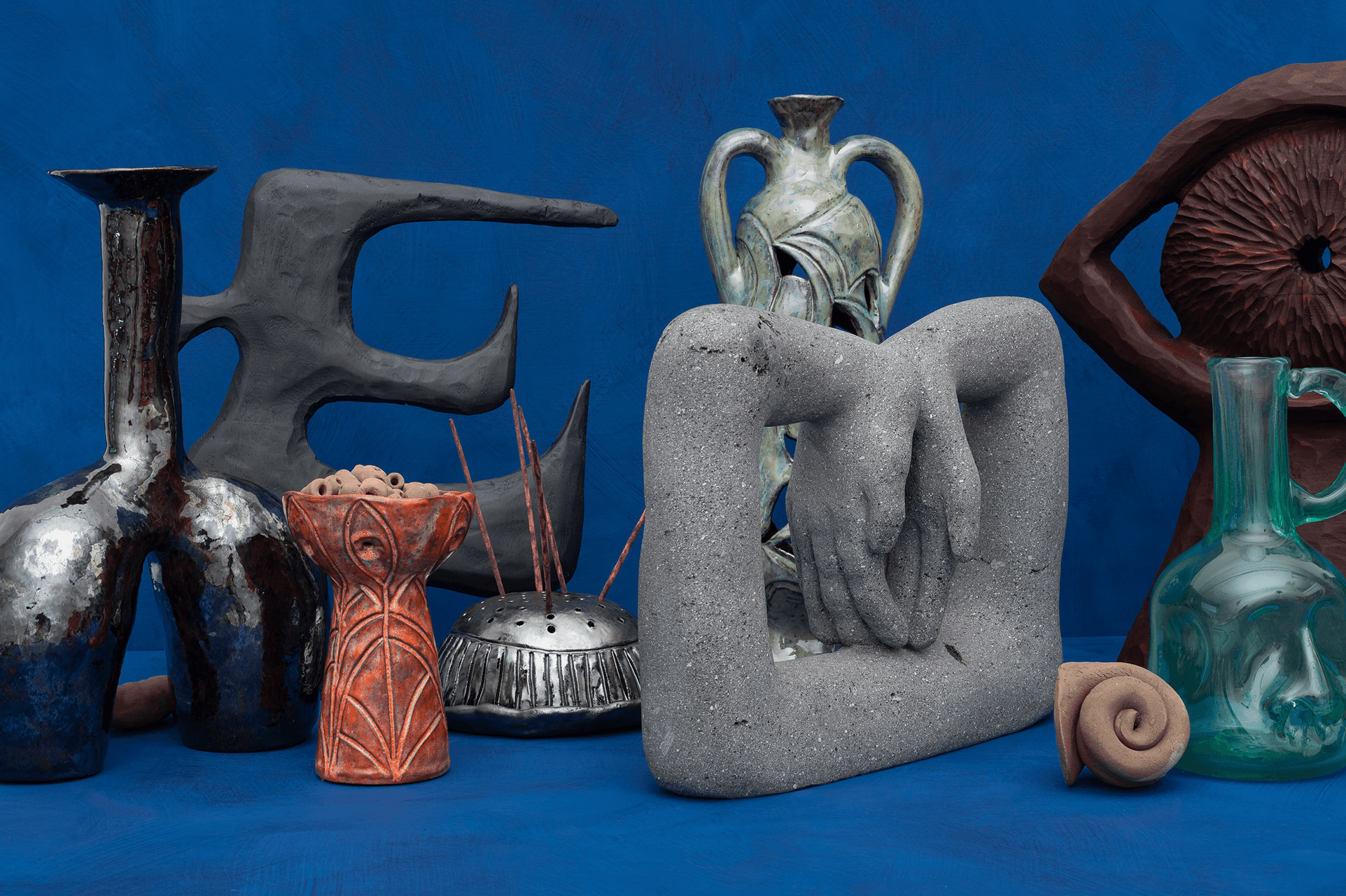
Cool Composition, 2019
Photography by MARK BLOWER
h: Speaking of taking the time to be bored, or taking the time to absorb things, what is something you’ve encountered recently—a book, film, piece of music, exhibition or even an everyday moment—that has stayed with you or influenced the way you think?
WDO: Yesterday, I was listening to an album by Moodymann, a Detroit house musician. The album is called Black Mahogani. The tracks are like ‘radioscapes’. The way he integrates blackness, Ancient Egypt and Christianity into these sound bites! It synthesises a lot of the stuff I’m reading about at the moment.
Recently, I read Marlon James’ A Brief History of Seven Killings. It was just so phenomenal, like watching a thriller movie. I’m also rereading The African Origin of Civilization: Myth or Reality by Cheikh Anta Diop. Another book I read while we were travelling, The Mind in the Cave: Consciousness and the Origins of Art [by David Lewis-Williams], is about Palaeolithic art and emergent consciousness.
It’s all books and music. I don’t really watch movies anymore. We unplugged the TV when our daughter was born and it hasn’t been plugged back in since. I’m witnessing this little human become more and more aware of her environment. I’ve realised there is a difference between sensation and perception; she doesn’t have language or a social framework yet. Essentially, she’s making sense of the world. That’s definitely got me thinking about how language works and how we start to perform these perceptions as we grow.
h: It seems that fatherhood has influenced the way you look at perception itself, and creativity. People always say that childhood is the most creative stage of a human’s life because you are completely open to everything. Everything can be anything. You don’t have any preconceived ideas of how things should be.
WDO: Sometimes, as we get older, we start judging everything. We become jaded. To me, she doesn’t have any of that; it’s really beautiful.
h: Your sculptures transform familiar household objects—telephones, plants, vessels and furniture—into figures that seem to carry their own personalities and emotions. What draws you to exploring the emotional lives and hidden stories of everyday objects?
WDO: It’s so precious to be alive, to have consciousness. How do you call attention to how sacred it is? There is something about amplifying nature through still life that helps us pay attention to the mundane.
Let’s go back to this idea of ‘internal, external’. Think of our man-made environment—buildings, technology—before any of this stuff could exist physically, somebody had to think of it. In that sense, everything is art. Everything is a mental fabulation before it can be made into something you can touch. But we take it for granted, this phenomenon of being made physical. There’s something about paying homage or making an ode to the things that we might overlook. It makes sense to me.
Look at the history of the anthropomorphic. Before anthropomorphism, there was animism, the idea that everything in nature is alive. I adopt that same logic, but not only in nature; everything that is made is alive.
I learnt the term panpsychism in a book by Michael Pollan. It’s the notion that everything—even a toaster, chairs and whatnot—is alive. I am of that mindset. Our environment shapes our consciousness. It’s a collaboration. How do we know we’re physical unless we’re brushing up against other things that are also physical?
h: You work across clay, wood, bronze, painting and drawing, with each material carrying its own history and physical character. How do you decide what material a particular idea belongs to?
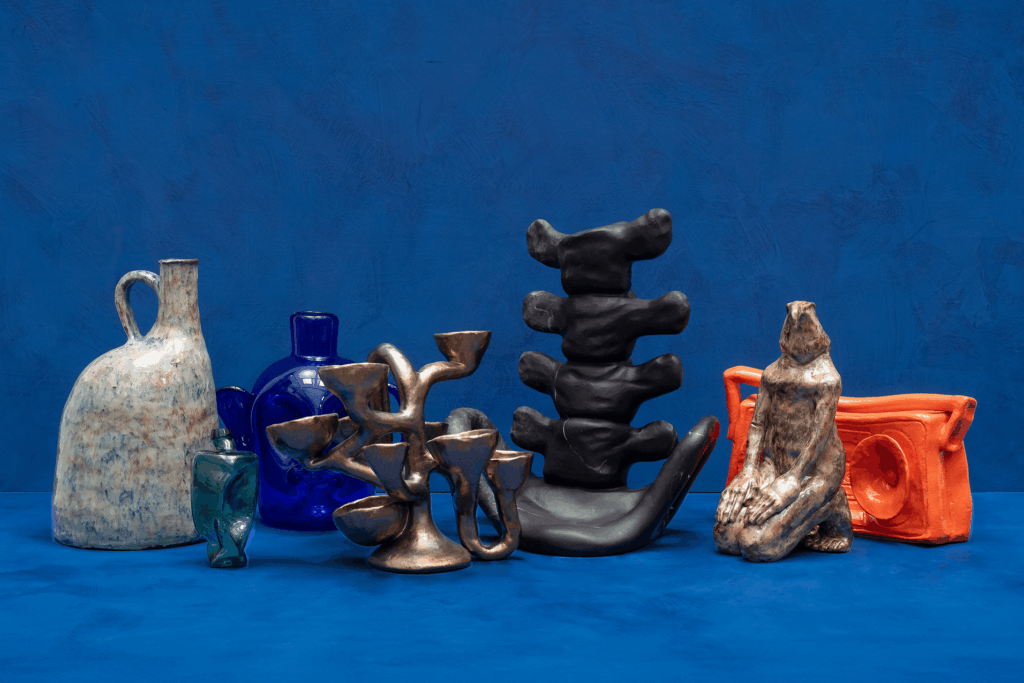
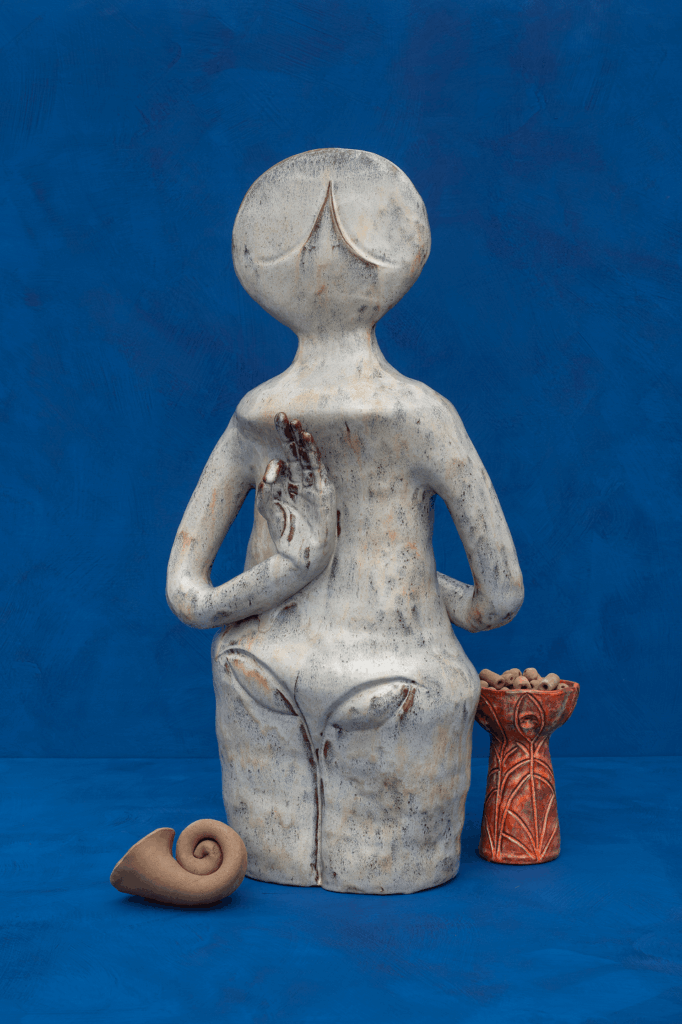
WDO: In terms of making sculpture, I’d say I’m a traditionalist—I work with very traditional sculptural materials. These materials resonate with the earth. I make a lot of vessel-like work, a metaphor for the physical body.
I have been reading the Bible for the past year. The materials they used to create monuments—the tabernacle or shrines—were stone, wood, bronze.
These materials are archival too. I’m thinking about African statuary in bronze and wood. I’m interested in tactility, shaping things by hand. Specifically, ceramics are so haptic; they carry the energy you put into them. Touching and feeling become part of it. I like the evidence of a hand being used. It’s a vocabulary.
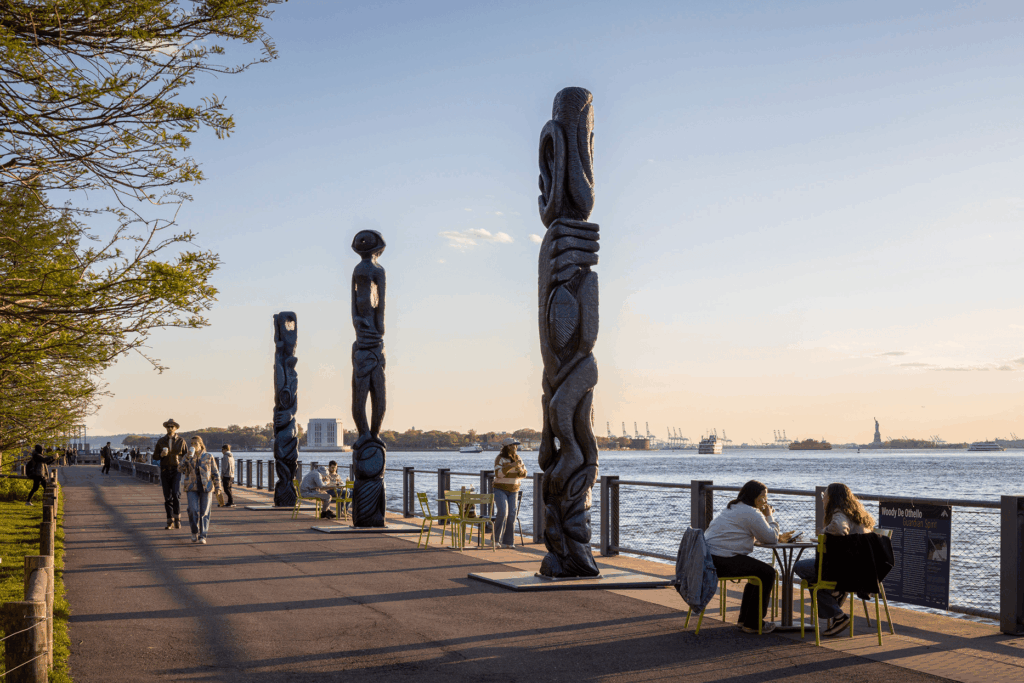
There’s one sculpture I have in mind which is currently up in Brooklyn Bridge Park: a giant phone and a comb leaning against each other. When I first conceived of it, I chose these two things arbitrarily. But it makes sense. The comb untangles your thoughts and the phone represents the ability to communicate. Letting intuition be the thing that dictates my decisions is very important.
h: Your practice is deeply connected to your upbringing in Miami, your Haitian Catholic background, and broader African diasporic traditions. How do these different systems of belief and ways of understanding the world shape the way you approach objects, symbolism and transformation?
WDO: I grew up with the Bible, but I didn’t really believe in it or understand it. Later, I started learning about ancient Egypt, the Egyptian Book of the Dead and the Pyramid Texts. There are many points of comparison; each helps me to understand the other a little bit more.
I have also been thinking about Carl Jung’s theory of primordial images. I like the idea that these symbols exist in our subconscious because we have all evolved from the same place. Symbology persists through time.
Growing up Catholic, specifically Haitian Catholic, my parents always considered voodoo to be something evil, with a negative connotation. But then, through my own research, I realised that the Haitian Revolution would not have happened without the influence of African indigenous belief systems and spirituality. Learning about African ontologies is a way for me to just straight-up decolonise my thinking.
In Catholicism, there is a heavy emphasis on the material world. Other belief systems show me that the material world cannot exist in isolation from the immaterial—the underworld, the land of our ancestors. I have always been a non-materialist; I feel comfortable in the face of opacity. It’s an important lesson in living: knowing that tomorrow is not promised and that you can’t control everything. Knowing that you can’t control everything, I become thankful for the thing that I can control: myself. And for blessings, things that are just happenstance.
With African modalities, the dichotomy between good and evil starts to disappear. It’s not right and wrong, but two things in opposition to each other that together create balance.
h: Woody De Othello: coming forth by day has been on view at Pérez Art Museum Miami and will next travel to the Manetti Shrem Museum of Art. The exhibition extends beyond the visual, incorporating sound, scent and spatial relationships. When you create an exhibition, are you thinking less about displaying individual works and more about creating an environment or an experience for the viewer?
WDO: I try to think about the space as an offering, an offer to be in your body. In this way, sculpture is not dissimilar to dance; it forces the body to manoeuvre in a particular way. Music literally goes into us; we pick up the rhythm. I’m interested in how exhibition design can start to offer that too. It’s about the experience of feeling your body in relation or proximity to something else.
For coming forth by day I was thinking about my meditation practice. My sculptures are reminders of the everyday, offering little moments of stillness, slow looking and introspection.
We are too aware; it’s a new phenomenon. Fundamentally, humans still have the same hardware that we were given 30, 40, 50,000 years ago. So much has changed and we’re expected to keep up. When we evolved into Homo sapiens, we were nomadic creatures. The world was not filled with so much noise. Our hardware was designed and engineered to have more space, freedom and time than we do now.
h: We’ve spoken a lot about the past. Now, how would you describe the future in 3 words?
WDO: I would say, trying, faith and optimism.
Optimism and faith are self-explanatory, but trying is twofold. The future is going to be trying; we’re going to be tested. And second, trying as continuing to show up. Try to do what you feel like is just and right. Trying is almost becoming one of my mantras: “I like to try”.
h: Finally, if you could invite three people (dead or alive) to dinner, knowing they would accept your invitation, who would they be?
WDO: I’d invite Toni Morrison, and someone like Michael Jackson or Quincy Jones? I don’t know about the third person. My wife’s here! Who would be my third person? [to his wife]. It could be an Egyptian pharaoh. The pharaoh who was the architect of the Great Pyramids. I’d ask him, how did you make those?
Some people think Ancient Egypt goes back to, like, 4000 BCE, 3000 BCE. We’re in 2000 AD now, which means Ancient Egypt is a thousand years longer than contemporary times.
h: It’s a whole other universe, isn’t it?
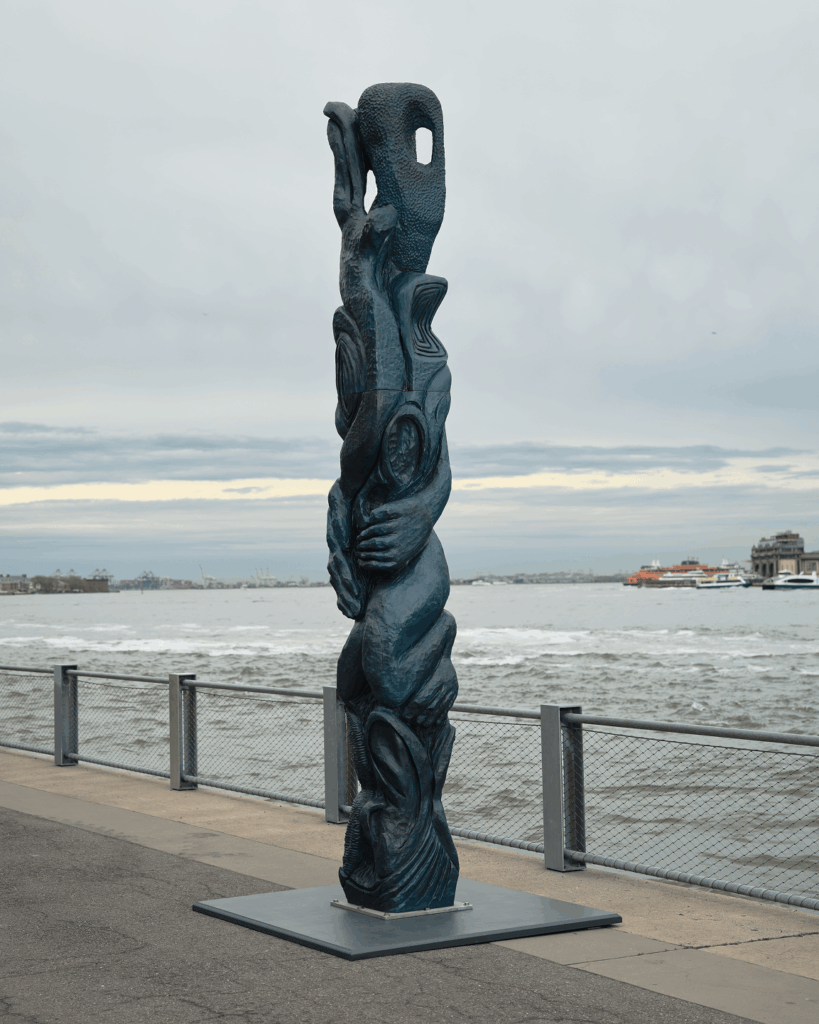
Reverence, 2026
Photography by KARMA
Two sides that hold truth @ Basel Unlimited 2026
Photography by PHILLIP MAISEL
Two sides that hold truth @ Basel Unlimited 2026
Photography by PHILLIP MAISEL
Guardian Spirit, PUBLIC ART FUND @ BBP 58 WOODY DE OTHELLO
Photography by NICHOLAS KNIGHT
Words: MARTA TERESA