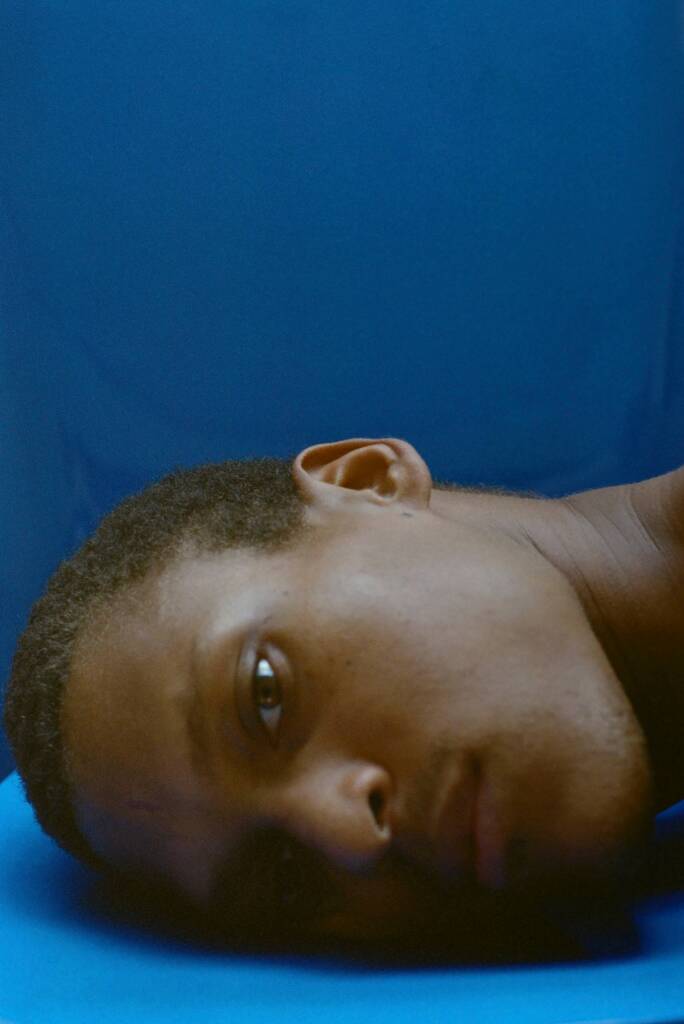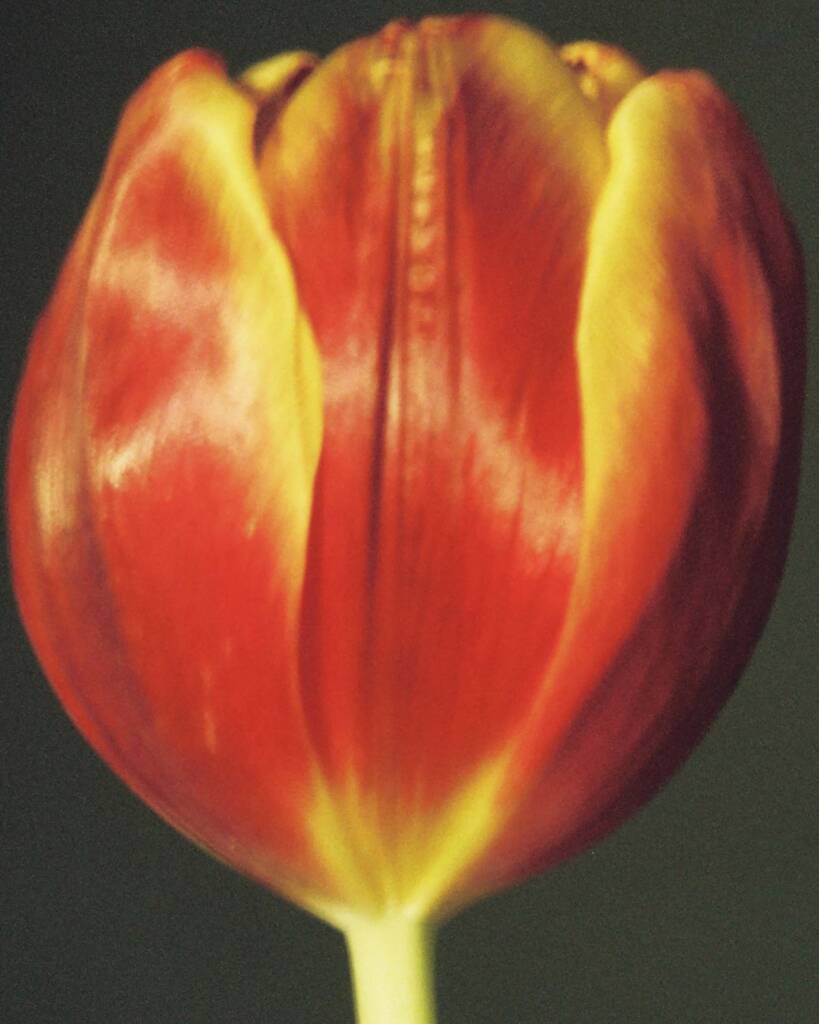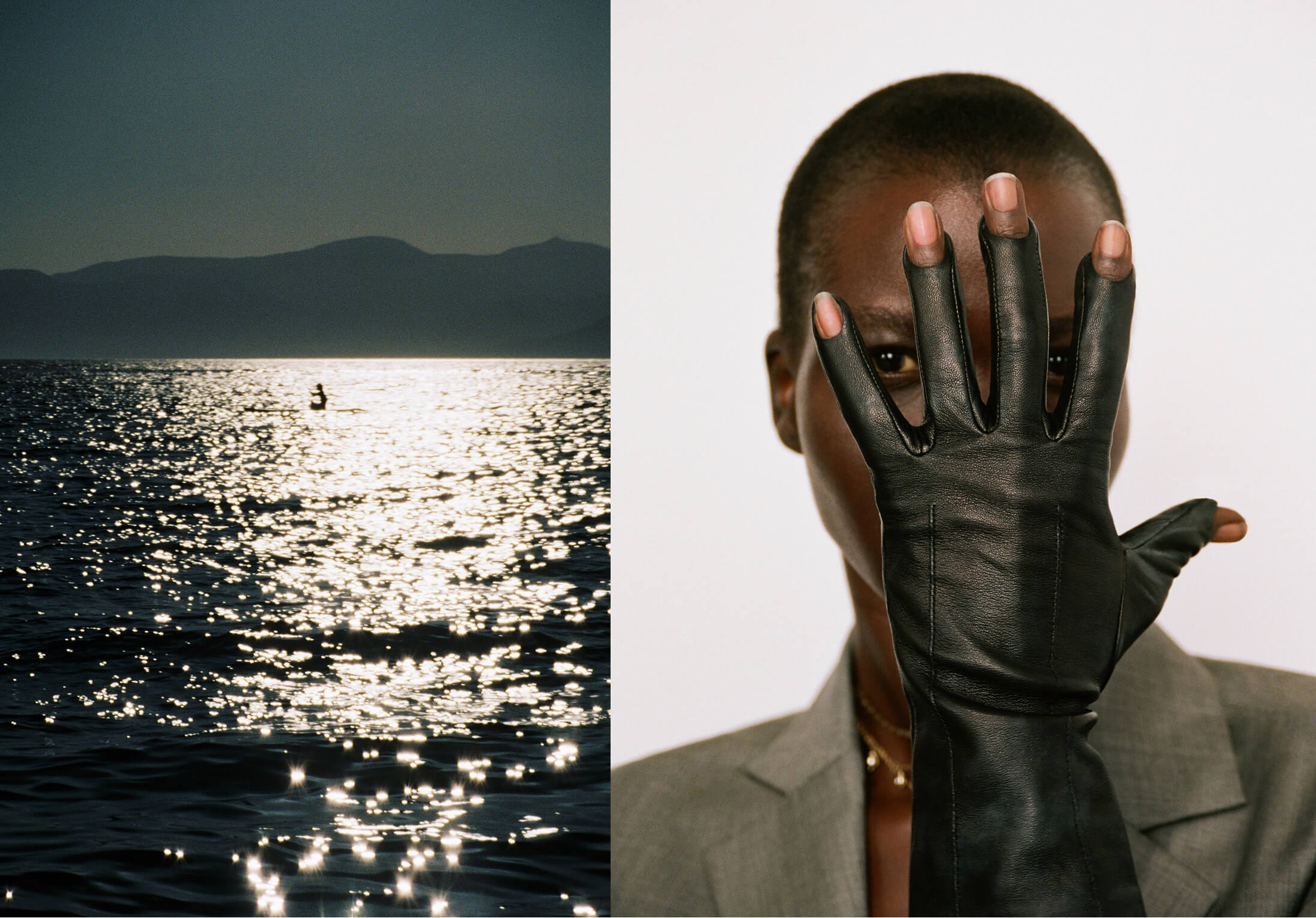
Davit Giorgadze weaves faces with flowers, stark backdrops with bold fashion. The Georgian fashion photographer has worked with clients including Prada, Helmut Lang, and Bottega Veneta, and his work has appeared in publications such as The New York Times and Vogue. His images are so soft they strike, using color as a form of poetry. In them, fashion expands and collapses into shapes, tones, and gestures. With only a few elements, Giorgadze composes something close to magic, as if his camera sees beyond the perceivable world. In this conversation, he speaks with hube about his evolving practice, the value of individuality, and what’s currently nourishing his gaze.
hube: You grew up in Tbilisi; how does that city still influence your visual language?
Davit Giorgadze: Growing up in Tbilisi was very interesting. It was somewhat limiting, but at the same time, it felt limitless, very open, exciting, full of love, scary, experimental, dreamy, and pure. So, yes, my visual language was influenced by growing up in Georgia a lot, and it is still a big part of my identity.
h: At what moment did photography stop being a practice and start becoming a reflex? Do you remember the first time you felt you were no longer “taking” a picture but being taken by it?
DG: I have been documenting since I was 13, and it felt natural to me immediately. I was very observant and it always seemed more of a necessity to me than being prepared for it. Obviously, I take a lot of images daily. It’s part of my expression and way of communication.
h: Your images often carry a paradox: fragility that cuts, softness with teeth. Do you pursue this tension, or is it simply the place where your vision naturally lives?
DG: My work comes from my experience, and it’s simply my surroundings, interests, and things that make me think and draw me emotionally.
h: Which stories or faces do you wish the fashion world would highlight more, and how could photography challenge those norms?
DG: For me, it would be people who are less visible and are not represented in the majority. It would be great if that could be pushed more in every aspect of fashion, not in specific projects only.