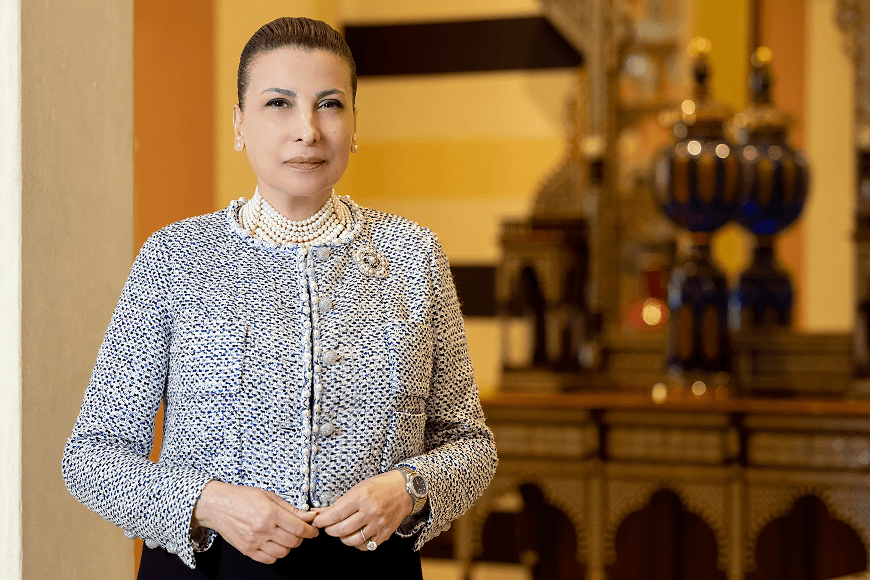
Founder of the Abu Dhabi Music & Arts Foundation (ADMAF) and Artistic Director of the Abu Dhabi Festival, Her Excellency Huda Alkhamis-Kanoo has spent nearly three decades playing a pivotal role in shaping the UAE’s capital into a global stage for creativity and innovative design. She established ADMAF in 1996, and in 2004 launched the Abu Dhabi Festival, which has since welcomed artists such as Yo-Yo Ma, Renée Fleming, and countless others. Under her leadership, the Festival has evolved into one of the region’s leading platforms for global artistry and cultural exchange, bringing together an international cohort of established figures and emerging voices each season.
Huda’s vision has never been about spectacle alone, but about fostering meaningful regional collaboration. Through her long-term commitment and strategic vision, the Abu Dhabi Music & Arts Foundation has become a catalyst for arts education, social innovation, and cultural diplomacy. Her mantra—“Invest in the young. Create the future. Partner with the world”—continues to shape the Foundation’s direction.
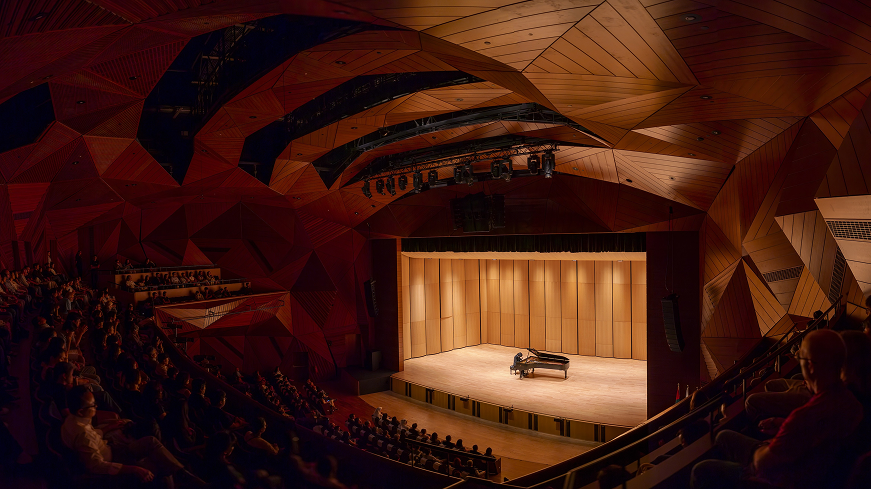
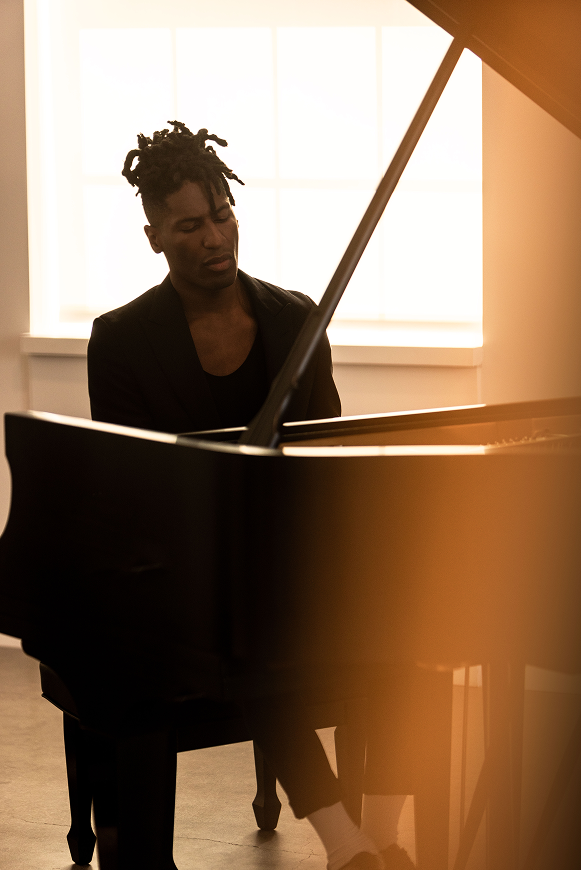
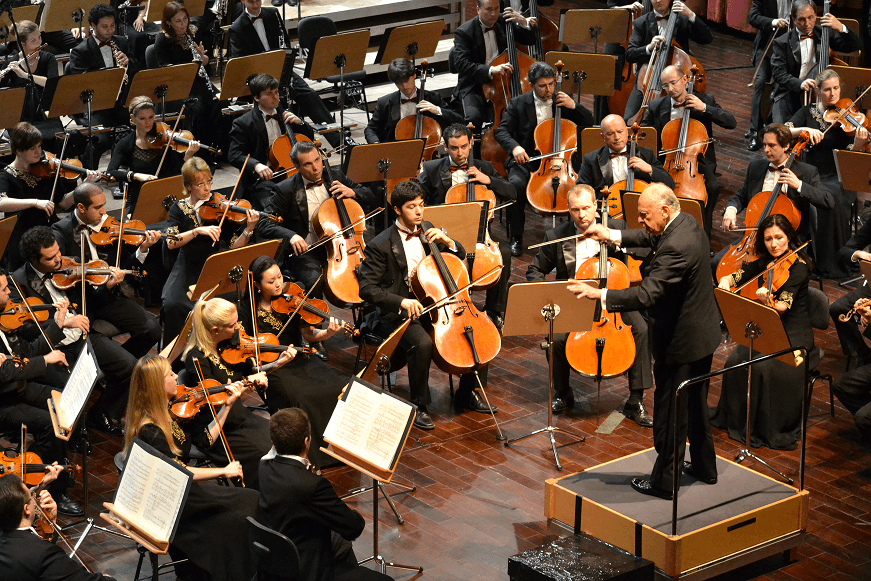
The 23rd edition of the Abu Dhabi Festival promises to carry this message forward, with Jon Batiste in concert at Emirates Palace, the American Ballet Theatre’s Gulf première, performances by the Qatar Philharmonic Orchestra, and Sondra Radvanovsky with Vincenzo Scalera at NYU Abu Dhabi, alongside concerts by Minsoo Sohn and HAUSER. The Festival’s recital series will be dedicated to Emirati artists, including mezzo-soprano Fatima Alhashimi, qanun player Noura Al Mazrouei, cellist Elham Al Marzooqi, and oud players Saif Al Naqbi and Mubarak Al Dhaheri, shining a spotlight on emerging Emirati talent.
In a moment when arts and culture are too often treated as an afterthought, Huda Al Khamis-Kanoo has made them the centre of her life’s work. In conversation with hube Editor-in-Chief Sasha Kovaleva, she reflects on what can emerge when the arts are given the support they need to flourish—not as ornament, but as a vital force shaping society, to the benefit of all.
Sasha Kovaleva: The world is increasingly looking to the Gulf as a cultural compass rather than a newcomer. What do you think the region is uniquely offering that the global art world is now ready to engage with?
Her Excellency Huda Alkhamis-Kanoo: There is a beautiful Arabic word that sums up what the region offers uniquely: ibda. It weaves together the notions of creativity, originality, innovation. It is the act of bringing into existence something never seen before. It implies courage and eagerness. The region brings ibda to the global cultural scene. The UAE in particular: we are a young nation, but we have an old soul. This duality is something unique: we have the energy of youth but the depth of an old, rooted civilization. I also think we come to the art world with a certain sense of responsibility towards the past. Our region has many extraordinary cultural capitals: Baghdad, Damascus, Cairo, and Beirut. Their fortunes might have shifted a little, but it is a proud heritage for all Arabs. And as Abu Dhabi rises as a leading cultural capital, I think we have the duty and responsibility to rekindle this sort of enlightenment in the region. In a fragmented world, the UAE offers a place of harmony. Two hundred nationalities live in peace in this country. Culture, and the celebration of diversity, is one of the platforms through which this harmony is achieved. And I think this makes us quite unique too.
SK: How has ADMAF’s mission evolved as the UAE has transitioned from a young nation to one of the global cultural leaders?
HEHAK: Our core mission has always been to serve the youth, the artists and the audiences of Abu Dhabi, the UAE and the Arab world. We still adhere to this ethos of service, and, in this sense, our mission remains the same. Yet with the UAE rising to global cultural prominence and ADMAF succeeding in many of its undertakings, the meaning and scope of this mission have changed. ADMAF began as a local cultivator of opportunities, talent and audiences. We have now become a global bridge-builder. In addition to nurturing talent at home, we project the Arab cultural voice to the world stage. I remember when I struggled to find a venue for a single concert. We are now a UNESCO City of Music, and by 2030 we will have a world-class performance centre. I remember a time when I had to move mountains just to give a small exhibition some attention. Today, we have major museums attracting both Emiratis and visitors from around the world. This journey defines ADMAF and how our mission evolved: grassroots in spirit and global in reach.
SK: You’ve said that ADMAF ‘builds on the conversations our country has with the rest of the world’. How do you see the arts facilitating forms of diplomacy that politics alone cannot achieve?
HEHAK: I’ve often said that culture is the continuation of diplomacy by other means. What I mean is that diplomats bring structure to international relations and this is vital. Perhaps even now more than ever, at a time when so many tensions are building up around the world. But once those conversations have taken place at a government level, they need to be embodied. That’s what art does. It brings the mind and soul of a nation into the heart of societies abroad. A treaty, however important it may be, will never be as real and relatable as a work of art.
Our collaboration with the Seoul Museum of Art (SeMA), is a great example. The UAE and South Korea have enjoyed wonderful relations. But our twin exhibitions Layered Medium: We Are in Open Circuits that brought the largest ever exhibition of Korean contemporary art to Abu Dhabi last May, followed by Proximities, which brings the works of three generations of contemporary visual artists from the UAE to Seoul in December, takes the conversation closer to people and their hearts. When we experience our shared humanity through art, we pave the way to mutual understanding. Treaties structure shared interests. Culture allows shared emotions.
يونشان ليم
Courtesy of ADMAF
Supplied by artist
Courtesy of ADMAF