Ravi Rajan Chanel Culture Fund Role of artists Artistic agency
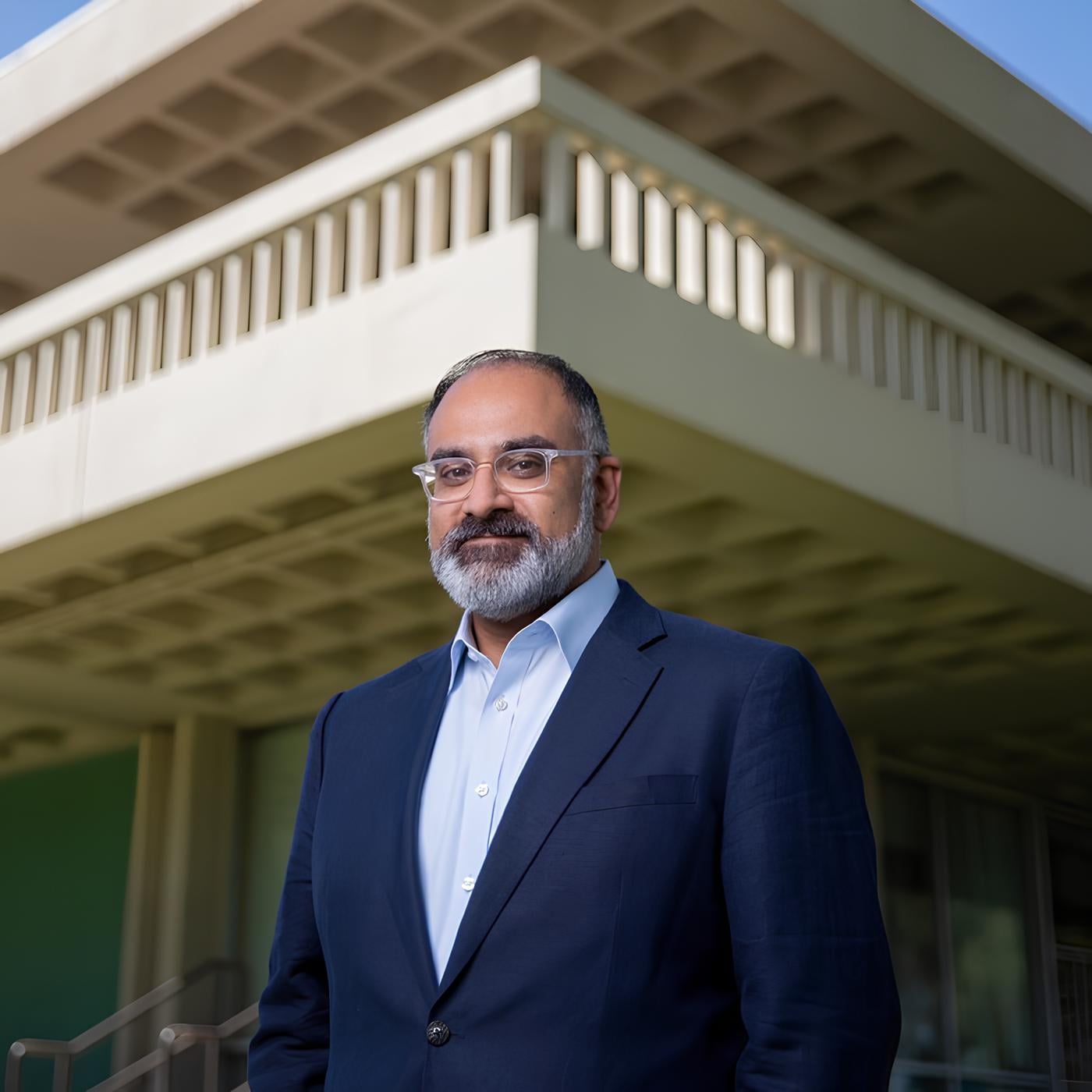
President RAVI S. RAJAN. Photography by RAFAEL HERNANDEZ. Courtesy of CALIFORNIA INSTITUTE OF THE ARTS

Ravi Rajan on artistic agency and the futures we create

In a time of rapid change and constant instability, questions around the role of artists feel more urgent than ever. What do artists uniquely contribute to the world today—beyond aesthetics, beyond commentary? For Ravi S. Rajan, President of CalArts, the answer lies in synthesis. Artists, he argues, work distinctly, drawing together history, lived experience, and emerging realities to create speculative models of how the world might be otherwise.

In this conversation, Rajan reflects on artistic agency as the core value of CalArts, on the widening gap between artists and technologists, and on the need for education to evolve at the speed of life. He also discusses CalArts’ collaboration with the Chanel Culture Fund, a partnership based on shared values: invention, experimentation, and a curiosity about what comes next. Together, they are working to establish a new research hub that brings artists and technologists into closer dialogue, facilitating multidisciplinary exchange and expanding access across geographies.

Rather than positioning CalArts as a driver of culture from above, Rajan imagines it as a collaborative node in a global ecosystem where artists are equipped not only to respond to the world but also to shape its future.

hube: At a moment shaped by political polarisation, climate crisis, and rapid technological change, what do you see as the unique contribution of art—something that other forms of knowledge or action cannot fully provide?

Ravi S. Rajan: I said this a lot, and I’m not the only one who said this, but artists work in a special way in the world. They create models of how the world could be. Those speculative models take into account all sorts of things from their lives, everything that happens, from history. They do that through the work that they make.

Other forms of knowledge and action, like science, about medicine, the climate crisis, and technology, are good in a technical way of understanding things. But with artists, it’s almost a Gestalt. They pull all of that together and make things in the world that then show us how the world could be, maybe different from how it is now. I think that’s special, unique, and really important.

h: Do you feel the role of the artist has shifted in recent years? Are artists today facing greater responsibility, greater freedom, or a new tension between the two?

RR: I don’t think that’s changed. Artists have done this forever, since time immemorial. I don’t think that the tension between freedom and responsibility has changed either. With great freedom goes great responsibility, as the adage goes.

I do think there are more people, more artists in the world who may have more freedoms, and with that comes responsibility. Who gets those freedoms and how that operates, shifts over time depending on countries and geopolitical realities. But the responsibility is the same. It is significant. I don’t know if it’s greater or less than before, but it’s always been there. It comes back to the ability to make things that challenge us.

“Artists are the touchstone of our judgment”, John Kennedy said in a famous speech. Winston Churchill also spoke very elegantly about the purpose of the artists, about how they create works that are a salve during current events that are happening right now. These were the heads of state recognising that artists let us see further.
Ravi Rajan
Chanel Culture Fund
Role of artists
Artistic agency
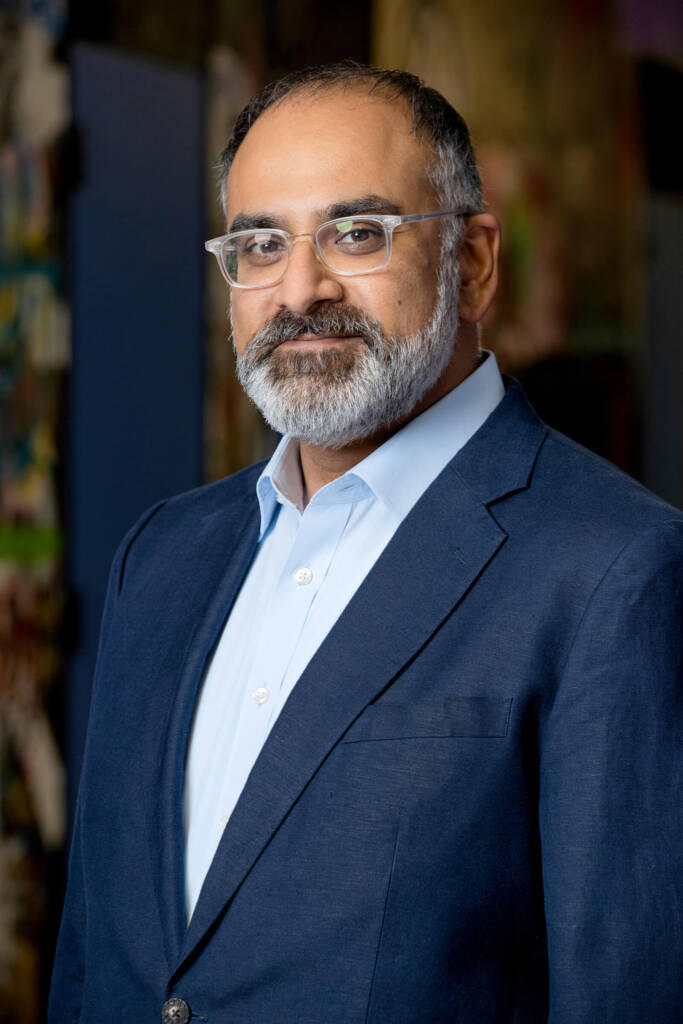
President RAVI S. RAJAN
Photography by RAFAEL HERNANDEZ
Courtesy of CALIFORNIA INSTITUTE OF THE ARTS
Ravi Rajan
Chanel Culture Fund
Role of artists
Artistic agency
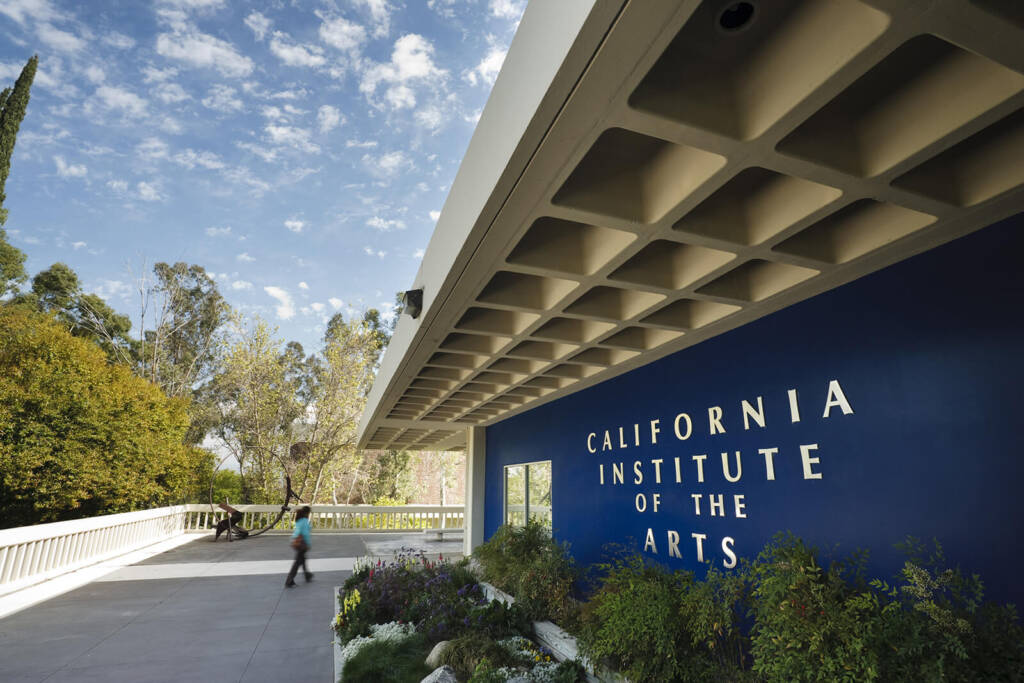
CalArts Main Building
Photography by SCOTT GROLLER
Courtesy of CALIFORNIA INSTITUTE OF THE ARTS

Ravi Rajan
Chanel Culture Fund
Role of artists
Artistic agency
Wild Beast Music Pavilion
Photography by SCOTT GROLLER
Courtesy of CALIFORNIA INSTITUTE OF THE ARTS
Ravi Rajan
Chanel Culture Fund
Role of artists
Artistic agency
Art MFA Interview Day
Photography by RAFAEL HERNANDEZ
Courtesy of CALIFORNIA INSTITUTE OF THE ARTS
Ravi Rajan
Chanel Culture Fund
Role of artists
Artistic agency
WORLD MUSIC FESTIVAL in the Wild Beast Music Pavilion
Photography by KARLEY SULLIVAN
Courtesy of CALIFORNIA INSTITUTE OF THE ARTS

h: Every educational institution embodies a set of values. Which values do you believe CalArts needs to articulate and defend most clearly today?

RR: I believe that the most important value of CalArts is agency. You see that front and centre. By that, I mean giving artists the agency to do the kind of work I’ve been talking about in the world. That agency can include technical knowledge, as well as other values of CalArts, like persistence, empathy, or inclusivity, and the ways an artist approaches them. But agency is meta. As an educational institution, that’s what we’re in the business of doing: working with artists and expanding their agency in the world.

h: Do you see CalArts primarily as an institution that actively drives cultural change, or as a space that creates the conditions for change to emerge?

RR: If I had to pick, I’d say neither, but a little more the latter. And it’s not necessarily that CalArts, as an institution, creates the conditions for change to emerge. We don’t make art. We work with artists. Ultimately, the artist is the one who makes the art in the world. The artist is the one who creates the conditions for change to emerge. It’s a two-step process. We engage with artists and give them the agency to create the conditions in which change can emerge.

Sometimes that distinction is hard to articulate. When you interview a museum, a gallery, or a performing arts centre, they’re about art, about the things that artists make. We’re really about the person and the persons. That’s a little different. It’s a distinct role.

h: CalArts has long been associated with experimental and forward-looking practices. How do you personally understand the relationship between creativity, technology, and human experience at this point in history?

RR: This may sound like a broken record, but I don’t think that that’s fundamentally changed. It may have accelerated. I’ll contend that, actually, the speed at which we invent things in the world may have accelerated. It definitely feels like that.

If you think about the distance between the invention of film photography, tintypes, for example, and digital photography, that evolution took decades. But from early digital photography to where we are now, the shift happened in a fraction of that time. So things are moving faster.

I do think that the speed at which that change is happening is really tremendously quick. That creates its own difficulties. But I think the notion of experimental and forward-looking practices is inherent in engaging those changes. That speed is something that’s not easy to overcome, and that’s definitely causing shifts in how we operate and how quickly we have to adapt.

h: Technologies such as AI, machine learning, immersive media, and digital performance are often discussed in terms of risk or disruption. How does CalArts encourage students to engage with these tools as creative possibilities, while also thinking critically about their social and ethical implications?

RR: It’s a very important question, because sometimes people are faddish. “AI” is a fad word right now. Everyone has an opinion about it, but not everyone has a good understanding of what they mean when they use the term. This includes students, parents, consumers, and everyone. If you compare the number of mentions of artificial intelligence in the media two years ago to today, it has increased significantly. People are frothing at this, but at the core, the question is interesting.

If you think historically, film, mechanical image-making, instead of drawing or painting, changed everything. There was tension. The schools of art were saying, “That’s not art. That’s just mechanical.” When images began to move, some even thought that it was the devil. We’re not there anymore, clearly. The difference now is speed. We don’t have the luxury of time to have an argument about the theological aspect of whether a moving image should be captured. The speed makes it harder to do that at a leisurely pace.

On the other hand, if artists don’t engage and experiment with those things, that’s critical to the agency that they have. The social and ethical implications are real, and that’s where the tension lies. There’s a praxis to this; you have existing philosophical frameworks and ethical concerns, and then you have a new technology with real possibilities. The question is how you balance those. That balance is part of agency. Both sides have to be present.

The best way to criticise something is to understand what it is, experiment with it, and realise what that entails. The strongest arguments against nuclear weapons came from people like Albert Einstein. They knew exactly what it was; they knew the power of it. The criticism came with that knowledge, and that’s a kind of agency that artists have to have. Otherwise, it seems like it’s an uneducated answer, and we’re in the business of education.

It’s best when you know exactly what that is, and then say, “Used this way, it creates real problems for labour, for equity, for authorship. Used another way, it opens possibilities.” Artists need to be part of defining those uses, not necessarily the technologist over in the corner. That’s really important. And again, it comes back to speed. As these technologies evolve more rapidly, it becomes more difficult to keep up, but that makes engagement even more necessary.

h: CalArts’ collaboration with the Chanel Culture Fund signals a meaningful alignment between an independent art institute and a global cultural platform. Many collaborations between art institutions and global brands risk feeling symbolic. What convinced you that this one could actually push boundaries rather than just polish reputations?

RR: The advantage here is that we’re not an art institution. We’re an educational institution about the arts. It’s that same two-step process I mentioned. The Chanel Culture Fund engaging with an educational institution is different from engaging with, say, a museum. That’s a little bit more straightforward. This one operates at a deeper level.

What’s motivating both institutions is important. The founders of CalArts, Walt and Roy Disney, as well as Gabrielle Chanel, were deeply concerned with what comes next. Chanel has spoken about that idea very clearly. Those founding values, about invention, about the future, are embedded in both institutions.

Chanel, in its own sphere, creates the conditions for artists, fashion designers, and artisans to make work that has value in the world. That idea of artists creating value and having the agency to do so aligns closely with what we believe in arts education.

I’ll be honest with you, one of the hardest things to keep up with in arts education is the widening gap between technologists and artists. The speed only makes it wider. But the best way for technologists and artists to work together is for that gap to be closed is to be in the same space, to engage in projects together. I contend that, actually, the best discoveries happen when different domains get together. If a technologist who understands code works only with other technologists, things can become compartmentalised. If artists are in there, looking at the code and asking, “Can the code do this? What if we did this?” that’s a multi-disciplinary kind of experimentation that I think is really important.

We’ve seen this happen before. Artists engage. When artists engage with technologists, something new arises. Think of someone like Edwin Land, who invented instant photography, Polaroid. He was a chemist, but he was very interested in image making, and he had that input from other artists who were image makers. Polaroid becomes a company, same with Eastman, same with all of these things.

I go back to photography because it’s maybe the one thing in our recent memory. There may be people, like me, who remember the evolution of the photographic image and how it disrupted how we thought about images. And similar shifts have happened in sound, in movement, across disciplines. So when we think of artists, I’m defining it very broadly, not just visual artists.

h: Looking ahead, what are the long-term ambitions of this collaboration—especially in terms of supporting underrepresented voices, developing new mentorship models, and enabling cross-cultural exchange?

RR: I think it’s not exactly a mentorship model as much as a research model. It is less about a teacher-student relationship, and more about a multidisciplinary research, bringing together people from different domains who may not even be in the same institution. They could be a technologist at a company, an independent technologist, an independent artist, or an artist working at CalArts or another university. Universities are just one part of the ecosystem.

The idea is to create a hub, a space where individuals from different domains come together on a project basis. The core funding helps establish that hub and seed those projects. But sometimes there can be extramural funding that aligns with specific initiatives. The base support allows us to generate those proposals and pursue larger opportunities. It really begins with building the hub itself, and I’m very excited about that.

Long term, the ambition is for this hub to define a new space for artistic research, one that actively closes the gap between artists and technologists. It acknowledges a practical reality: artists and technologists often exist and work in separate spheres. This creates a structure for them to collaborate.

The notion of underrepresented voices and the mentorship models goes back to one of our values: inclusion. If you only pick artists from one geography, that’s what will shape the outcome. Same with technologists. The real test will be in the projects we support, who we bring together, and where we source those collaborators. Inclusion has to be embedded in how the hub is built and how it operates.

h: How does this partnership foster international dialogue while staying grounded in CalArts’ core values and experimental ethos?

RR: I think one could see how it’s grounded in our values. The international dimension is closely tied to inclusion. In fact, the artists who are interested in this kind of collaboration are not just in the United States or Europe; they are everywhere. And the same is certainly true for technologists.

There are hubs of technological innovation across the world: in the Middle East, in Asia, in many regions. And if you take that as a geopolitical spin, this is something we’re all interested in and agree on. We spend a lot of time thinking about the things that we disagree with and arguing with one another. This is a space where we can come together around the same table and do something very interesting, important, exciting, and beautiful for the world.

Ravi Rajan
Chanel Culture Fund
Role of artists
Artistic agency
Digital Arts Expo
Photography by RAFAEL HERNANDEZ
Courtesy of CALIFORNIA INSTITUTE OF THE ARTS
Ravi Rajan
Chanel Culture Fund
Role of artists
Artistic agency
Next Dance Concert in the SHARON DISNEY LUND DANCE THEATER
Photography by RAFAEL HERNANDEZ
Courtesy of CALIFORNIA INSTITUTE OF THE ARTS
Ravi Rajan
Chanel Culture Fund
Role of artists
Artistic agency
Digital Arts Expo
Photography by RAFAEL HERNANDEZ
Courtesy of CALIFORNIA INSTITUTE OF THE ARTS
Ravi Rajan
Chanel Culture Fund
Role of artists
Artistic agency
JONGHOON AHN (MFA Art and Technology) 
Generated Cinema, 2025 
Photography by ABRAHAM PEREZ, courtesy of CALIFORNIA INSTITUTE OF THE ARTS
Ravi Rajan
Chanel Culture Fund
Role of artists
Artistic agency
MANASA HUNSUR MANJUNATH (MFA2 Art and Technology)
Cerebral Symphony, 2024 
Photography by PRESLEY YANG, courtesy of CALIFORNIA INSTITUTE OF THE ARTS
Ravi Rajan
Chanel Culture Fund
Role of artists
Artistic agency
Wild Beast Music Pavilion
Photography by RAFAEL HERNANDEZ
Courtesy of CALIFORNIA INSTITUTE OF THE ARTS

h: How do you imagine CalArts’ role evolving over the next decade within a global ecosystem of art schools, residencies, and cultural institutions?

RR: I think this notion of a hub being a catalyst becomes very important. CalArts has a foothold in Los Angeles, has a history with Los Angeles, with the art, as well as all of the other arts: music, motion picture. It’s very Los Angeles, California, thinking about inventing and experimentation.

How can we be a hub? I really think the metaphor is collaboration, not competition. So I think what happens is, when resources get tight, people immediately get into a fight or flight mode. But it’s not fight or flight, it’s actually holding hands. And the real answer is that we probably shouldn’t fight, we shouldn’t stick our heads in the sand. What we should do is to engage our intellect, our thoughts, and think about how we can do things stronger together. And I think that becomes very important.

There are things in the way. There’s funding from government sources. Those governments like each other. This is always the case. I think the future for CalArts is about what are the strengths that CalArts brings to the table. But how can we be a hub so that others can collaborate? CalArts can then be a co-equal operator in that, not necessarily the hierarchical King, in such a kind of network.

h: As arts education is reshaped by technology, globalisation, and increasingly hybrid creative practices, how is CalArts rethinking what an art education can and should be today?

RR: That’s a great question, because we’re currently engaged in a program study asking exactly that: What have we offered? What are we offering now? And what should we be offering pedagogically? Ultimately, the focus is still on giving artists that agency. But if the world is shifting, and it is, then the skills artists need to exercise that agency may also be shifting.

Take performance, for example. In traditional performing arts—theatre, film, even music—there was an assumption that the audience was largely passive. You sit in the darkened room for 30-90 minutes. Filmmakers get 2-3 hours; it’s a luxury. The truth of the matter is, people don’t want to sit in a darkened room with that many people for those periods of time, for many reasons, pandemic among them. You can be at home and interact differently. Every one of us also has a computer in our hands. So how are we interacting? What does participation look like now?

There is a growing field described as “location-based entertainment”, which encompasses live audience interaction. You go somewhere—“location-based”—and you are entertained. When you hear the term ‘entertainment’, you probably think of theatre, film, and music. But it could be anything. You may have noticed luxury brands using these immersive moments to accentuate their brand. Is that advertising? It’s an experience. You see places like Meow Wolf. How would you describe what they do? It’s a multi-threaded narrative that you experience as you walk through it. It’s like theatre, but more engaging.

You see large spaces, such as arenas and theatres, which were previously used for passive activities. Now, they are being transformed into interactive environments. Old retail spaces are being gutted and turned into entertainment venues, such as the Netflix House.

If you’re going to leave your house and be with other people, and it’s not for shopping, because that can happen online, then it has to be for something experiential. We don’t want to be isolated. We want reasons to be together, to interact. And technology is already at the forefront of this evolution.

Fast forward to a curriculum. A program has a basis in film, in theatre, in music, dance, movement, projected image, animation, all the things that CalArts has. That positions us well to examine how these practices are evolving and help to push them. That spirit of experimentation is part of our institutional identity. If someone were to create that, it would be CalArts. That’s really exciting.

We’re also developing new partnerships to support this shift. Chanel, for example, has an interest in technology and creative experimentation. The Dolan Family Foundation has supported project-based learning—bringing together multidisciplinary teams of students to work on real-world projects. That allows students to learn by doing, in collaboration, and in direct engagement with emerging practices.

We’ve also had conversations with Sony, for instance. They are interested in being part of what comes next. They develop the panels and the technology, and they’re curious about what we are doing, how we approach technology, and how this aligns with their work on products and spaces.

ISSUE 7

The new edition is here