Artists and curators were scattered across the city, some gathered over Aperol spritzes, others in their rented Venetian apartments, when their phones lit up with reports that the 61st Venice Biennale jury had resigned. The moment was almost casual, mixed into the usual rhythms of Venice: drinks in hand, a city of canals in constant motion. Leading up to the opening of the international art exhibition, the news was definitely a disruption in the waters, but an expected one. At a nearby table, someone was overheard saying, “Let the drama continue.”
On April 30th, the panel made up of five curators—Solange Oliveira Farkas, Zoe Butt, Elvira Dyangani Ose, Marta Kuzma, and Giovanna Zapperi—resigned amid internal tensions over decisions made that did not align with the spirit of the late Koyo Kouoh’s curatorial concept for this edition. In a previous statement, they wrote: “this jury will refrain from considering those countries whose leaders are currently charged with crimes against humanity by the International Criminal Court.”
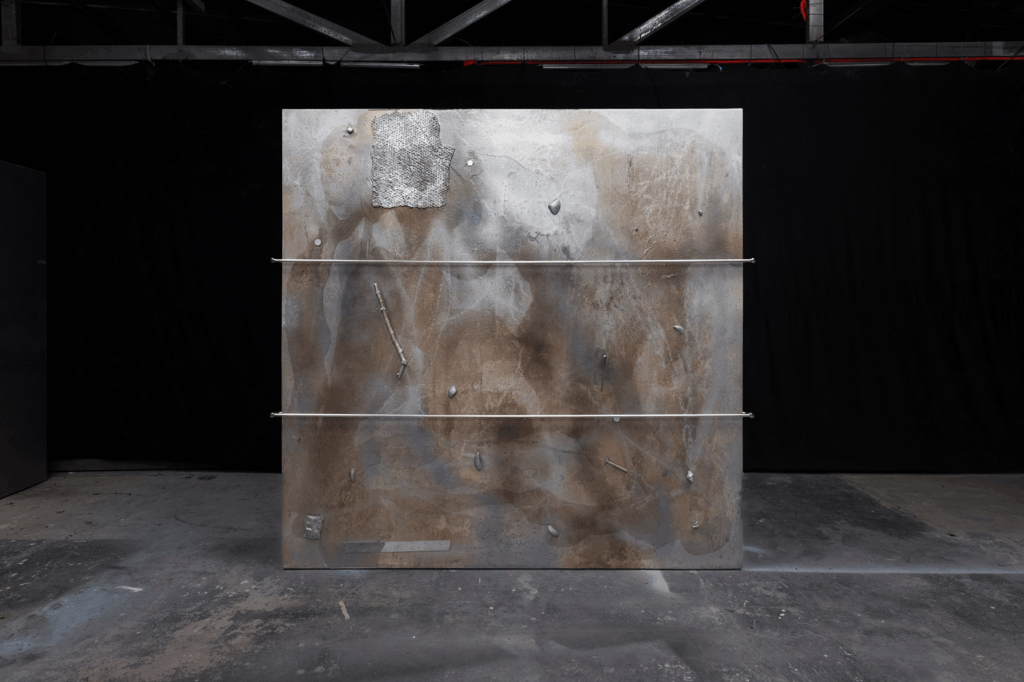
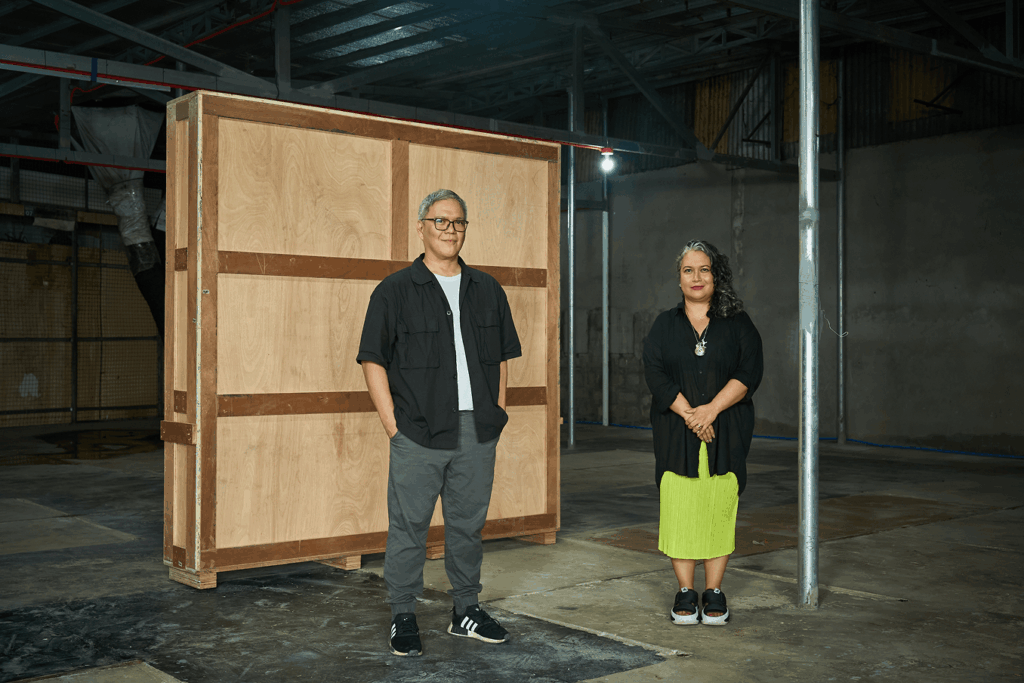
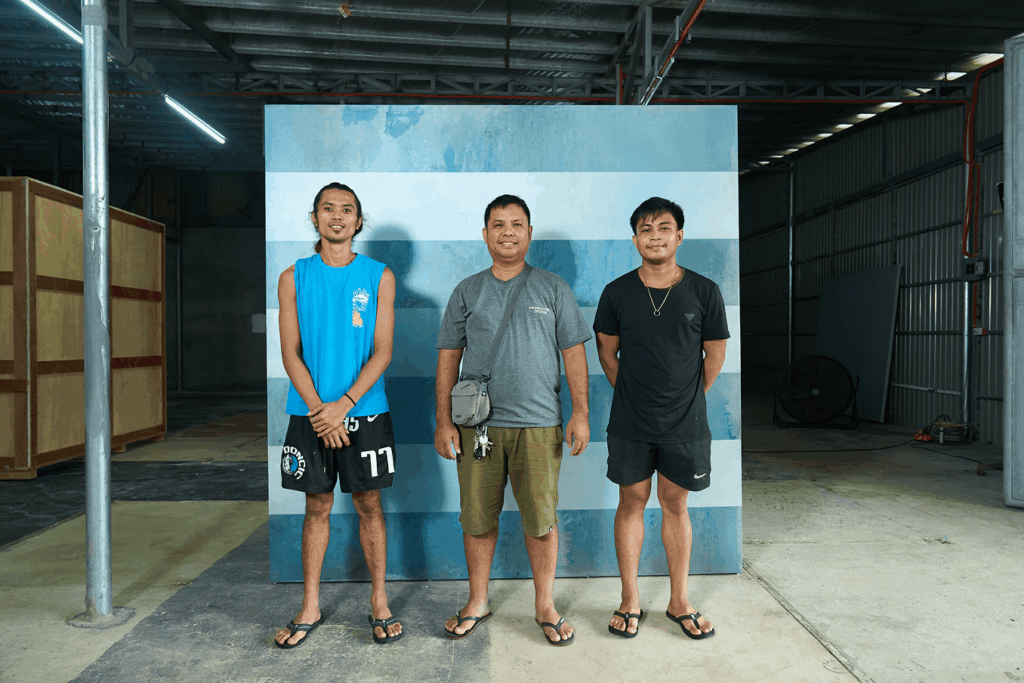
For some participating pavilions, the question of representation is not only political but also physical, connected to the routes shaped by geopolitical tensions and the conditions that allow works to arrive at all. The works for the Philippine Pavilion were shipped 60 days before the escalation of conflict, moving through maritime routes affected by instability. The items were carried as cargo, composed of 20 painting panels of the same size, seven feet by seven feet, designed to fit inside a 40-foot shipping container. “We’re very lucky it passed through everything,” Filipino artist Jon Cuyson tells hube. The works are now ready for public view at the opening from 9 May.
Water as a site of migration, nourishment, and love
Manila-born Cuyson brings forward the narrative of the Philippines, an archipelago of over 7,000 islands that sits along major shipping lanes in the South China Sea, one of the most contested and economically critical waterways in the world. Together with curator Mara Gladstone, who has organized exhibitions, public art programs, and publications at Desert X, the Palm Springs Art Museum, and the J. Paul Getty Museum, the work operates on several levels: contextual, personal, and ecological.
Sea of Love (Dagat ng Pag-ibig) is about submerged histories, unseen maritime labor, kinship and migration, and the queer experience. Among the starting points was Jean Genet’s Querelle de Brest, a queer French novel titled after its central character. Cuyson reworks this by making it Filipino. He introduces Kerel, a queer time-traveling seafarer, in a constellation with Mutya, a trans gardener-lover, and Nanay Cleo, a visually impaired shamanistic mother. Developed over years from 2010, the trilogy eventually solidified in 2020 as a fictional ode to longing across water.
This is a second application for Cuyson. The first application was in 2023, for the 2024 edition, also through an open call. That earlier proposal focused on the Kerel trilogy, which he explains is a fictional universe and a proxy for his experience as an immigrant and a queer artist, moving between places, living in New York while earning his MFA in Painting from Columbia University.
For the 61st Biennale, he adds a fourth film to the proposal, Sea of Echoes, featuring mussels as non-human protagonists, inspired by their attachment to Spanish galleons, his visits to mussel farms in Cavite, Philippines, and his research, where he discovered they have survived five mass extinctions. He says, “Mussels are quietly filtering water, sedimenting, clustering, and releasing clean water, providing food for other organisms at sea.”
Apart from videos, the full Philippine installation in Venice is composed of paintings, sculptures, and sound that follow the logic of the sea. It is a shifting installation that unfolds as a kind of horizon, a kind of vessel, a kind of architecture that holds all of these elements together. Being inside the pavilion feels almost like being in a ship at sea.
A world shaped by a water-based diaspora operates through a different logic because it’s always in constant movement. What results is a condition of loneliness, of politics, of life-giving force, maybe even danger, where leaving land, boarding ships into a state of flux, existing in a nationless location across water, and fishing as a source of food become narratives of complexity.
With Sea of Love, we ask Cuyson: is love something that exists in sea, or is it something that is tested by it? “The sea creates separation, but it also connects us,” he says, adding, “At sea, you are always on guard, you are never fully at rest, and I think that holds a certain tension.” What emerges is a paradox: the longer in water, the deeper the desire for connection. In that sense, the sea holds a form of love that pushes and pulls, that reaches across the distance, like a kind of dance.
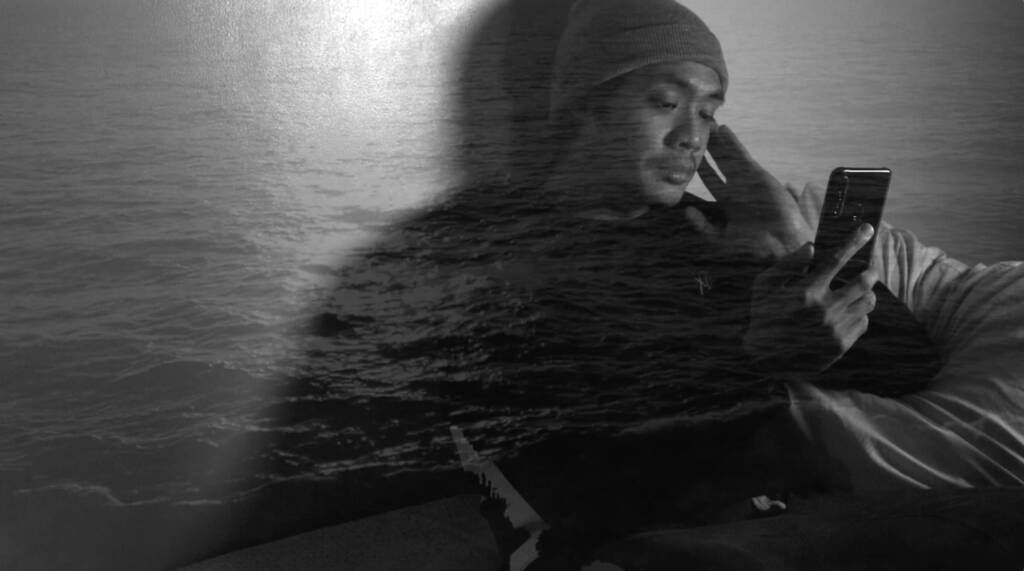
Still image from Kerel (Sea of Love), 2021. Digital video in black and white finish with sound
Courtesy of JON CUYSON © EVERYDAY PRODUCTIONS
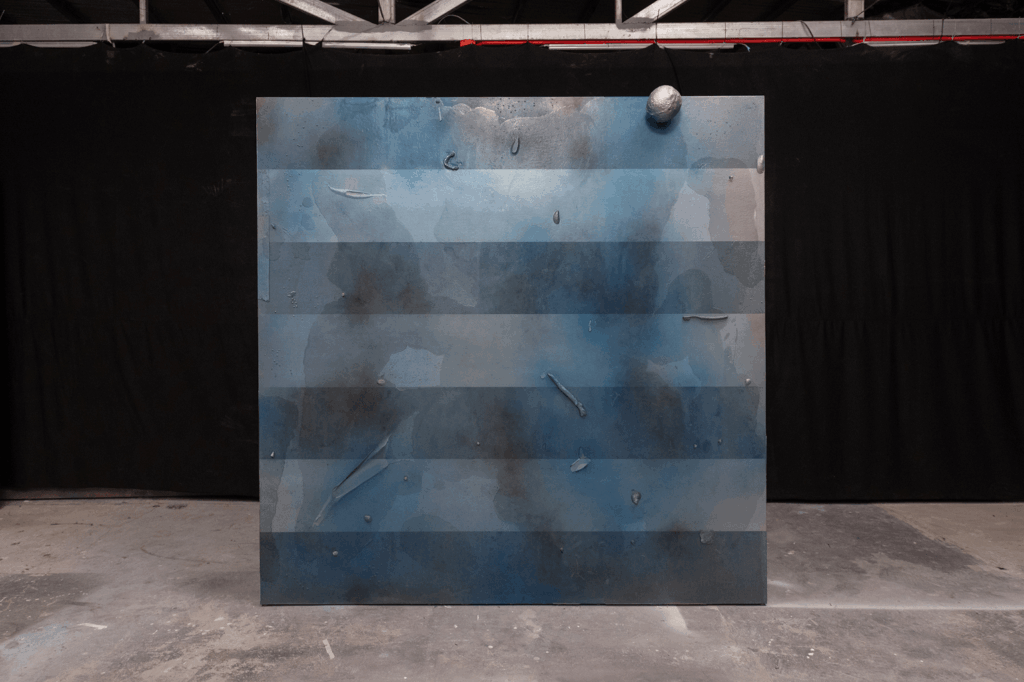
The W/Hole Horizon (detail), 2026. Mixed media on canvas.
Photography by BIEN ALVAREZ
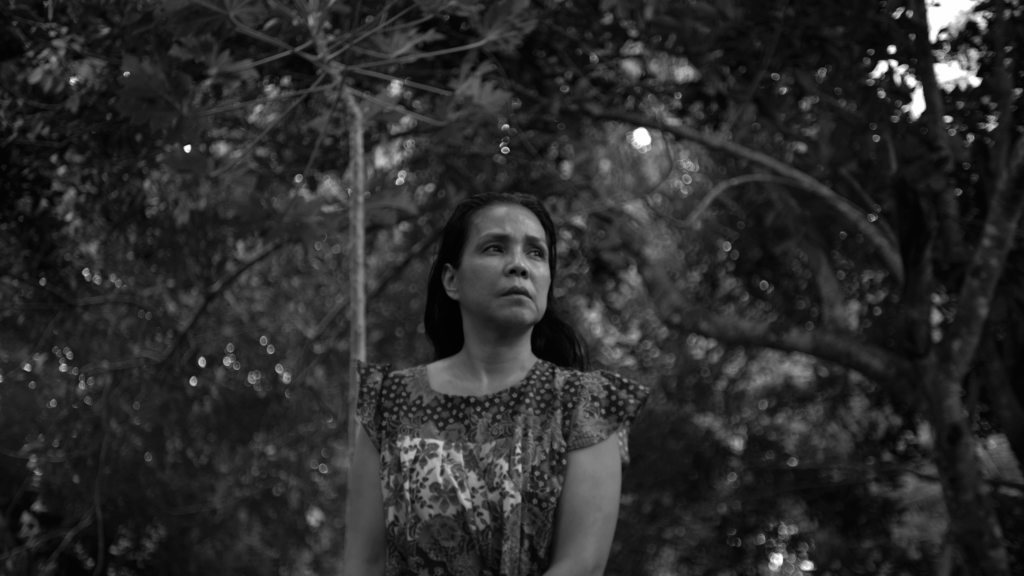
Still image from Nanay Cleo’s Dream, 2021. Digital Video in black and white finish with sound
Courtesy of JON CUYSON © EVERYDAY PRODUCTIONS
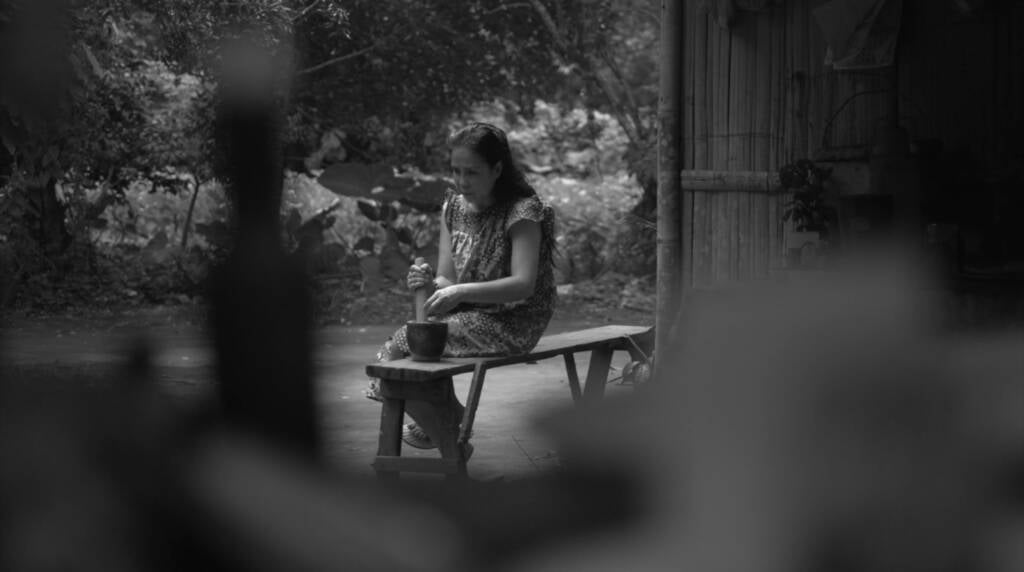
Still image from Nanay Cleo’s Dream, 2021. Digital Video in black and white finish with sound
Courtesy of JON CUYSON © EVERYDAY PRODUCTIONS
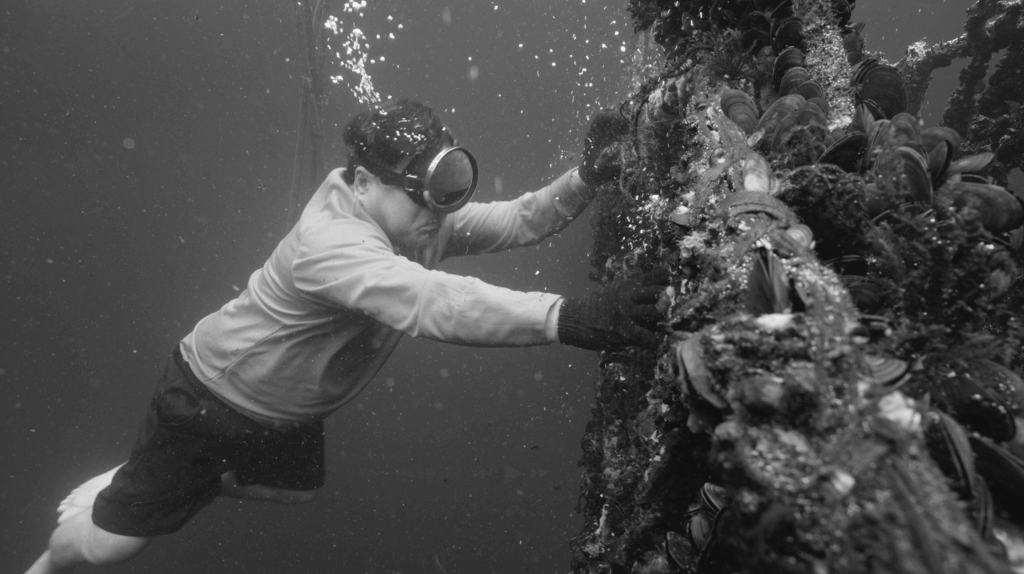
Still image from Sea of Echoes
Courtesy of JON CUYSON © EVERYDAY PRODUCTIONS
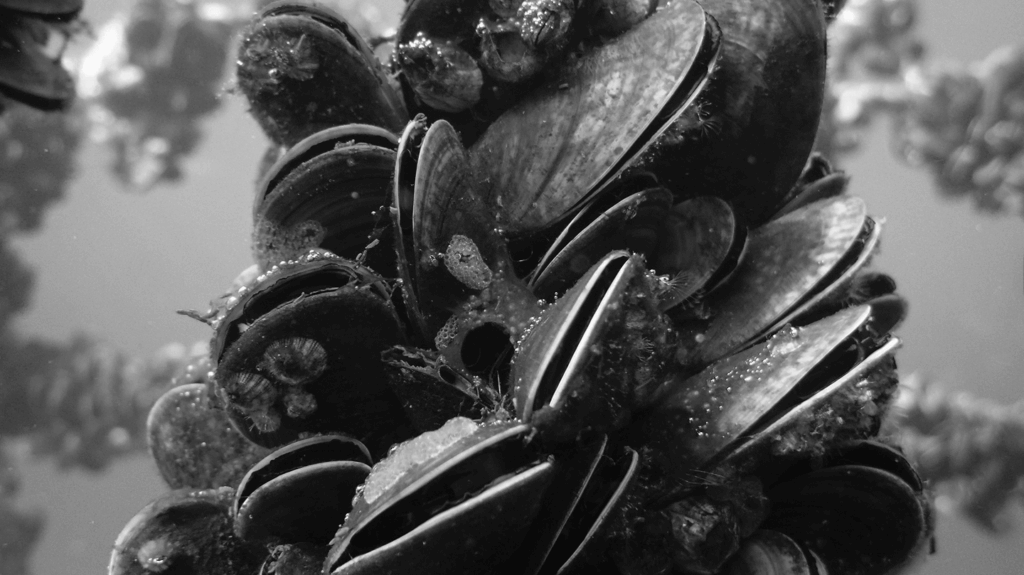
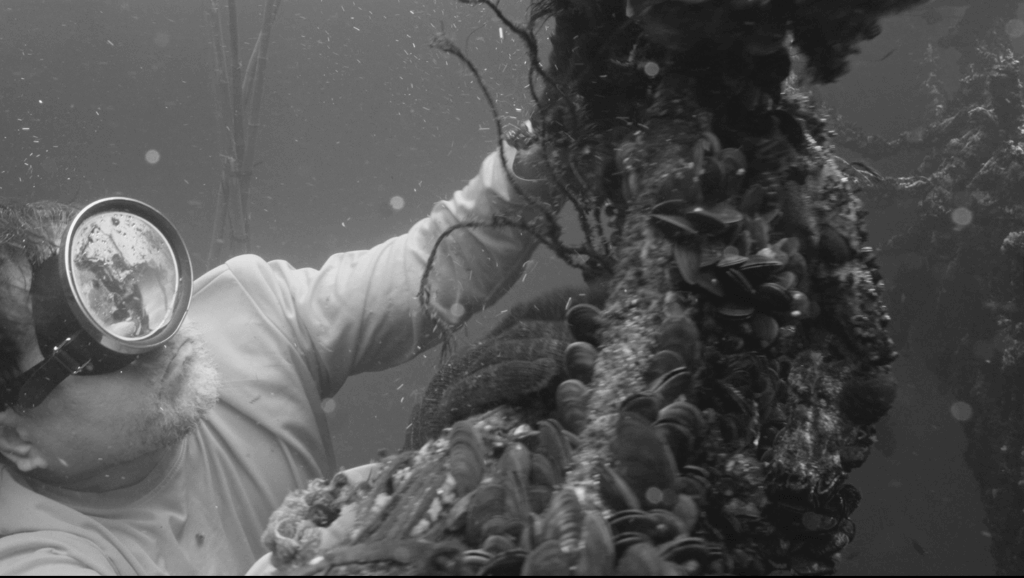
Still image from Sea of Echoes
Courtesy of JON CUYSON © EVERYDAY PRODUCTIONS
Photography by KIERAN PUNAY
Photography by KIERAN PUNAY
Photography by JACOPO SALVI (ALTOMARE)/ZACHETA ARCHIVE
Photography by JACOPO SALVI (ALTOMARE)/ZACHETA ARCHIVE
Photography by JACOPO SALVI (ALTOMARE)/ZACHETA ARCHIVE
Photography by JACOPO SALVI (ALTOMARE)/ZACHETA ARCHIVE
Photography by JACOPO SALVI (ALTOMARE)/ZACHETA ARCHIVE
Water as language for better worlds
A dance unfolds in slow motion, guided by the rhythm of water.
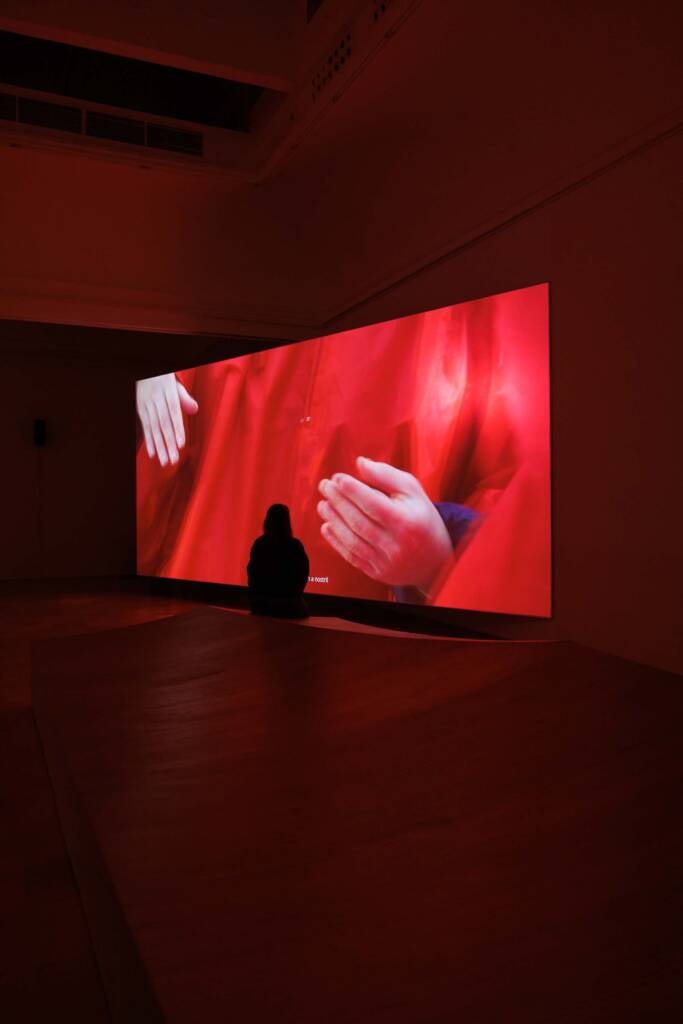
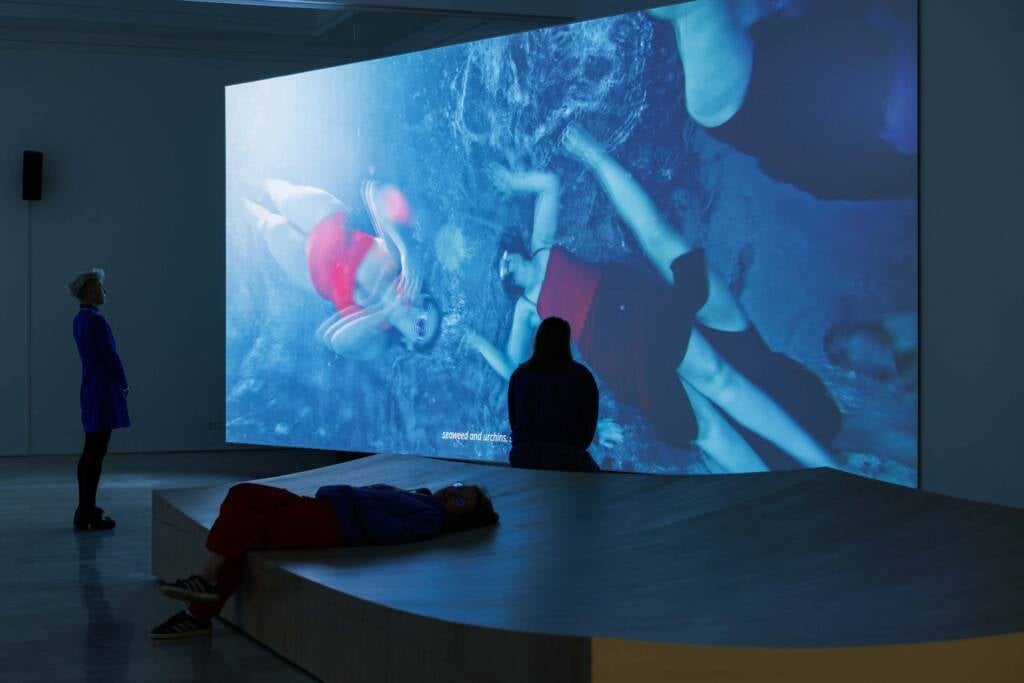
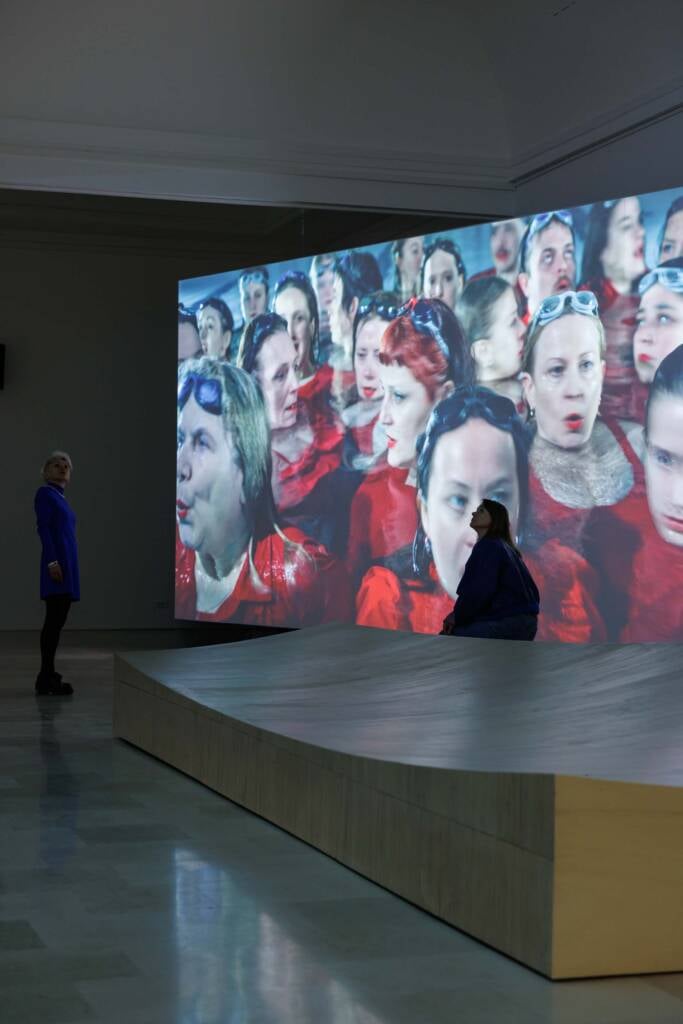
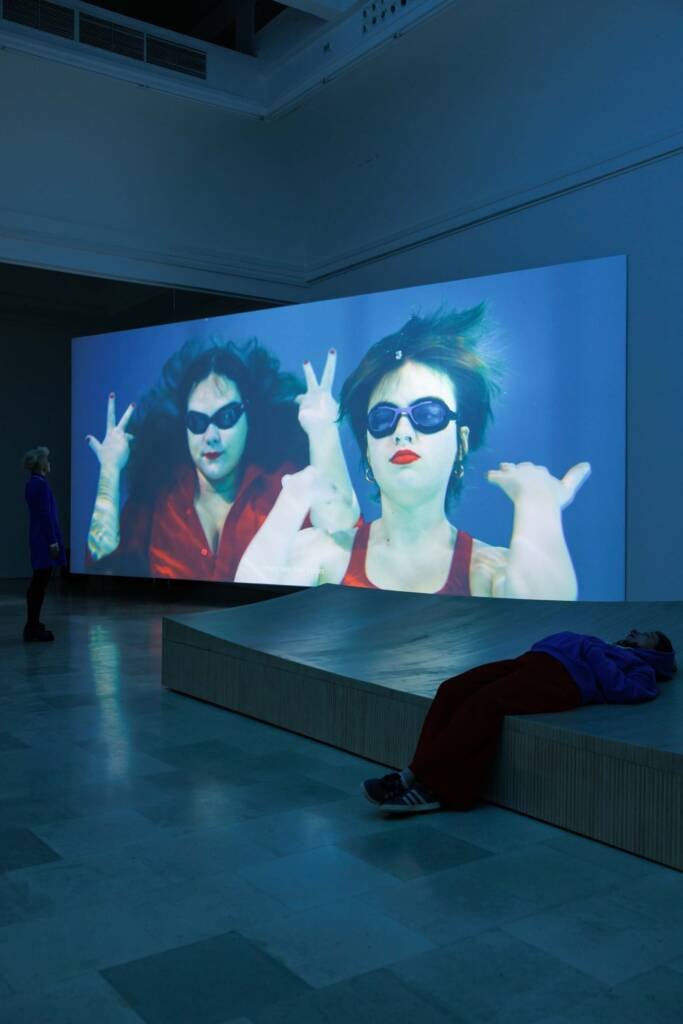
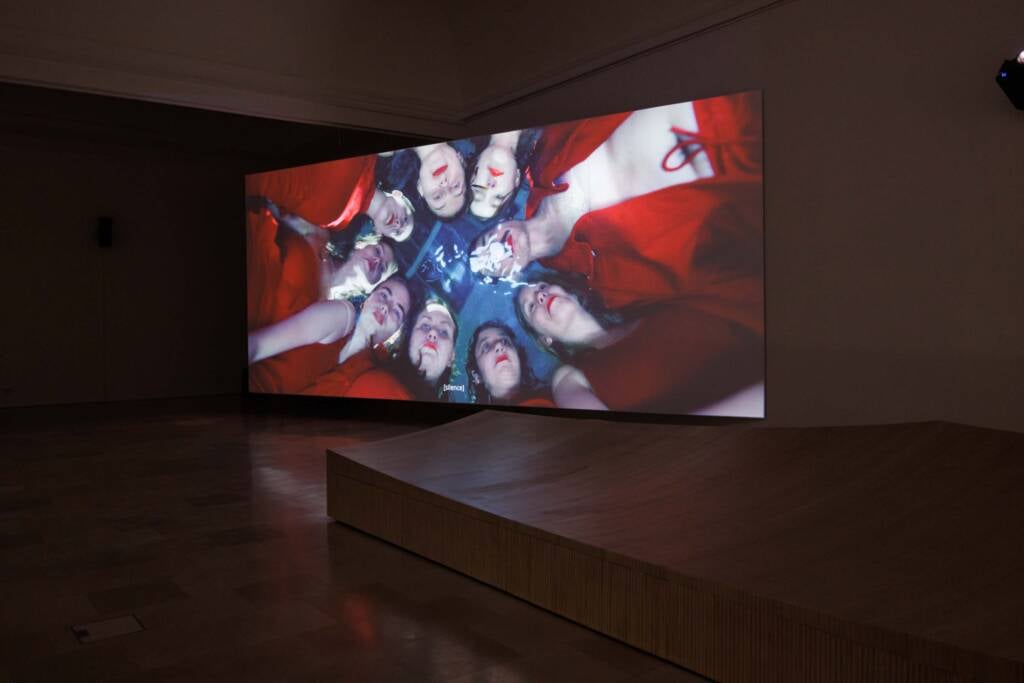
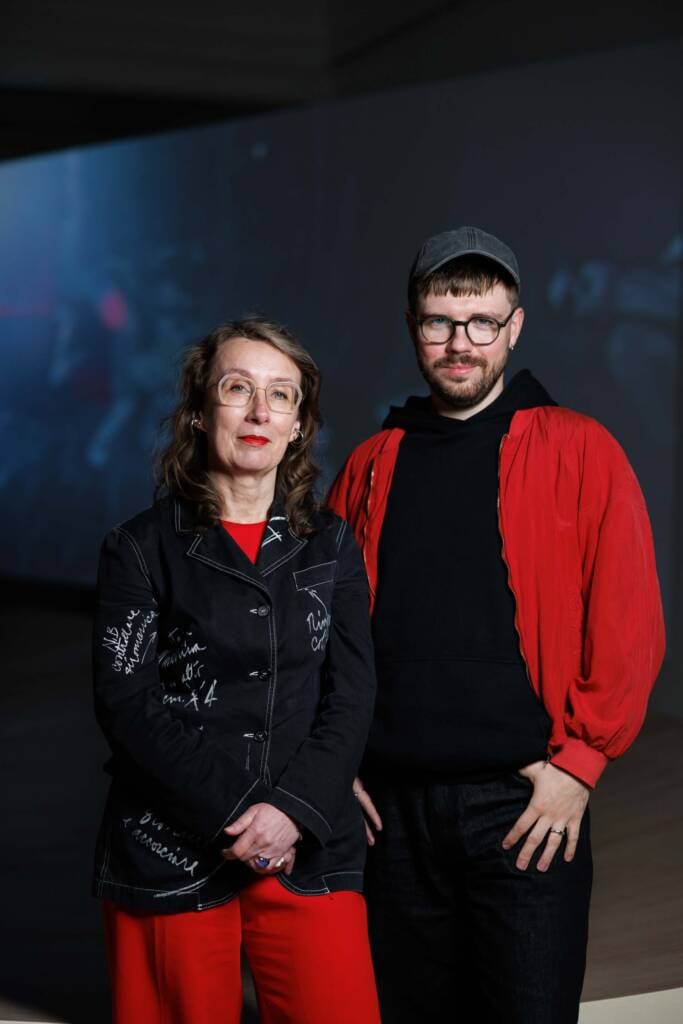
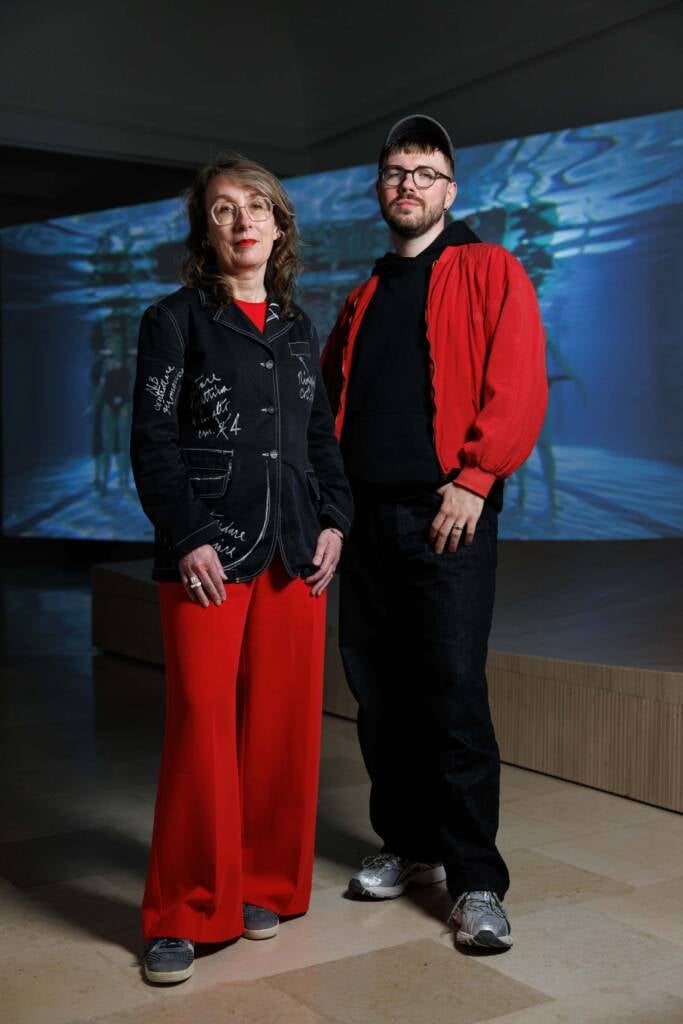
Presented at the Polish Pavilion by artists Bogna Burska and Daniel Kotowski, and curated by Ewa Chomicka and Jolanta Woszczenko, Liquid Tongues brings together multiple choreographies in which marginalized languages, Deaf culture, whale communication, and more-than-human forms of expression coexist within a shared system.
Rooted in Burska’s earlier practice and her collaboration with Kotowski—whose primary language is sign—the project expands into work with both hearing and Deaf performers of Choir in Motion. The group spent long winter hours filming in a pool in Warsaw, as well as in rivers and abandoned outdoor swimming pools.
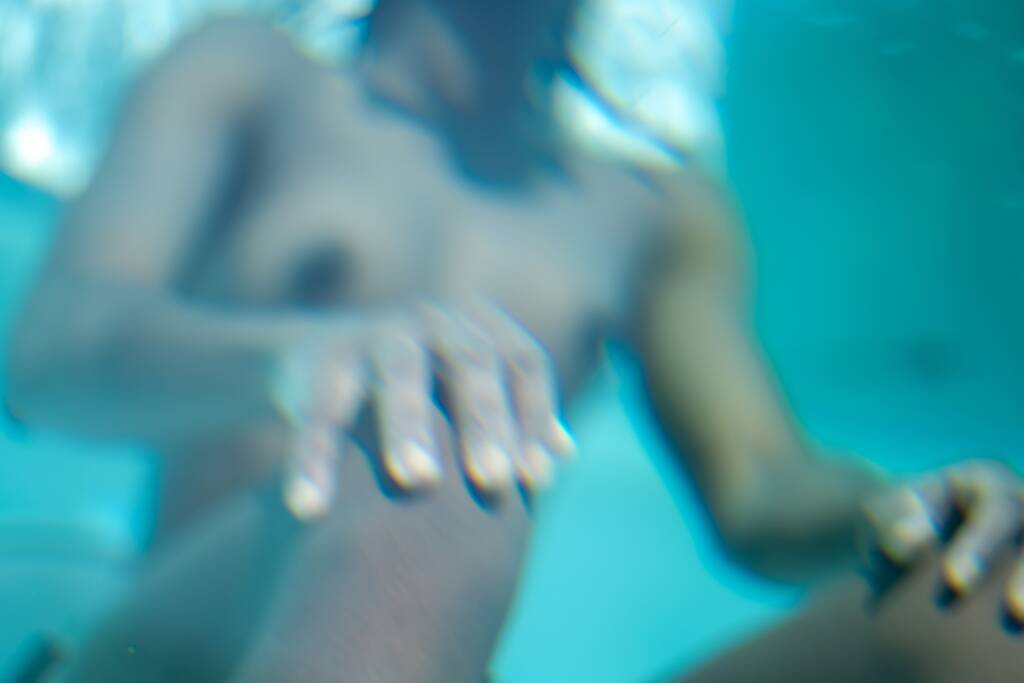
Bodies in red costumes, doubled against deep blue waters, recur throughout the film, evoking the sensation of looking into a lake where reflection exists across two worlds. Developed with cinematographer Magda Mosiewicz, this underwater mirror motif becomes central to the visual language of the work.
Across these settings, water becomes both stage and environment, where what is lived above is transformed below.
“I realized at some point that when I am underwater, I lose my own capacity to communicate,” Burska reflects, “but Daniel, or any signing person underwater, is able to maintain it.” In this reversal, communication hierarchies shift. Underwater, sign language remains readable while spoken language dissolves, reconfiguring social and sensory order.
Whales become another point of reference, as does sound in water itself. The score, composed by Alexandra Grikag, draws from whale song and communication patterns, while Burska was inspired by the work of Roger Payne, whose recordings of whale vocalizations transformed scientific understanding and helped to actually stop commercial whaling. It remains a striking example of how art can result in positive outcomes.
As Burska notes from her research, “humans seem to think that wat is quiet, but it is actually the opposite. Sound travels four times faster in water.” She adds that when underwater environments become too loud, whales respond by reducing or ceasing vocalization altogether, leading to breakdowns in communication, navigation, and even reproduction.
From these insights, the work evolves into a speculative narrative that moves between land and water, where different modes of communication coexist and change depending on the environment. “It’s about rethinking how we relate and communicate from scratch, and creating a world where things are done differently and made possible,” she says.
“Our message is to encourage the building of new worlds,” she says, while acknowledging that such propositions could often be dismissed as naïve, yet she embraces that risk. “Sometimes it is enough to do things we are used to seeing as impossible,” she adds, “to make them real.”
The production unfolded over months of continuous work, requiring close collaboration across disciplines. The team, Burska notes, became “almost like a family,” navigating technical constraints and physical strain together. The final installation is presented across two screens and dual perspectives: one at eye level, unfolding as a poetic narrative; the other requiring viewers to look upward, as if from beneath the surface.
Even upon arrival in Venice, and in the days leading up to the opening, the team continued refining and adapting the installation. “Each morning, we did what was needed at that moment,” Burska recalls.
They were also met with an unexpected presence: a seabird had built a nest directly in front of the pavilion, requiring a protective fence to be built around it. Yet another reminder of nature’s choreography.
Photography by JACOPO SALVI (ALTOMARE)/ZACHETA ARCHIVE
Water as mirror of a decaying system
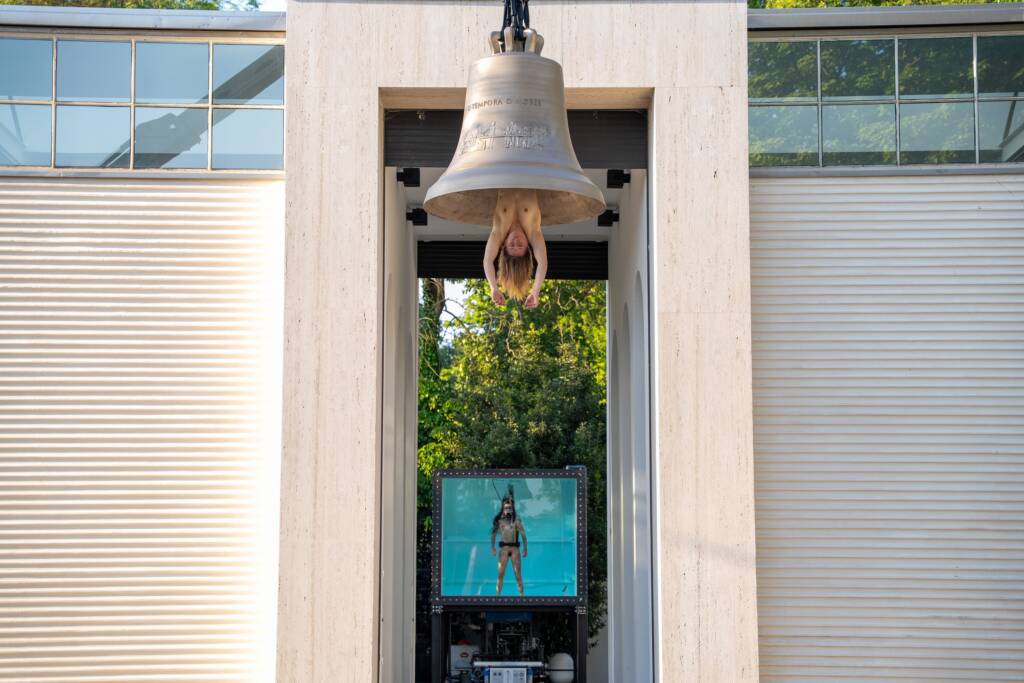
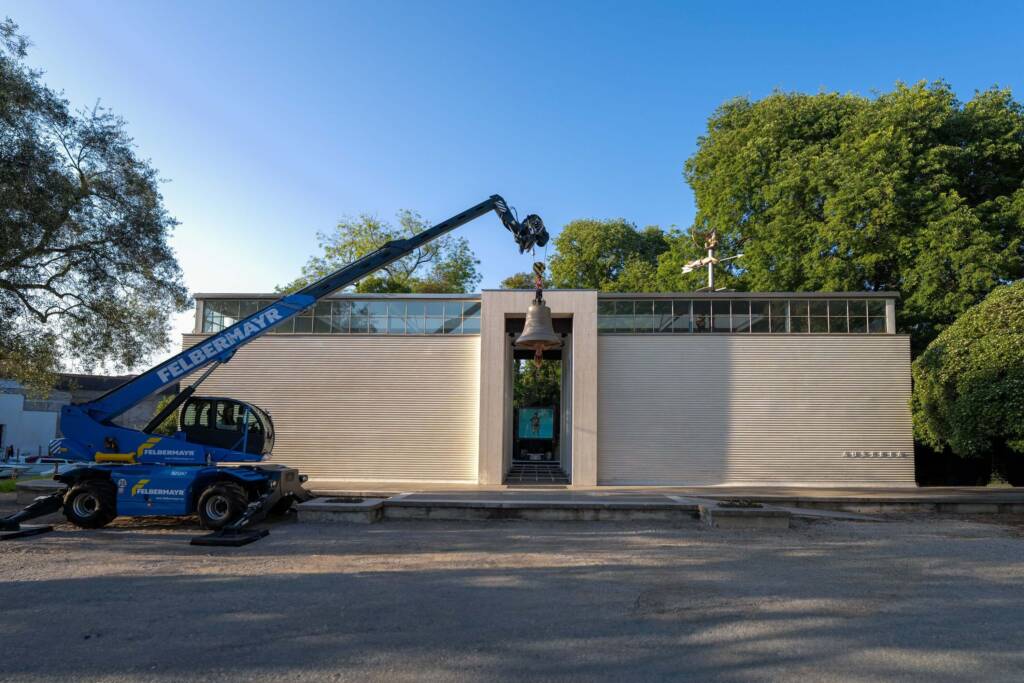
We catch curator Nora-Swantje Almes after the inauguration of the Austrian Pavilion, which features the work of artist and choreographer Florentina Holzinger. “This morning we had a kind of prelude to the pavilion. We found this bell underwater in the Venetian lagoon, lifted it out with the performers, and brought it here in a procession.”
She continues: “I think this is really what Florentina’s work does. She finds these narratives that are hidden under the surface, making visible what we cannot or do not want to immediately see.”
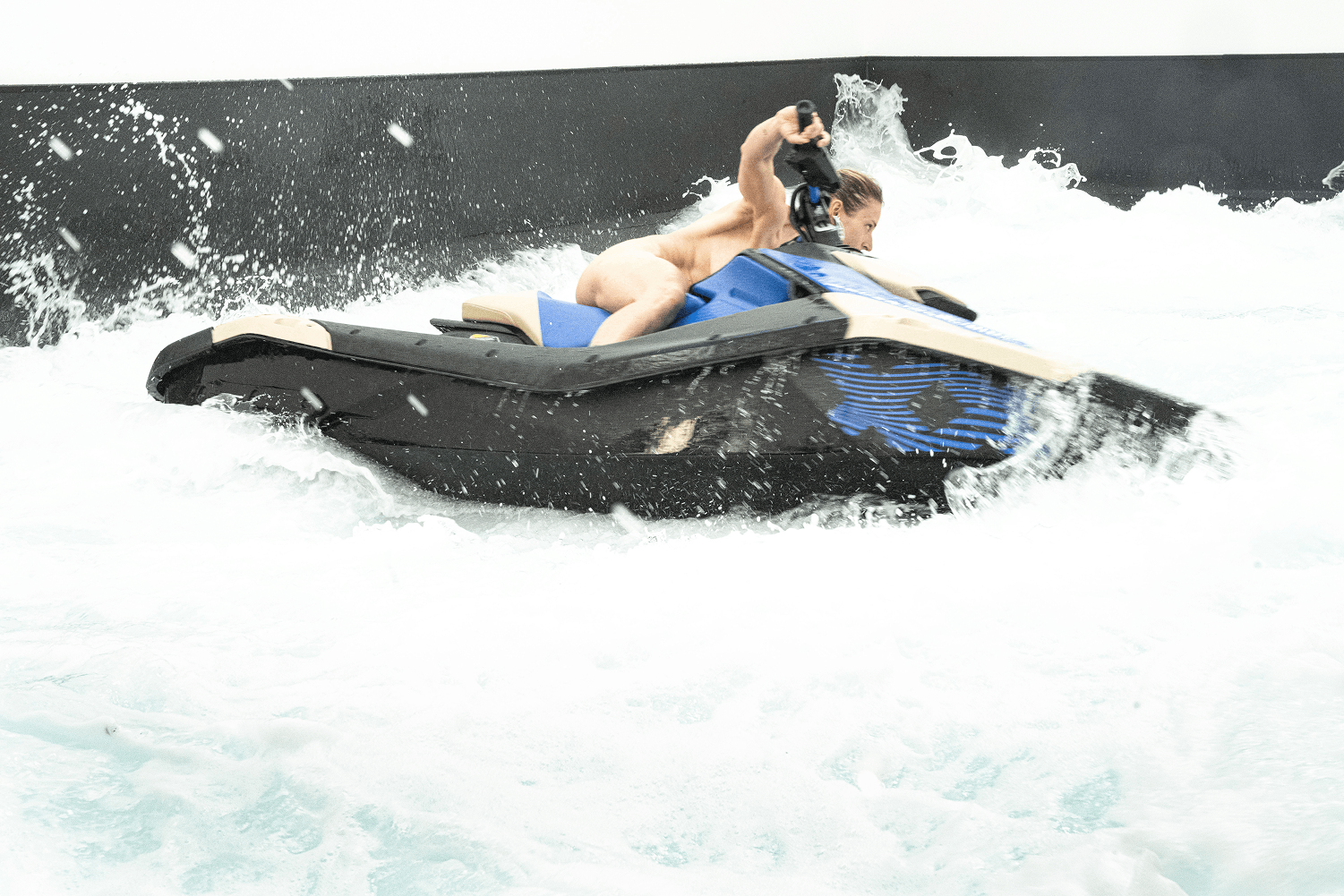
During the opening, a nude Holzinger ascended the bell by rope, adorned only with two metal bells attached to her hips. Suspended upside down, she activated the bell through the movement of her own body, striking it and transforming herself simultaneously into artist and instrument.
As we enter the pavilion, a question comes up: if water is both life-giving and dangerous, how do we navigate its contradicting powers?
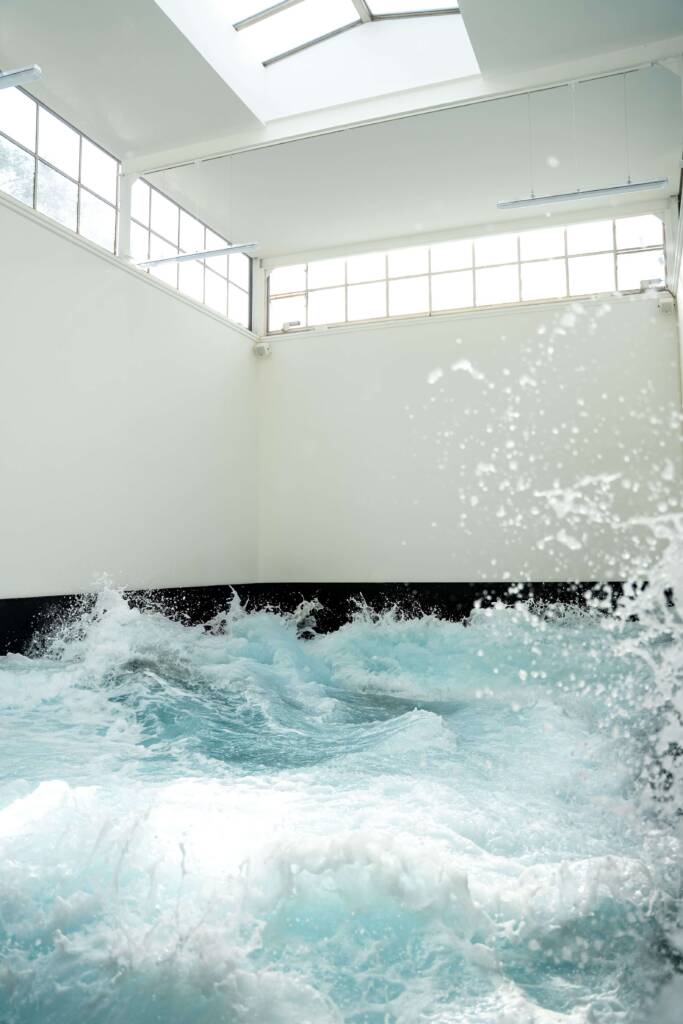
In the context of SEAWORLD VENICE, the work operates both as concept and as a reflection of the conditions of the body. Almes explains: “What we do here is really flood the pavilion with the urine of the visitors, which means there is a dependency on the visitors who come here.” It becomes a sort of donation to continue the pavilion and the artwork running, making visible the water cycles that pass through our bodies. Here, even going to the toilet becomes a performative act.
The pavilion is structured in five sections. At its center, a naked performer on oxygen is immersed in an aquarium. On either side, two portable toilets are made available to visitors, where the urine is collected and filtered through a system in the middle before being circulated back into the tank where the performer is situated.
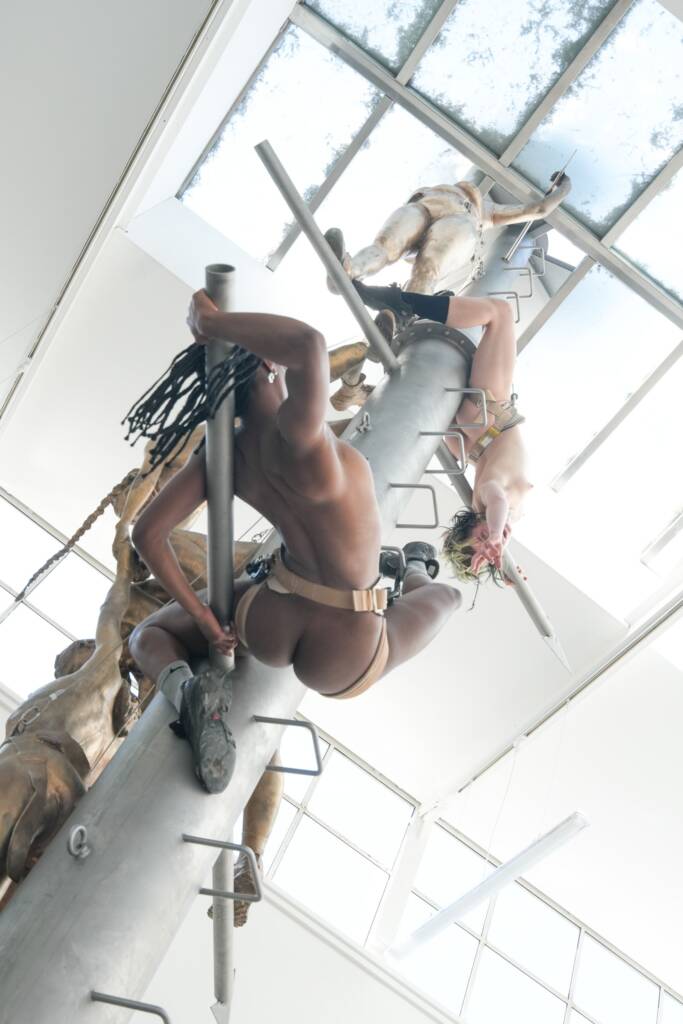
One section is dedicated to a jet ski intervention. Next to it is the space where the water flows when the jet ski is in use. Another space contains sculptures of women, where a performer climbs a rotating pole among the figures.
Outside this room, a visible filtration system operates as part of the broader water loop. At one point, a performer tells us the system is broken after someone defecated in the toilets. It’s unconfirmed whether this is true. At some point, the line between fact and fiction begins to blur. Inside the portable toilets, a sign simply reads: “No shitting.”
Despite these ambiguities, Almes highlights the rigor of the work. “The biggest challenge was understanding how to make all of this work in a heritage-protected building,” she says. “Safety is really important for us and we always work in a controlled way.”
The scale of the project is equally demanding. “We inhabit the pavilion now,” Almes adds. The team arrived in Venice weeks ago, though parts of the technical crew have been on site for months. With a large team rotating throughout the duration of the Biennale, the work unfolds over seven months of continuous bodily presence. The pavilion remains open daily, operating within regular exhibition hours while sustaining an ongoing live presentation.
For Almes, who is also the Curator for Live Programme and Outreach at the Gropius Bau since 2024, the starting point remains the artistic vision. “I see myself as a curator who collaborates closely with the artist,” she explains. Her ongoing dialogue with Holzinger dates back to 2024, when they worked together at Bergen Kunsthall on outdoor performances. “That moment—bringing the work outside the theater and into the real world—was where I felt her practice expanded. This feels like a continuation of that direction.”
While Venice is rarely treated as a thematic starting point, many of its conditions resonate with Holzinger’s existing practice. She has worked with intense research on water as an element, as a myth, as a resource that is vital for us, but also something very threatened. She worked with this in Ophelia’s Got Talent, which was a large-scale theater production, and then with SANCTA, her opera, which dealt a lot with the church as an institution. There is always this entertaining and subverting spectacle factor in Florentina’s work, Almes shares, so SEAWORLD VENICE became a really good anchor point. “It’s actually the same title we already used in our proposal, which is one thing that hasn’t changed,” says Almes.
The water becomes a center not only for the project’s spatial and conceptual development, but also for what it stands to convey. “For me, the water surface becomes a reflective mirror,” Almes says. “People see themselves in it.” Walking through the pavilion, visitors encounter shifting images, bodies, and systems. What emerges is not only immersion, but confrontation, where viewers are asked to recognize their own role within the cycles. “You walk into the pavilion and encounter Florentina’s images and composition. I think it’s important that people have this moment of encounter, think about how they relate to the work and maybe also feel their responsibility and complicity in this whole system that we are part of and that is currently crumbling.”
When asked about the recent jury resignation, Almes sees it less as shock than as symptom. “It reflects these broken systems we are living in,” she says. “Structures we know are no longer functioning in the way they should. So we have to find new ways of dealing with them.”
This logic extends into the pavilion’s infrastructural thinking. As part of their research, the team explored how to build a functioning recycling system. One reference was a research project at the University of Ghent, which investigated how urine can be treated and transformed into water suitable for brewing beer. Another was the experimental initiative at the Roskilde Festival, where urine collected from attendees was used for beer production.
“We loved these ideas because it showed that this kind of recycling system is actually possible,” Almes says. The toilets used in the pavilion are urine-diverting systems already available and implemented in various contexts worldwide.
At that moment, we look down at the beers we’ve been holding since the opening, served freely throughout the afternoon. “No, don’t worry,” Almes says. “It’s just Austrian beer.”
Photography courtesy of NICOLE MARIANNA WYTYCZAK
Photography courtesy of NICOLE MARIANNA WYTYCZAK
Photography courtesy of NICOLE MARIANNA WYTYCZAK
Photography courtesy of NICOLE MARIANNA WYTYCZAK
Photography courtesy of NICOLE MARIANNA WYTYCZAK
The flow of a new time
In Venice itself, water is never still. Holzinger herself points this out during her speech at the opening, describing how a circulation process takes place over a roughly six-hour cycle: a high tide pushes water from the sea into the lagoon, and then, in the following low tide, it flows back out again. This happens twice a day, a continuous flow that, in her framing, illustrates a natural form of purification.
From the seafarers and mussels in the Philippine Pavilion, to the Polish Pavilion’s interpretation of whale communication codes through spoken English and International Sign, to the Austrian Pavilion’s reworking of inherited symbols of the past, water appears in multiple ways, but together forms a collective symphony. At the pavilions, water becomes more than an element—it becomes a movement to listen.
Words: LIZ BAUTISTA