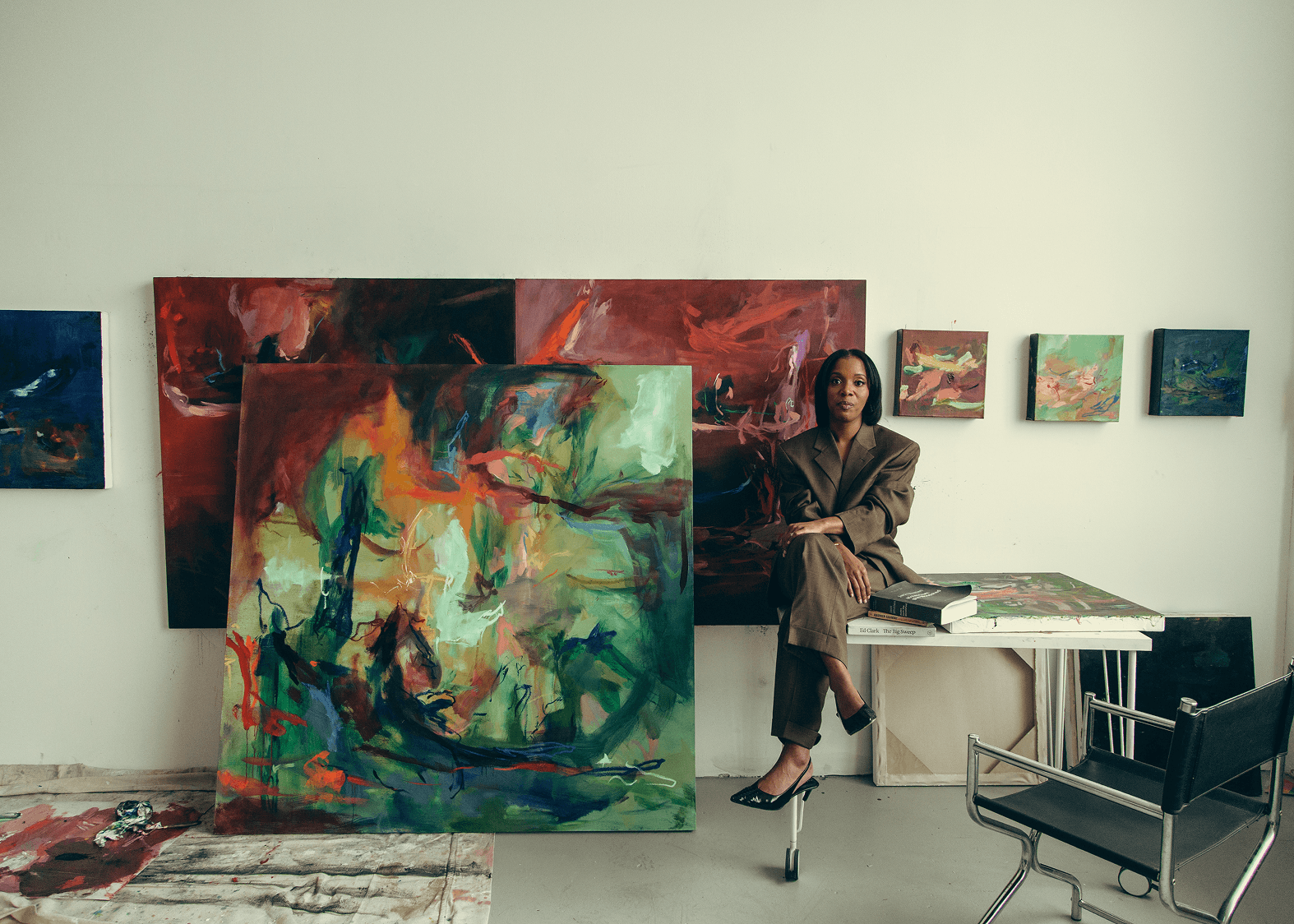
LINDSAY ADAMS. Photography by ERIN MORGAN TAYLOR

Lindsay Adams on Fugitivity, Space, and Abstract Painting

In the span of just a few years, Lindsay Adams has established herself as a promising emerging artist. With an interdisciplinary background in social sciences, she graduated from the School of the Art Institute of Chicago in 2025, soon afterwards experiencing a remarkably swift ascent: a solo exhibition at Sean Kelly Gallery in New York, a residency at Silver Art Projects, and a prestigious commission for the forthcoming Obama Presidential Center. As the youngest artist selected for this project, Adams joins a roster that includes Theaster Gates, Carrie Mae Weems, and Jenny Holzer. Her work, draws from her  background in social sciences and is informed by a keen awareness of history, place, and belonging, opens new emotional and conceptual horizons in abstract painting. 

Her current exhibition, titled SOIL, is on view at Sean Kelly Gallery through June 6th, 2026. There, Adams pulls luminous, expansive worlds from a profoundly dark ground. She shows color as a dynamic material rather than something stagnant or still, exploring its influence on space and surroundings. The works hover between the familiar and the distant, inviting viewers to slow down amid a fragmented, image-saturated culture and engage with painting as a space for contemplation, wonder, and imaginative refusal.

hube: You’ve had an incredibly fast rise since graduating from SAIC in 2025—you opened a solo exhibition at Sean Kelly Gallery, received an Obama Presidential Center commission, and more. What has this moment felt like?

Lindsay Adams: I’ve had a wonderful year since graduating and am deeply grateful for the support and space I’ve found for my work. I have been working hard in the studio and in my research and am excited to continue building out various projects. This moment has felt encouraging and enchanting, and I am grateful to be a steward of my practice and to grow alongside it. I feel very grounded in the present and look forward to the future.

h: You came to painting after studying social sciences. How does that analytical lens shape your studio process, especially in thinking about abstraction, space, fugitivity, or psychological landscapes?

LA: Ive been painting for over half of my life at this point. I’ve had a chance to live, explore, and study subjects alongside art, which has made my appreciation and understanding for my practice much clearer. Coming to painting through the social sciences fundamentally shaped the way I think, observe, and move through my practice. I am constantly aware of interconnectedness and am discovering how things are related. I studied International Studies and Spanish at University of Richmond while minoring in Studio Art, and even then I was driven by a desire to understand worlds beyond what was directly in front of me. I’ve always been deeply interested in history, travel, cultural exchange, and the ways people construct meaning, belonging, and identity across space. My degree was interdisciplinary and I took classes across departments, so much of my studies spanned history, anthropology, political science, and sociology. 

Embracing the social sciences and having a liberal arts background has given me the latitude to create a practice rooted in observation, research, and an empathetic attention to my immediate environment and the larger world. This layered way of thinking and problem-solving has allowed me a diversity in thought and making. I push and pull from different parts of myself and the world and bring that into the studio. My paintings are pensive and emotional, and I build them both intently and intuitively. I build colors and gestures, creating worlds that expand and hold. Fugitivity and this understanding of refusal, offers a way of thinking about movement, possibility, and refusal beyond fixed categories. It informs how I think about belonging, not as permanence but as something continually made and remade. 
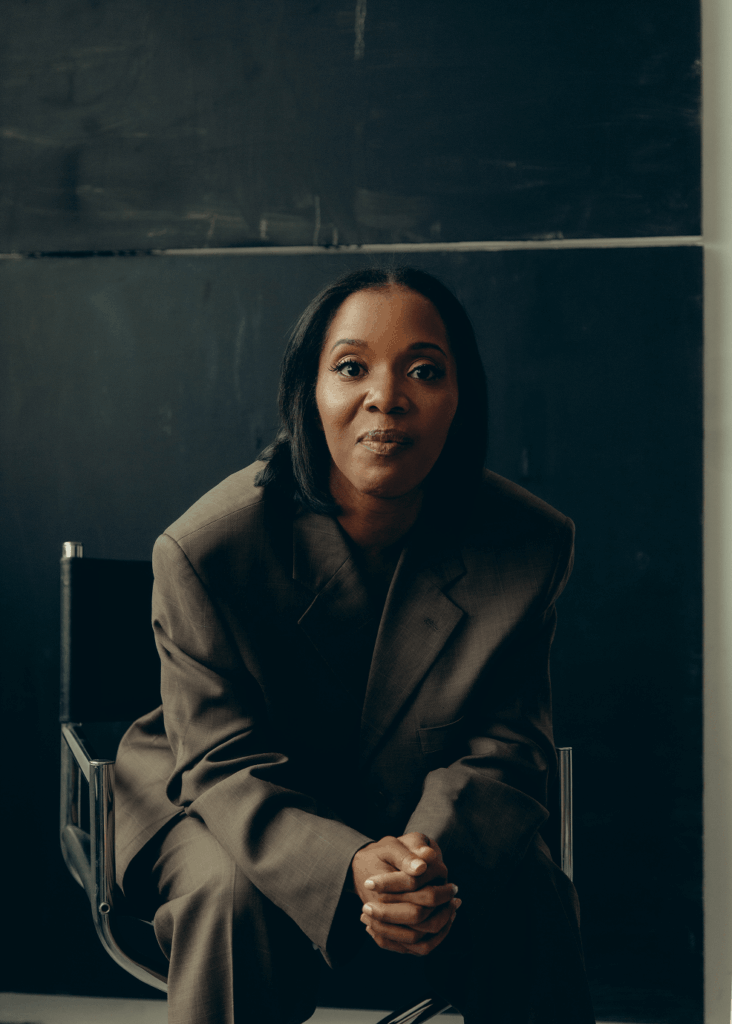
Lindsay Adams
abstract painting
Silver Art Projects
emerging artist
LINDSAY ADAMS
Photography by ERIN MORGAN TAYLOR
Lindsay Adams
abstract painting
Silver Art Projects
emerging artist
Photography by IAM VECCHIOTTI
Lindsay Adams
abstract painting
Silver Art Projects
emerging artist
Installation view of LINDSAY ADAMS: SOIL at SEAN KELLY, New York, April 17 – May 30, 2026
Photography by JASON WYCHE, Courtesy of SEAN KELLY, New York
Lindsay Adams
abstract painting
Silver Art Projects
emerging artist
LINDSAY ADAMS
Chocolate City’s Heartbeat, 2026 © LINDSAY ADAMS
Courtesy of the artist and SEAN KELLY, New York
Lindsay Adams
abstract painting
Silver Art Projects
emerging artist
LINDSAY ADAMS
Carrie Blue, 2026 © LINDSAY ADAMS
Courtesy of the artist and SEAN KELLY, New York
Lindsay Adams
abstract painting
Silver Art Projects
emerging artist
Installation view of LINDSAY ADAMS: SOIL at SEAN KELLY, New York, April 17 – May 30, 2026
Photography by JASON WYCHE, Courtesy of SEAN KELLY, New York

h: You were born in Washington, D.C., completed your bachelor’s in Richmond, and are currently based between Chicago and New York, finishing a residency at Silver Art Projects. How do different environments feed into the emotional possibilities in your work?

LA: In many ways Washington, Chicago, and New York share a similar cultural resonance. There is plenty of art and a grounded community that embraces the history of the places, albeit complex. I have felt deeply embraced in different ways across these places and I enjoy being in community with people with different backgrounds and experiences. In my graduate thesis I wrote about belonging and how it isn’t rooted in geographic permanence; it moves and shifts and you can carry it with you. I posited that “belonging is a dynamic, fugitive act—formed through movement, memory, and the ongoing (re)imagining of place.” Home can mean and feel like many different places or things. I feel like my movement has allowed that: I have confronted change, done a sort of rebuilding, and I know clearly what it means to miss a place while still having it with you.

h: Your first solo exhibition in New York, titled SOIL, is now on view at Sean Kelly Gallery. Can you tell us about the creative process behind the works in this show, and why did you choose this direction for your NYC debut?

LA: When I began working on the current body of work for SOIL, I knew I wanted to lean deeply into the notions of both place and expanse. I’ve been thinking a lot about the state of being, and of being freely, and I’ve been capturing that. I asked myself, “What does it mean to refuse containment?” and used that as a conceptual and creative tool.

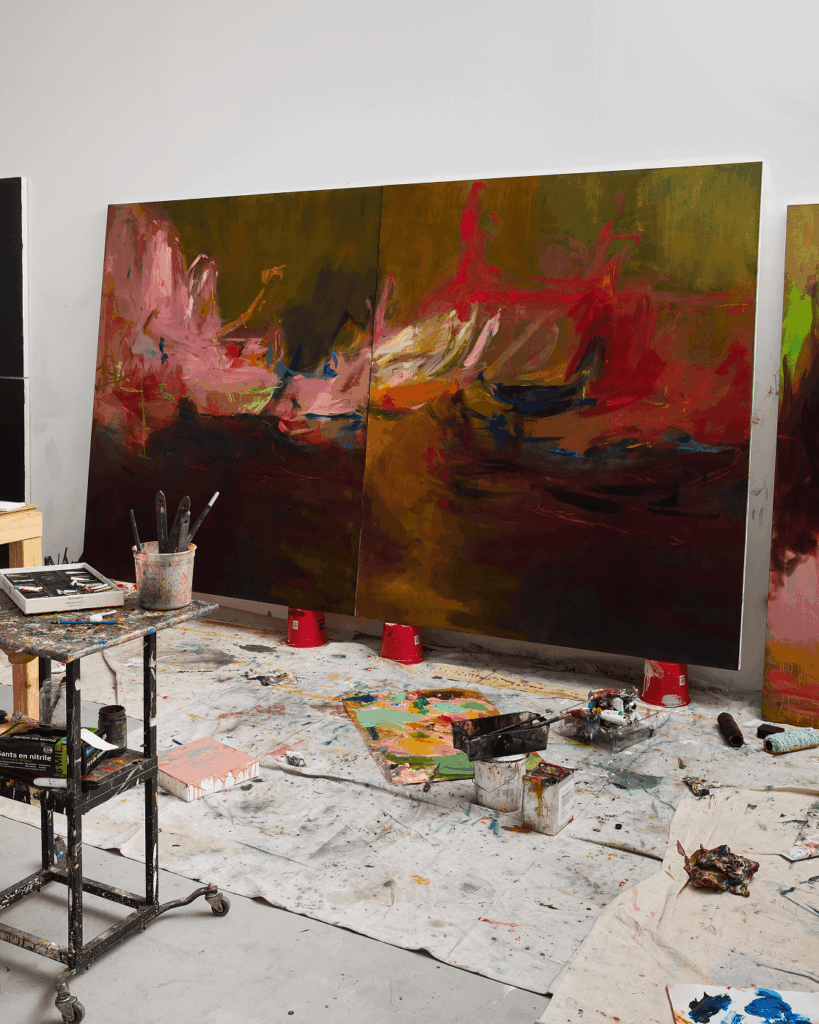
In SOIL, each painting begins with the lamp black pigment, applied as the initial layer of paint on the canvas. Starting with black began as a formal decision, because I wanted to challenge the ways I had been building my paintings. I normally build paintings from light to dark, but wanted to literally pull light and life out of darkness. This work offers a space to really see my hand. I began adding oil sticks and oil pastel alongside the oil paint, changing the scale of the marks that exist in between and on the layers. These works are very emotional and range across color, creating both natural and celestial environments. They feel both familiar and distant, and I pushed my use of color in new ways.

h: What does it mean to you to be the youngest artist selected for the Obama Presidential Center commission, alongside established names like Theaster Gates, Carrie Mae Weems, and Jenny Holzer? How do you see yourself entering into dialogue with their work and legacies, and how did you approach creating the commissioned piece?

LA: I am very excited to be among this dynamic group of artists commissioned by Virginia Shore for the Obama Presidential Center. It is very encouraging to be in conversation with other artists who have translated their work and practice across mediums and spaces. The Center will be a living legacy and place of community, culture, and learning, and I am thrilled to be a part of that.

Virginia and I worked together to select one of my works to use as the foundation and inspiration for the commission. I started with the high-resolution image of the painting and then worked to digitally maintain some elements of the original work and translated that across the silk screen for the installation.

Lindsay Adams
abstract painting
Silver Art Projects
emerging artist
LINDSAY ADAMS
SOIL (Virginia Red Clay), 2026 © LINDSAY ADAMS
Courtesy of the artist and SEAN KELLY, New York

h: Abstraction is frequently seen as universal, but it’s always filtered through the artist’s identity. How do you perceive the tension between art as a reflection of self and art as a universal language?

LA: Abstraction does offer a different entry point to experiencing and interpreting art. I think a wonderful aspect of abstraction is that it doesn’t always need to be filtered through identity and it can exist beyond that. In a beautiful way it can sit in both a place of critical discourse and negotiation and a place of simplicity. Ultimately, it lands differently with the maker, the viewer, and the interpreter. I think art serves as a reflection of self and as witness to the world around the art. That complexity and tension between the two offers a latitude for them to connect across space and time.

h: What does freedom feel or look like for you in the act of painting itself, especially in the gestures, disruptions, and accumulations of color?

LA: Freedom in painting often feels like a constant act of discovery. There are so many windows and doors that I arrive at in the studio that take me on dynamic adventures. Some of my marks are searching for the others; some end, and some don’t. It is really quite an alchemic experience. A part of the freedom that I have allowed myself to arrive at is also a matter of trust. I trust my hand, heart, and mind, and allow myself both joy and frustration in that journey. Though my paintings are errant, they also exist within a structure of color and form. After all, I am creating an image. Disruption opens up new possibilities, where gesture can redirect the entire composition of a work, and a field of color can create a sense of expansiveness that extends beyond the edges of the canvas. Painting exists as a place of critical wander and a search for resolve. 

h: As an emerging artist in a new generation rethinking color, gesture, and mark-making, what philosophical or emotional possibilities do you hope abstraction can open up for viewers in a fragmented, image-saturated world?

LA: We live in a world that is increasingly fast, fragmented, and saturated with images. One of the things I value most about abstraction is its ability to slow us down and create space for contemplation. I hope to create works that encourage viewers to engage their imagination and sense of wonder. For me, abstraction is not about escaping the world but about offering another way to move through it. It can create space for reflection and curiosity.

I don’t spend too much time trying to figure out whether or not the work is understood. I want the work to be experienced, ideally in person. Abstraction can hold complexity; it is a nuanced genre that allows for expansive visual and conceptual vernacular. In that sense, it feels like a distinct gift to navigate my very abstract life and the abstract world that I live in. Abstraction is a tool of imagination, and imagination is a tool of refusal. It allows me to do everything I want—whether with a figure and a representational form, or without.

h: Looking ahead, what kind of wonder or questions are you hoping to keep alive in your practice—and perhaps in the broader cultural conversation around painting, memory, and belonging?

LA: Looking ahead, I want to continue protecting and cultivating a sense of wonder and embracing my keen understanding that imagination is a radical act. We’re living in a world that encourages speed, certainty, and immediacy, and I’m interested in holding onto questions rather than rushing toward fixed answers. 

I hope the cultural conversation around painting continues to make room for multiplicity: for different histories, different relationships to memory, and different understandings of space and identity. I’m interested in how painting can function as a site of listening and relation, not just representation. As someone who thinks a great deal about memory, place, and belonging, I hope my work encourages people to consider how histories persist even when physical spaces disappear, and how imagination itself can become a form of survival, resistance, and world-building. Ultimately, I appreciate being able to use color, form, and the foundation of art making to continue an expansive conversation of both art and culture.

Lindsay Adams
abstract painting
Silver Art Projects
emerging artist
Photography by IAM VECCHIOTTI
Lindsay Adams
abstract painting
Silver Art Projects
emerging artist
Photography by IAM VECCHIOTTI
Lindsay Adams
abstract painting
Silver Art Projects
emerging artist
Photography by IAM VECCHIOTTI
Lindsay Adams
abstract painting
Silver Art Projects
emerging artist
LINDSAY ADAMS
Photography by ERIN MORGAN TAYLOR

Special thanks to SUTTON COMMUNICATIONS

ISSUE 8

issue no8

Discover the new issue — available now