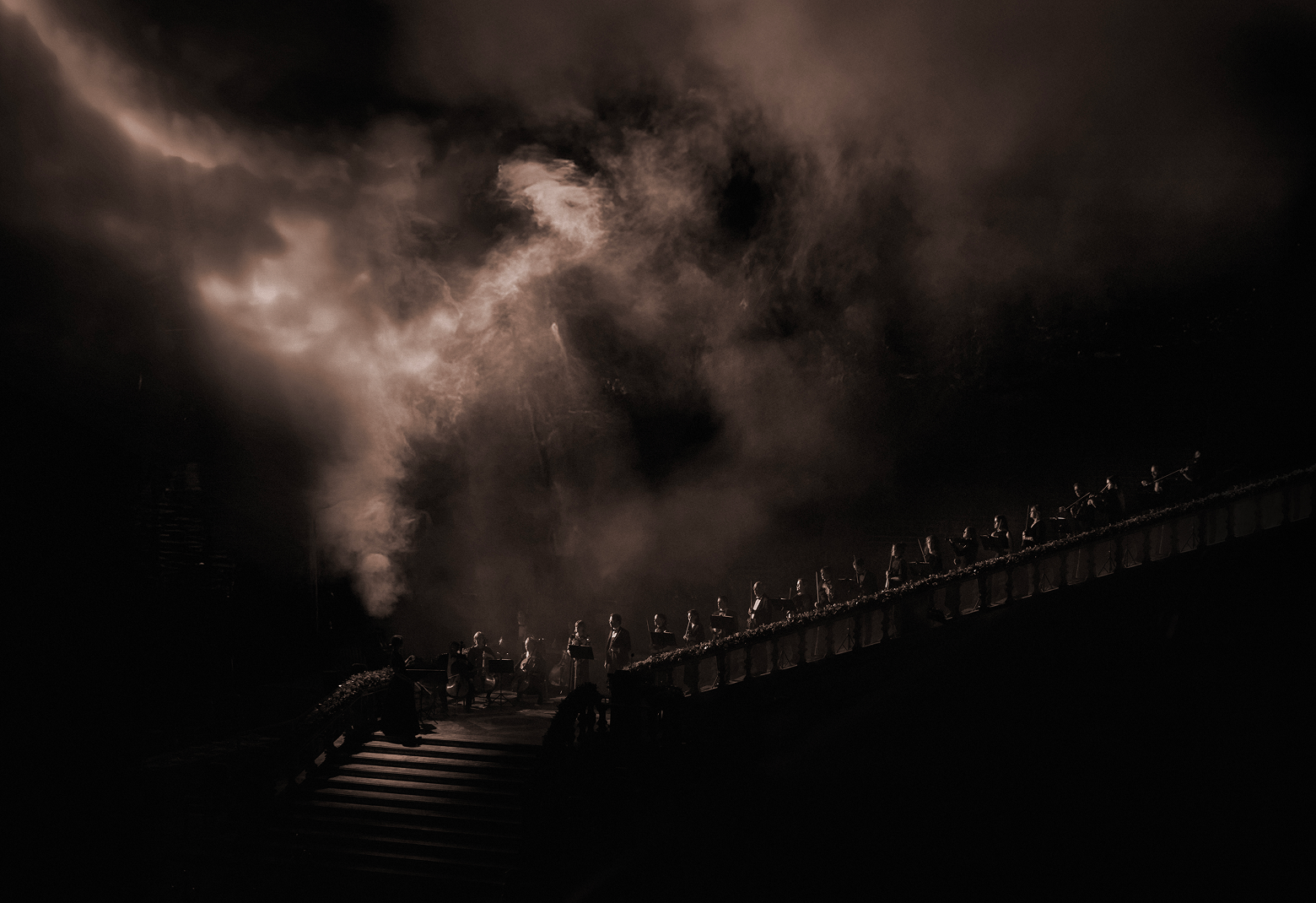
After Hours Til Dawn Tour
São Paulo, 2024
Courtesy of ALEXANDER WESSELY
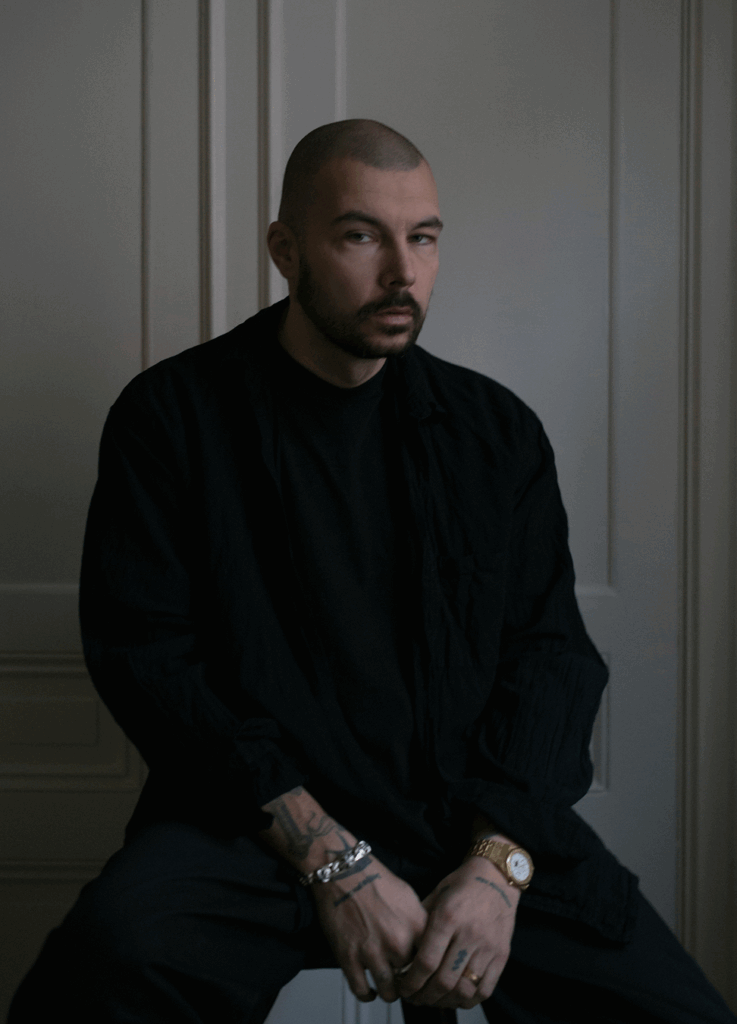
Alexander Wessely builds worlds. Immersive and monumental, these dramatic but quiet landscapes are populated by sculptural forms that evoke mythic figures and relics that reveal themselves as both human and divine. Raised between Athens and Stockholm, Wessely has developed a distinct artistic language that combines the devotional and philosophical traditions of Greece with the visual restraint and clarity of Swedish design.
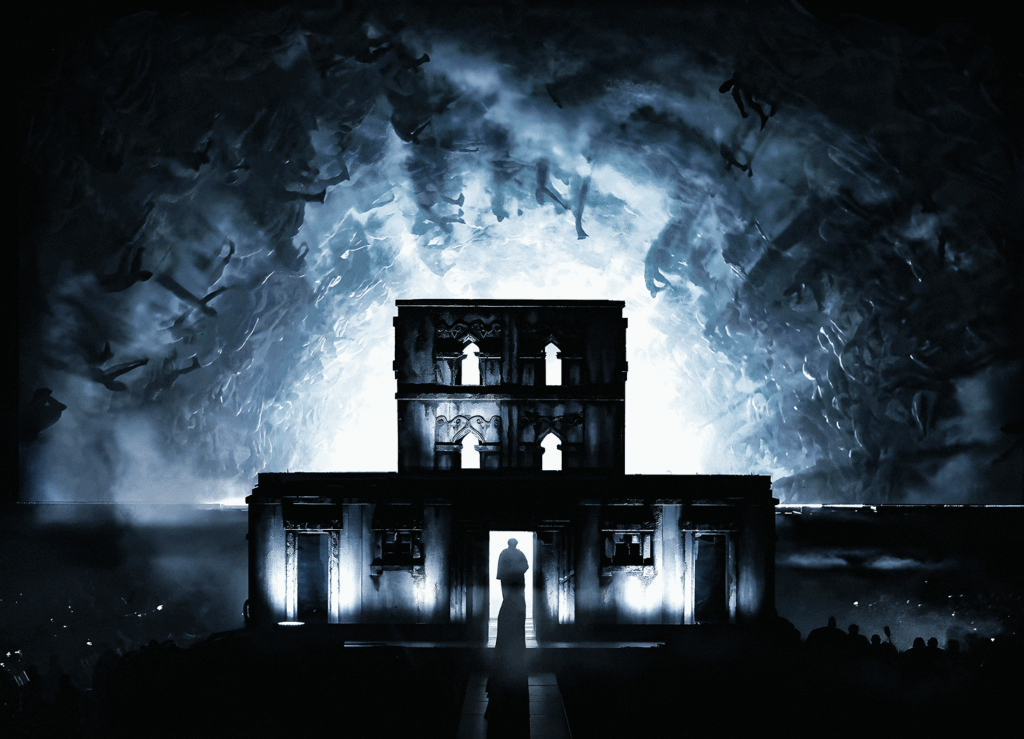
As a child, his yiayia would tell him stories in which “gods walked among people and the spiritual world was as real as the physical one.” It is unsurprising, then, that so much of his work explores the merging of the real and unreal. “For me, that boundary was always blurred,” he tells hube. “Now I use technology to do it differently.” Across scale and form—from marble busts to spatial installations for the Sphere, from photographs to stage design for some of the world’s most famed performers—he seeks the same experience for the viewer: a moment of transcendence where seeing is replaced by feeling.
hube: Art often creates an emotional journey for the viewer. In your work, do you consider how to engage with individual emotions and collective feelings?
Alexander Wessely: I’m obsessed with the idea that no two people in an audience should feel the same thing. When I created the concept for the Nobel Prize ceremony, I thought a lot about this. A room full of laureates, royalty, diplomats, scientists, artists, all watching the same thing but bringing completely different lives to it. The collective part comes from the ritual, the shared space, the music. But the individual experience is what you carry into it. I never want to dictate how someone should feel. I want to create a space where feeling is unavoidable. That’s true whether it’s a ceremony for 1,500 people or a stadium with 60,000.
h: Philosophy has long reflected on the boundary between the real and the imaginary. As an artist, does such a line exist?
AW: No. And I actively try to destroy it. I’m drawn to this idea of the audience forgetting the boundaries of reality, merging the physical and the digital until you can’t tell what’s what.
At times, I want people to experience existential terror. That’s not a gimmick, it comes from a genuine place. My grandmother in Greece raised me on philosophy, on stories where gods walked among people and the spiritual world was as real as the physical one. I grew up moving between Athens and Stockholm, two completely different realities. So for me, that boundary was always blurred. Now I use technology to do it deliberately.