Felipe Escudero’s houses look as if they landed rather than rose from the ground. Outside Quito, a long concrete roof folds once, then again, and settles over a hillside with the casual precision of something that was never meant to be heavy. The rooms inside feel staged, almost, but not in a showy way—more like the quiet after a scene has already played. Escudero, who is Ecuadorian and Brazilian and keeps studios in Quito and Madrid, has been making this kind of contemporary architecture for a decade: buildings that seem both exact and slightly unreal.
He studied at Georgia Tech and the Architectural Association, put in time at MAD in Beijing and Heatherwick in London, then came home. Back in the Andes, he found materials that still carried their own weather—volcanic stone, abrupt light, trees unwilling to stay decorative. A restaurant ceiling that moves like water, a house wrapped around a single magnolia tree, collective residential projects that seem to blend with nature, furniture that sits somewhere between object and idea: all of it comes from the same stubborn preference for future living spaces—ones that make you notice you are in them.
hube: You characterize your work as “poetic modernism.” What does that term mean to you, and how do you balance the clarity and lightness of modernism with the emotional depth and storytelling that define your projects?
Felipe Escudero: Architectural Digest described my work as “Poetic Modernism” in 2022, in an article by Samuel Cochran. I thought it was surprisingly accurate, so I happily appropriated it.
Modernism has always fascinated me because behind its aesthetic was an incredibly optimistic social project: functionality, intelligent fabrication, and the idea that good design could improve everyday life. In many ways, I am still living inside that revolution.
But functionality alone is not enough for me. Architecture also needs to move you. It should create memory, curiosity, and surprise. You should walk into a space and feel something before you fully understand why.
That emotional layer is where the poetry enters. Modernism gives you clarity; poetry gives that clarity a soul.
h: Having trained and worked internationally—at the Architectural Association, MAD Architects, Heatherwick Studio, and beyond—before returning to Quito, what unique perspectives did those global experiences bring to your current practice?
FE: I was fortunate to learn from people with very strong points of view—Ma Yansong, Thomas Heatherwick, Theodore Spyropoulos. They all have been and still are my mentors. But probably the most important education came simply from living in different places. There is a big difference between visiting a city and actually inhabiting it. When you live somewhere, you understand architecture through ordinary rituals: how people eat, move, gather, escape the heat, use a park, occupy a sidewalk.
In Italy, I became obsessive about sketching classical buildings and their details. I realised that a Roman town is conceptually not so different from a contemporary Western city, and even that the structural logic of a classical building is not so distant from Mies van der Rohe. Architecture keeps reinventing itself, but certain ideas are remarkably persistent. Then in Beijing I became fascinated by traditional Chinese gardens. They construct an entire natural universe in miniature. Hard and soft elements overlap, spaces unfold gradually, and views of distant landscapes are “borrowed” and incorporated into the garden. Nature isn’t decoration; it becomes part of the architecture.
But after seeing enough cities around the world, another thing becomes obvious: globalization can make everywhere look strangely similar. The same buildings, cafés, furniture, references, even the same taste. That made me increasingly interested in the opposite question: what can only happen here? Eventually that brought me back to Ecuador and Brazil. The ambition is not to reject global culture, but to take everything I have learned and filter it through a very specific geography, climate, culture, and personal history. I think uniqueness today comes from being extremely local and somehow making that local condition universal.
Two of the major themes that inform the work in my studio are: From Brazil, various mid-century designers like Niemeyer, Burle Marx, Athos Bulcao applied a lot of naif thinking into modernism, resulting in their works feeling like they were easy to make. There is a lot of synthetization, attention to detail, and sensibility behind making something look magically effortless. From Ecuador, the -3000 BC pre-Columbian culture Valdivia still proves to be so futuristic in their craft—their high level of polishing stones was unprecedented in the world— their philosophical understanding of multiple dimensions is comparable to Deleuze, and their capacity for abstraction similar to modernism in Europe. These ideas are present in all my projects, independent of scales.

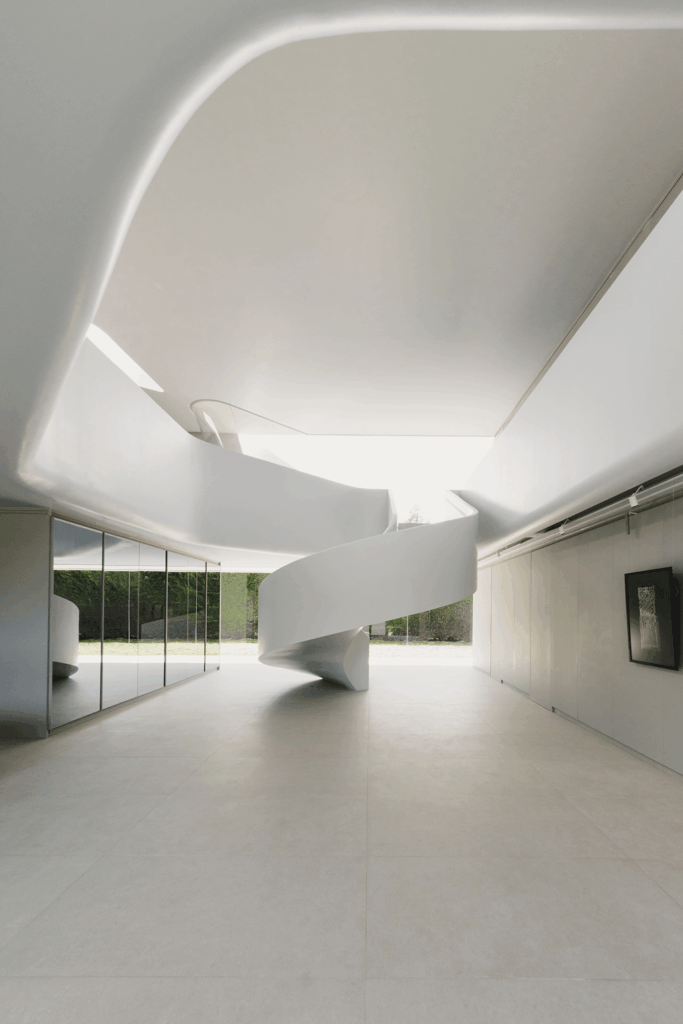
TA House 3, 2025
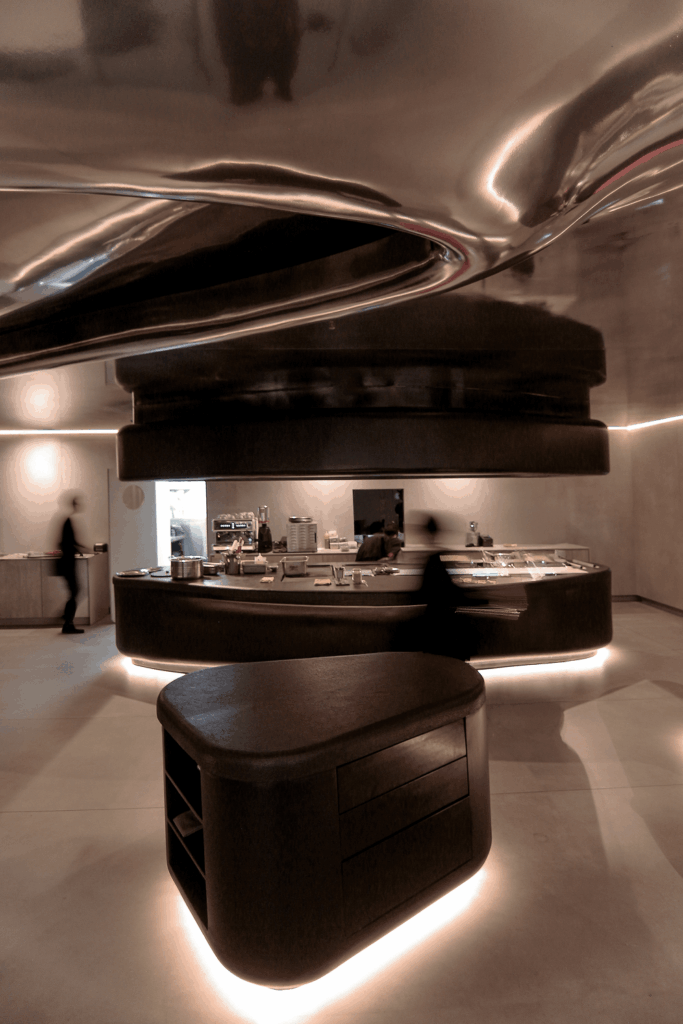
Foresta, 2025
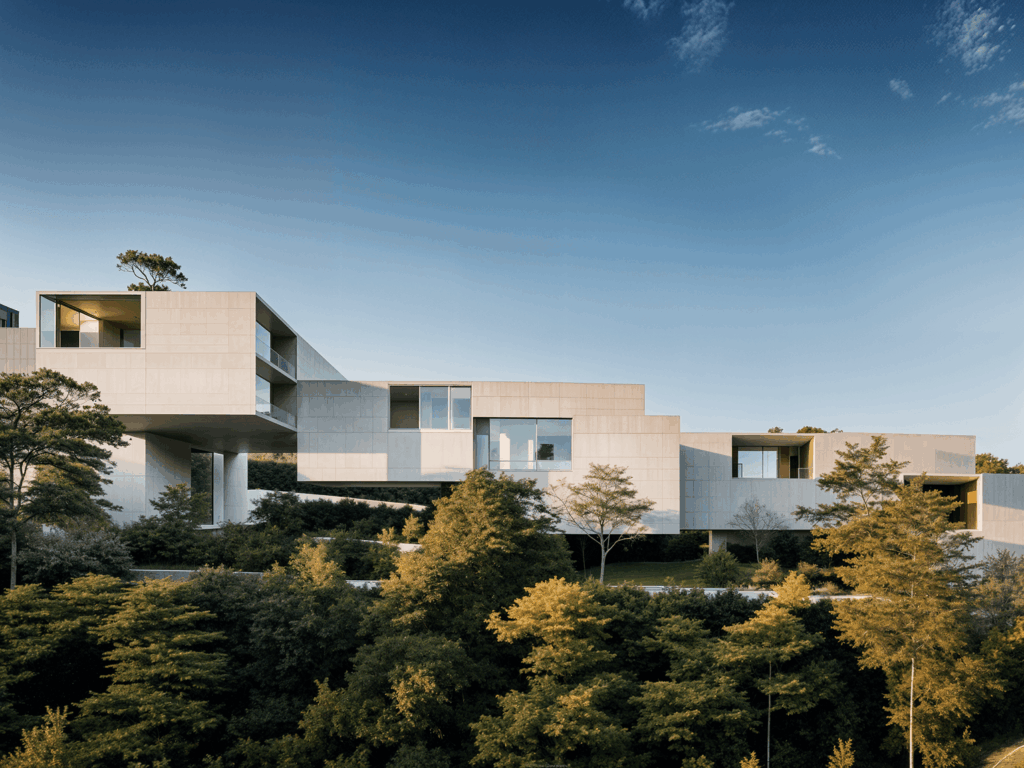
Manto, 2027
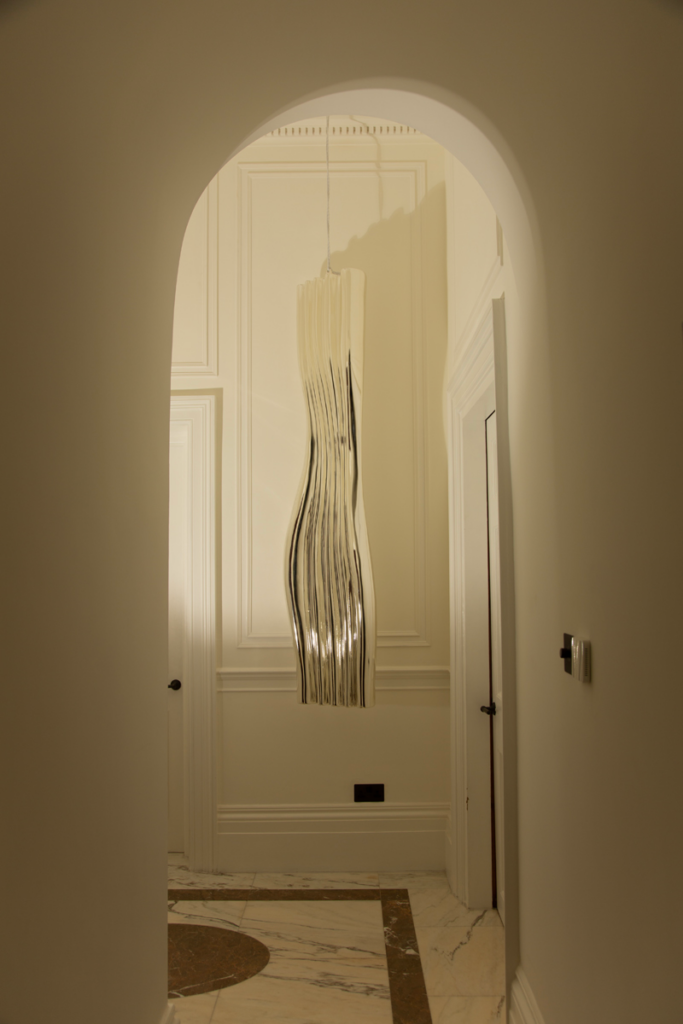
Everlasting Motion Monoliths
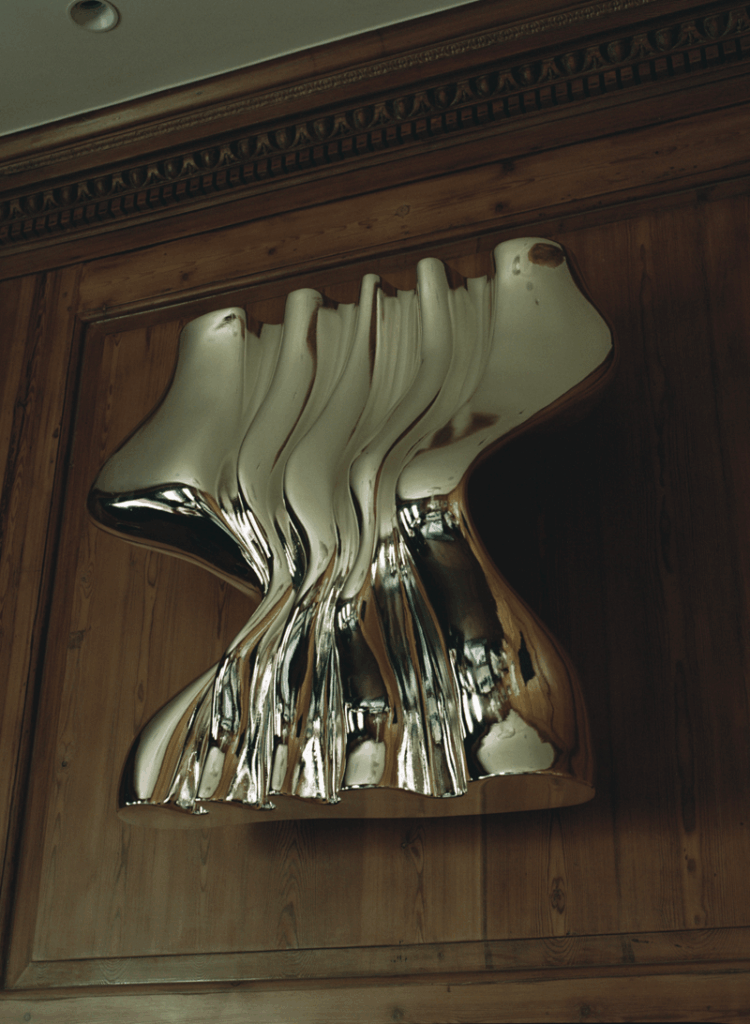
Everlasting Motion Monoliths
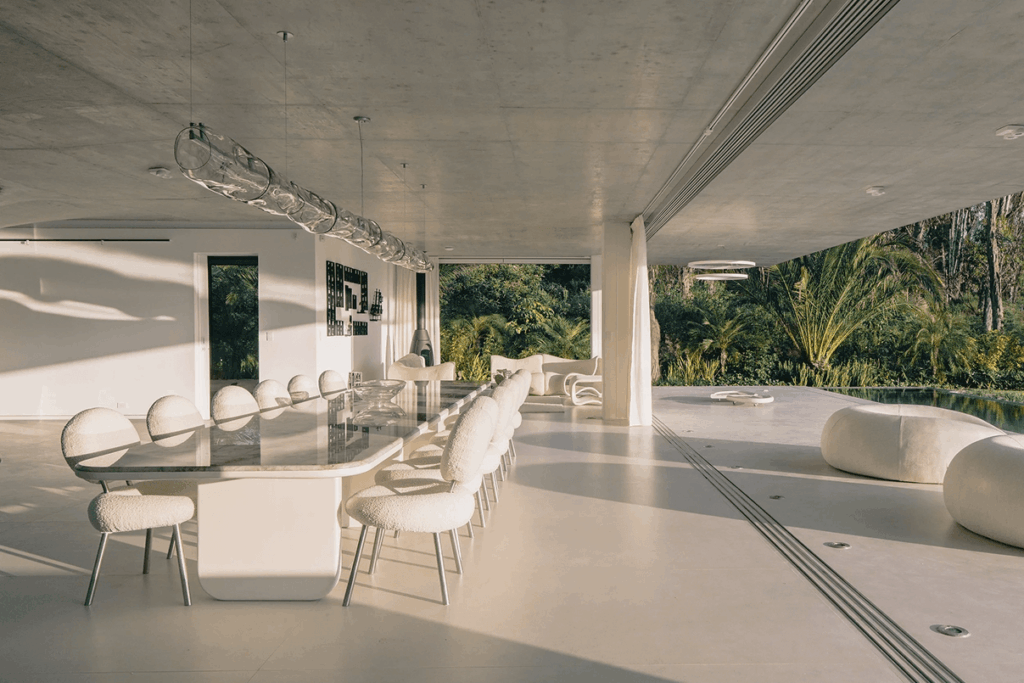
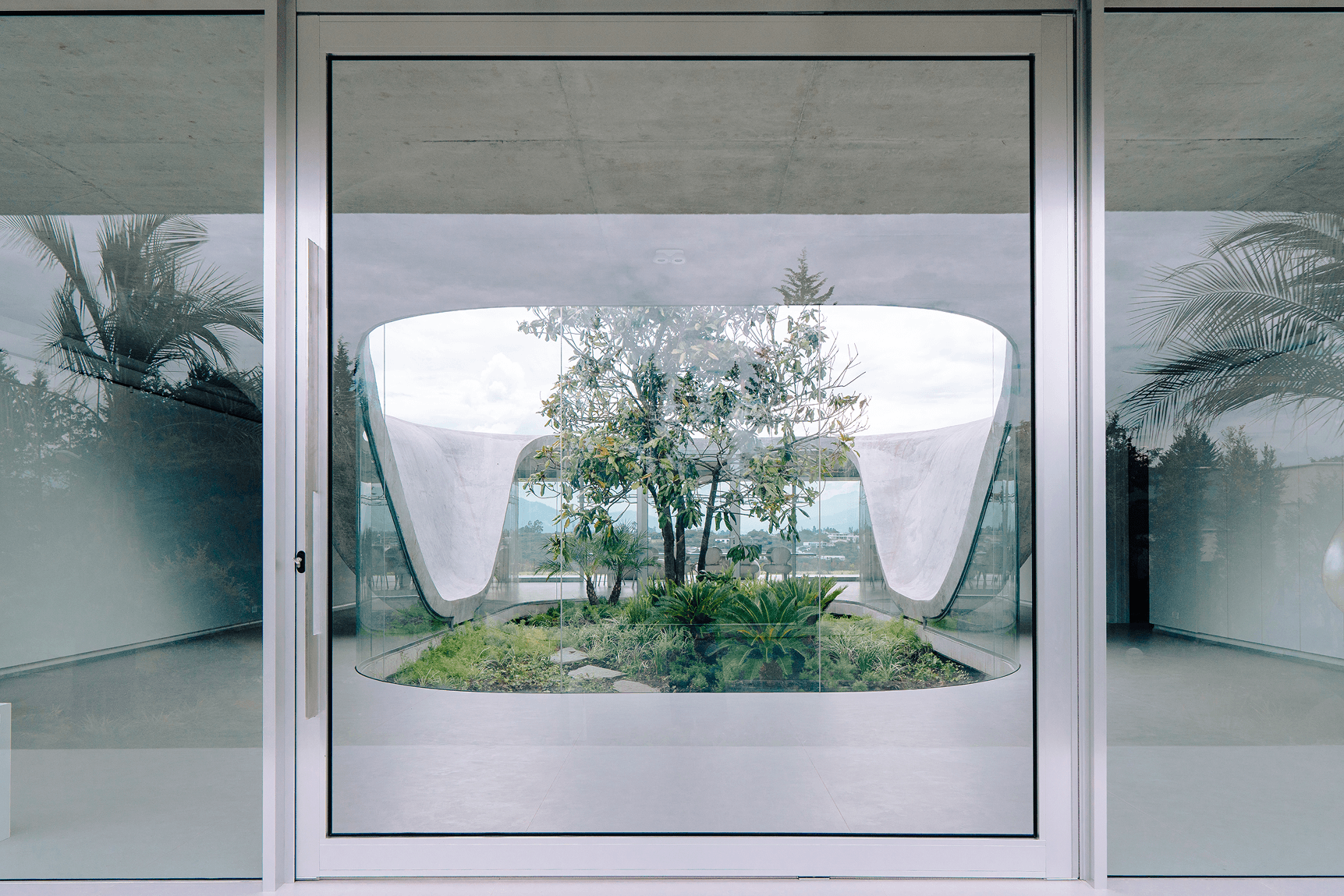
Magnolia House, 2022
h: Many of your projects, like Casa Magnolia, center on a living element such as a tree as an emotional anchor. How do you approach integrating nature not just as a backdrop but as a co-creator in your designs?
FE: Nature has been present in my imagination since I was a child. I grew up in Ecuador, in a country where within a relatively small territory you have the Andes, the Amazon, the Pacific, and the Galápagos. Nature is difficult to treat as background when it is constantly reminding you that you are inside it. I think architecture begins with the same basic instinct as gathering around a fire. Fire gave us warmth and protection, but it also created a place to gather. Architecture has always operated somewhere between those two conditions: shelter and connection.
So when I design, I often ask how little architecture is actually necessary. Can the walls disappear? Can a roof simply frame a tree, the horizon or the rain? Can architecture make you more aware of the world rather than separate you from it? When that happens, nature stops being something you add to a project at the end. Light, vegetation, weather, topography, and time begin making decisions with you. At its best, architecture doesn’t compete with nature. It edits our attention toward it.
h: In projects like Foresta restaurant, you dialogue with raw volcanic materials and culinary philosophy. How do you think about materiality as a language that communicates between the geological past, human craft, and future inhabitation?
FE: I am fascinated by bringing apparently opposite worlds into the same space. Imagine the friction between 2001: A Space Odyssey and a piece of raw volcanic rock. One suggests a future that is seamless, automatic, and almost immaterial; the other carries millions of years of geological history in its surface.
We increasingly live in the first world. Everything is becoming frictionless: one click, one screen, instant information, artificial intelligence. I find that exciting, but it also makes physical experience more valuable. So instead of choosing between technology and nature, I am interested in collapsing them together. A space can feel futuristic and primitive at the same time. A large-scale touch screen can sit next to volcanic stone. Something computationally designed can still invite you to touch it. Perhaps the more digital our lives become, the more architecture has to remind us that we have bodies.
h: Your studio treats buildings, interiors, and objects as part of a single spatial language. Can you walk us through your design process when a project begins with a fundamental question about human well-being?
FE: One of my early encounters with art was exhibiting algorithmic drawings at the Royal Academy of Arts in London. They were made from millions of lines that produced patterns at different scales. From far away you saw one image; as you moved closer, completely different structures appeared. That idea stayed with me. The Eameses explored something similar in Powers of Ten: the world is continuous across scales, even though humans have a tendency to divide it into categories.
So I don’t really see a chair, a house, and a museum as fundamentally different creative problems. The scale changes, but the question can remain the same: what does this contribute to the experience of being human? Our process involves experimentation, editing and a lot of reduction. We keep removing things until the intention becomes clear.
Currently, a snapshot of one day in the studio is to design a 3-hectare public sculpture park, a network of cable car stations, a couple of private beach houses, and a collection of furniture pieces in collaboration with Italian brand Artetemi. These are diverse projects but all clients are aligned with the fundamental vision of the positive impact on society and environment each one of those works must have.
Ultimately, I want the work to produce presence. We spend an extraordinary part of our lives looking through screens, somewhere other than where our bodies actually are. Architecture has the opposite opportunity: to make you intensely aware that you are here. If a space can make you slow down, touch something, notice light moving across a wall or suddenly become aware of another person, it has already done quite a lot.
h: In a world increasingly shaped by technology and AI, how do you incorporate these tools without losing the intuitive, emotional, and craft-driven core of your creative process?
FE: One of humanity’s first transformative technologies was agriculture, which is an incredibly artificial manipulation of nature that today feels completely natural. The definition of “natural” changes very quickly. Artists once painted with brushes, architects drew with pencils, then we adopted computers, and now we have artificial intelligence. I don’t find the transition frightening in itself. The important distinction is between the tool and the person using it.
A powerful tool without intention usually produces more noise. So there are two responsibilities: first, to know what you want to say; second, to understand the tool well enough that it doesn’t start making the decisions for you. AI may dramatically change how architecture is produced, just as the computer did. But it doesn’t eliminate taste, judgement, intuition or obsession. In fact, when everyone has access to increasingly powerful tools, those qualities probably become more important: Technology changes. Intention survives.
h: Many of your projects seem to invite a shift in perception—rethinking how we inhabit space and relate to our surroundings. What cultural or societal shifts do you hope your work might subtly encourage?
FE: I would like architecture to make us feel less like occupants of the planet and more like participants in it. For a long time, we have imagined buildings as autonomous objects: a piece of land is occupied, an object is placed on it, and the world outside begins at the façade. I think that distinction is increasingly outdated. A building is really an interface between people, climate, water, vegetation, light, animals, materials, and time. Once you see it that way, architecture becomes less about producing objects and more about constructing relationships. That changes quite a lot. Nature is no longer something viewed through a window. Public and private space become more porous. A building can contribute to an ecosystem rather than simply consume part of it.
If my work encourages any cultural shift, I hope it is a subtle one: to make us more sensitive to what surrounds us. Maybe the future of architecture is not the design of shelter, but the design of relationships.
h: Casa TA doesn’t begin at the ground but with a folded ribbon of concrete overhead—you started the house from its roof. What changes when you design a home from the sky down instead of the floor up?
FE: I do have a slightly irrational fascination with making heavy things appear to float. There is something beautiful about concrete behaving as though gravity were optional.
But whether a project begins from the roof or the ground is ultimately secondary. What matters is whether it creates its own world. I want there to be a slight rupture between everyday life and the moment you enter a project. Not theatrical in an obvious sense, but enough that your perception changes. Scale feels different. Light behaves differently. You become more conscious of where you are. In Casa TA, beginning with the roof allowed us to think of the house almost as a piece of landscape suspended in the air. The roof establishes a horizon, and life unfolds underneath it.
h: Was there a project or idea that didn’t work—that you’d build completely differently now—and what did it teach you?
FE: Every project contains things I would change. I think that’s unavoidable—if you look at work from ten years ago and wouldn’t change anything, you probably haven’t learned very much. But the biggest shift in my thinking is less about one particular mistake and more about what I increasingly want architecture to do. When you are young, architecture can easily become about the building itself: the wall, the detail, the material, the object. The longer I work, the more interested I become in making all of that disappear. Of course, the walls are still there. But you don’t want someone standing in a room thinking about how clever the wall is. You want them thinking about the person across the table, the landscape, the light, perhaps nothing at all.
In that sense, the paradox is that we spend enormous effort designing physical things so that, in the end, people can forget about them. When the object disappears and only the experience remains, architecture becomes a kind of alchemy.
To be more concise, we were recently selected in the final phase to design a proposal for the National Art Museum of Ecuador —we lost against Japanese Pritzker Prize architecture office Sanaa and looking back I could think of many things that I could have changed. But the lessons learned, the people we met, are the most valuable parts of the process and they inform the following projects.
h: You want the people inside your spaces to feel completely present. What was the last space you didn’t design that did that to you—that stopped you and made you feel entirely there?
FE: The Cathedral of Brasília by Oscar Niemeyer. The sequence is extraordinary because he withholds the building from you. From outside, you see these white structural elements emerging from the ground and assume you understand the cathedral. Then you descend underground.
And suddenly you enter this enormous space filled with light.
The architecture almost performs a magic trick: compression followed by expansion, darkness followed by brightness. The structure itself becomes the ornament, and the stained-glass work transforms daylight into something almost physical.
What stayed with me was not really an architectural detail. It was the sensation of becoming intensely aware of the space, the light, and yourself inside it. That is probably what I search for in architecture: moments when a building stops being something you look at and becomes something you are briefly part of.
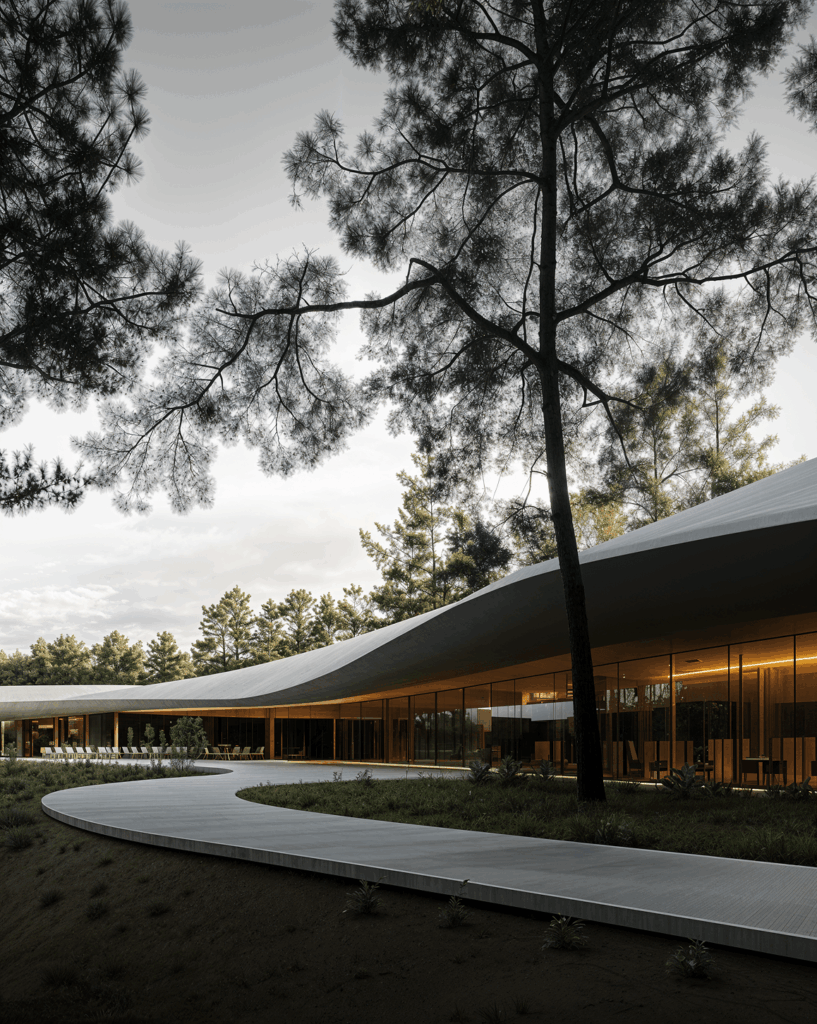
Museum Club Checa, 2024
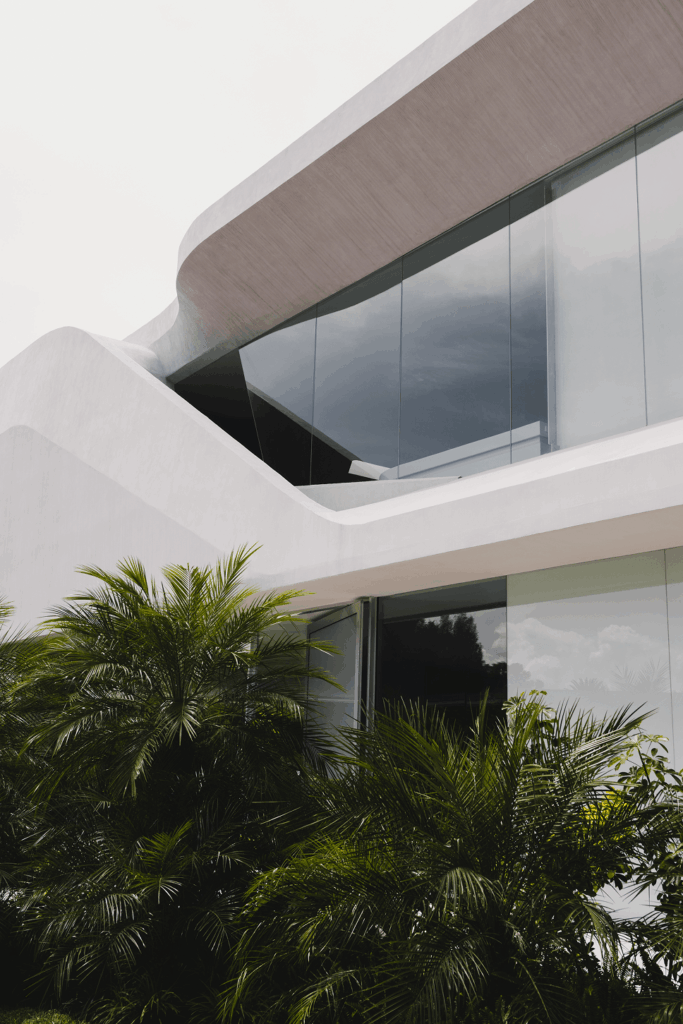
TA House 3, 2025
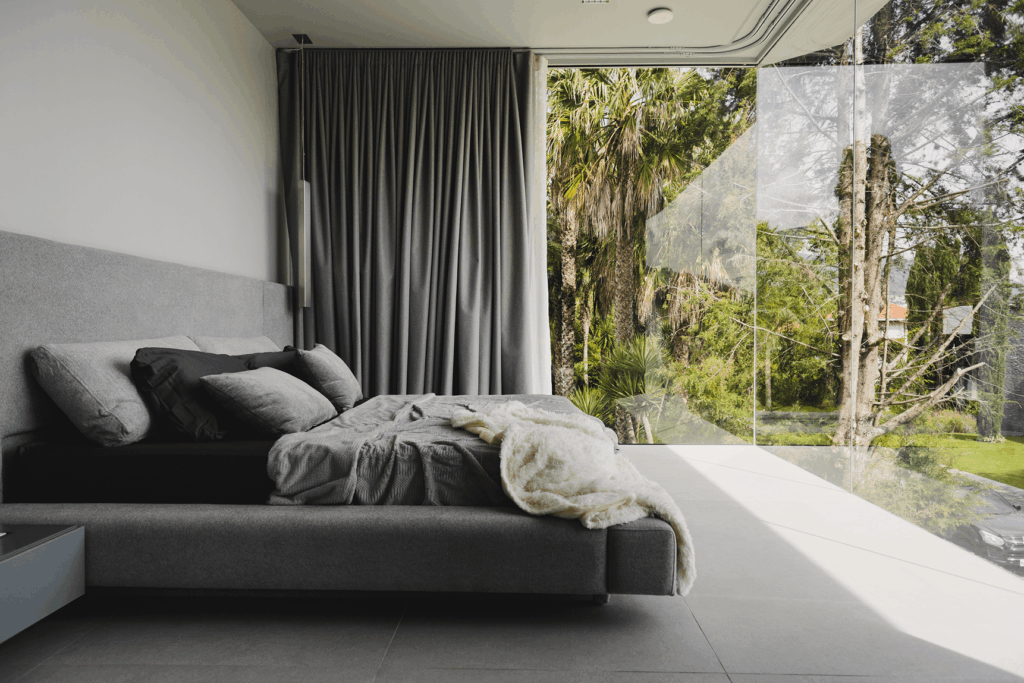
TA House, 2025
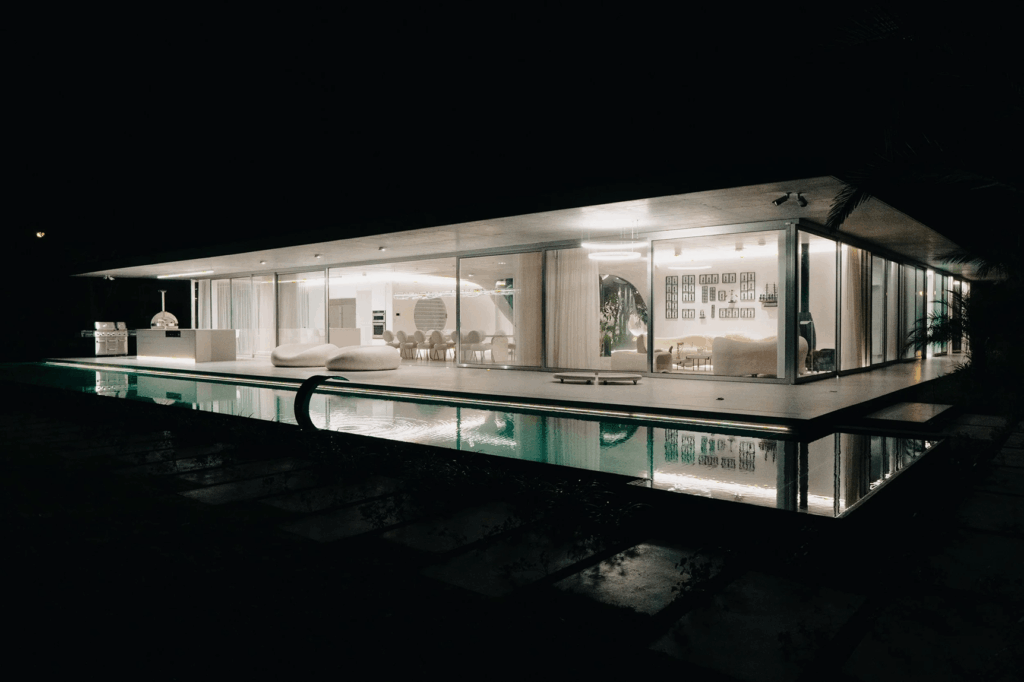
Magnolia House, 2022

Courtesy of FELIPE ESCUDERO