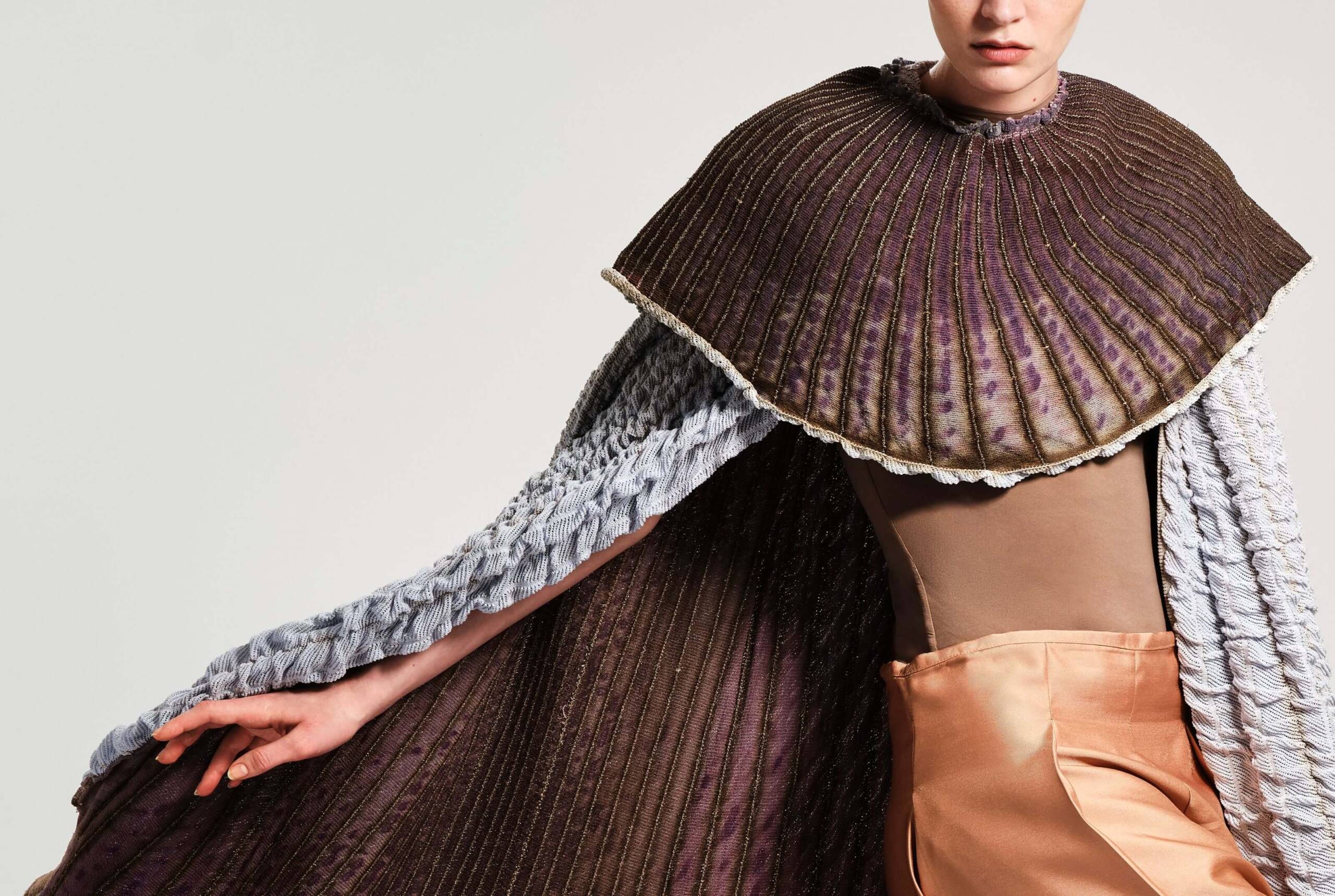
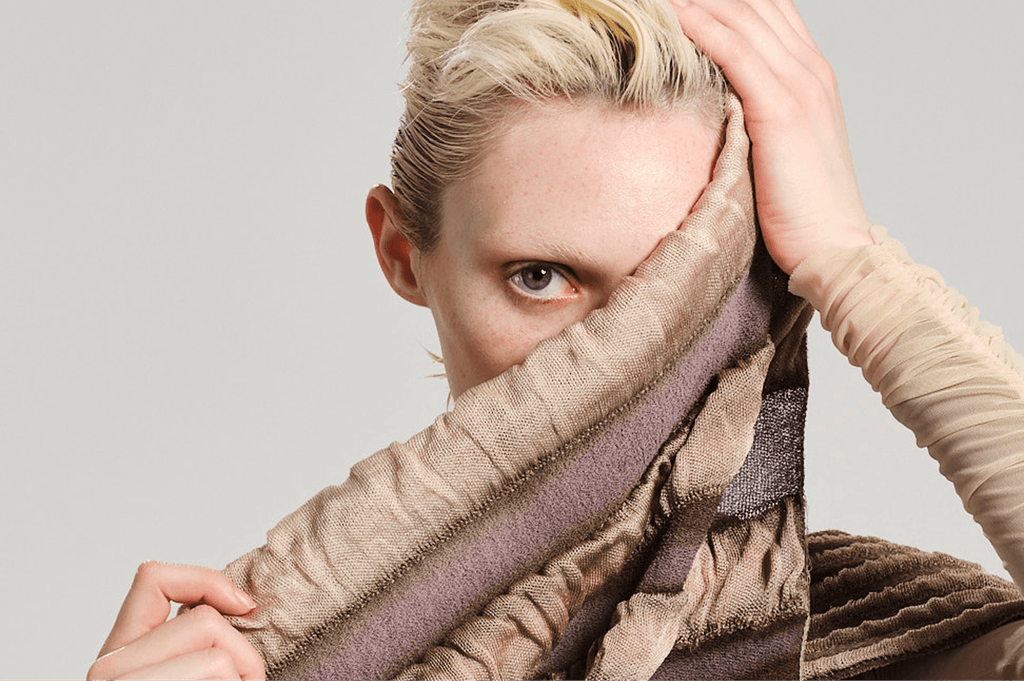
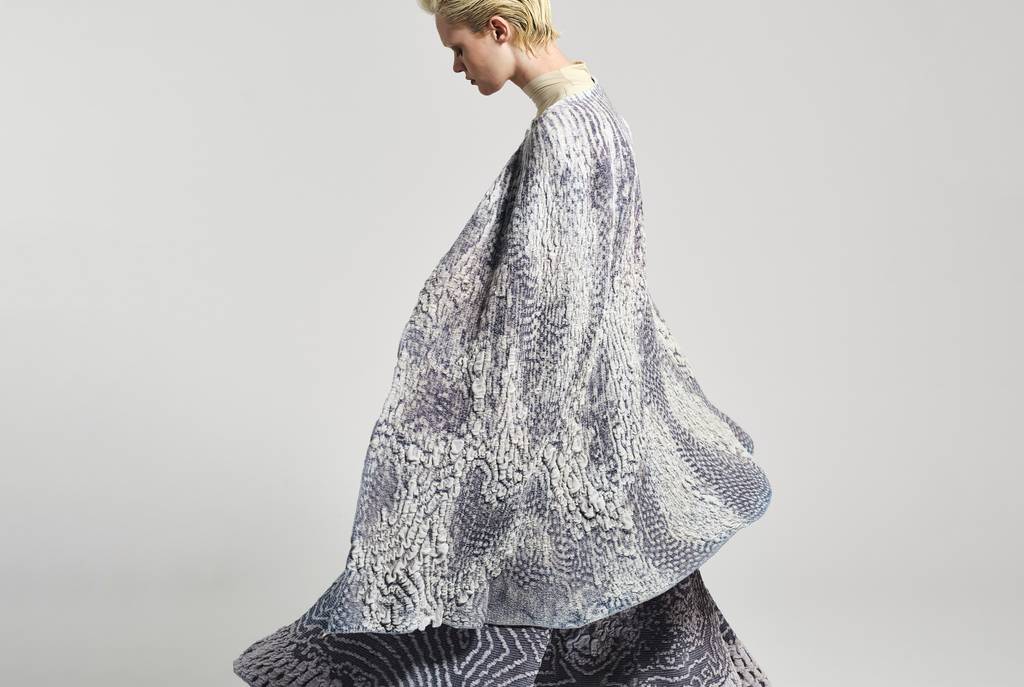
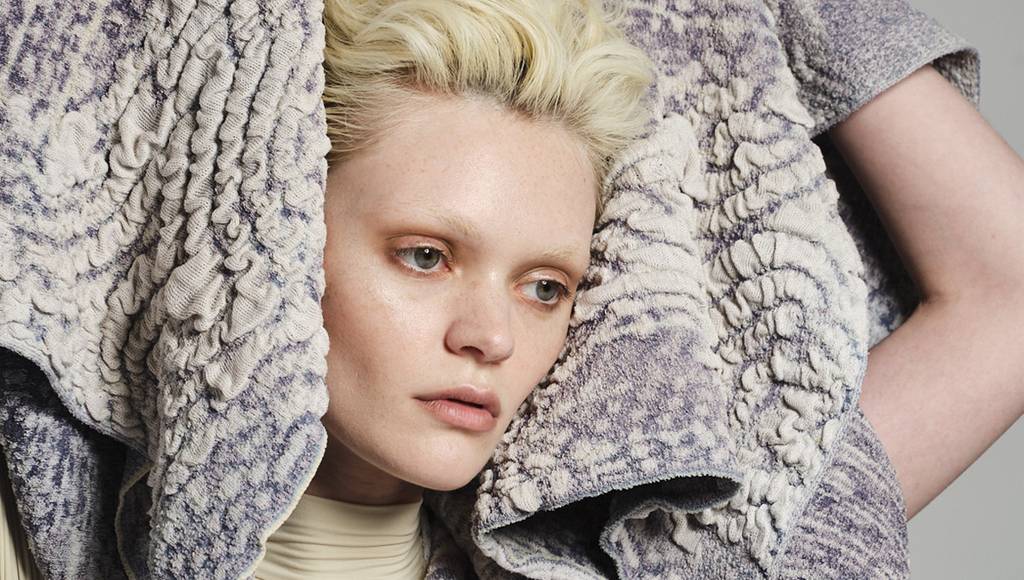
Neri Oxman’s research and design studio OXMAN has unveiled VIGILS, a project investigating an alternative to conventional textile dyeing: engineered bacteria that grow pigments directly onto fabric. Expressed through four silk capes, Velum I–IV, the research explores how biology, engineering and design can shape a new generation of textile materials.
How VIGILS grows colour
VIGILS proposes a radical shift in textile coloration: instead of applying dye to finished fabric, colour develops through a controlled biological process inspired by patterns found in nature.
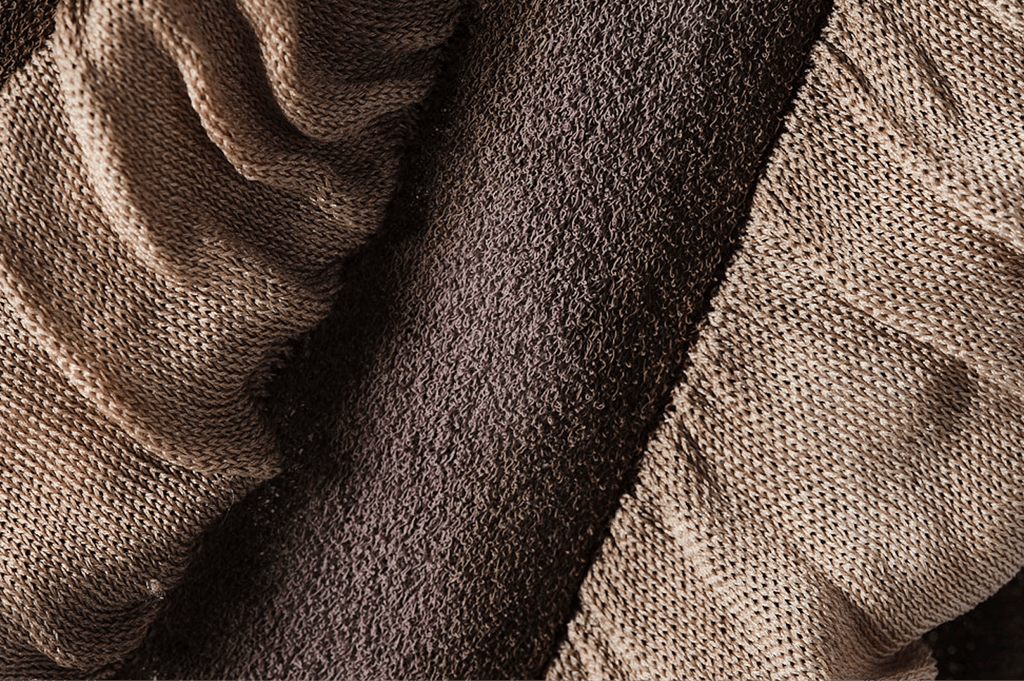
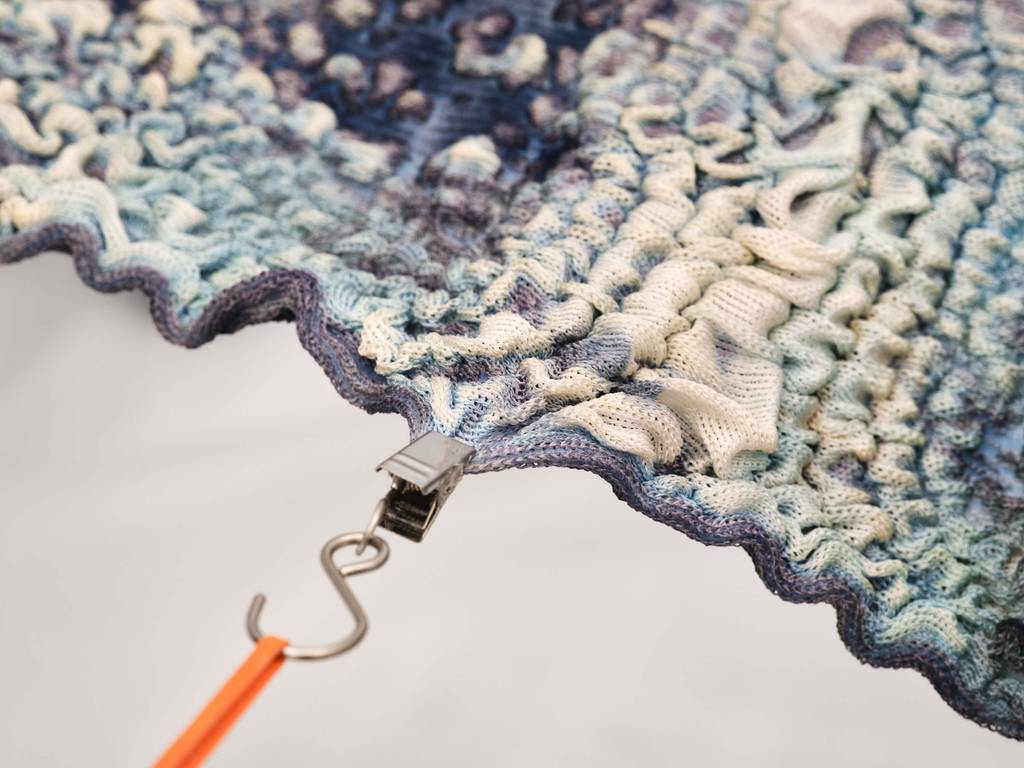
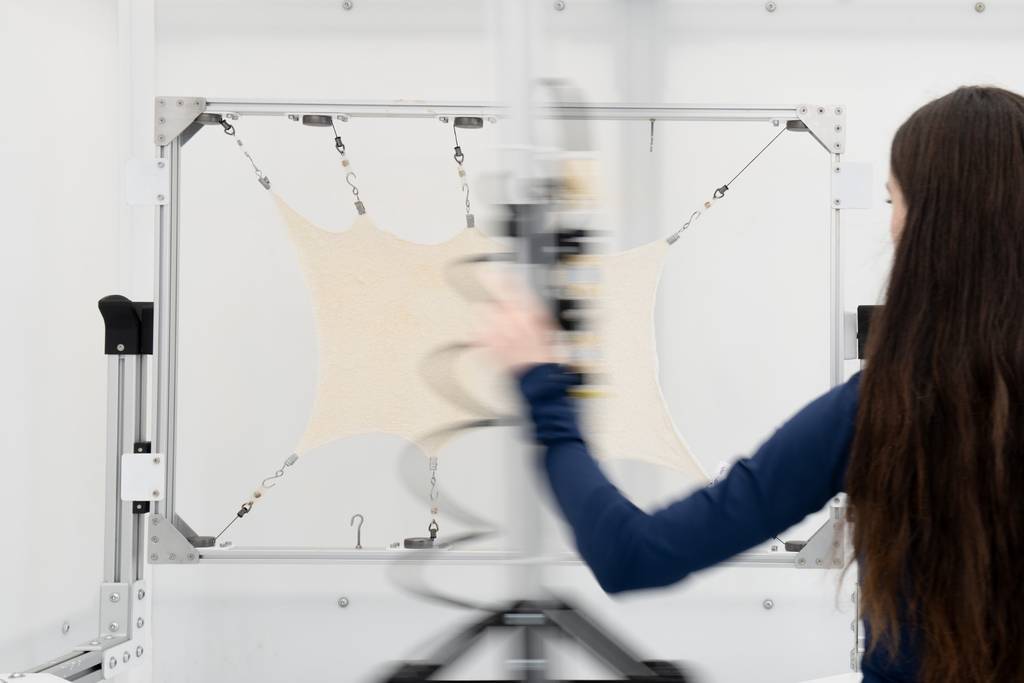
Each cape begins with a three-dimensional knitted silk structure. Selected for its protein-based composition, fine filaments and chemical affinity with pigments, silk provides a suitable substrate for bacterial growth. Computer-controlled knitting positions fibres treated with chemical inducers at precise points, programming where colour will develop and how patterns will emerge.
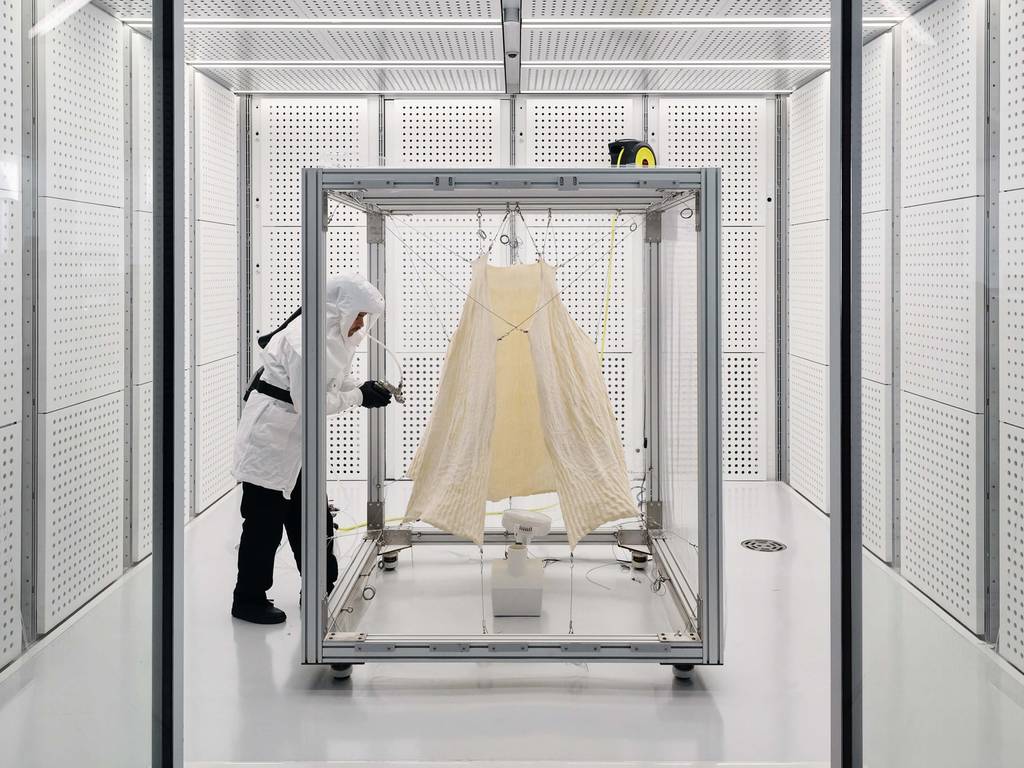
A bacterial culture is then sprayed onto the fabric, which acts as a miniature bioreactor. In response to the chemical inducers, engineered genetic pathways prompt the bacteria to produce pigments from basic amino-acid building blocks. Over approximately 24 hours, the culture spreads across the textile, depositing colour according to the programmed structure and conditions of growth.
The technique combines genetic engineering with the precision of computational knitting, allowing designers to direct patterns while biological activity shapes their final appearance. The resulting pigments include indigos and melanins. Washing and drying remove the bacteria, leaving the colour embedded in the material. According to OXMAN, each cape accommodates approximately 18 trillion bacterial cells during production.
VIGILS therefore treats coloration as an integral stage of material creation, with each pattern bearing the imprint of the biological process that produced it.
From hybrid living materials to wearable textiles
VIGILS extends OXMAN’s ongoing investigation into biological systems as collaborators in design. Its origins lie in Vespers (2016–2019), a series of masks developed with the Mediated Matter Group at the MIT Media Lab. The final instalment, Vespers III, incorporated engineered pigment-producing microorganisms into 3D-printed resin, examining how biological activity could influence designed objects.
The studio later developed O°, a platform investigating biodegradable footwear and textiles made from PHA, a thermoplastic produced by bacteria. Experiments in fibre drawing, extrusion, knitting and 3D printing expanded the potential of bacterially derived materials.
With VIGILS, these investigations enter a more flexible realm. Where Vespers explored rigid forms and O° examined structural materials, the new project applies related principles to knitted cloth, establishing what OXMAN calls Hybrid Living Textiles.
Although the current work centres on silk, the inducible-fibre technique has also been tested on wool, cotton, nylon and other commercially available materials. These experiments point towards broader applications, though commercial viability will depend on further research into production, performance and scalability.
A new material language for fashion
Conventional textile dyeing can consume significant amounts of water and energy while relying on chemical treatments and petrochemical-based pigments. Biological coloration offers an alternative, using engineered organisms to produce complex molecules from simple building blocks. VIGILS’ environmental benefits, however, will require further assessment of its resource use, durability and manufacturing impact.
OXMAN sees the project as the first step towards a broader platform integrating engineered biological processes into textiles and is inviting collaborators to explore its commercial potential.
“Design is not design without the ability to tinker with the process itself. To wire genes to fibers, and knitting looms to petri dishes,” says Neri Oxman.
By embedding biological activity in the coloration process, VIGILS challenges the distinction between material production and surface decoration. As biofabrication advances, OXMAN’s research points towards new ways of developing and manufacturing textiles, with engineered organisms playing an active role in design.
Explore Neri Oxman’s vision for a new material ecology where synthetic biology meets computational design in our interview.
All images and video courtesy of OXMAN