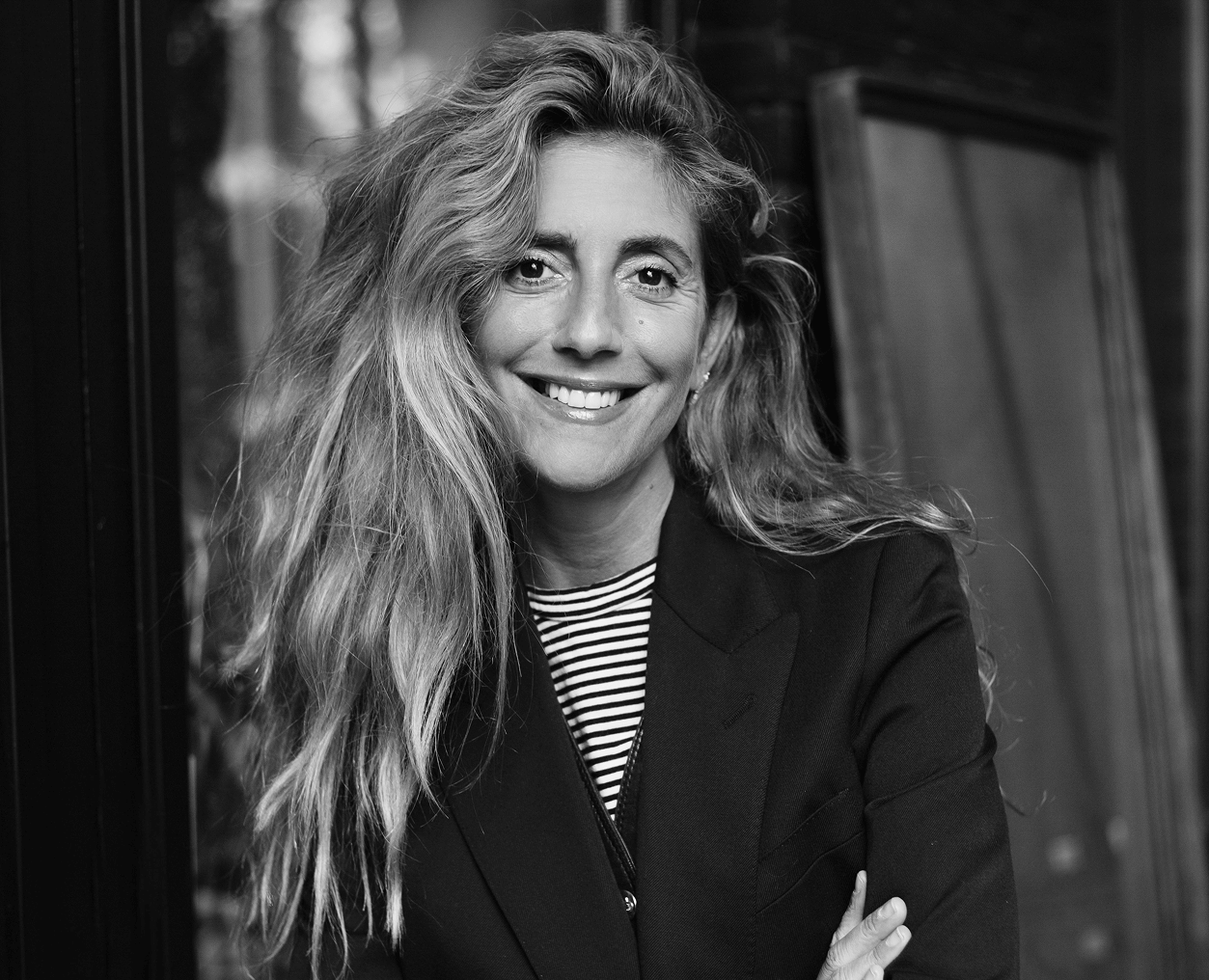
Entrepreneur and stylist Danie Bles has long navigated the world of fashion with the assurance of someone who possesses an innate sense of style and is fueled by her unending drive to learn more. Born into a textile family, she began styling Elite Model Look test shoots at just 18, before building a career across television, magazines, and celebrity styling—working with clients such as Sylvie Meis, Renate Gerschtanowitz, Patty Brard, and Leontine Borsato—developing a signature mode of eclectic polish.
As an entrepreneur, Bles founded ByDanie, a store of intentionally curated vintage and new pieces, followed by Maison365, her personal-styling platform created for the ‘everywoman.’ Like all her ventures, it centers on her ‘mix-and-match’ philosophy: something old, something new, each piece carrying the sensation of a newly discovered treasure. Her most recent venture, 8 The Agency, is an international creative marketing agency that uses its expansive network to build connections for both established companies and emerging creatives.
Her boldest move came in 2017 with her acquisition of Amsterdam Fashion Week, which she rebuilt into a more contemporary, commercially connected platform. By introducing elements like ‘see-now, buy-now,’ she pushed the event toward immediacy and greater international relevance, distinguishing it from other fashion weeks, following its own rules and—crucially—its own schedule. As the fashion industry faces ongoing financial challenges, Bles’ exceptional understanding of the structural reset needed to support designers and companies alike has proven integral in rebuilding Amsterdam’s Fashion Week into its strongest iteration yet. Her eye may shape the picture, but her instinct shapes the system—Danie Bles is a visionary worth heeding, particularly for an industry trying to break free of a system that everyone can agree no longer works.
hube: Could you tell us about the very beginning of your professional journey? What first drew you toward the creative industries, and was there a defining moment or person that set your path in motion?
Danie Bles: I liked styling because I grew up in textiles. My grandfather had a company here which used fabrics only from Italy. My mother used to work with the Dutch Fashion Institute, and my father always had a wholesale business. When I was young, I always said, ‘I’m never going to work in fashion because the only thing you talk about at home is fashion.’ But when I turned 16, I knew I wanted to go in that direction, become a make-up artist combined with styling or something like that.
I ended up leaving Amsterdam to do a Penn State art course as an au pair at 18. I was doubting what I was going to be. My father told me ‘Danny, take a piece of paper and write down three words that you really like, and anything else you’re not going to do when you go back to Amsterdam.’ I always remembered that because in this small square that I pencilled on the paper, I wrote down ‘styling, stylist, fashion’—everything had to do with style. When I came back, I continued my internships as a stylist for TV and shoots.
I started doing this internship as a stylist, and after one good year, I saw that Elite Model Look always had this stylist coming in for the new Elite Model Look of the Year. I called the office and asked, ‘Can I please do the styling?’ After three weeks of calling every morning at nine, I decided to pass by their office. I entered and said, ‘I’m the girl who’s calling you every day.’ I got the job and came into a studio with the photographer Ray Christian, and we did the shoot. He said to me afterwards, ‘I don’t know if it’s my lucky day, but I want to work with you again.’ That was the first moment I felt that if you really want something, you need to follow your passion, continue, and believe in yourself. I didn’t finish school, so I don’t have my diploma from school. My diploma was going to be my life experience in fashion. When you have the whole picture, there always needs to be a certain amount where you’re learning and a certain amount where it can be on automatic pilot, but you always need to be learning.
I became fashion director of Jackie Magazine. By then, I had already done many fashion shows. I wrote my column, wrote a book, and had my own magazine at a certain point. The journey continued. I had a styling school for eight years where we taught many new kids on the block, which was very inspiring. When I turned 40, I took over Amsterdam Fashion Week, and that journey continues today.
h: Do you think that your determined spirit is innate or something that developed with time, something learned?
DB: I love my work until today, and I love the diversity of the work, but I also like this whole vibe of power. I don’t know if I am able to do it, but I’ve never done it, yet I’ll try. Everything I did was out of passion and curiosity. Curiosity is also one of my biggest qualities, something that I have always had, specifically within this field. Everything that is creative, I love. I was one of the first in Holland to start doing celebrity styling. There was no such job. It was at the time of Rachel Zoe in the United States. It had never been a true job; it was only a job for people who worked in television. I had the ambition to produce shows, but I thought, how am I going to do it? I’m not a designer, but I would love to do it. People know me in the Benelux mainly for my mix and match concept—always something vintage, something new. I did the first show where everything you saw on the catwalk you could immediately buy—see now, buy now. At that time, that was quite unique.
When I was fashion director at Jackie, the owner of the publishing house came to me and said, ‘You always wanted to do a fashion show. Why don’t you just do it? Here’s 10K—what do you need?’ I called the number; I believe it was 10K or something that I mentioned, which was completely unrealistic because I was not able to produce a fashion show for 10K. I thought, if I make it ‘mix and match’ and have all the brands pay me to be part of the show, then I can make it happen. I made that concept on paper, and we did it, and at a certain point, I even sold it to Amelia, and they took over. I like to explore new things and connect people, brands, and designers.
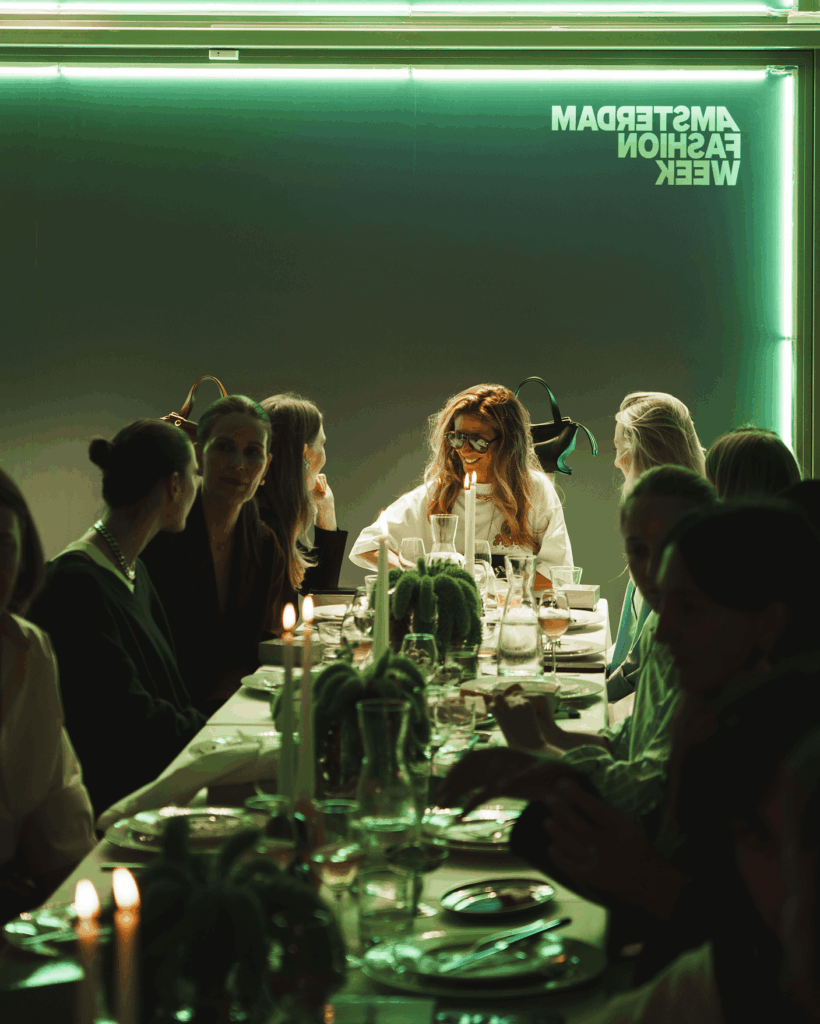
Photography by KATERINA BEZEDE
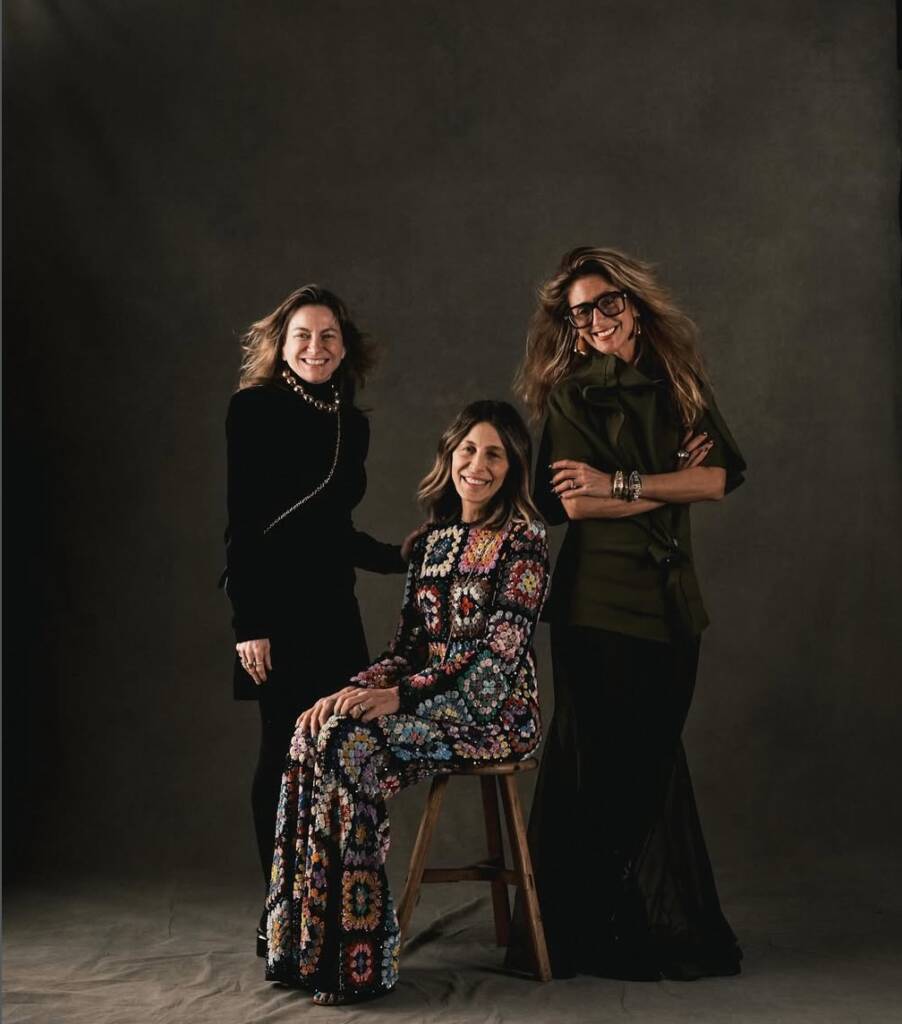
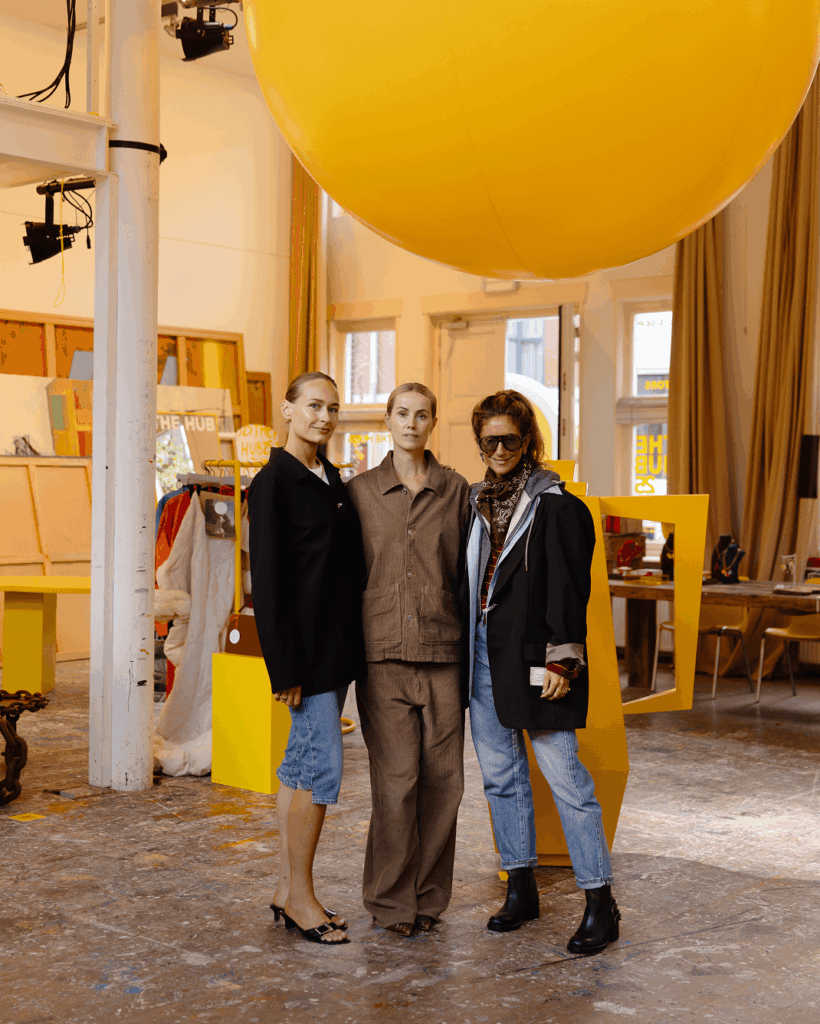
Photography by RESA STEENVOORDEN
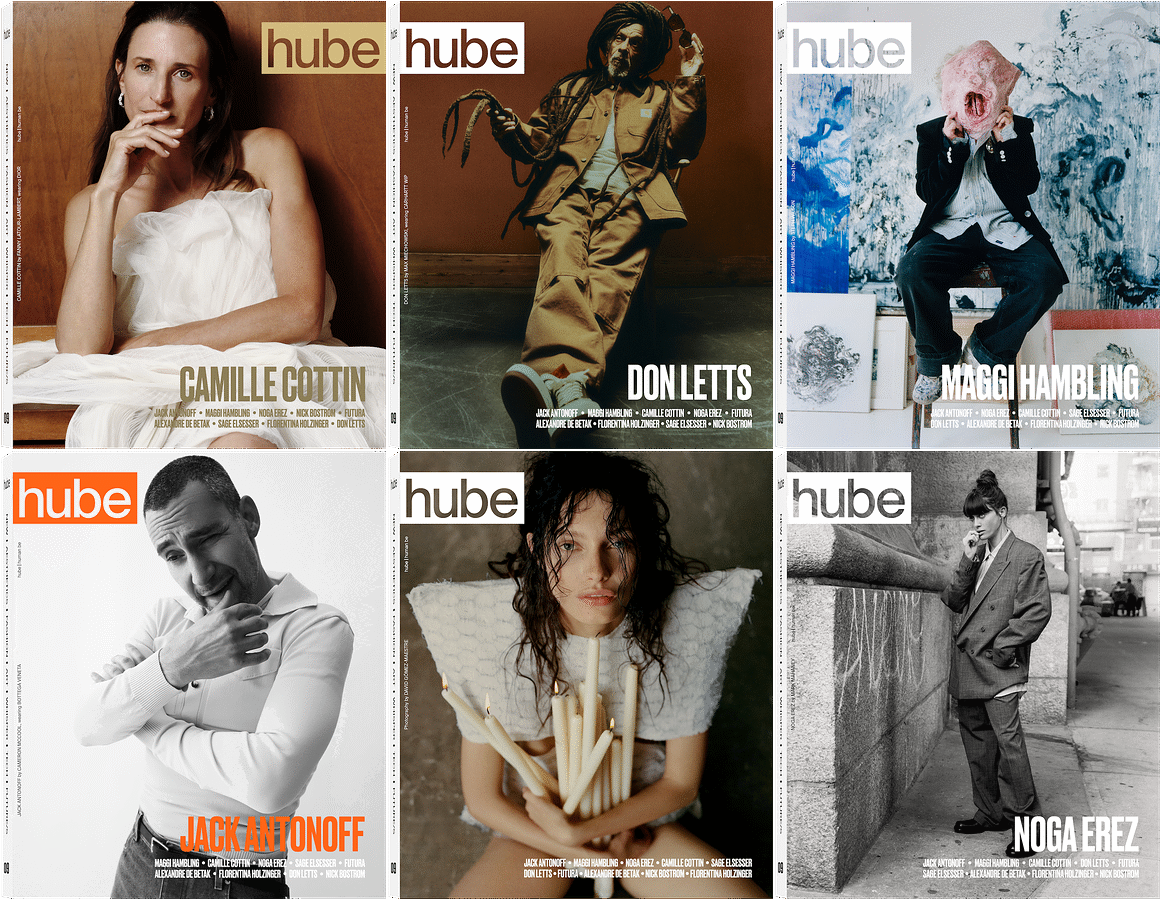
Photography by BURAK GORALER


Photography by TARONE RACHAMIM
h: In your view, how has the evolution of social media reshaped the craft of styling—not just in terms of visibility, but in the way authenticity, storytelling, and community are built around fashion?
DB: Creativity is something unique that you either have or you don’t. When I was fashion director, we were still free to use a top from Prada with vintage pants or a jacket from Gucci. We mixed it up, and it already happened even before the evolution of social media that you had to use a full look, which I think was the start of killing creativity. The magazine industry was already killed by the idea that it needs to be a full look.
Then social media came. I love people with influence, but the term ‘influencers’ often refers to those who don’t have any taste and just wear a look without knowing what they’re wearing. There are a few exceptions, such as Kohan from New York; she’s great, but she’s more of a stylist than a person of influence. But today, on social media, you see all the same girls, the same outfits, the same full looks. Even street style during Fashion Week—in Milan, I was there last month—they all look the same at a fashion show. It used to be full of inspiration outside a fashion show; you could feel the energy from all these creative groups and different stations with different people. The funny thing is that the fashion world has become more diverse and inclusive, but I think people look more the same than ever before. It’s killing the creative industry. I think the whole world wants to look like each other—in terms of Botox, in terms of what they wear. The whole world is dressing all the same; it’s like masks.
That’s why I have a big passion for vintage. I think true inspiration comes from music and art, and people need that nowadays. If you buy a ticket to a museum tomorrow or today and you walk in and there’s an exhibition on the left side about people from the seventies, and there is an exhibition about people from the 2020s on the right side, I’m sure that when you’ve seen both and you walk out, if people asked you which exhibition inspired you more, you would tell them the one from the seventies. Uniqueness is unique; that is what inspires you.
h: What currently excites you most about fashion’s direction? On the other hand, are there aspects of the industry that challenge or even frustrate you, creatively or ethically?
DB: I really love these new young initiatives that are community-driven. In Holland, we have Pata. I like that, because of social media, when you’re young and very ambitious, you can start immediately because you have this online platform where you can expose yourself and be creative, be you. Duran Laning from Holland, who just became the creative director of Jean Boche, has always been part of Amsterdam Fashion Week as well. I love to see his creativity and that he stays true to himself; he’s unique. I love that you can create any type of concept and be creative in this industry. There is still room and space to be truly creative, whether it gets recognised or not—there is still space, and there are still people who will recognise it.
What I don’t like is that if you become a creative director these days at a big international brand, you don’t even get proper space or time to show what you’re able to do. You’re under constant unhealthy pressure. I think it’s only about numbers and turnover, and within the big groups everybody is moving and swapping around. Fashion is not a trick; it is a serious job, but you need to be given the time and space to develop and to give it your vision and your involvement. But it takes time. Good things don’t come easy, and sometimes I get the feeling that fashion becomes a trick, and that I find very dangerous.
With Amsterdam Fashion Week, we created The Hub five years ago. It was really my baby, and I introduced it a little differently from what you see in Milan or even in Copenhagen. It’s more like a concept store with new initiatives, brands, talks, drinks and beats, where people can drink, dance for free and hang out. What I find very exciting, and what puts a smile on my face, is when I see older people from the industry and very young people dancing together and feeling the vibe in the moment.
The old need the new, and the new need the old, but you can only reach that if you’re in real contact. Big companies need these new young talents because of their vision without boundaries. But these young people also need some lessons from the old, because the world has changed, but there are still rules and regulations to survive.
h: You’ve managed to merge styling, entrepreneurship, and creative direction into a single ecosystem. Was this an intentional vision from the start or something that evolved organically? What has founding and leading 8, The Agency taught you about resilience, intuition, and leadership?
DB: At Amsterdam Fashion Week, when I took over, it was always in January and July, following the couture schedule of Paris. I never understood this because, first and foremost, we’re not Paris. I don’t have the ambition to become Paris because I could never achieve it, so I would be working for something I’m never going to achieve. I always thought that if I needed to make a healthy company out of Amsterdam Fashion Week, it should also inspire, be more sustainable, make impactful connections, and change perspectives—that it’s not about what’s new, but which brand has a great story to tell this season. With that approach, I said September is the most important month for fashion. I only want to do September, and if I do something in March, it can be a studio spin-off or an activation. But September is the week when I want to share the best stories—to show what Amsterdam, Holland and Benelux have to give at that potential moment.
What is really different from Paris is that we also sponsor a lot of brands. We help and support them. In Paris, if you’re a brand, you can be on the official schedule, but you pay for everything yourself or arrange it on your own. We help brands by connecting them within a network—with potential sponsorships or collaborations on a bigger scale.
A lot of brands are also struggling. Even when they look big, maybe they’re not that big, or maybe they’re struggling. For example, in the past edition, we combined Reconstruct, a super young but very sustainable brand with a great story to tell, with Surreal, a washing brand. For them, it was an incredible connection. They could do what they wanted to do and work in a certain colourway. The designer is always in the lead, and we guide and protect it.
8 The Agency started out of my passion for storytelling. The traditional PR agencies, where you have a showroom to borrow something and a press release, those days are over. Good PR starts with a great concept because when there’s a great concept and a good story, then you have great PR. I decided to start the agency during COVID because I thought when the world opens up, we’ll be ready for it. During COVID, we were busy bringing flowers to hospitals across Holland with the agency team. When the world opened up, we were able to accelerate. That’s when we started creating concepts for commercial brands and connecting them with designers. We also do activities throughout the year for the L’Oréal Group, as well as smaller independent brands. We try to work with the bigger brands that come from abroad. They have strict guidelines, which means we cannot be as creative as we would like, but we learn a lot from their work experience. For the Benelux brands we work with, and who want to grow internationally, we take these learnings and build brand books for them, and we build the brand for them internationally. They help one another, and that’s why we love the combination.
h: How do your surroundings—Amsterdam’s spirit, light, and creative community—influence your perspective on style? Would you say there is a uniquely “Dutch” approach to fashion that you channel in your projects?
DB: Amsterdam is well known for its street style. We have a lot of street style brands, and it’s very laid-back. You could compare it a bit with Berlin, but definitely not with Milan or Paris, where it’s more rigid. We’re not educated in the same way. In Italy, people are educated with food and style—we’re not. It needs to be practical against the rain. If you dress up and go for dinner, people ask if you’ve just come from a wedding.
We don’t have this refinement. But we do have this laid-back, street style, community-driven culture. A lot of music is always involved. There is style—but it’s a different style. I like it because I grew up here, and I embrace this community aspect. I like that you can rely on the community. When you see Sarah Mann from Colette, for example, whom you also interviewed, everything she did was about building community with the right people. She still has that community. Everything she does, the community shows up for. That’s what I like about Amsterdam too. When we have Fashion Week, people are supportive, and you really feel you’re building it together.
h: As someone who connects established talents and emerging voices, what qualities do you look for in collaborators? What, to you, defines genuine creative chemistry?
DB: For me, first and foremost, it’s passion. If you create a collaboration together and bring talents and designers together, it starts with listening to what someone needs or wants to present—truly listening to someone else. If you put a commercial brand next to a designer, you need to listen to his or her story; otherwise, there’s no good collaboration. When you see a collaboration, you can immediately feel whether it’s the right one. It’s about intuition. Great collaborations start with listening to each other and seeing if it’s the right fit. If people can grow together, then it’s the right one.
h: Is there a particular project or collaboration that felt like a turning point—something that changed how you see fashion, or how the industry perceives you?
DB: A big moment in time for me personally, and within the press and media landscape here, was my first Mix and Match show. That was a big thing because it hadn’t been done before. That was about fifteen years ago. It was a significant moment when people responded with excitement and interest.
There were different moments because I did different things. When I took over Amsterdam Fashion Week eight years ago, it was nothing. The image wasn’t good, and nothing about it worked. I changed the perspective by doing it throughout the city once a year—not only shows, but also presentations, talks, collaborations and workshops. Holding it once a year became an important element.
I also integrated culture because we have a lot of it in Amsterdam—museums, historical buildings and all the elements the city has to offer. When the press arrives and goes back home, they have experienced Amsterdam as well. I like to inspire people because when you’re inspired, you want to come back. When you come back the next season, you see something different. That’s what makes Amsterdam Fashion Week unique. It’s different because you don’t automatically see all the brands every season. It’s a curation each edition—who’s part of it and who’s not.
An important part of my work is storytelling. People know me for creating experiences—like when we built a house where guests could walk through different rooms. In the laundry room there was a fashion activation; in the kitchen, chefs were cooking alongside a new collection presentation. In another room, there was music. It was all about building on storytelling and inspiring people through an authentic way of presenting fashion.
h: Your vintage curation has a cult following. What does your process of discovery look like when sourcing pieces for your store? Are there any unforgettable stories behind special finds—items that carry emotional or historical significance for you?
DB: The store started about fifteen years ago because of my styling work. I had collected a lot over the years while travelling—anywhere from Los Angeles to New York, Paris and all over the world—and from all the people I’ve dressed.
I curate and select pieces, sometimes thinking in themes. At the moment, I’m totally into music, so I’ve transformed the store with old music albums and LP players. Another season, I might have The Little Black Jacket event, where everything revolves around the little black jacket—including Chanel vintage and other brands. Or I might transform the store into a little French café, or a full candy shop. I’ve always been a big Snoopy fan, so sometimes everything starts with Snoopy. I like to curate by theme and then collect according to the vibe.
A few years ago, I started buying new collections as well. I mix them, using brands such as Marie Lichtenberg from Paris, Jackie Aiche from Los Angeles or Loren Kiki. High-end brands are mixed with clothing brands such as Miramika or Harden Cashmere from Los Angeles. I love the idea of people coming into the store, going through the selected pieces and discovering that what they like might be new or vintage.
I like to change the perspective of people who would never buy second-hand and only buy new, showing that it’s the best way of dressing. I think women still dress for women—it’s about creating uniqueness and your own identity. Mixing vintage and new is always a great combination.
h: Finally, if you could send one message to young creatives trying to find their voice in today’s ever-shifting fashion landscape—what would it be?
DB: Stay curious forever. Without curiosity, you’re nowhere. Always try to find true inspiration. You can use your phone to take pictures of what inspires you—go to markets, flea markets, concerts and thrift shops. Always explore where things come from, because if you have knowledge, you have the power to create new things. The power of creating is also the power of knowledge.
For the future, young people should think about who they can collaborate with, because together you can often go further than on your own. Try to benefit from each other’s qualities while staying true to yourself. If people love you, they will give you honest feedback, and they will help you grow as a person.


Photography by KATERINA BEZEDE
Words: ISABELLA MICELI
