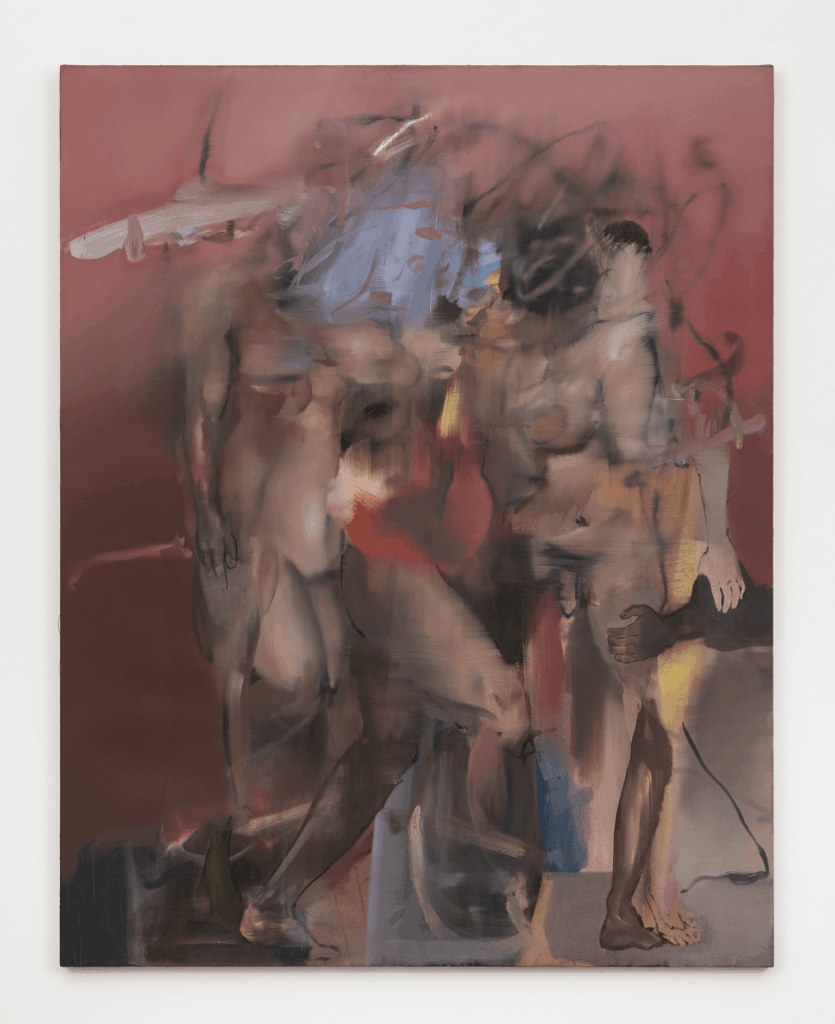
ABSENTEE, 2025; acrylic and oil on line; 240 × 190 × 4 cm
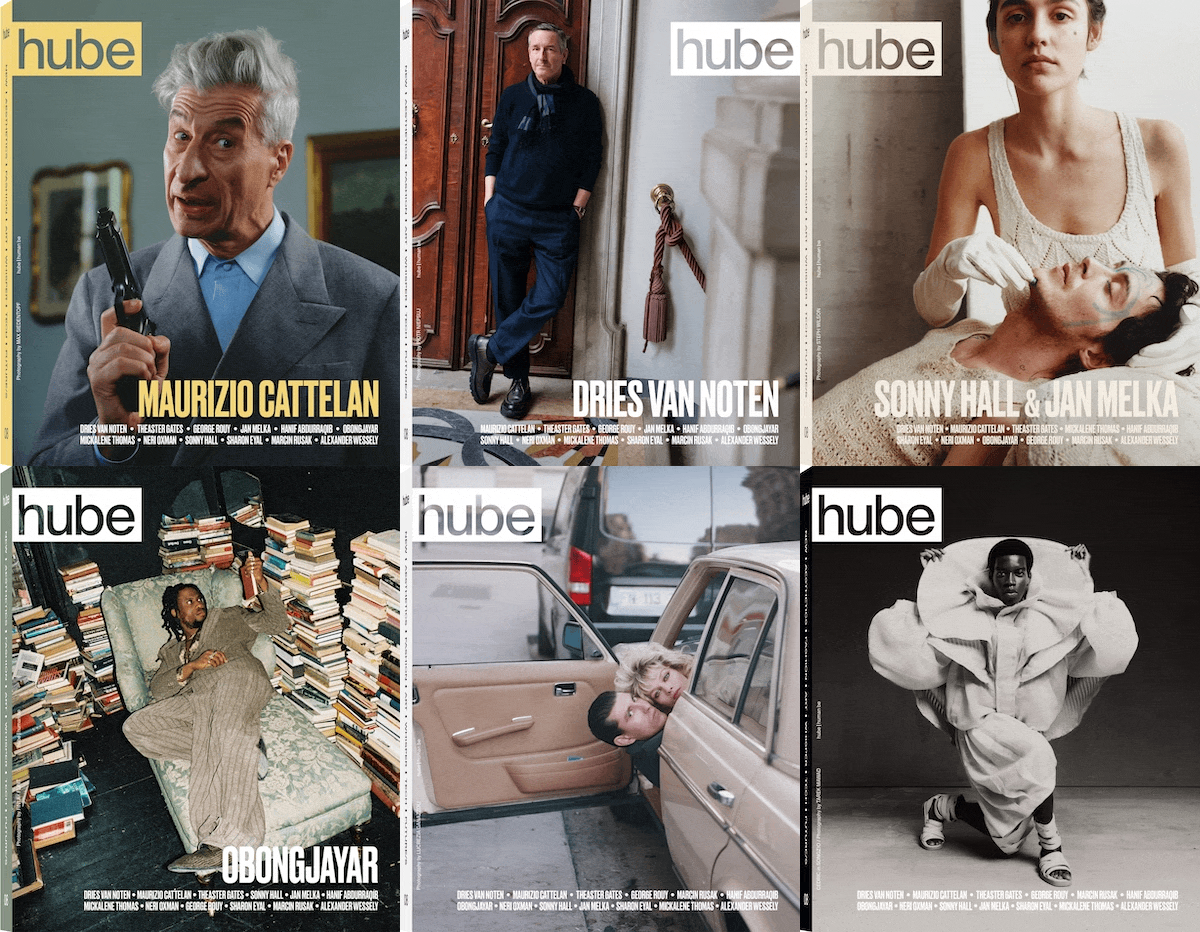
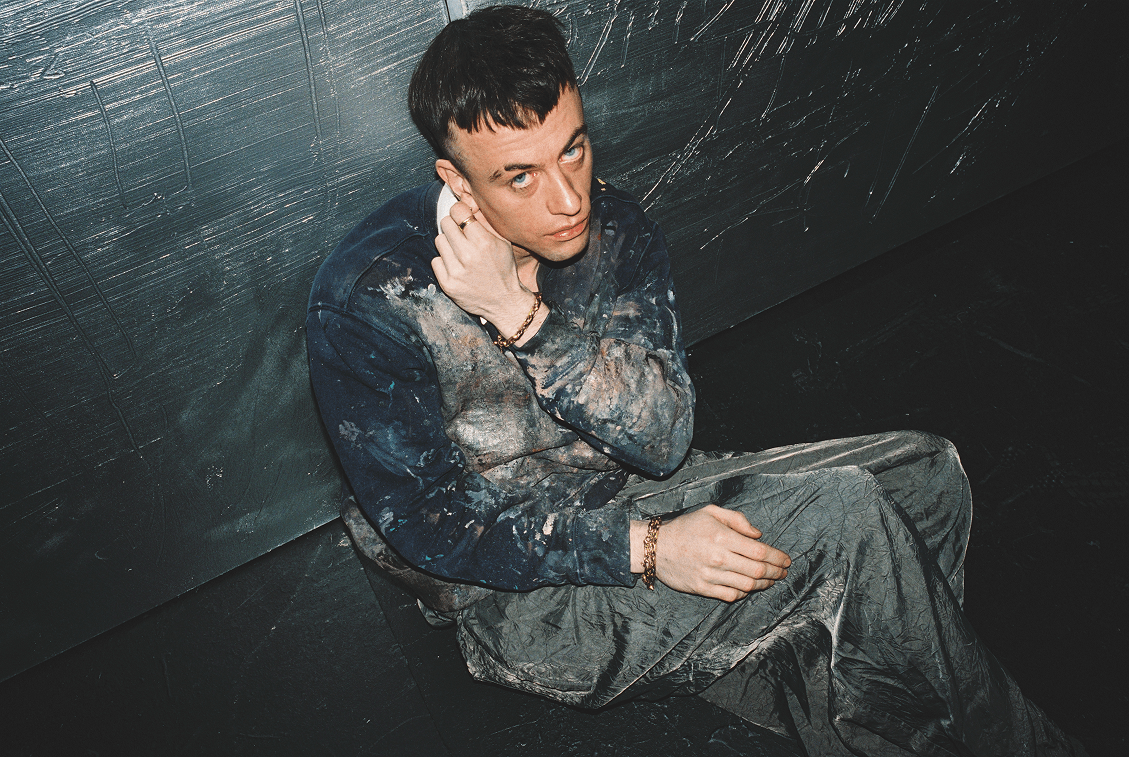
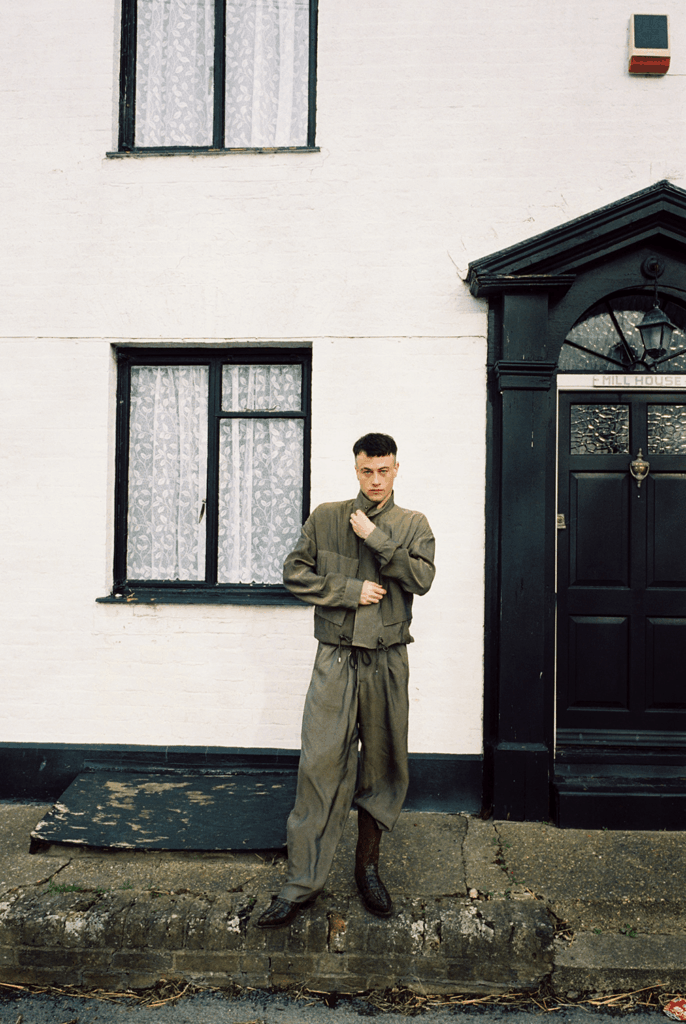
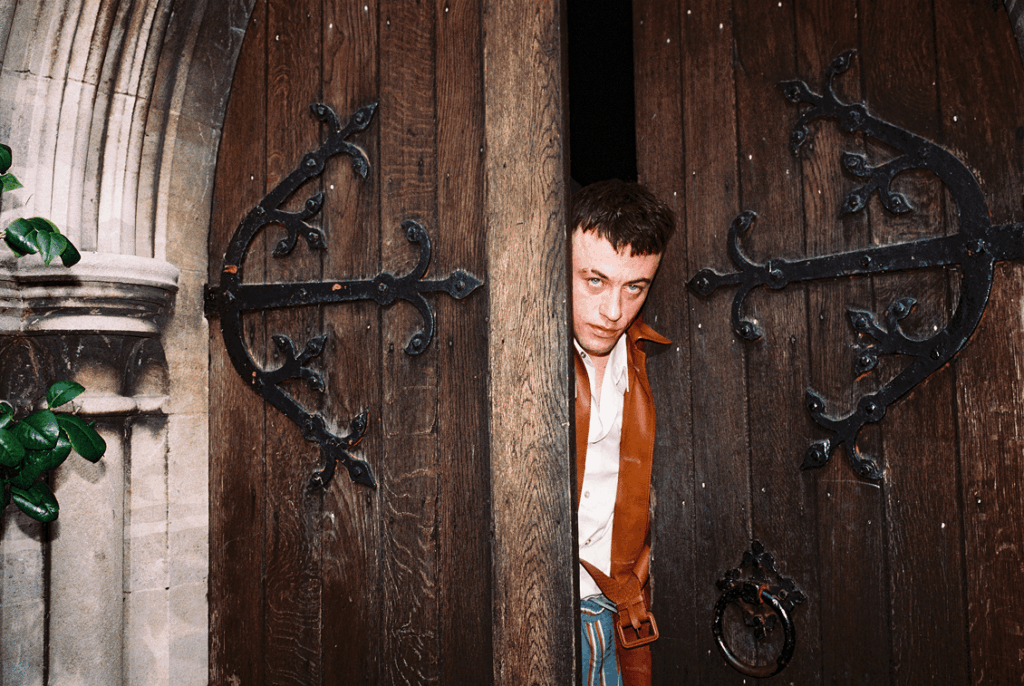
George Rouy is interested in the body as landscape. In his paintings, lines smudge and forms distend; figures—alone and in groups, seen and unseen—take on a spectral quality as they shift and bleed into one another. Though analogue, his work has a strangely digital intensity. Glitched, multiplied, and frozen, the unstable anatomies that populate his canvases seem formed by a state of overload. “We are forever in flux,” he explains, “forever shifting modes.” Rouy works from life, but not from models. He creates his work by splicing together images found online with photographs of his own works. The resulting forms are familiar but unknowable. Without eyes, they have no gaze to return our own. Instead, they function like reflections or shadows, forms onto which we can transfer something of ourselves. We visited him in the Kentish market town of Faversham, where his studio sits on the same street as the 19th century church he calls home. This Gothic Revival setting was a fitting place for discussions of the body as matter and apparition. In his work, these vicissitudes persist, suspended in restless transformation.
hube: Should art be connected to an idea, or can it exist as form and experience without narrative or meaning?
George Rouy: Absolutely it can. I think that’s how I work, and within these parameters, there isn’t much narrative at all. Yesterday, I was talking to Maggi Hambling about how it’s actually the kind of vibration between modes, or the friction between ideas, where things are most interesting. When things are too full, you give too much away to the viewer. It almost takes away the potency of the work.
Because I’ve been painting for quite a while now, I’ve come to understand where a painting will hit the most, where it exists in its most potent form. I think my paintings exist within a well. They are very focused on the body and all that comes with it. A few years ago, I made a decision about how I would approach the figure. I felt that reducing it would lead me down many different avenues, each that would help me explore how we fit—within ourselves and within society. I think my work continues to do that, but every series shifts slightly.
I think the thing about narrative—and I’ve said this many times—but the thing that really solidified the idea that there didn’t need to be a narrative, that things could exist within this abstract, was when I saw Sharon Eyal’s work. She can somehow piece together a sense or feeling, her own kind of experience and emotion, and then transfer it into a work that is very open-ended and emotive and emotional. Her work doesn’t have to be defined by a set reason. Why do things always need to have a narrative or meaning? We live in a world where everything’s so defined, and what is beautiful about art is that it can exist between two realms.
h: How has working with Sharon Eyal reshaped your understanding of the body—not just as an image, but as an instrument of presence, tension, memory, and transformation? What did these encounters with moving bodies reveal to you about your own artistic language?
GR: When I first saw Sharon’s work, I was at a point where I was trying to find where my own work sat in the context of contemporary art, contemporary painting, and contemporary figuration. I was still working it out. Then I saw her work, and it was so full of intuitive emotion. It felt like everything that I was trying to do in painting was being presented to me through dance, through movement, and through thinking about the body in real time. I started to compare that feeling to, for instance, when I first saw a painting by Rothko or Lucian Freud. There’s this kind of intrigue and clarity to those artists that’s very, very immediate, but which has a long-lasting impact on how you continue to see things.
I just saw the Gerhard Richter show in Paris, and it was such an enquiry into not just the body, but also photography and portraiture, and all the things that he existed within, in the realm of said human. He’s another artist who I’m massively influenced by, particularly when it comes to taking these subjects and extracting the humanity from them. Richter does it in such a different way to, let’s say, Sharon or Rothko. Still, for some reason, they share a similar thread in my mind—a thread that kind of leaks out into my own work. It is about humanity.