Jiahe Zhang trained as an illustrator and never studied painting formally; she taught herself. Born in Dalian and now living and working in London, she paints the city as a way of thinking through her own place in it. She reads Spinoza, arrived at via Susan Sontag’s journals, and Mogobe Ramose on Ubuntu, both of which support the same proposition: that self and world are not separable, and that a person is formed by what they are connected to rather than by what they own.
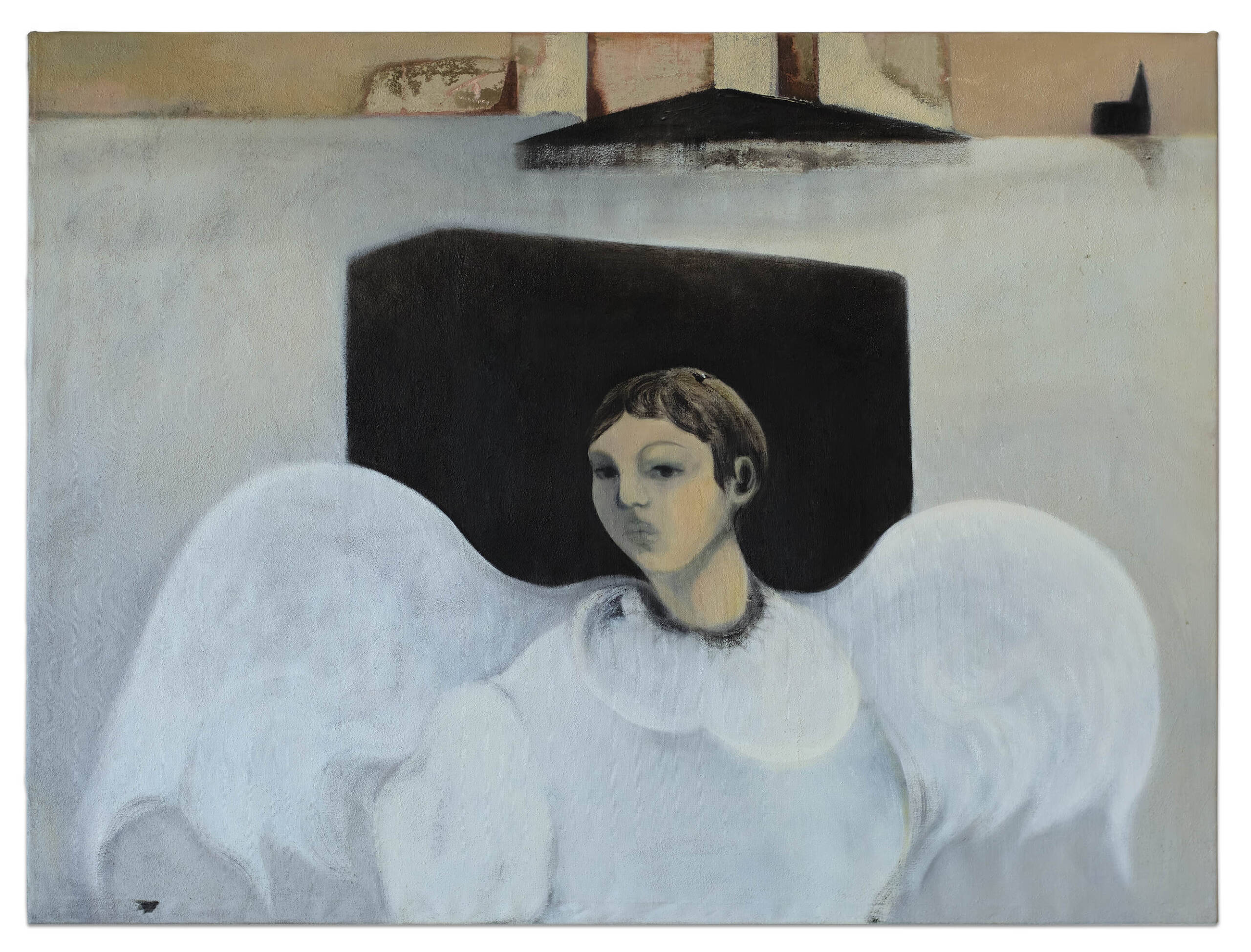
Her paintings construct cities that are not quite any city. Perspectives flatten; tower blocks, power plants and infrastructure are painted until they read as personality rather than architecture; figures sleep and wake under a city that has piled up over them, among motifs that return from painting to painting—flies, a pointed tower—each holding a private memory and a fact about how the place was built. She works oil into sand, cement, dirt, and wood shaving, so the surfaces hold the literal substance of construction.
Probability, her first solo exhibition, opened at Allotment, E8, London in July, built from three years of research across philosophy, recent history, and her own life. It gathered oil paintings, charcoal drawings, diagrams with a surrealist logic, and a self-published artist book. hube spoke with Zhang about honesty in the studio, the self as something shared, and what stays behind when a street is razed.
hube: Your practice encompasses painting, drawing, and writing. How do these mediums dialogue with one another in your studio, and what role does writing play in the development of your visual language?
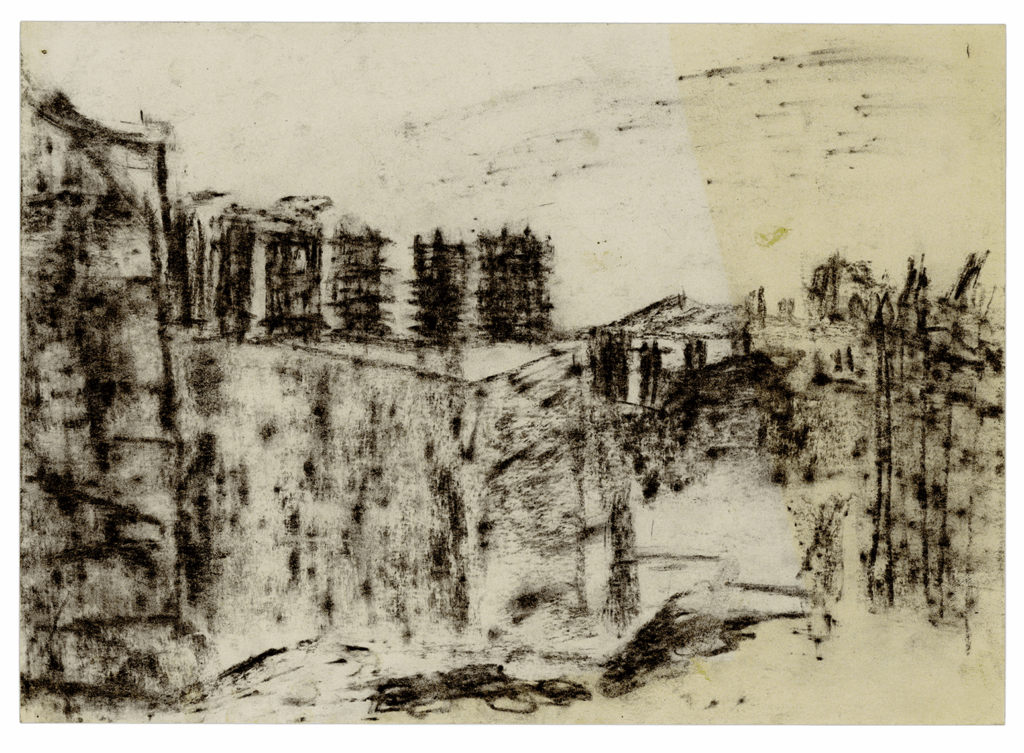
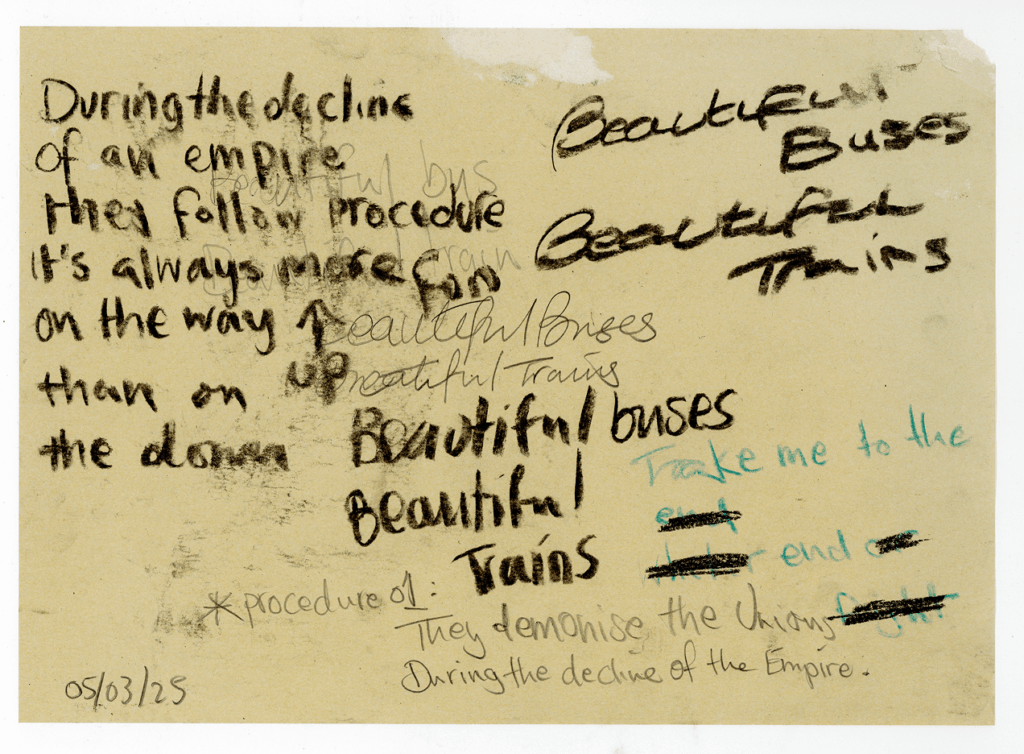
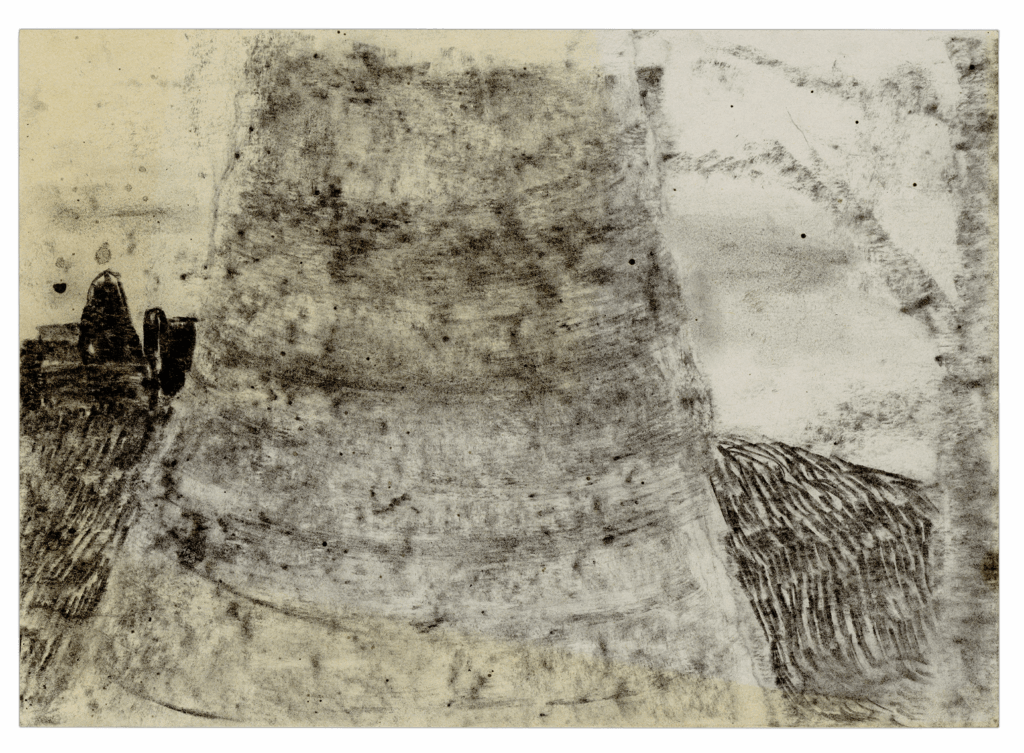
Jiahe Zhang: I have always kept multiple notebooks and diaries. Writing, for me, is a vehicle for self-creation; it is a place where I can find my most honest self, which is often difficult for me to express verbally. This is the reason I draw and paint too. There are moments in the studio where I will suddenly have a realisation; I write these down on loose paper with charcoal and stick them on my studio walls. I refer to them when I am painting; they manifest as the motifs or diagrams in these works, and I see them as inseparable from my visual language. The paintings are manifestations of thought, so writing is a sketch of thought.
h: You describe your work as a form of troubleshooting. What does that process look like in the studio?
JZ: As I mentioned, the paintings for me are manifestations of thought and thinking is never linear. It can take years for something to be fully realised—writing, drawing, and painting are my tools but also sources of questions. A painting might not be working, which could seem like a practical question, so I will go back and draw a different composition, but along the way I could find the issue wasn’t about the composition at all but the thought that inspired it in the first place. Sometimes a conviction is challenged through the making of the physical work. My process is often not a flowing line of production but more like working backwards from an answer in maths. If this is where everything is now, then when did it start, and why?
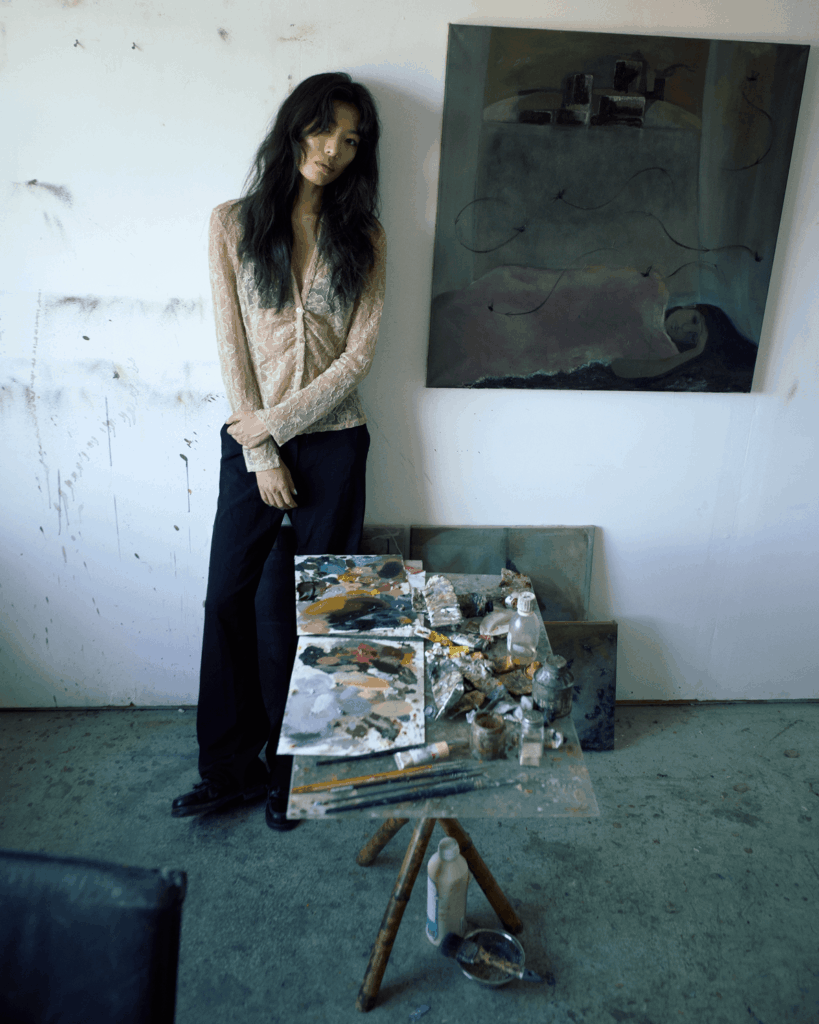
Courtesy of KINGSLEY IFILL
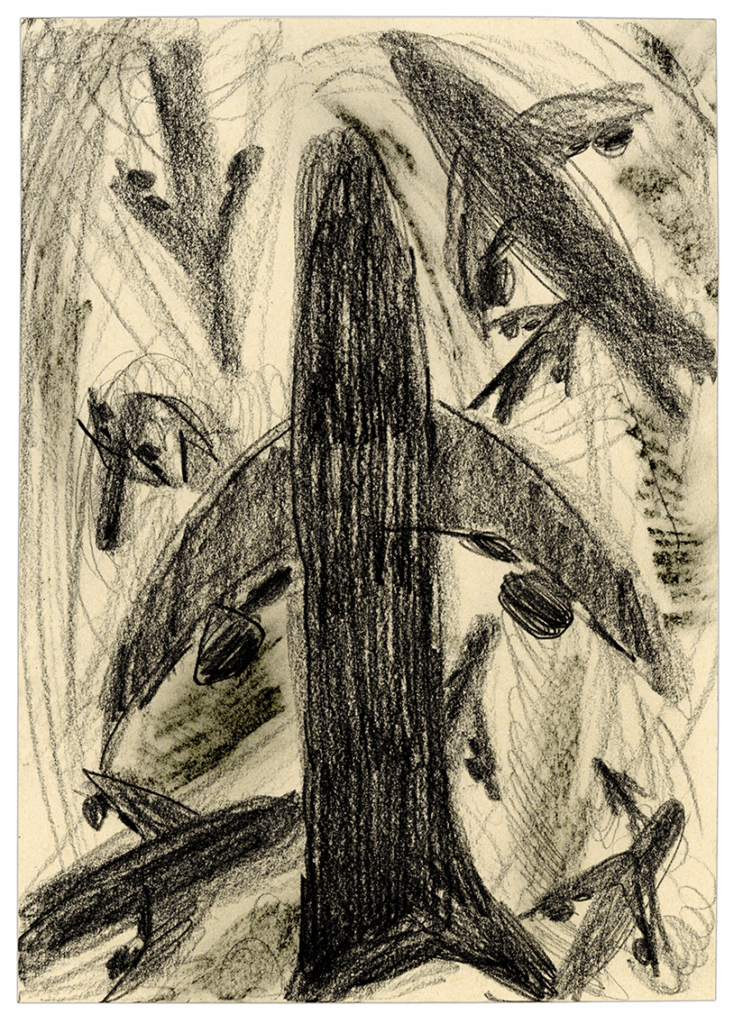
Taking photos of planes doing backflips in my dream, 2026
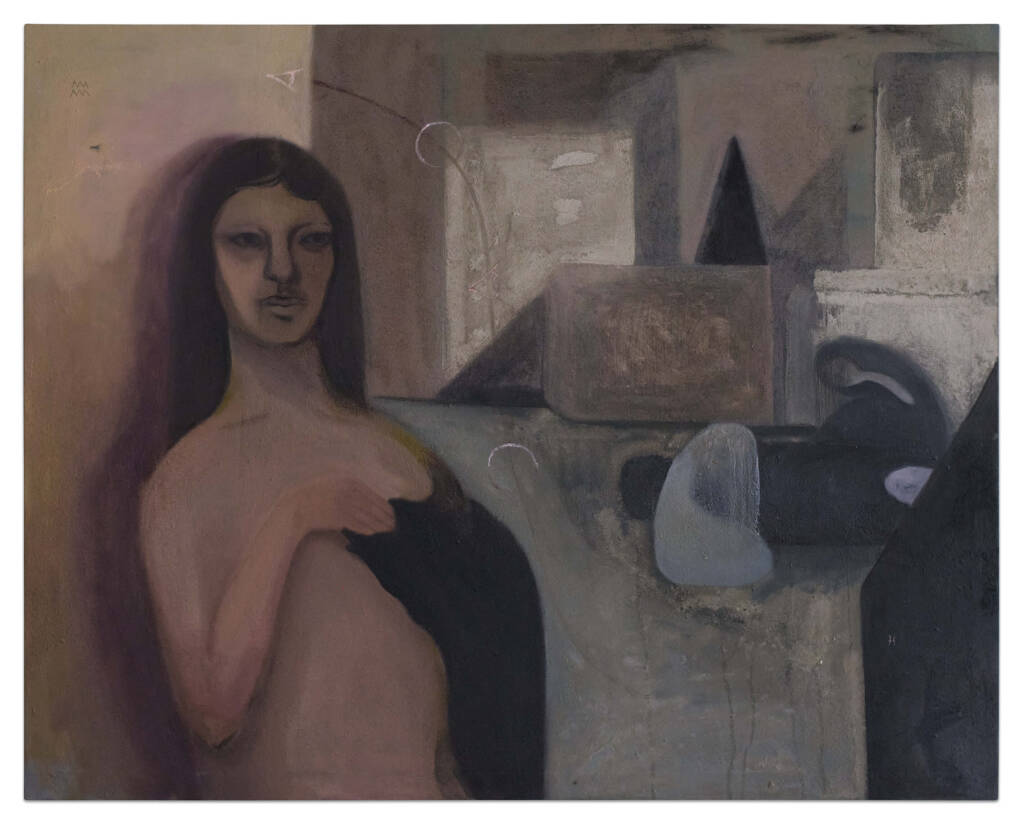
Age of Pisces
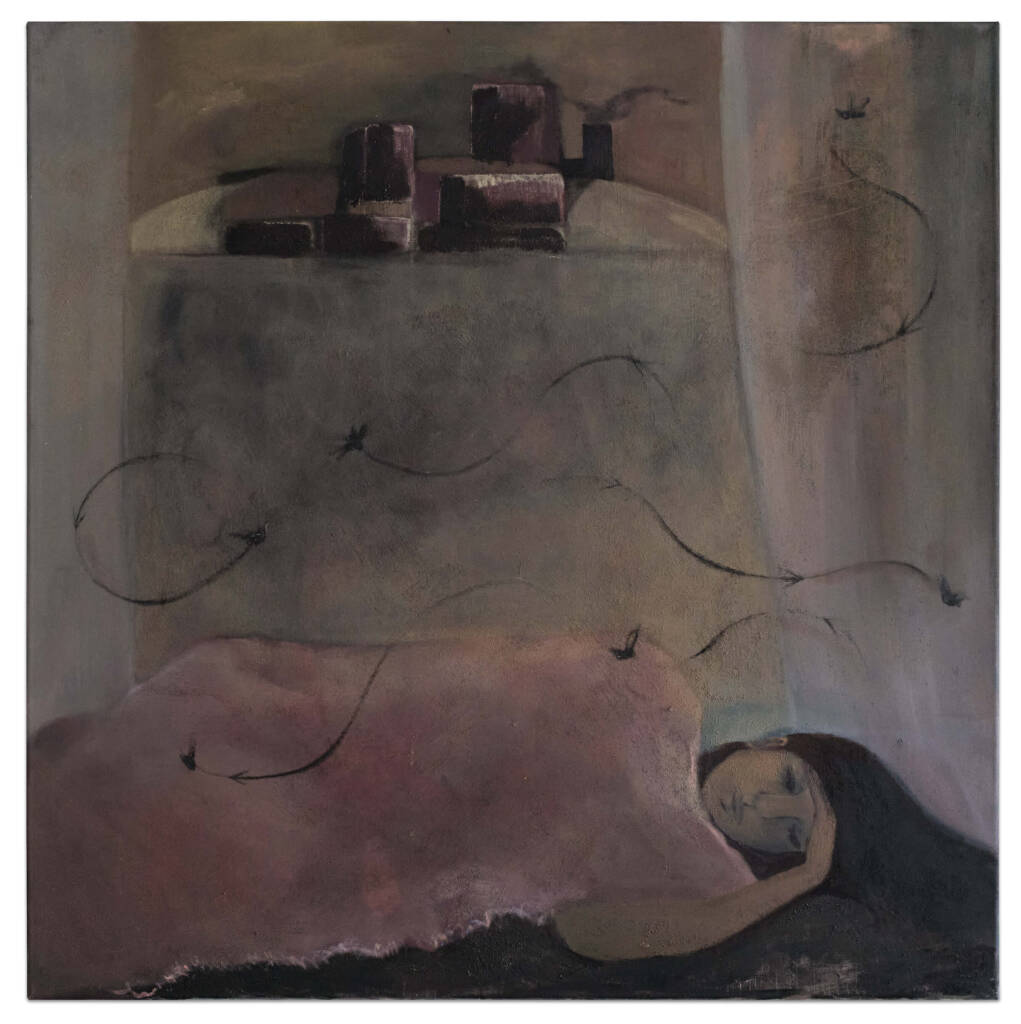
Age of consequence
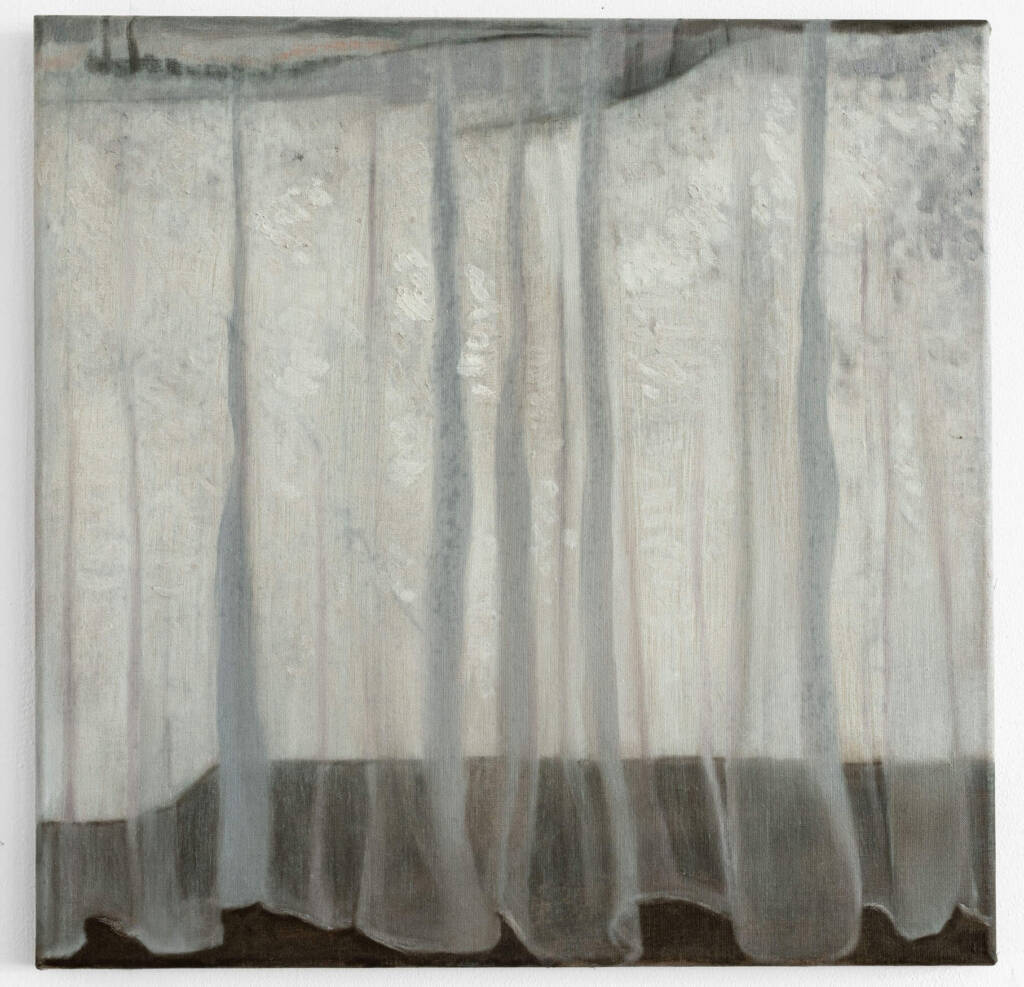
Ebay nostalgia, 2024
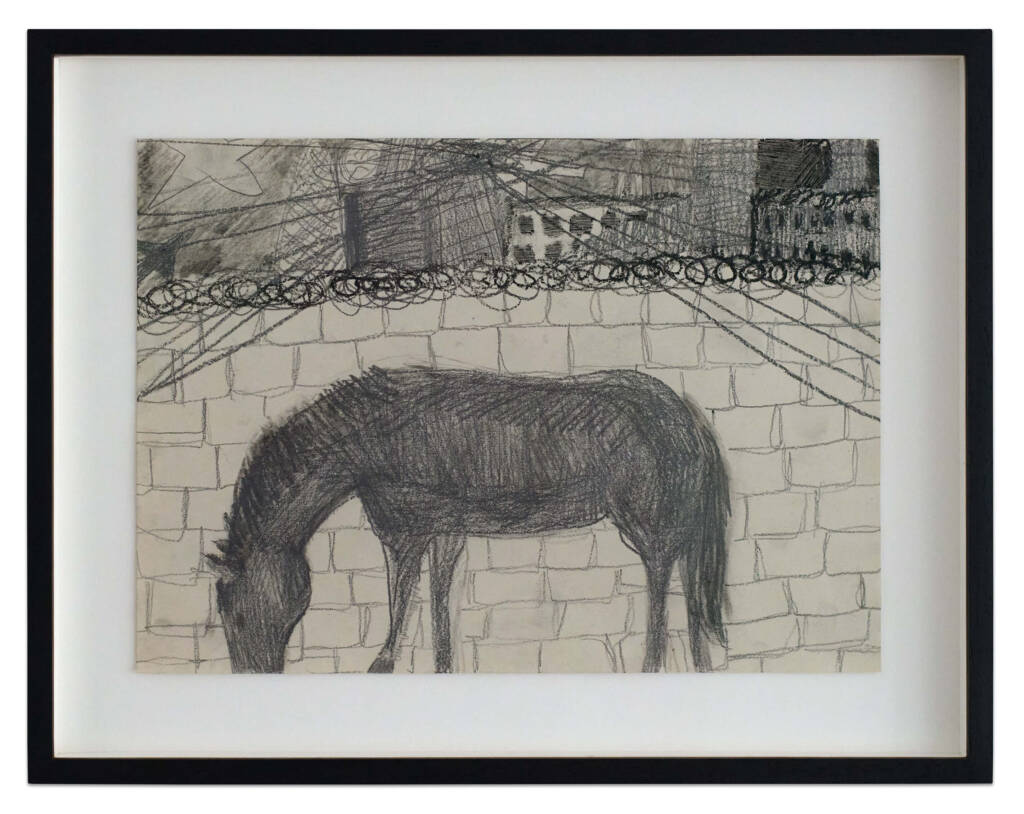
Horse eating a violin
h: For Tracing Movement, a group exhibition you took part in this spring, you explored movement and the tensions it creates. Can you walk us through the vision and inspirations behind the pieces you showed there?
JZ: I wanted to explore transitions in the broader theme of movement. All three paintings shown were about the transitions of the spiritual and emotional self; whether it be a memory carried from childhood which lights up a part of adulthood or the growth which comes after a sudden emotional rupture. I was making the paintings before I knew of the theme, and I was going through a major growth spurt spiritually, so the theme manifested perfectly.
h: Probability is your first solo show, built from three years of research. What did you think the work was about when you began, and what had it become by the time you hung it?
JZ: When I started, I knew it was going to be about the city and its material and immaterial relationship to the self. That didn’t change. What changed was what I understood about myself through the process. The show began as six paintings, under the title Fate < Probability. I felt the urge to over-explain, so that my point would be understood by others. By the end I had decided on three paintings, and the title was going to be simply Probability. I revisited my notebooks whilst working on the paintings. It was significant to see how much time I had spent under the theme of the city, how long it can take to say something with conviction, and how important it is to make and to say things with conviction. By the time they were all hung, I was reminded how much of myself is in these works. It felt like a checkpoint in my artistic and personal life. I felt an alignment inside.
h: The street in Dalian where you grew up has been built over and disappeared. What do you still have of it, when the material is gone?
JZ: When I revisited the street and found that it no longer existed, I felt an overwhelming emptiness and grief, as if I was haunting my own past. Later I realised it wasn’t that I needed a cement balcony to ground my existence; it was that the balcony facilitated the growth of something far more valuable, the self, which can never be erased by a demolition party. When the material is gone, our existence persists through family, community, and culture. The memories become the real artefacts.
h: How did you arrive at the philosophies of Spinoza and Ubuntu—were you looking for a way to think about the city, or did they find you first and change what the work was about?
JZ: I found out about Spinoza a couple of years ago whilst reading Susan Sontag’s published Journals, so I had been reading him for a while. I have been looking into different philosophical interpretations of the self, as the work for the show was exploring the idea of inseparability of the self and its environment (which, for me, is the city). When I found African Philosophy Through Ubuntu by Mogobe B. Ramose, it definitely expanded my view on the subject—the self and others as one. Again, framing the self as more than just the individual.
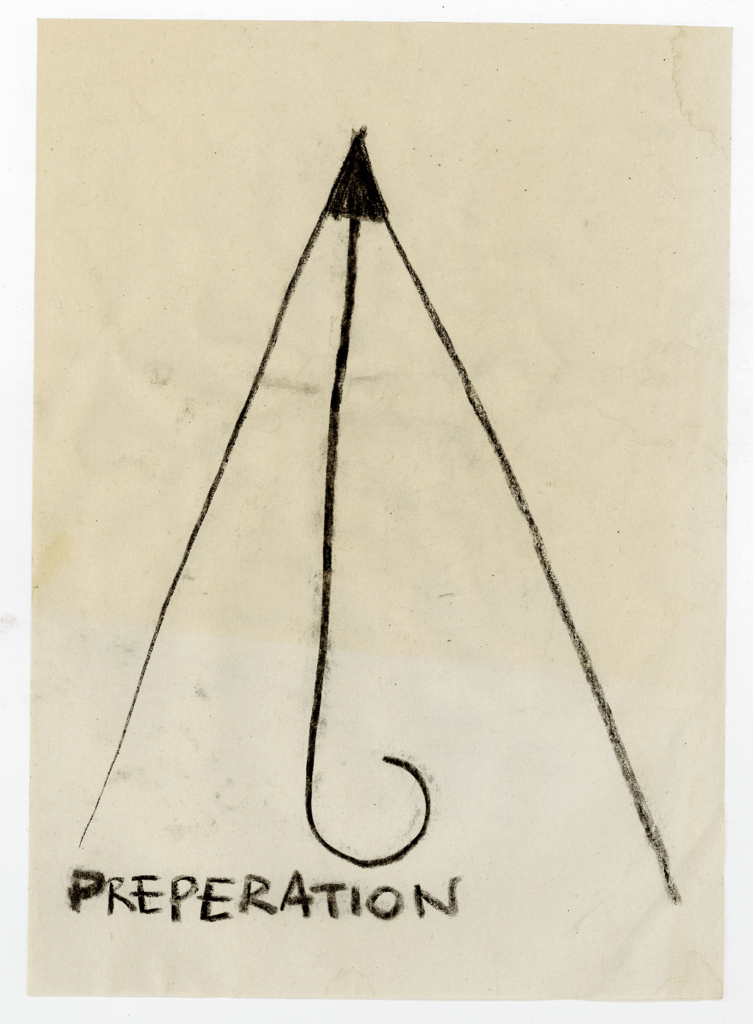
Diagram illustrating perpetural preperation, 2026
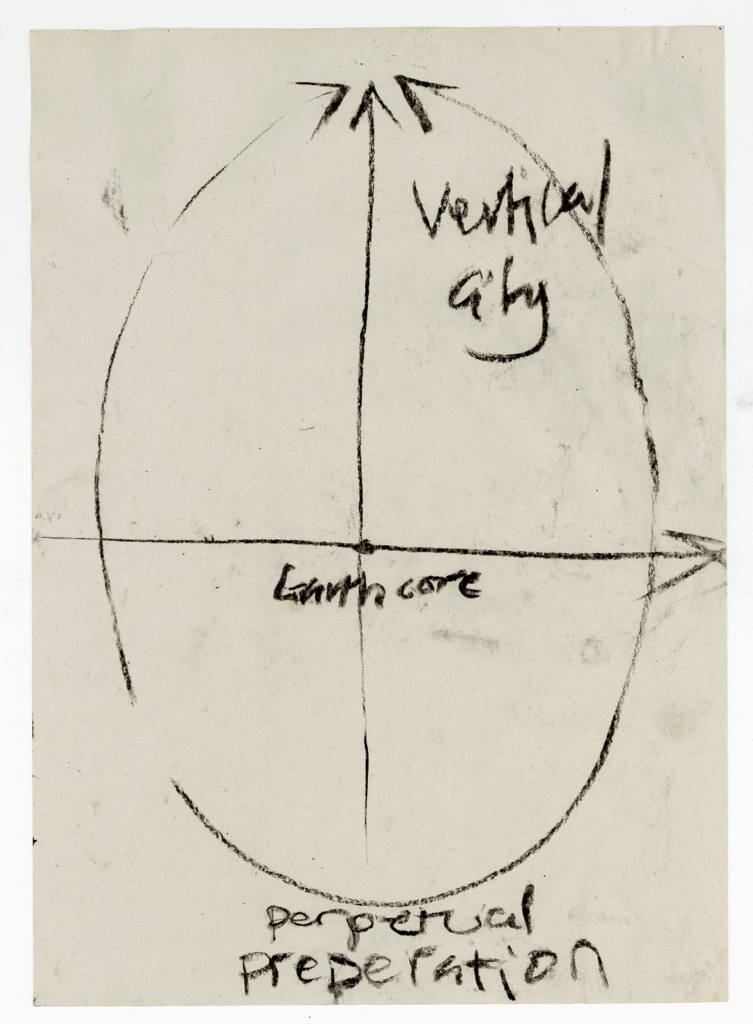
Fig.unkown, 2026
h: Age of Aquarius is made with oil, sand, cement, dirt, and wood shaving on linen. How did you arrive at that combination—is it about what those materials do to the surface, or about what they are?
JZ: The use of cement came about somewhat unintentionally. I have been trading materials with my neighbour, who has a workshop downstairs from my flat; he gave me some cement one day to try and I loved working with it. When it’s mixed with linseed oil and pigment it gives my paintings that tar-like quality. When it dries it becomes pale and dusty and falls down over the painting—I think it’s really beautiful. I have used sand and dirt from around the studio floor for a while now. I love the heavy, gritty textures they give to my paintings and the randomness in how these materials latch onto the canvas. Of course, these are building materials often used for construction and that is one of the reasons I decided to use them in my process—it is very enjoyable for me to make images out of these otherwise invisible materials.
h: You live and work in London, and the work is about urban space. Is the city in these paintings a particular one—London, Dalian, both—or something assembled?
JZ: The cityscapes are one of the most abstract elements in my work. I don’t want them to look too much like anywhere in particular, although they are definitely influenced by my time living in London and Dalian. Both cities have these tall concrete block residential buildings, so it would be difficult to escape those kinds of subconscious references. I also have an obsession with industrial buildings and infrastructure, which look very abstract to me. I try to think of the feeling of a building more than the actual object when I’m painting them. There is a lot of personality to them.
h: What does an honest painting look like to you, and how do you know when you’ve made one?
JZ: An honest painting has to come from an honest place before the brush even touches the canvas. I’m always questioning myself: Why am I making this? Who am I making this for? What do I want people to think of it? If the answer is in any way superficial then I stop. I want to look at pure things. I think my best works are the ones I made thinking “no one is going to see this.”
h: What advice would you offer to emerging artists grappling with the pressure to define their voice clearly and early?
JZ: What I have learnt so far is that artists should keep all of their work—drawings, writings, film, photo. Everything. I threw away work before because I didn’t think it appeared to be matching my voice—later I realised that voice is constantly developing and evolving. It’s natural to change so try not to fight against it and put yourself in a box.
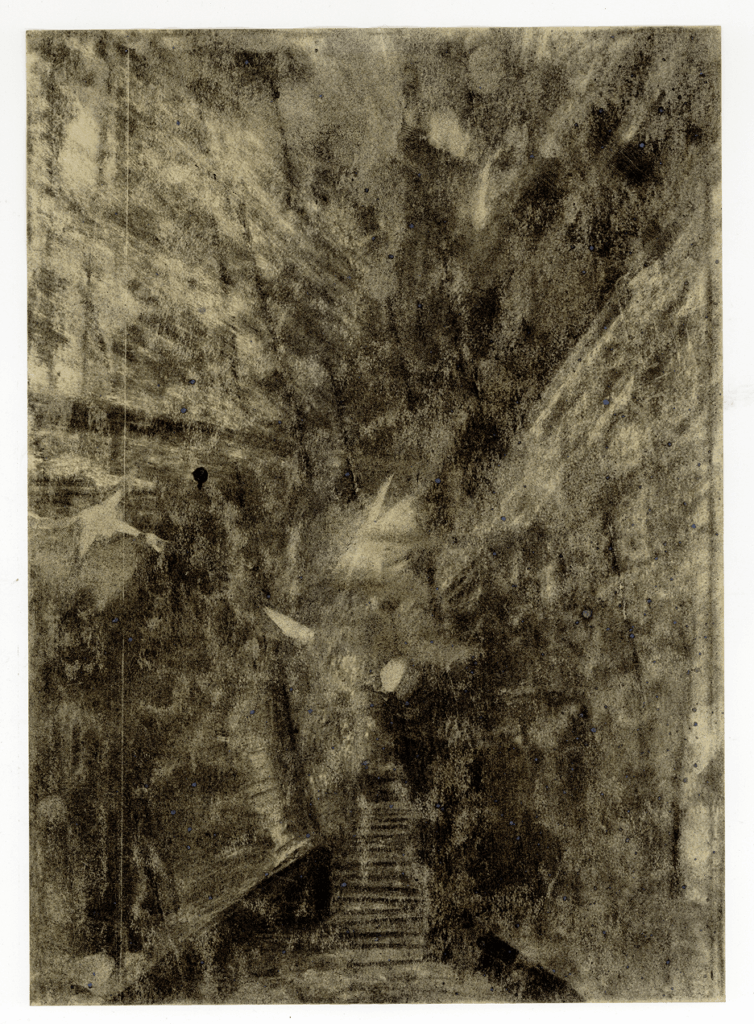
untitled, 2025
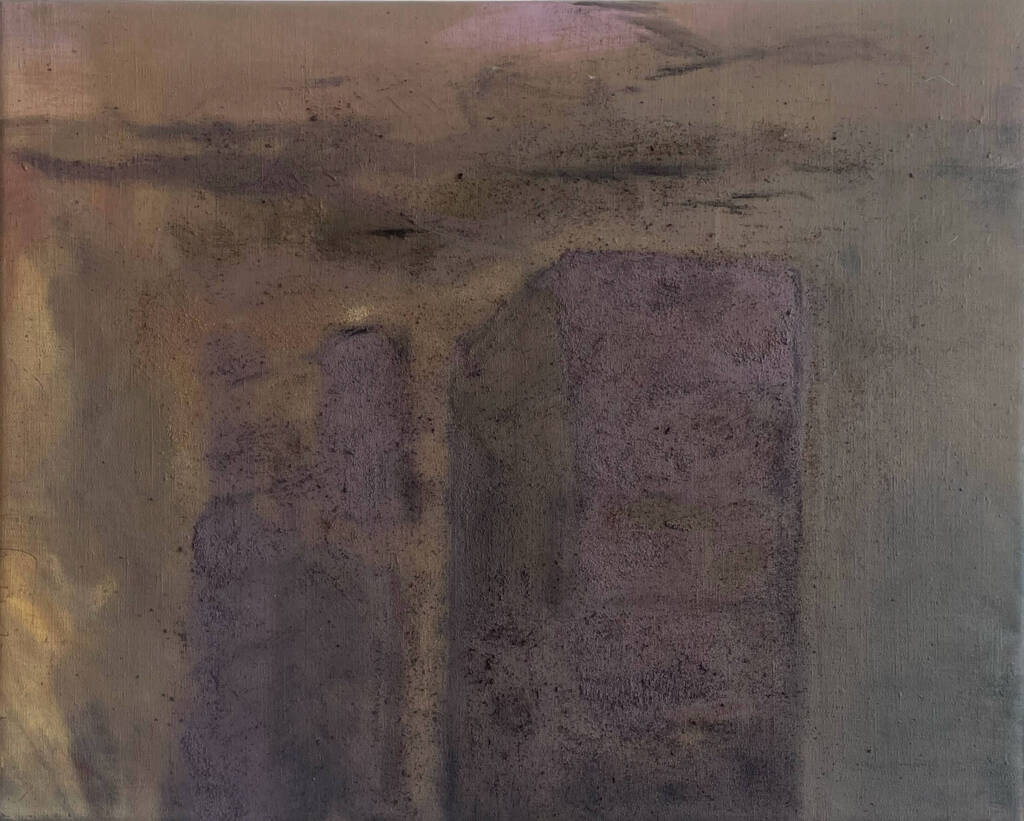
Studio window, 2025
untitled, 2025
untitled, 2025
untitled, 2026
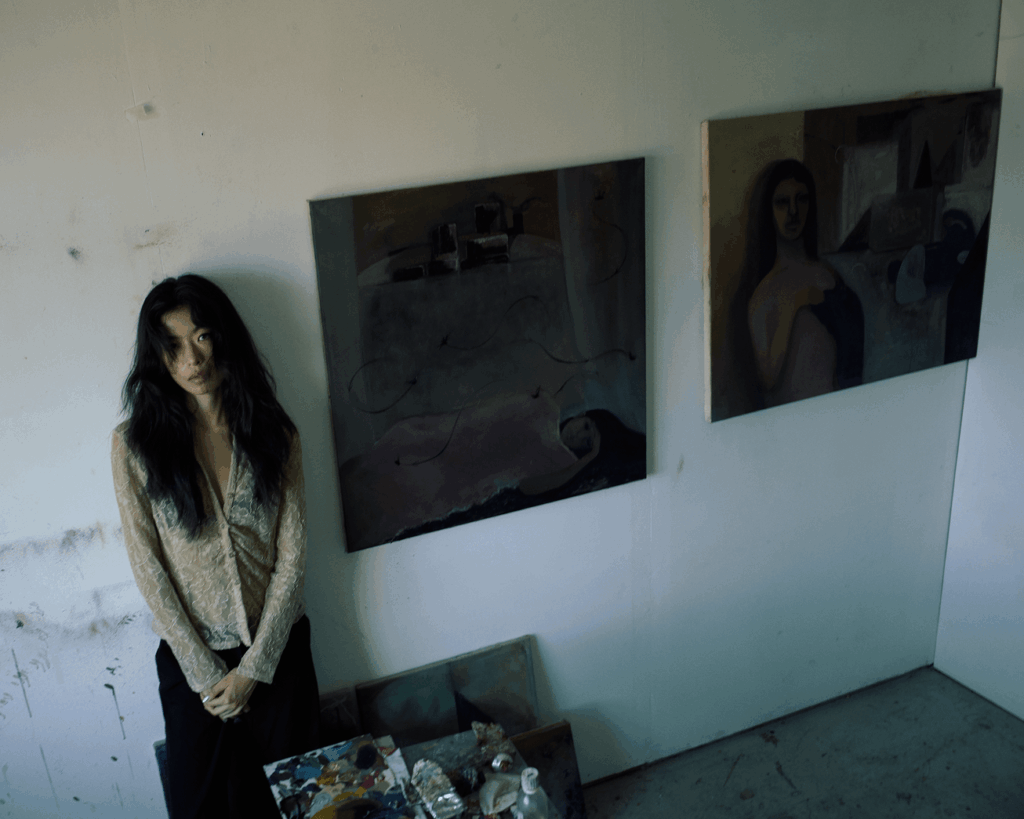
Courtesy of KINGSLEY IFILL