The painter of hats, pipes and apples, Belgian surrealist Réne Magritte from the silence of his studio was convinced “everything we see hides another thing; we always want to see what is hidden by what we see.” Reality has never belonged exclusively to the visible. Long before photography promised the faithful recording of appearances, painters understood that the world revealed through the eye was only one version of experience. Beneath it lay memory, sensation, longing, imagination and dream, those elusive territories where the external world dissolves into something inward, psychological and profoundly human. The American poet Wallace Stevens proposed something equally revealing, “The imagination loses vitality as it ceases to adhere to what is real.” For Stevens, imagination was never an escape from reality but its completion. Between Magritte’s concealed reality, Klee’s invisible one, and Stevens’ insistence that the real and the imagined remain inseparable, lies the space that Nicolas Party has comfortably made his own. The French philosopher Maurice Merleau-Ponty understood perception not as the passive reception of the world, but as an active encounter with it. We do not simply look at the world; we inhabit it, and it inhabits us in return. Reality is not merely before us; it is continually constituted through our experience of it. Party’s paintings embody this phenomenological understanding. They ask us not merely to recognise familiar forms, but to experience reality as something continually reconstituted through perception, memory and imagination.
In the world of make-believe, Stevens described poetry as “the supreme fiction”, not because it abandoned reality, but because it revealed truths inaccessible to literal description. Party’s paintings perform something similar. Mountains melt into motifs, trees reach over one another like impenetrable forests, and his fruits have the gravity of portraiture. As Party explains how ‘nothing is entirely invented, nor remains entirely real’. His paintings occupy the place where observation yields to memory, colour abandons itself to emotion, and where the image ceases to imitate nature to construct a reality governed by its own logic. That reality, for Party, is never something fixed or objective, rather, it is something continuously remade through perception. His landscapes are not descriptive of landmass in the geographical sense, nor are his portraits concerned with likeness alone. They are acts of distillation, where the incidental falls away, and detail surrendered to a more decorative role.
As Party’s forms are simplified until they approach the condition of an idea. Yet the artist’s thirst for simplification in no way impoverishes the image; instead, it enlarges it. Like poetry, which achieves its greatest resonance through compression, Party’s paintings remove the unnecessary so that something more essential can emerge. Turn-of-the-century Austrian poet and playwright Rainer Maria Rilke believed that art allows things to become inward, releasing them from their ordinary function so that they acquire a deeper spiritual presence. Party performs something similar, as his mountains, flowers, fruit and faces cease to be emblems in the world, and instead vessels of contemplation, disclosing what Rilke might have recognised as the ‘invisible life of things’. Their apparent simplicity is therefore deceptive; what has been removed is description, allowing a greater essence to surface with greater clarity.
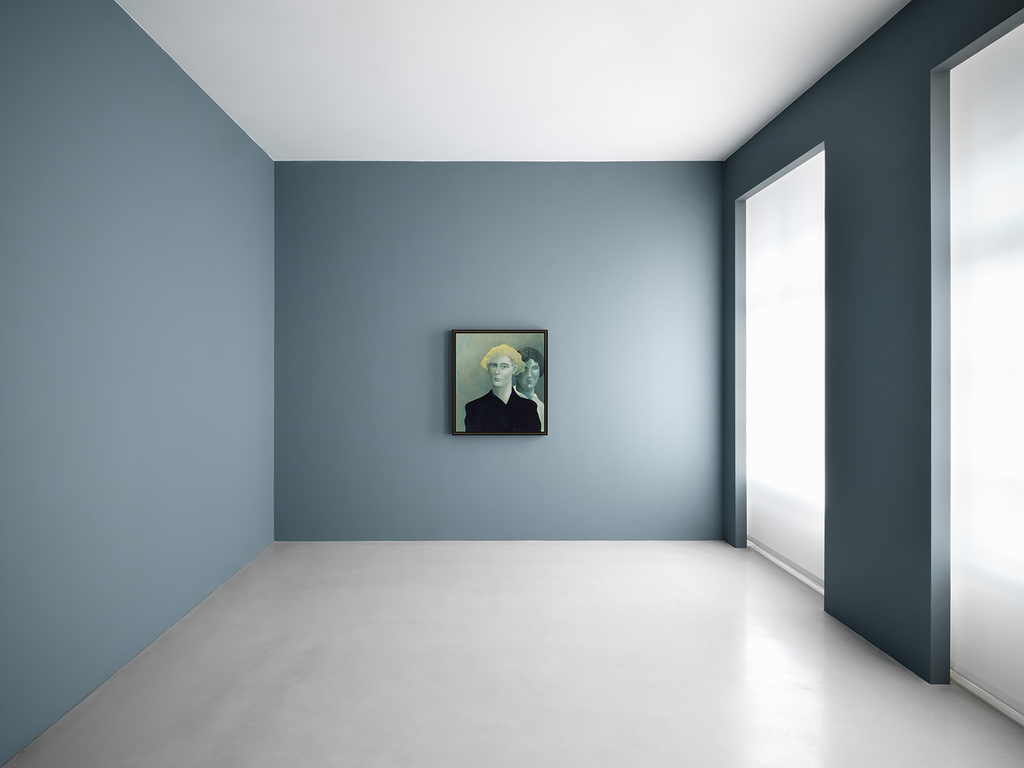
There is an enduring temptation to describe his work through the familiar language of Symbolism or Surrealism. Certainly, evidence of both traditions appears throughout his practice. The inward landscapes of Symbolism, the dream logic of Surrealism, the metaphysical silence of Italian artist and writer Giorgio de Chirico, and the poetic ambiguity of Magritte all seem to infiltrate Party’s imagination. Yet his paintings belong fully to none of these histories. They don’t present symbols needing to be deciphered, nor dreams deserving of interpretation. Rather, they cultivate a beguiling ambiguity that for the artist is a condition of perception itself. Inviting us, the audience, to linger between certainty and uncertainty, recognition and invention. His works are less narratives than states of mind, less representations than acts of seeing. Yet there is another register silently surfacing beneath this chromatic seduction. Maria Rilke observed that “beauty is nothing but the beginning of terror.” Thus, the atmosphere of Party’s paintings is never entirely without consequence. The dream becoming a nightmare, the immaculate surfaces, perfect contours and luminous colours possess an almost hypnotic authority, drawing the spectator into worlds that are seductively tranquil but at the same time strangely closed. The trees read like concrete forests, the make-believe mountains like prison walls, the flowers cut glass. Gradually, admiration gives way to unease, and what initially feels idyllic begins to resemble an amusement park without a way out.
It is here that Party’s paintings approach the uncanny. The Austrian neurologist Sigmund Freud explaining it as that which is simultaneously familiar and unfamiliar; of the uncanny conjuring a disruptive darkness to what otherwise appears entirely normal, precisely because what takes places defies explanation. Party achieves something of that same kind of uncertainty without recourse to shock or spectacle. On the contrary, nothing overtly threatens us, nor does it feel entirely secure. The paintings seem to ask us to be careful what we wish for; a world purified of noise, accident and disorder may also become a world emptied of contingency, movement and escape. Beauty, in this sense, is never merely consoling. It can also become absolute. As Party understands that the most persuasive fictions are those that seduce before they unsettle. His painted worlds don’t imprison the viewer physically, but psychologically they linger long after one has left them, questioning whether the ideal image conceals something more menacing beneath its immaculate surface.
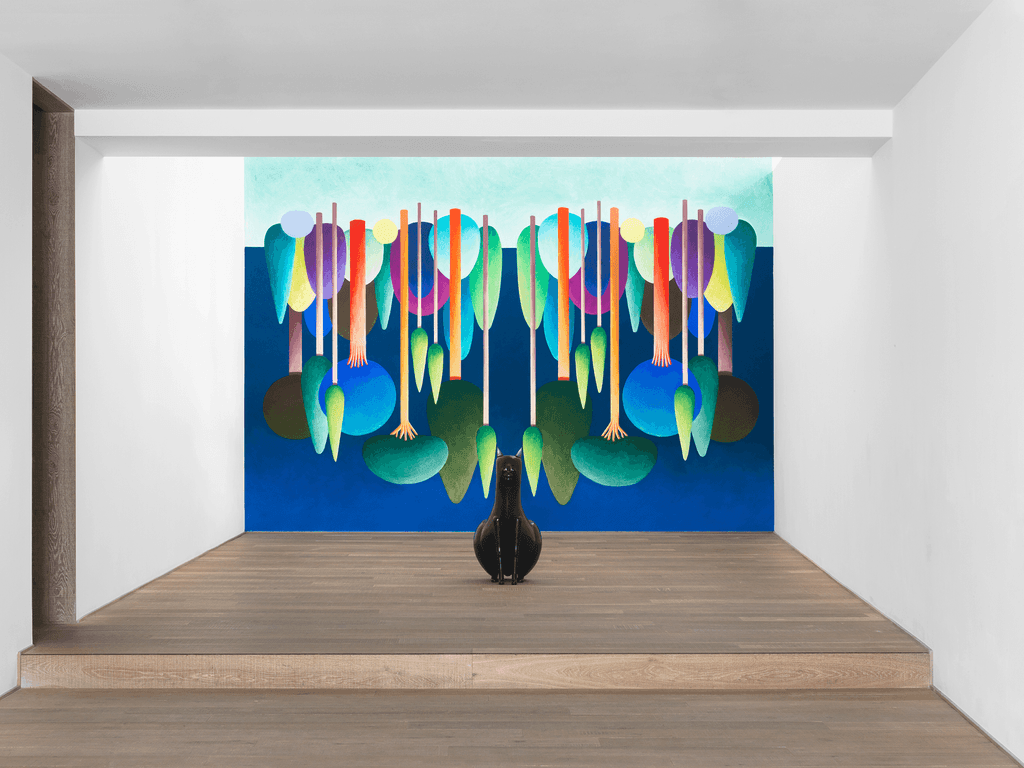
And colour becomes the principal architect of this reality. Freed from the descriptive obligation to the real world, colour assumes an altogether different function. A lavender mountain, an emerald face or a crimson tree cease to appear improbable because they obey another order altogether, not the logic of optics, but a sense of feeling. Here colour is neither ornament nor embellishment. It becomes an overwhelming atmosphere, based on structure, emotion and space simultaneously. The world is not coloured; it is constituted by colour. Party reminds us that colour is capable not simply of explaining reality, but of bringing it into being. Perhaps this explains the extraordinary silence that inhabits Party’s paintings. They resist spectacle despite their chromatic intensity. Nothing dramatic occurs. There is no narrative climax, no symbolic revelation, no theatrical gesture. Instead, the images exist as entities, asking only that we remain with them long enough for their transformations to take effect. French philosopher Gaston Bachelard, in The Poetics of Space, understood that reverie enlarges the world beyond physical description into psychological experience. “The world is beautiful before it is true,” he wrote, suggesting that poetry, and by extension painting, precedes explanation. For Bachelard, imagination was not an escape from reality but the means through which reality became intimate. Party’s paintings appear born of that state of reverie. They don’t try to explain the world; but instead deepen our intimacy with it. Beauty, here, is neither ornament nor escape, but a means of looking again.
Fundamentally, there is something restorative about Nicolas Party’s paintings. In an age in which the photography continues to hold on to the truth, his paintings defend ambiguity, uncertainty, and a feeling of doubt. They remind us that painting has never been obliged to explain the world; only to deepen it. By dissolving the boundaries between reality and one’s imagination, and of memory as a measure of things, Party returns painting to one of its oldest purposes; not to mirror the visible, but to awaken the invisible life that has always existed within it. English art critic and novelist John Berger observed that “seeing comes before words.” Party extends Berger’s proposition further still. Before interpretation, before meaning or language itself, there exists the experience of looking. His paintings restore that primal encounter. Stevens later wrote that “the final belief must be in a fiction which you know to be a fiction.” It is an idea that resonates profoundly with Party’s painted world. His landscapes, portraits and still lifes never pretend to be real; if asked, they would openly acknowledge themselves as inventions. Yet through that very artifice they arrive at something emotionally truer than description alone could ever achieve. The world we leave after encountering his paintings is outwardly unchanged, yet inwardly transformed. Colour has become less descriptive than psychological. Silence has acquired its own eloquence. Reality itself appears less fixed than we had imagined. In that subtle shift lies Nicolas Party’s greatest achievement; a reminder that painting still possesses the rare capacity not merely to represent the world, but to recreate the conditions through which we come to see it anew. Party will present exhibitions in The Netherlands, spanning Museum Voorlinden and the Mauritshuis in The Hague. At Voorlinden, the Swiss artist will transform the museum into an immersive world of landscapes, enigmatic portraits, still lifes and monumental murals, rendered in his signature pastel technique. Inspired by the Dutch Masters, the artist will also bring a selection of paintings from the Mauritshuis to Voorlinden, while presenting new works of his own. Together, the two exhibitions will establish a compelling dialogue between historical and contemporary painting. Scheduled to open in September 2027.
Rajesh Punj: Your exhibition at Xavier Hufkens feels less like a presentation of individual paintings than the construction of an entire psychological environment. Rather than simply hanging pictures, you seem to build a world that the viewer temporarily inhabits. Do you think of an exhibition as a total composition, where architecture, colour, murals and paintings operate together, or do individual works remain autonomous within that larger experience?
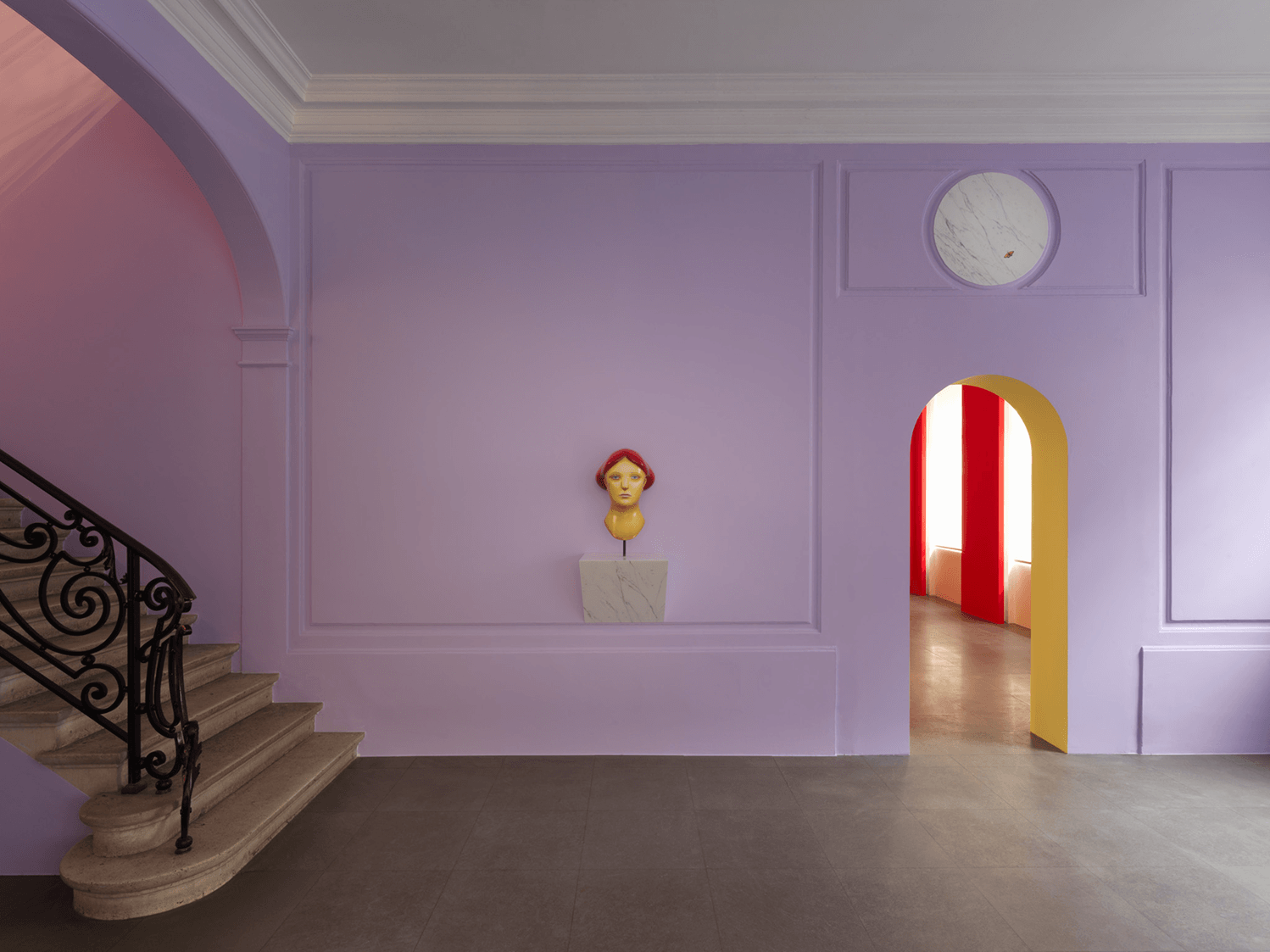
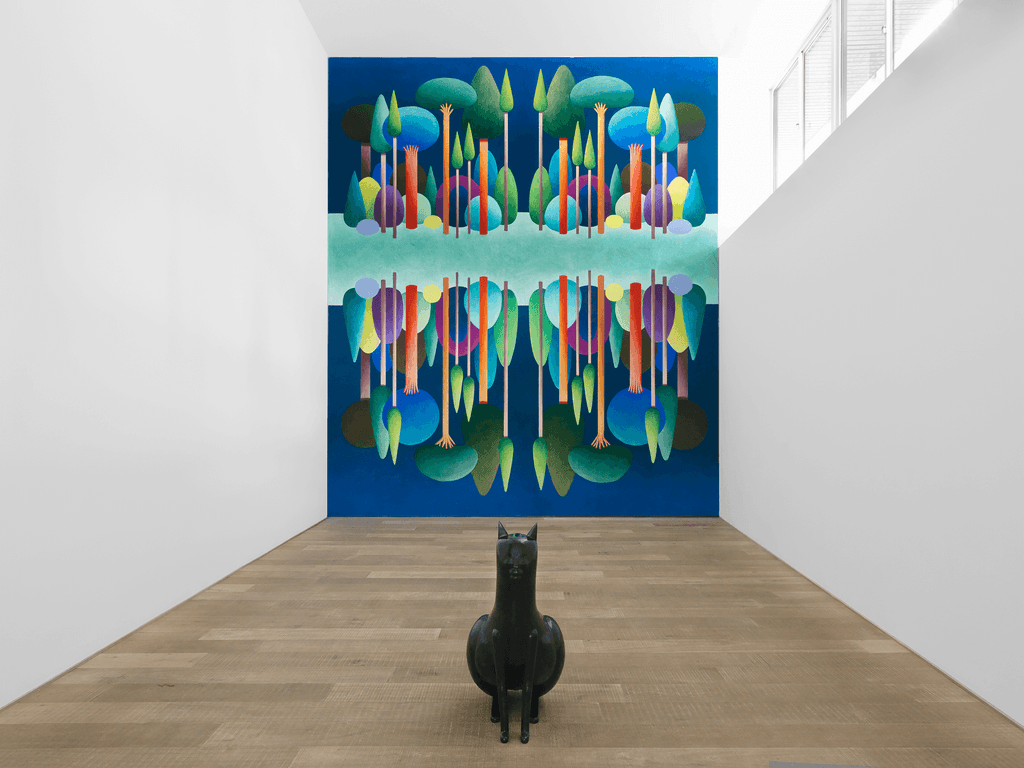
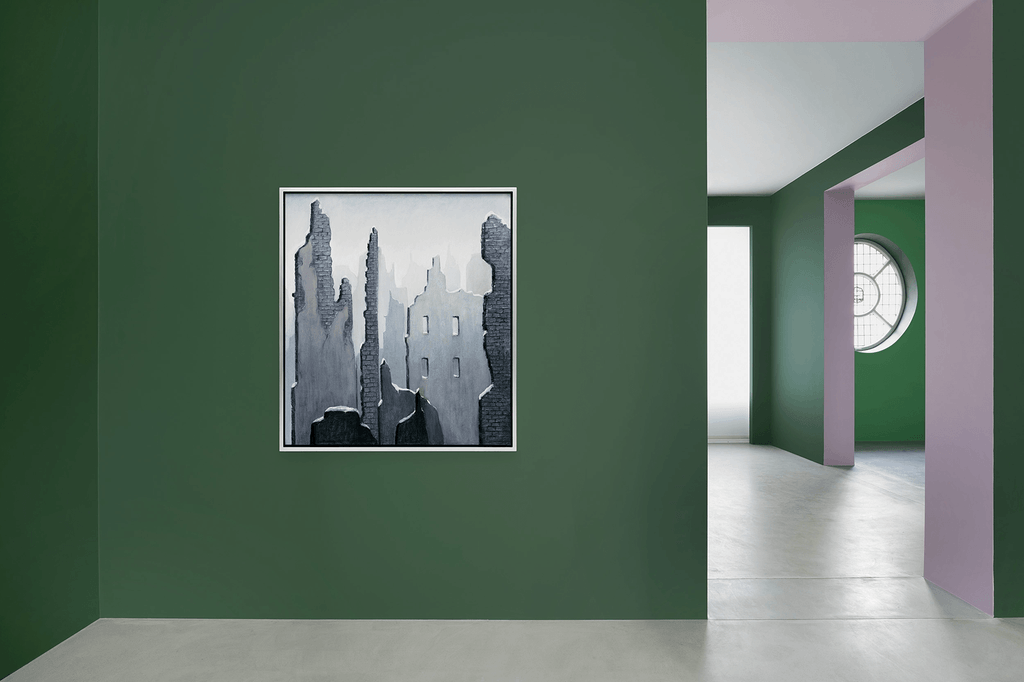
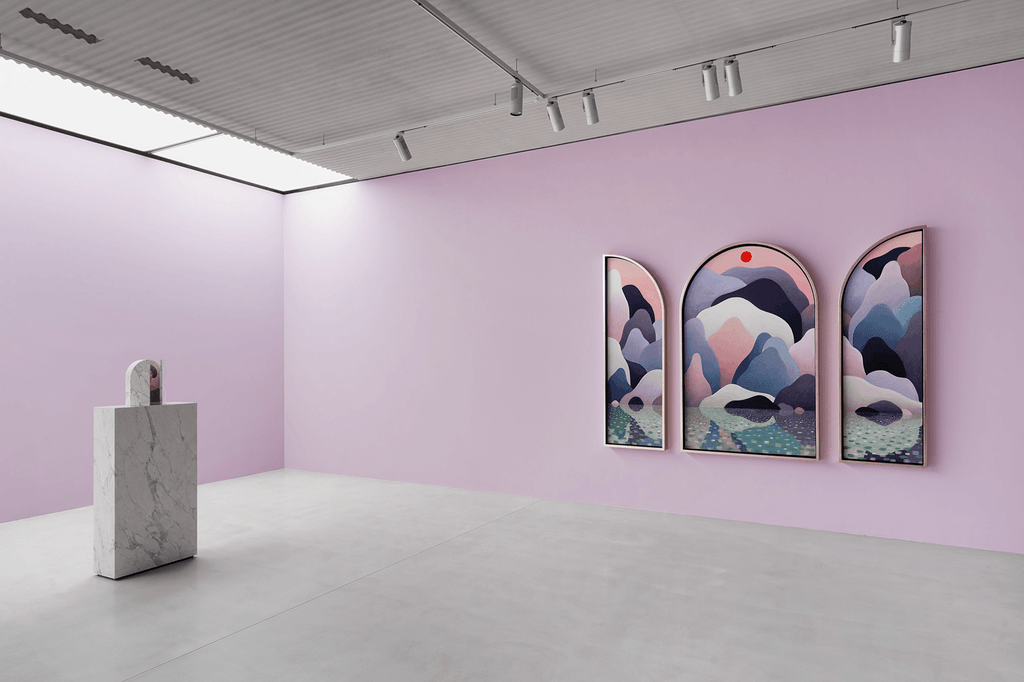
Nicolas Party: The exhibition is entirely composed of new works, which is generally the case with a gallery exhibition. Everything was made over the past two years. The space at Xavier Hufkens is almost museum-like. It occupies three floors with many separate rooms, and that allows artists to create distinct bodies of work. When you’re working in a single gallery space, that’s much harder to achieve. Here I was able to make five different groups of paintings, each quite distinct in terms of subject matter, although they share similar materials and processes. The exhibition begins with four paintings of Bruges. They’re based on photographs reproduced in Bruges-la-Morte, and those paintings are built around an entire network of references. The novel itself refers to another publication from the 1950s in France. (Alfred) Hitchcock’s Vertigo was inspired by that story, and one of my favourite films, Chris Marker’s Sans Soleil, in turn references Vertigo. There are also connections to Symbolist painters, particularly Fernand Khnopff, who designed the cover of the original novel. I enjoy those kinds of nested references, almost like Russian dolls, where one work contains another, and another again. The paintings focus on the bridges of Bruges, emphasising the reflections in the water, because Bruges is fundamentally a city defined by water. They are painted in a more Impressionistic manner than much of my work, perhaps as a kind of homage to the painters who originally shaped those landscapes.
Courtesy of the Artist and XAVIER HUFKENS, Brussels.
Photography by THOMAS MERLE
Courtesy of the Artist and XAVIER HUFKENS, Brussels.
Photography by ALLARD BOVENBERG
Courtesy of the Artist and XAVIER HUFKENS, Brussels.
Photography by ALLARD BOVENBERG
Courtesy of the Artist and XAVIER HUFKENS, Brussels.
Photography by ALLARD BOVENBERG
Courtesy of the Artist and XAVIER HUFKENS, Brussels.
Photography by ALLARD BOVENBERG
Courtesy of the Artist and XAVIER HUFKENS, Brussels.
Photography by ALLARD BOVENBERG
Courtesy of the Artist and XAVIER HUFKENS, Brussels.
Photography by ALLARD BOVENBERG
Courtesy of the Artist and XAVIER HUFKENS, Brussels.
Photography by ALLARD BOVENBERG
Courtesy of the Artist and XAVIER HUFKENS, Brussels.
Photography by ALLARD BOVENBERG
Courtesy of the Artist and XAVIER HUFKENS, Brussels.
Photography by ALLARD BOVENBERG
Courtesy of the Artist and XAVIER HUFKENS, Brussels.
Photography by ALLARD BOVENBERG
Courtesy of the Artist and XAVIER HUFKENS, Brussels.
Photography by ALLARD BOVENBERG
RP: Listening to you describe the exhibition, it strikes me that every painting seems to emerge from an accumulation of references. Literature, painting, cinema, they all appear to be assembled before the work begins. It sounds like a remarkably layered way of constructing an image.
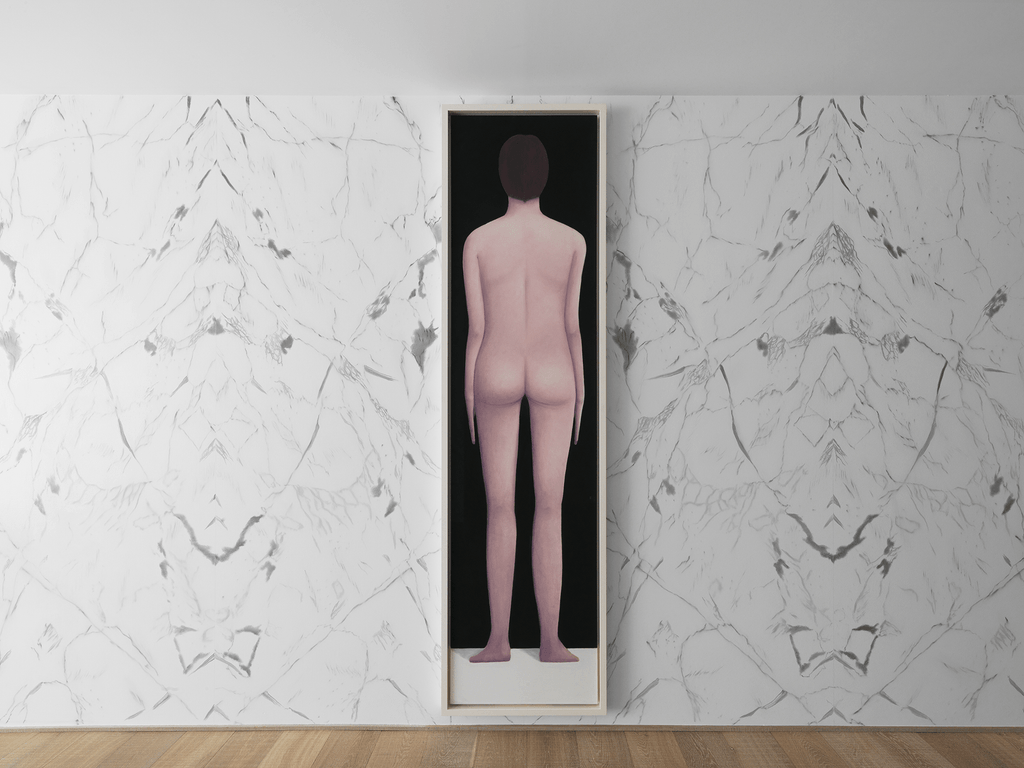
NP: It depends on the work. These paintings certainly contain many references, whereas others don’t. Anyone who loves art and culture naturally absorbs many different things. We read books, visit exhibitions, watch films, go to the theatre. Those experiences inevitably become part of the work. Sometimes my references are very direct, as they are here, since the paintings literally begin with photographs from a book. At other times they’re much looser and less visible. What interests me is that viewers don’t need to know any of those references for the paintings to function. I don’t want to overwhelm people with explanations. Some viewers enjoy tracing connections and recognising sources, while others respond much more directly to how a painting feels. Both approaches are completely valid. Even if you’ve never read Bruges-la-Morte, or never been to Bruges itself, the paintings should still exist independently. Bruges has a very particular history, architecture and artistic tradition, but none of that knowledge is essential. The references belong to my process rather than the viewer’s obligation.
RP: Is it the imagery itself that attracts you? When you mention literature and cinema, particularly Vertigo and Sans Soleil, are you responding primarily to their visual language?
NP: Most of the time I’m much more directly influenced by painting than by film or literature. If you know the painters I’m looking at, you can often recognise those references quite clearly. This series is slightly different because of that chain of references running through it. One fascinating aspect of Bruges-la-Morte is that it was one of the first novels to incorporate photography directly into the narrative. That approach never really became common, novels generally returned to illustration rather than photography, but here the photographs become integral to the story. In many ways, the city itself becomes another character within the novel. As for Vertigo, there isn’t any direct visual quotation in these paintings. It’s more that I admire the film enormously. I think many people would agree that it’s one of Hitchcock’s greatest achievements. It has an extraordinary visual intelligence, especially in its use of colour. Green, in particular, becomes associated with ghosts, memory, disappearance and transformation. Those ideas resonate with me, even if they don’t appear literally within the paintings. I enjoy making those kinds of connections while I work. Painting is a long and often solitary process, and these different conversations, with books, films, painters and ideas, make the experience richer. They become companions in the studio. They don’t necessarily appear visibly in the finished painting, but they’re present while I’m making it, and they make the process much less lonely.
RP: One aspect of your exhibitions that particularly interests me is the way individual paintings become part of a larger spatial experience. Do you think of these presentations as installations, or are they still fundamentally exhibitions of paintings?
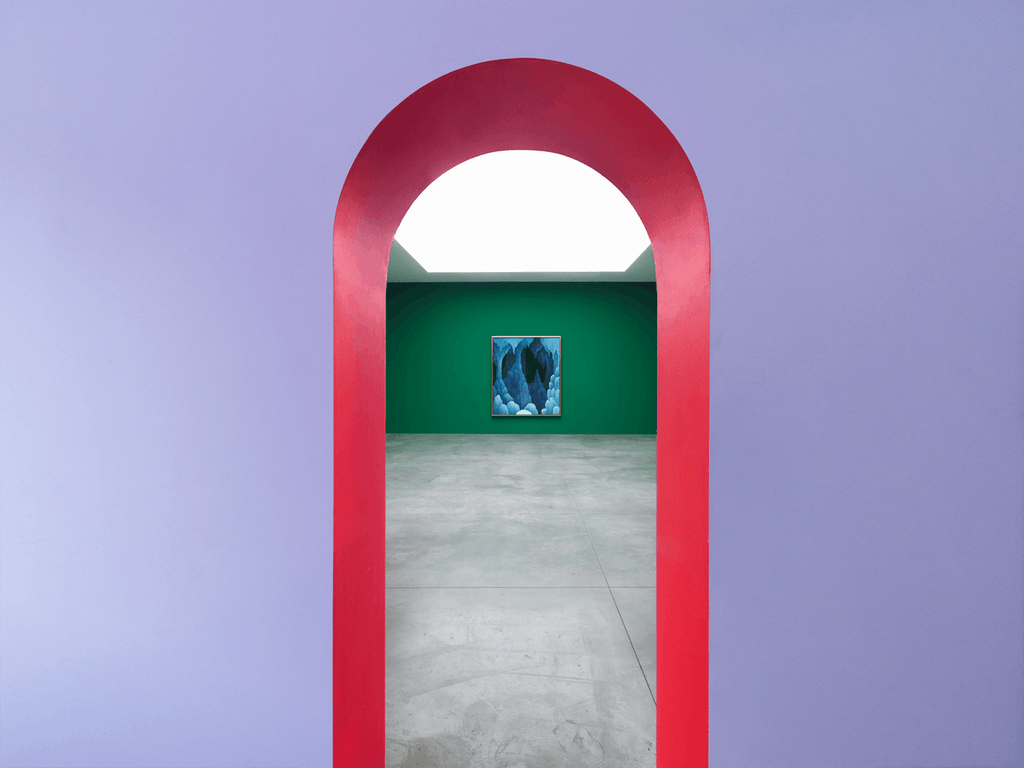
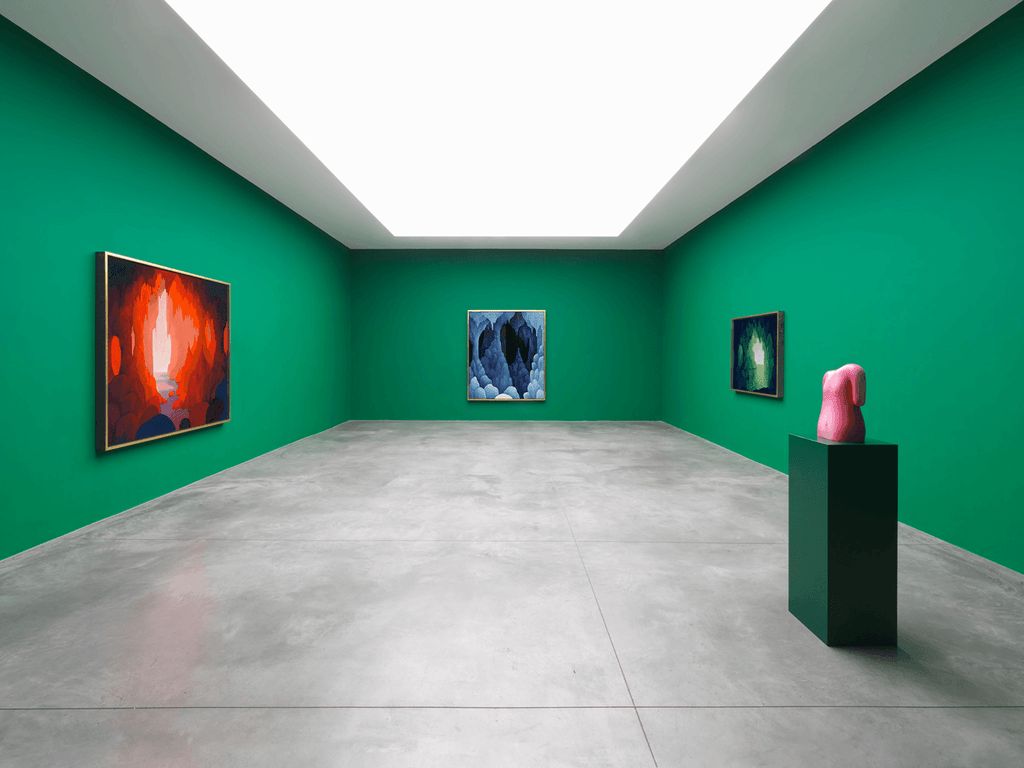
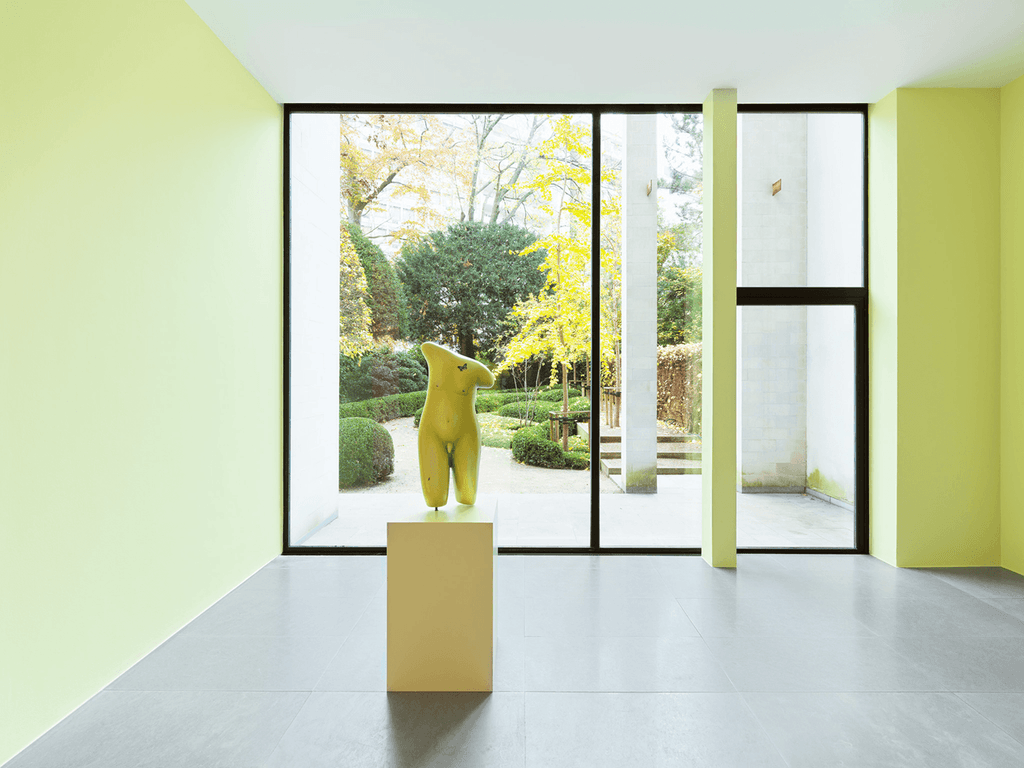
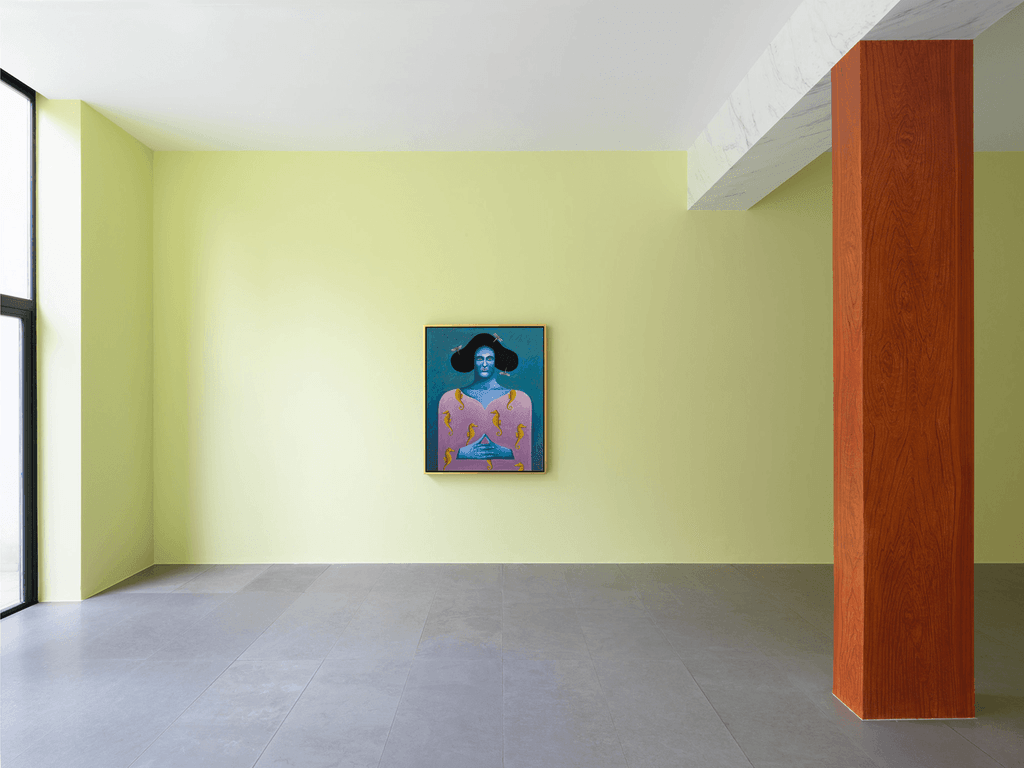
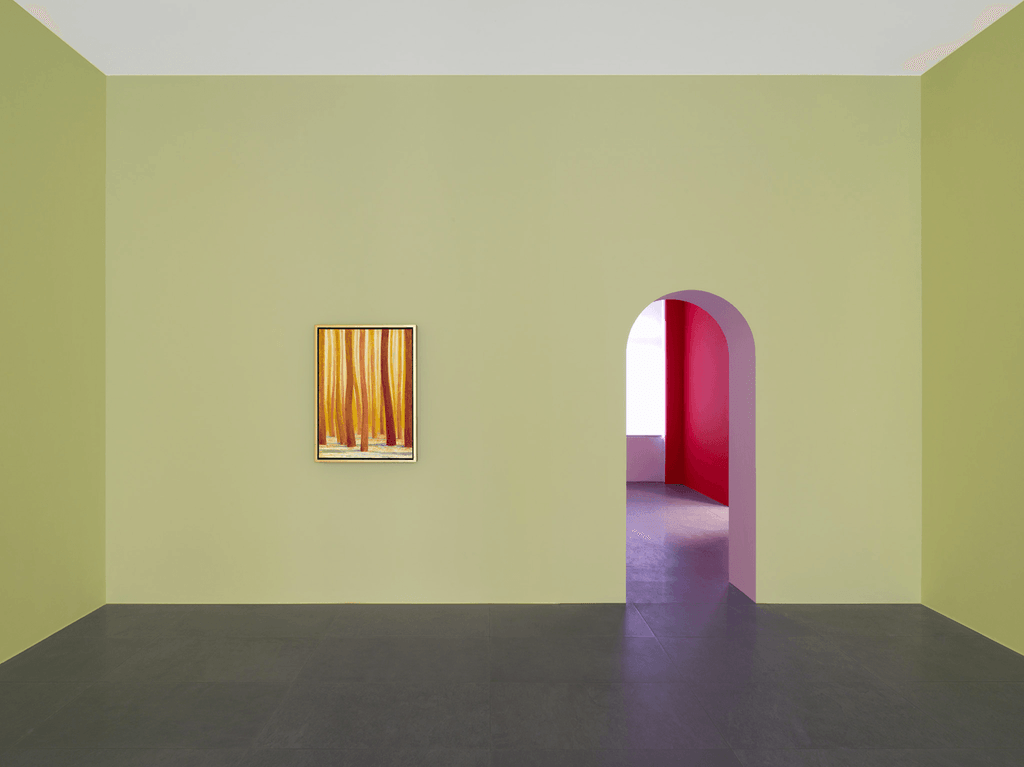
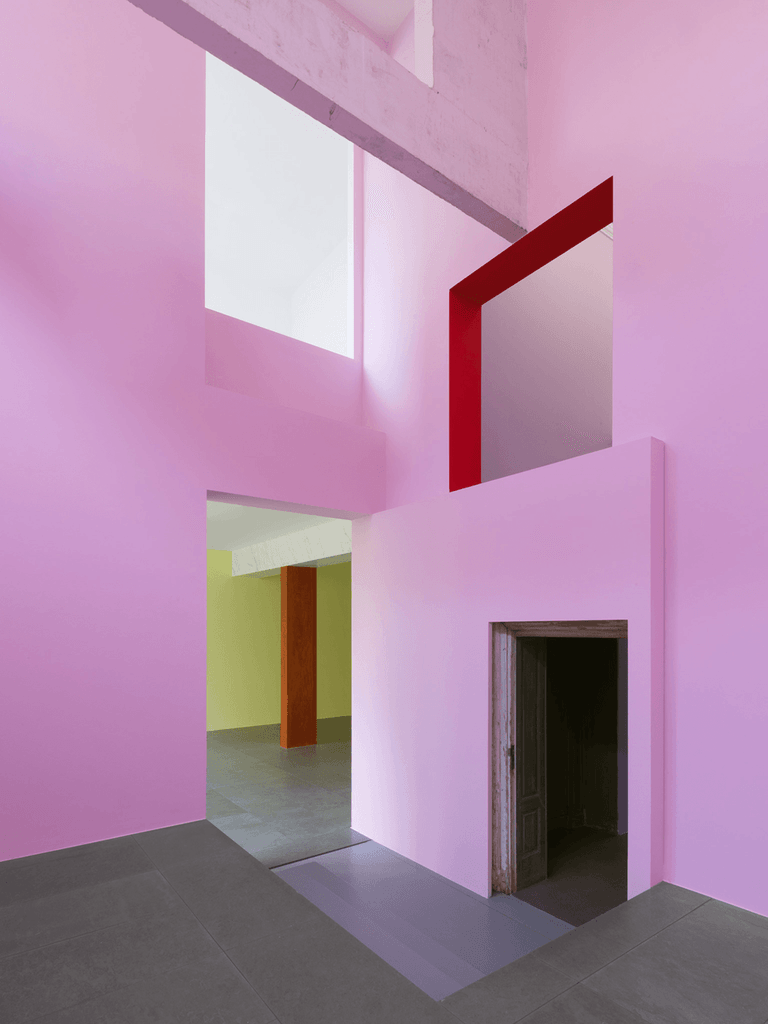
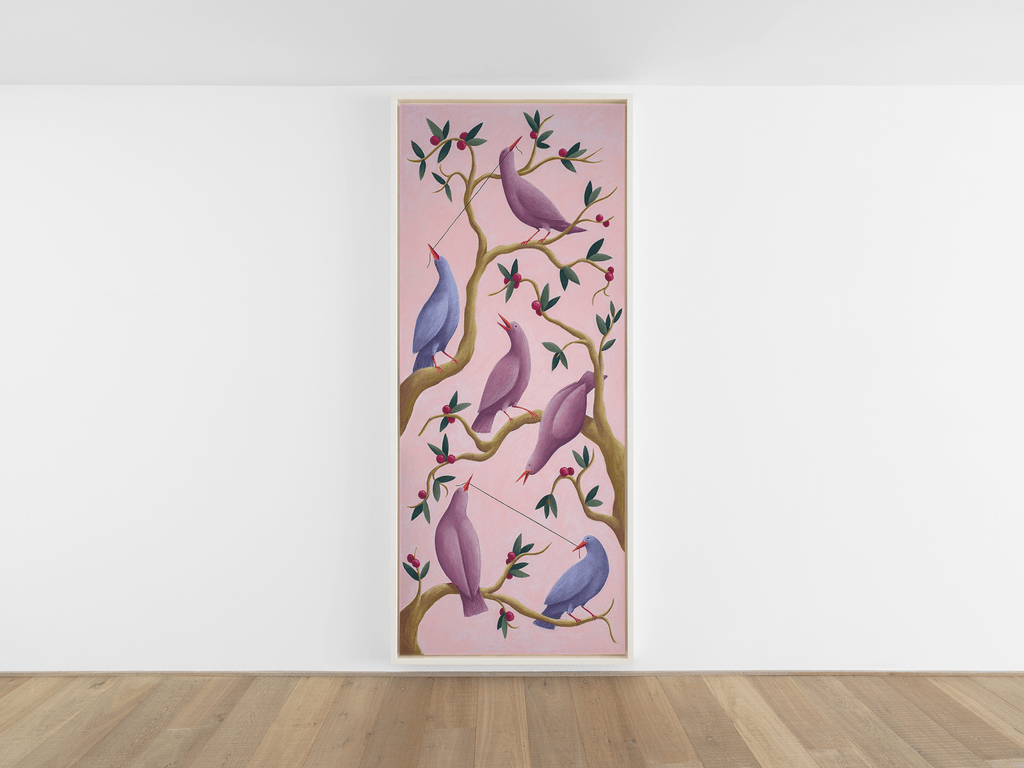
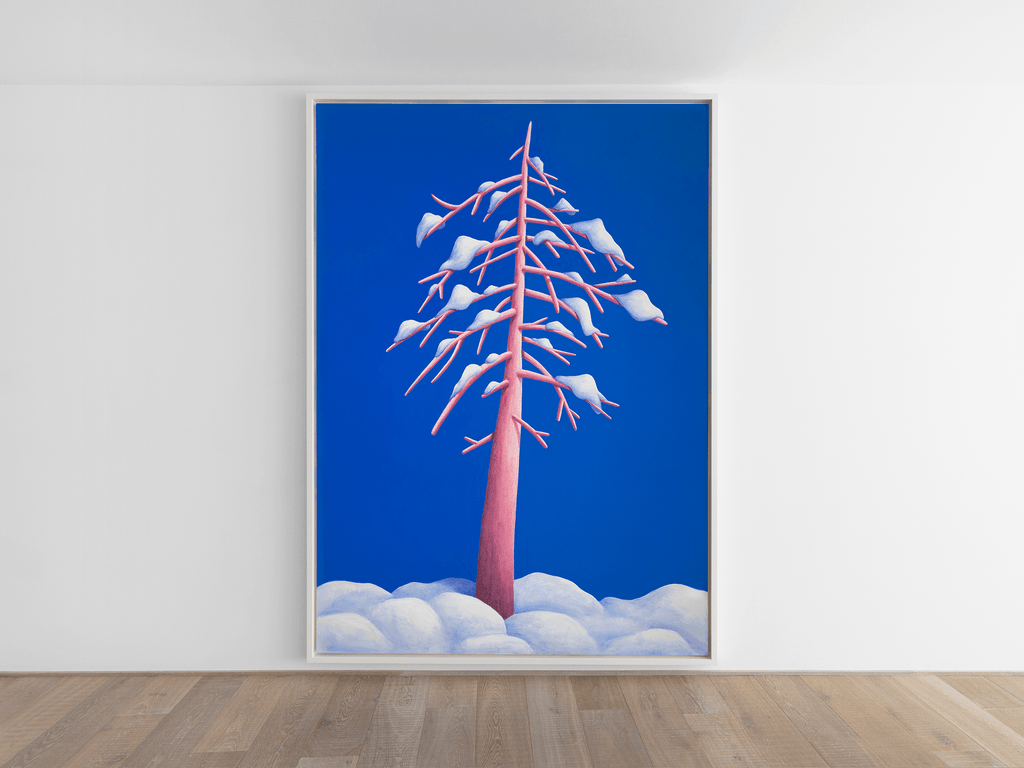
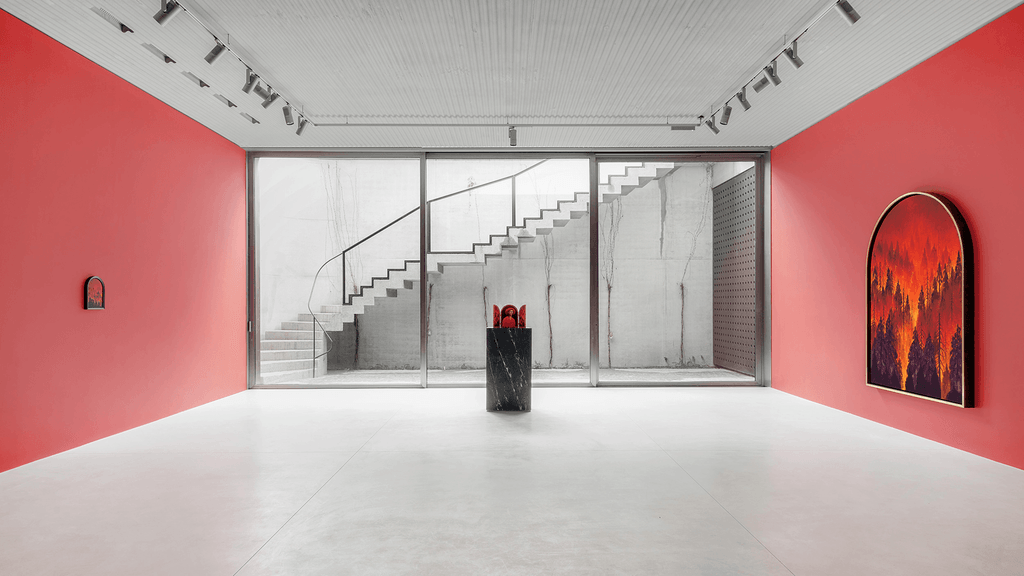
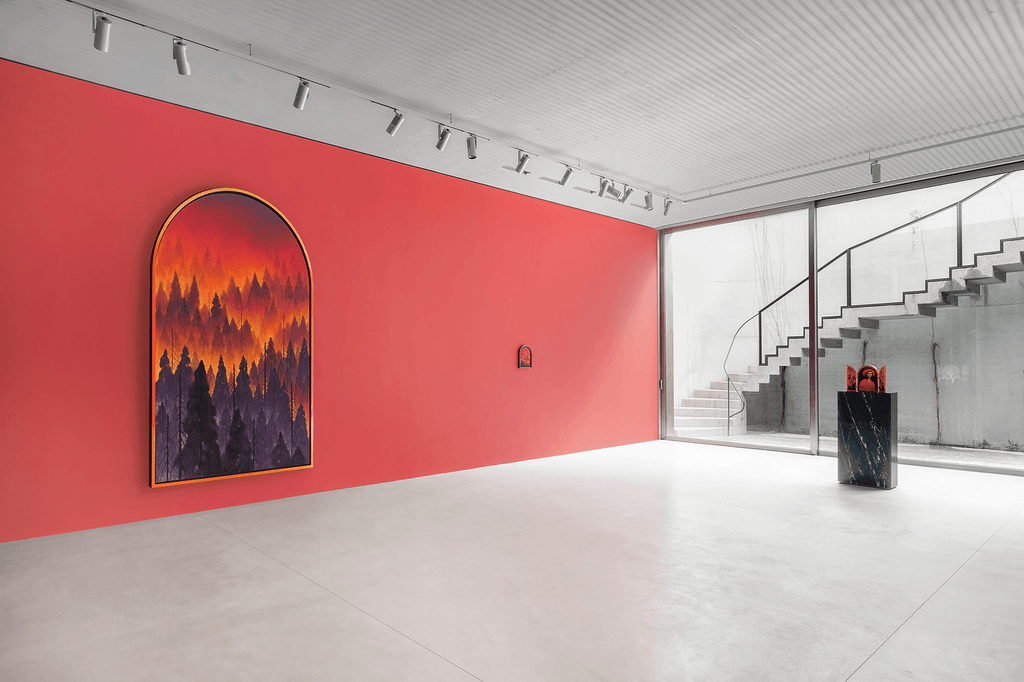
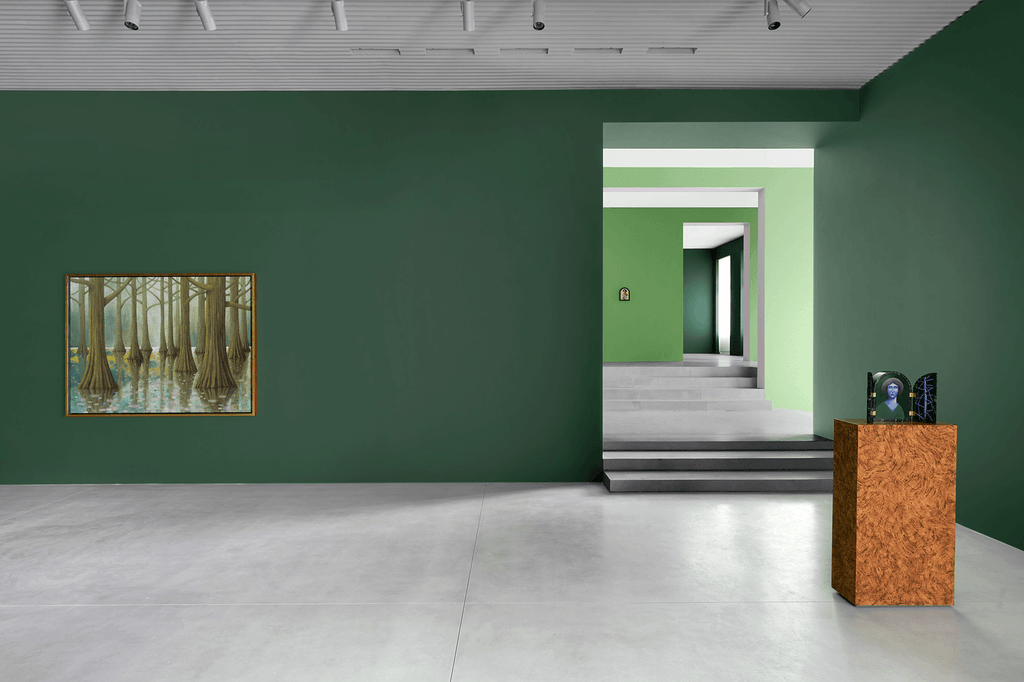
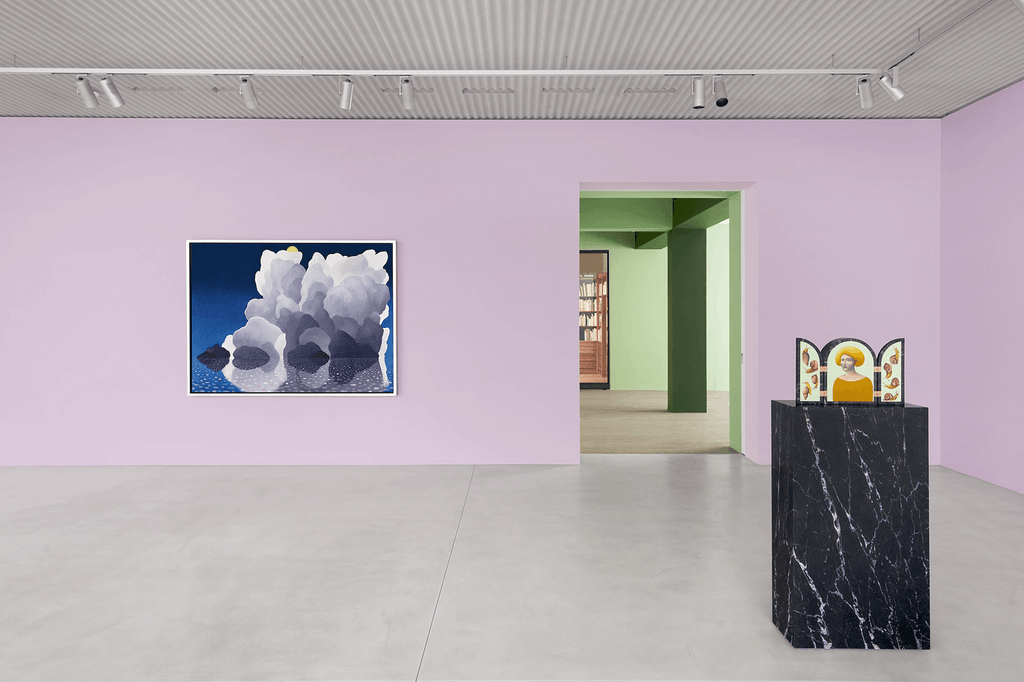
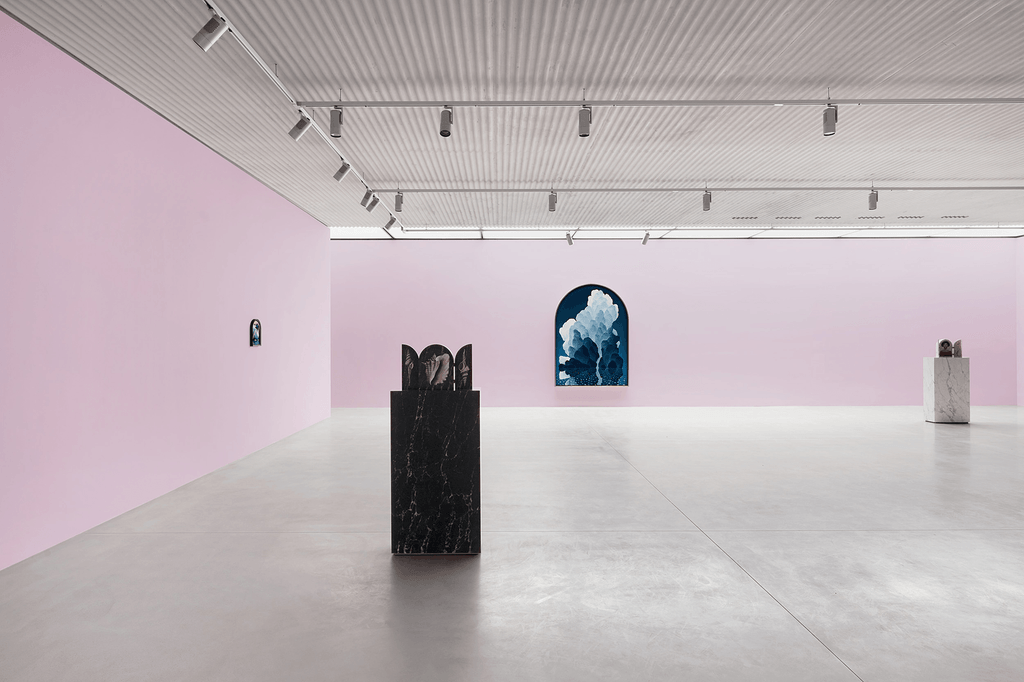
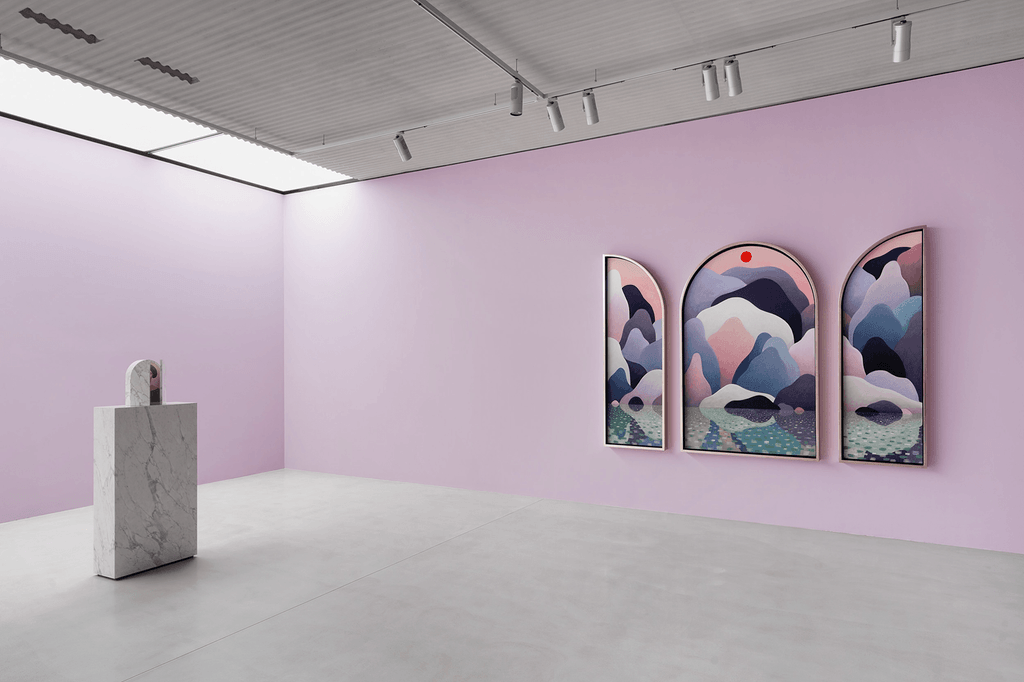
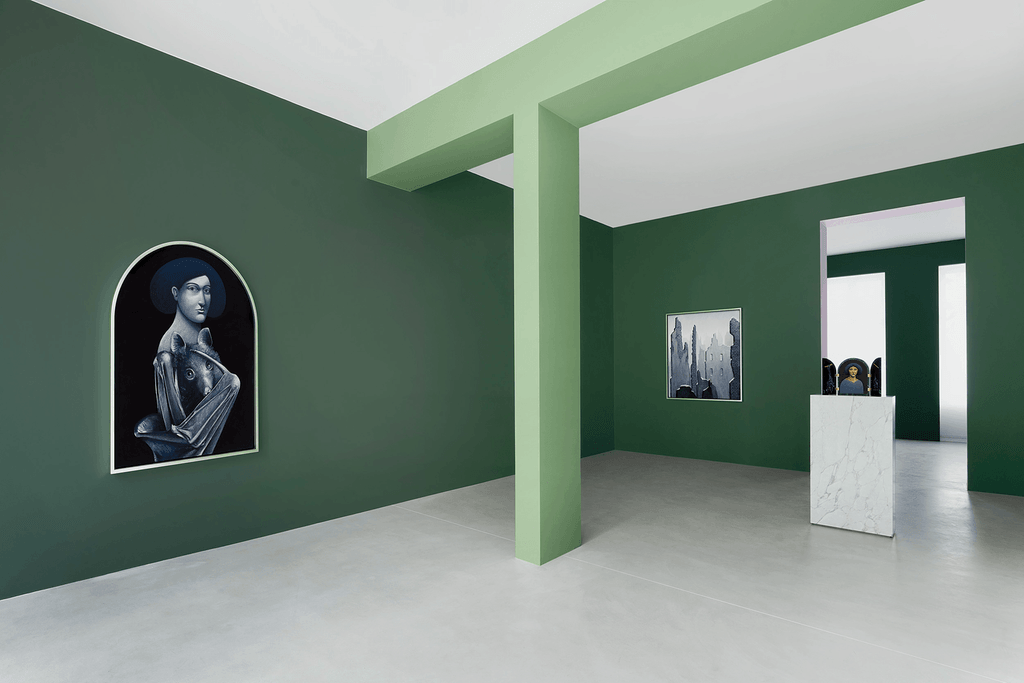
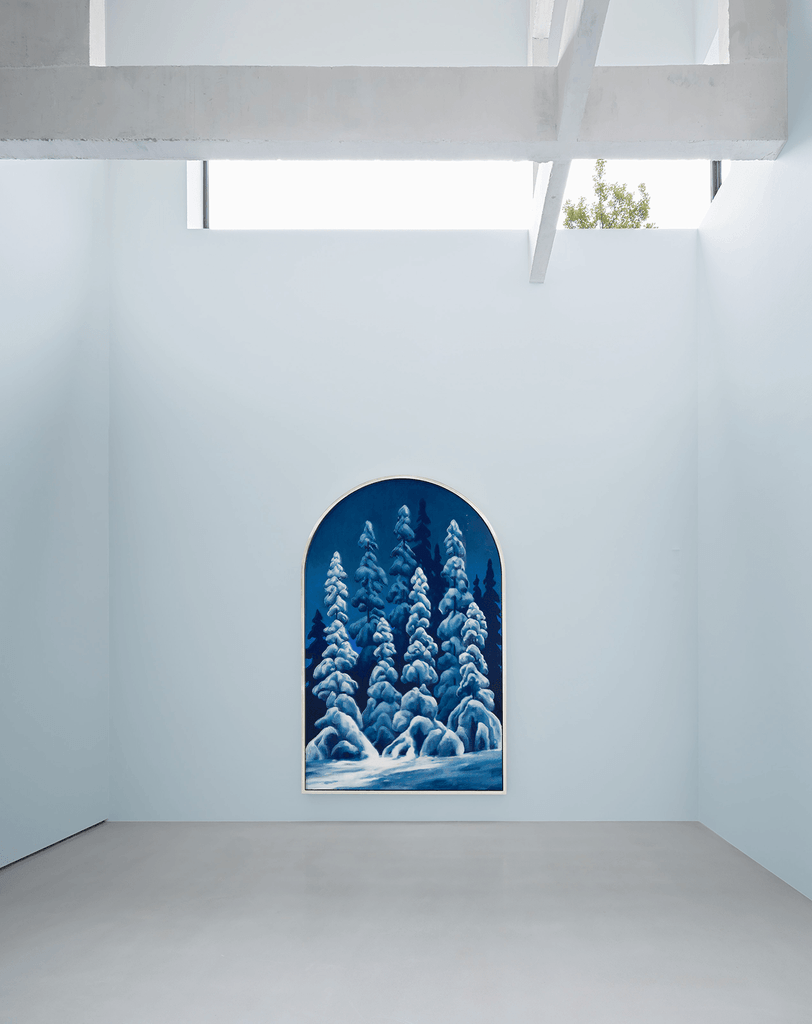
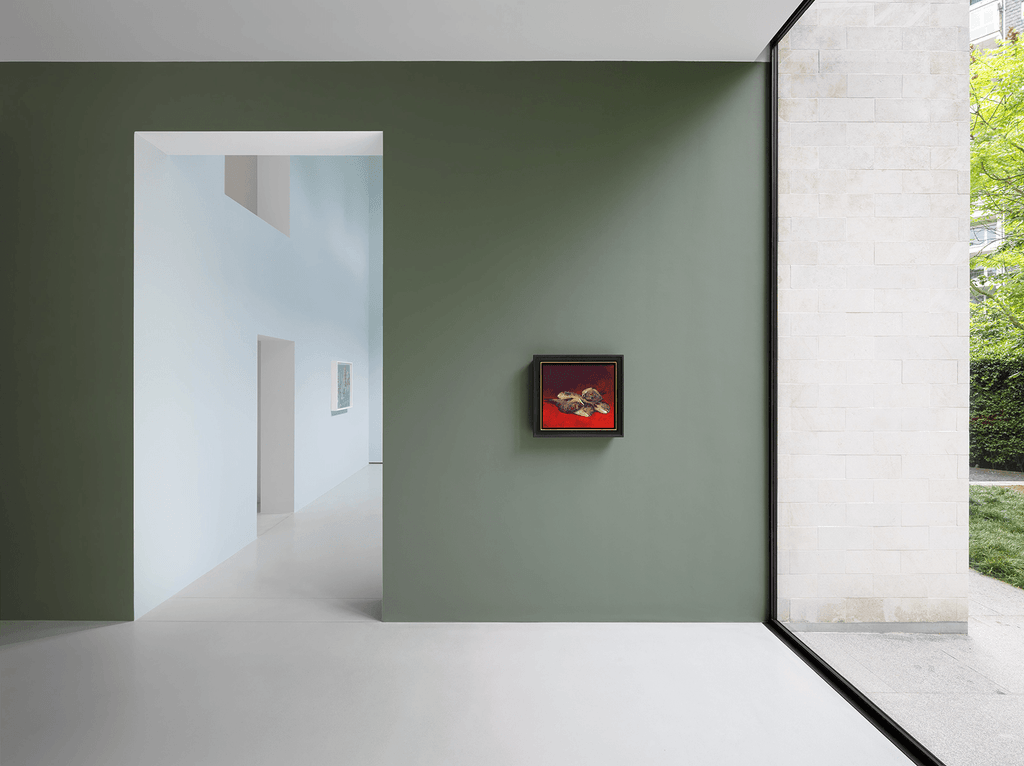
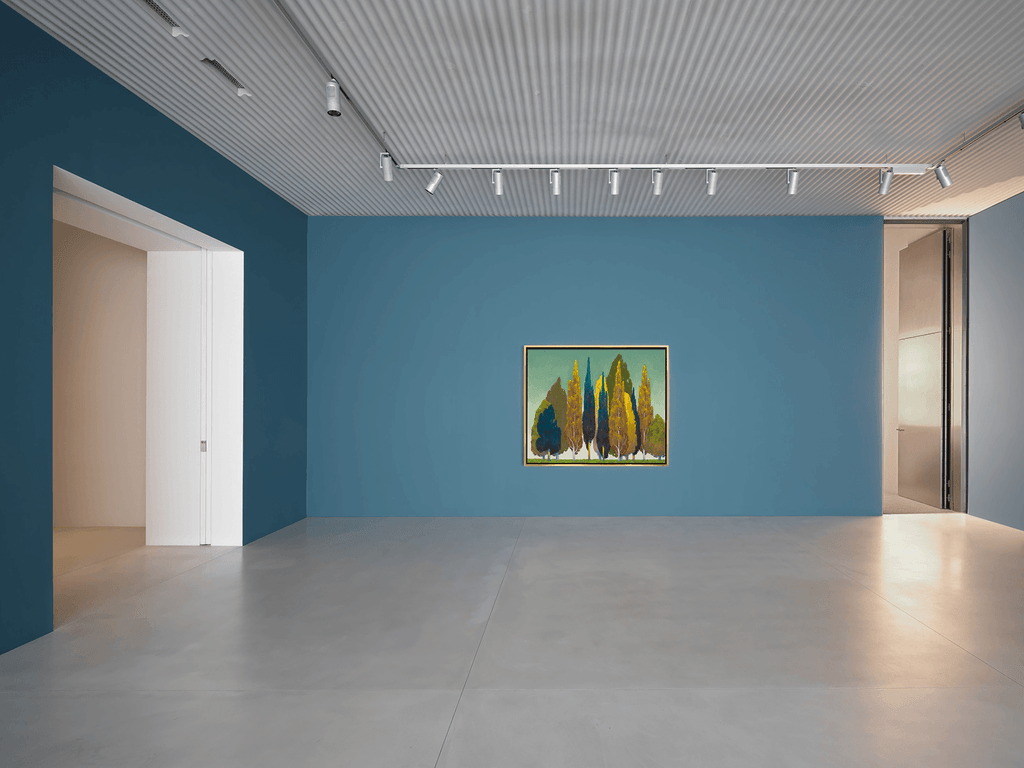
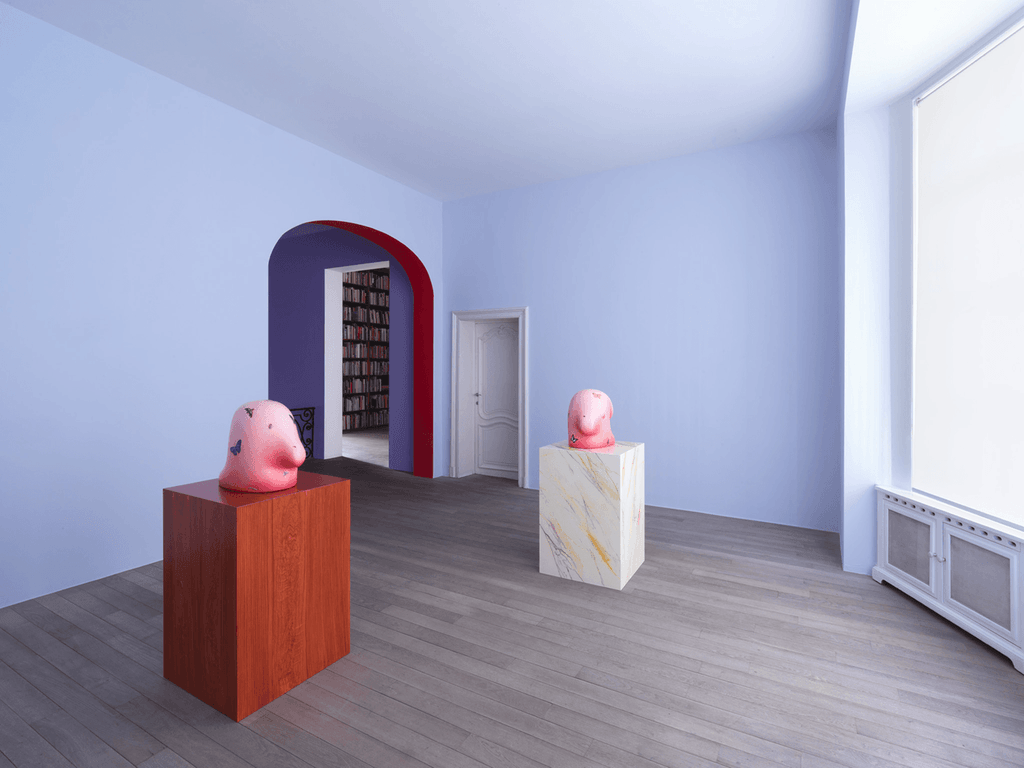
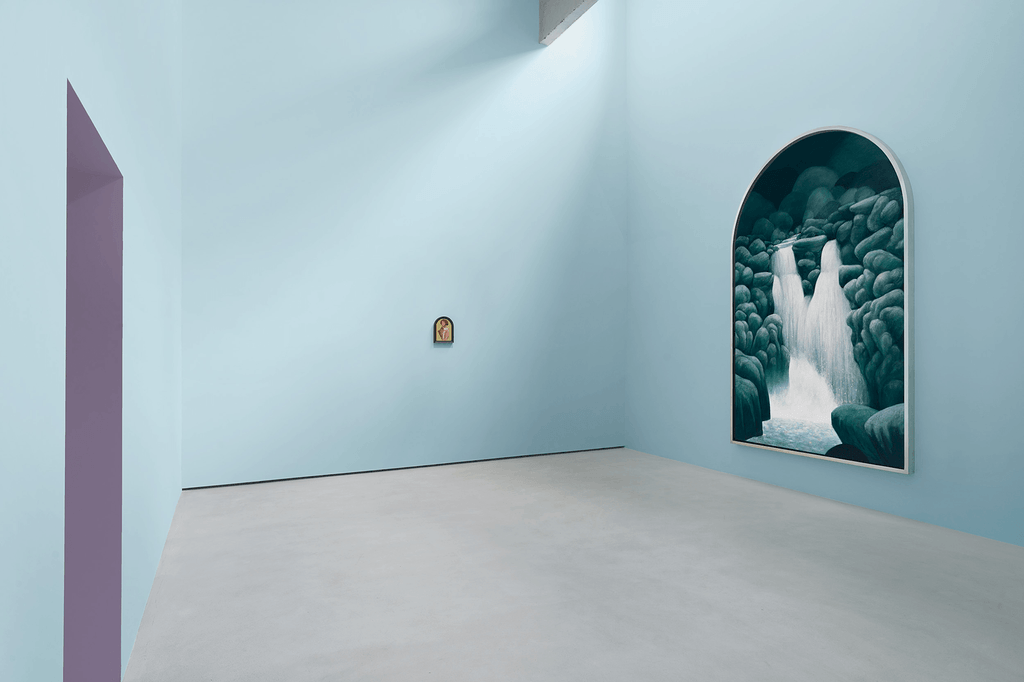
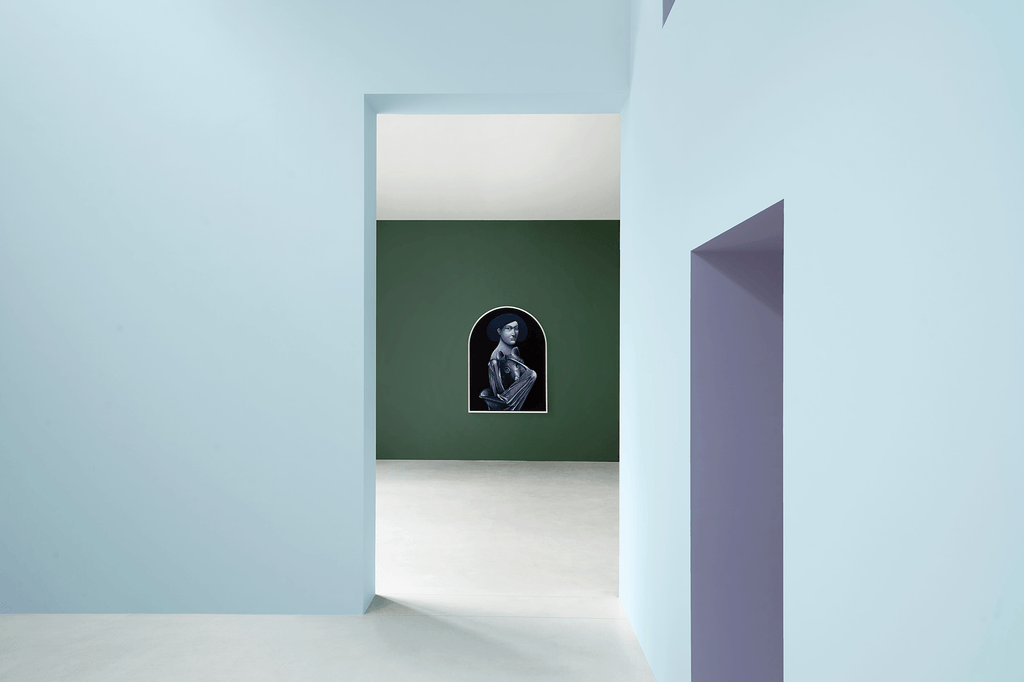
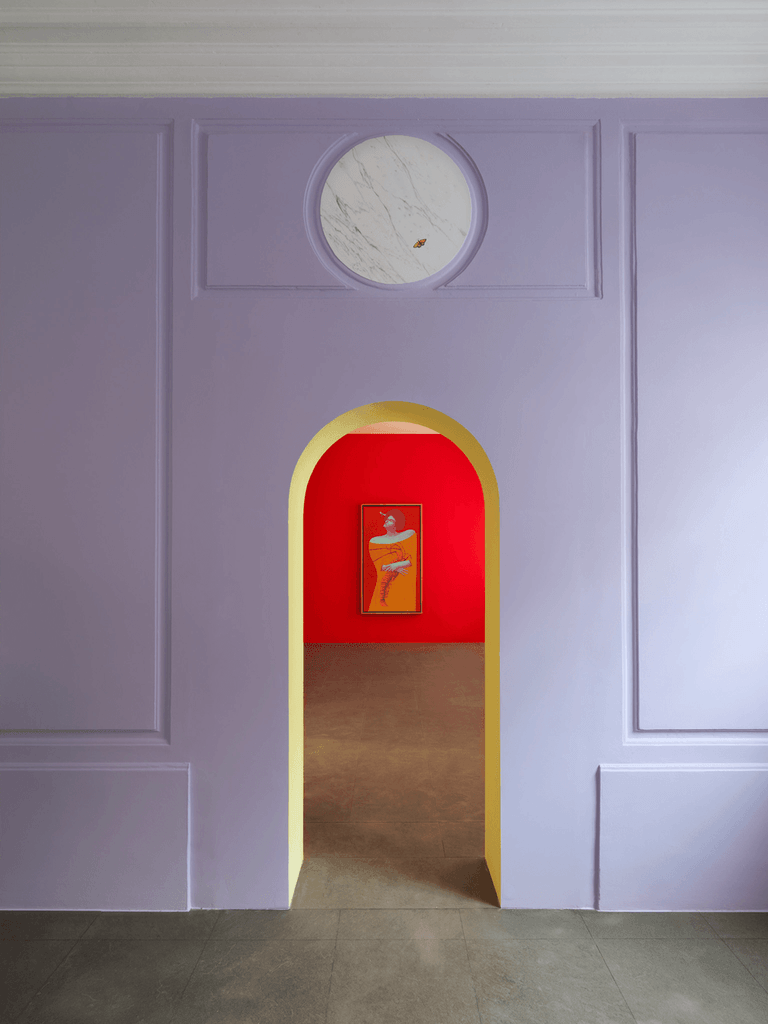
NP: Usually I paint murals, so people often describe my exhibitions as installations. In this exhibition I didn’t make murals. I simply painted the walls different colours. I generally reserve murals for museums because they’re so time-consuming. A gallery exhibition lasts only a few weeks, whereas a museum exhibition may remain open for several months. Murals also disappear afterwards, so they’re a considerable investment of time. Here, each room functions almost as its own environment. One room contains the Bruges paintings, another the tree paintings, another the dead fish, and upstairs there are the spider-web paintings. Each space has its own atmosphere, its own colour, and its own internal logic. At the same time, I’m interested in what happens as visitors move through the exhibition. They carry memories from one room into the next. Whether they consciously connect the spider webs with the fish, the trees or the paintings of Bruges doesn’t really matter. The possibility of those connections exists, and each viewer constructs their own narrative as they move through the space.
RP: Do you choreograph the way visitors move through the exhibition? Is that something you determine yourself, or does it become a collaboration with the gallery?
NP: For this exhibition it was largely my decision, although when it comes to installing the paintings, I always work closely with the gallery team. I’m very interested in hearing what they think because they know the space better than I do. They install exhibitions constantly, with many different artists, so they understand how the architecture functions and how rhythm can be created within the galleries. When you work with a museum it’s naturally more collaborative because there’s usually a curator involved. If the relationship works well, a curator can make wonderful suggestions, not only about where individual works should go, but about entrances, sightlines and how visitors move through the exhibition. I actually think it’s important for artists to remain open during installation. When you’re working alone in the studio for months, you become completely immersed in your own decisions. By the time you arrive at the exhibition, it’s healthy to let other people challenge your instincts. Often someone will suggest moving a painting, or placing two works together differently, and suddenly the whole exhibition becomes stronger. Installation is much more collaborative than painting itself.
RP: I imagine you’re thinking about flow as much as individual works. Unlike some exhibitions where paintings are encountered one after another, your exhibitions seem to guide the visitor through a sequence of psychological spaces. One room leads into another almost like moving through different dreams or states of mind.
NP: That’s exactly what I’m trying to create. Ultimately, I’m working with very simple materials. In the end it’s only paintings, coloured walls and architecture. There’s no music, no moving image, no theatrical lighting, none of the things we’re accustomed to experiencing in museums, airports or shopping centres today. The tools available to me are actually very limited. Because of that, I’m interested in creating as dynamic an experience as possible using only paint and colour. At Xavier Hufkens, where each room is so distinct, it becomes possible to create strong contrasts between one space and the next. Ideally the visitor experiences a succession of different atmospheres rather than simply walking through a sequence of paintings. What you’re always hoping is to draw people into the work and hold them there long enough for something to happen. You can’t control what each person feels because everyone arrives with different experiences, memories and references. But you can create the conditions in which reactions become possible. That’s really what interests me: creating situations that remain present in the viewer’s mind afterwards, both emotionally and poetically.
RP: There’s something deeply meditative about your paintings. Looking at them, I was reminded, perhaps unexpectedly, of (Mark) Rothko. Your work creates a similarly contemplative atmosphere. We enter these extraordinary worlds that remain connected to reality through trees, flowers, fish or portraits, yet at the same time they seem to detach us from ordinary experience. The paintings almost cast a spell over the viewer. One becomes completely absorbed in them. Is it that level of concentration you’re hoping to achieve?
NP: I really like the way you’ve described it. I’m definitely trying to create something meditative, something quiet, almost silent. That’s an experience I’m very drawn to myself. The Rothko Chapel is an extraordinary example of that kind of silence, and many of the Symbolist painters from the late nineteenth and early twentieth centuries also created works that possess a similar stillness. Those are experiences I love as a viewer, so naturally they find their way into my own work. This exhibition is perhaps quieter than some of my previous ones. I’ve made exhibitions where colour is much louder, much more forceful, but here I wanted a more restrained atmosphere. There is a kind of meditative silence running through the entire exhibition. When people talk about dreams, though, I don’t think it’s the dream itself that interests me most. It’s the moment when you wake up. That moment lasts perhaps five or ten seconds. You’re still suspended somewhere between sleep and consciousness. You don’t quite know where you are or what has happened. You’re aware that you’ve been dreaming, but the dream hasn’t completely disappeared. It’s a very strange state because your mind hasn’t yet fully returned to ordinary reality. It’s such a familiar experience that we rarely stop to think how extraordinary it actually is. Every human being dreams. Why? What purpose does dreaming serve? It’s one of the strangest capacities we possess. In some ways it’s no less mysterious than our need to make art. Why do human beings create culture? Why do we dream? We don’t really know. Both seem fundamental to who we are. That transitional state between dreaming and waking has always fascinated me. It’s a state of mind that’s suspended between different realities, and I think it’s an incredibly fertile place for artistic thinking.
RP: So, you’re less interested in depicting dreams than in recreating that condition, that space between sleeping and being waking?
NP: Exactly. The Surrealists were fascinated by dreams because they believed dreams could become a direct source for making art. They wanted to channel that unconscious imagery as literally as possible, and they produced remarkable work because of it. I don’t really work that way. For me it’s more about inhabiting a particular state of mind. It’s about how you experience the world, when you’re working, when you’re walking, when you’re looking at nature, at your children, at a film, or simply at yourself. That mental condition, which exists somewhere between different layers of consciousness, feels very important. Making paintings is obviously an intensely practical activity. You’re holding a brush, mixing colours, solving technical problems. But at the same time your mind has to remain somewhere else, and remain open to associations, feelings and unexpected connections. You’re simultaneously working in two different realities. For me that’s probably where painting begins.
RP: You’ve spoken about dreams as a state of mind rather than a source of imagery. Looking at your paintings, it also seems that reality is never abandoned, yet it is consistently transformed. Mountains become improbably smooth, trees almost sentient, faces resemble masks, and colour departs entirely from natural description. At what point does observation give way to invention?
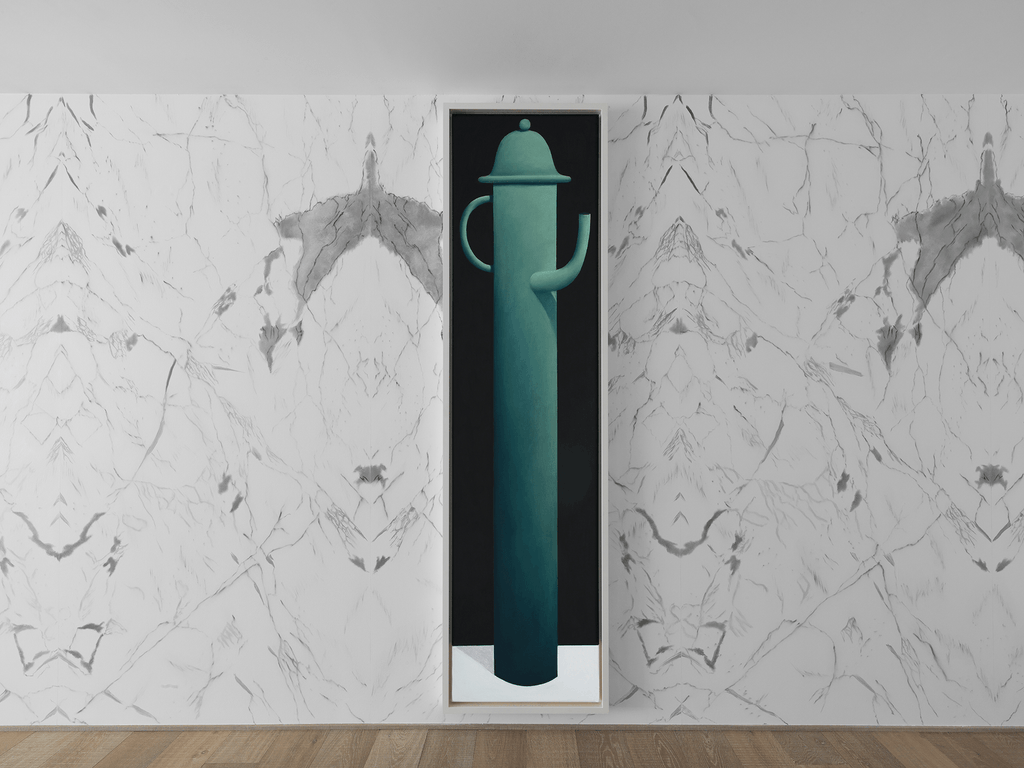
NP: I think that’s closely connected to the way I understand images. What has always interested me is not so much looking at an actual tree standing in front of me and trying to render every detail faithfully, but rather the idea of a tree. What does a tree become once it’s translated into an image? How few lines do you need before everybody recognises it as a tree? Children are fascinating because they don’t draw by observing nature. They draw symbols. A child doesn’t analyse the complexity of branches, leaves and light. They make a trunk, a round green shape on top, and immediately everyone says, “That’s a tree.” That language of images has always fascinated me. Painting is, after all, a language of signs. Even the most naturalistic painting is never the thing itself. It’s always an image. Throughout the history of painting—and abstraction is never very far from this question, artists have continually asked how little is needed before an image becomes recognisable. Some of my trees are almost exactly that: a simple vertical trunk with a rounded canopy. Real trees are infinitely more complicated. No two trees have the same number of leaves. Nature is endlessly complex. Yet somehow our minds recognise an incredibly simple sign as representing something enormously complicated. That’s where my curiosity begins.
Courtesy of the Artist and XAVIER HUFKENS, Brussels.
Photography by ALLARD BOVENBERG
Courtesy of the Artist and XAVIER HUFKENS, Brussels.
Photography by ALLARD BOVENBERG
Courtesy of the Artist and XAVIER HUFKENS, Brussels.
Photography by ALLARD BOVENBERG
Courtesy of the Artist and XAVIER HUFKENS, Brussels.
Photography by ALLARD BOVENBERG
Courtesy of the Artist and XAVIER HUFKENS, Brussels.
Photography by ALLARD BOVENBERG
Courtesy of the Artist and XAVIER HUFKENS, Brussels.
Photography by ALLARD BOVENBERG
Courtesy of the Artist and XAVIER HUFKENS, Brussels.
Photography by ALLARD BOVENBERG
Courtesy of the Artist and XAVIER HUFKENS, Brussels.
Photography by ALLARD BOVENBERG
Courtesy of the Artist and XAVIER HUFKENS, Brussels
Courtesy of the Artist and XAVIER HUFKENS, Brussels
Courtesy of the Artist and XAVIER HUFKENS, Brussels.
Photography by ALLARD BOVENBERG
Courtesy of the Artist and XAVIER HUFKENS, Brussels.
Photography by ALLARD BOVENBERG
Courtesy of the Artist and XAVIER HUFKENS, Brussels.
Photography by ALLARD BOVENBERG
Courtesy of the Artist and XAVIER HUFKENS, Brussels.
Photography by ALLARD BOVENBERG
Courtesy of the Artist and XAVIER HUFKENS, Brussels.
Photography by ALLARD BOVENBERG
Courtesy of the Artist and XAVIER HUFKENS, Brussels.
Photography by ALLARD BOVENBERG
RP: Of what I see, you are less interested in describing nature than in understanding how images themselves function?
NP: Exactly. If you think about someone like Cézanne, his concern was very much how to look at nature and translate that experience into painting. My approach is almost the opposite. I’m interested in how images already exist in our minds. How do we recognise a cloud? A tree? A face? A mountain? Those visual languages are incredibly powerful. A child draws a yellow circle in the corner of a page and suddenly that entire sheet of paper becomes the sky. With only a few simple marks they’ve created an entire world. That’s an extraordinary thing. The same happens with stories. As children we invent worlds almost effortlessly. A few words, a few shapes, and suddenly another reality exists. I think painting still possesses that same capacity.
RP: Looking at your paintings, there’s also a remarkable sense of space that somehow coexists with flatness. A dense forest can feel almost impenetrable, yet at the same time the picture remains emphatically a painted surface. You’re constantly balancing depth and compression.
NP: Yes, because I’m always aware that it’s an image. Perspective is only one possibility within painting. I’m interested in spaces that are believable enough for us to enter psychologically, but never so illusionistic that we forget we’re looking at a painting. The painting should always retain its own reality as an object. That tension between flatness and space has always interested me. It’s another consequence of working with images rather than direct observation.
RP: Another thing I notice is the extraordinary composure of your paintings. Everything feels carefully ordered. Trees align. Portraits remain still. Landscapes seem perfectly balanced. There is almost no sense of accident.
NP: That’s probably just my taste. I’m very attracted to images that are composed, balanced and symmetrical. I like emptiness. I like clarity. I like things that feel resolved. Why? I honestly don’t know. It’s very difficult to explain why you’re attracted to certain kinds of images. It’s like trying to explain why you love one piece of music but not another, or why one flavour appeals to you and another doesn’t. But, of course, you can always look back at your life and think perhaps I was influenced by this or exposed to that. But there are plenty of people who have had similar experiences and developed completely different tastes. In the end it remains something of a mystery, thankfully. The day we can fully explain why beauty moves us or why one image affects us more than another will probably be a very sad day.
RP: One of the defining aspects of your work is colour. Your palette is extraordinary, and colour seems to function as far more than description. It creates atmosphere, emotion and even structure. I’m curious how you arrive at the palette for a painting. Is it something you determine before you begin, or does it emerge during the process itself?
NP: I’ve always loved working with colour. Looking back, I realised quite early that drawing wasn’t necessarily my greatest strength. I wasn’t a bad draughtsman, but I certainly wasn’t the best among my friends. There were children who could already draw horses or people with remarkable ease, and I wasn’t one of them. What I discovered instead was that I loved paint itself. I loved colour, the marks it could make, the effects it produced. I realised that colour was the place where I felt most comfortable, where I could create something that felt convincing both to myself and to others. Historically, drawing has often been considered the more important discipline, while colour has sometimes been regarded as secondary or even superficial, as something capable only of seducing the viewer emotionally. But for me, colour has always been the essential language. It is through colour that I create emotion, atmosphere and images that feel compelling. That has remained true throughout my practice.
RP: How do you decide that a particular combination of colours is right? Is there a process of testing and revising, or do you know instinctively?
NP: Colour is completely experiential. It’s very similar to music, I imagine, although I’ve never composed music myself. You put notes together, you listen, and something either feels right or it doesn’t. You can’t entirely explain why. Painting works in much the same way. You place colours beside one another and you look. You experience them. You feel whether something is becoming more interesting, more dynamic, or whether it isn’t working. There really isn’t a formula. You can’t plan those decisions in advance. The colours have to exist physically before you can respond to them. Only once they’re on the canvas do you begin to understand what the painting needs. Sometimes you add a little red and immediately realise there’s too much. Then you reduce it. Or the blue needs to become greener. Or darker. Or softer. Painting is really a continuous process of adjustment. You’re constantly looking, responding, changing and looking again.
RP: So, painting itself becomes a kind of meditation?
NP: Very much so. It’s a continual conversation between what you see and what you feel. Every day begins differently. Every painting begins differently. There’s never a formula that tells you today’s painting will be green, or tomorrow’s blue. Every canvas starts its own journey. That’s one of the things I enjoy most about being in the studio. You simply begin, and then you respond. It’s an ongoing dialogue between your senses, your emotions and the painting itself. For me, that’s the most pleasurable part of the entire process.
RP: Throughout our conversation you’ve returned repeatedly to ideas of dreams, symbols, silence, colour and perception. It seems that your paintings ask viewers not simply to look at another world, but to enter another condition of seeing altogether. When someone leaves one of your exhibitions, what do you hope has changed? Is it their understanding of painting, or perhaps simply the way they look at the world outside?
NP: I don’t think painting should tell people what to think. What I hope is that it slows them down. We’re surrounded by images all the time. Most of them disappear almost immediately because we consume them so quickly. A painting offers something different. It asks you to spend time with it. If someone leaves the exhibition looking a little more carefully at colour, at trees, at light, or simply at the world around them, then that’s already enough. Painting doesn’t have to explain reality. Sometimes it simply reminds us that there are other ways of experiencing it.
Words: RAJESH PUNJ