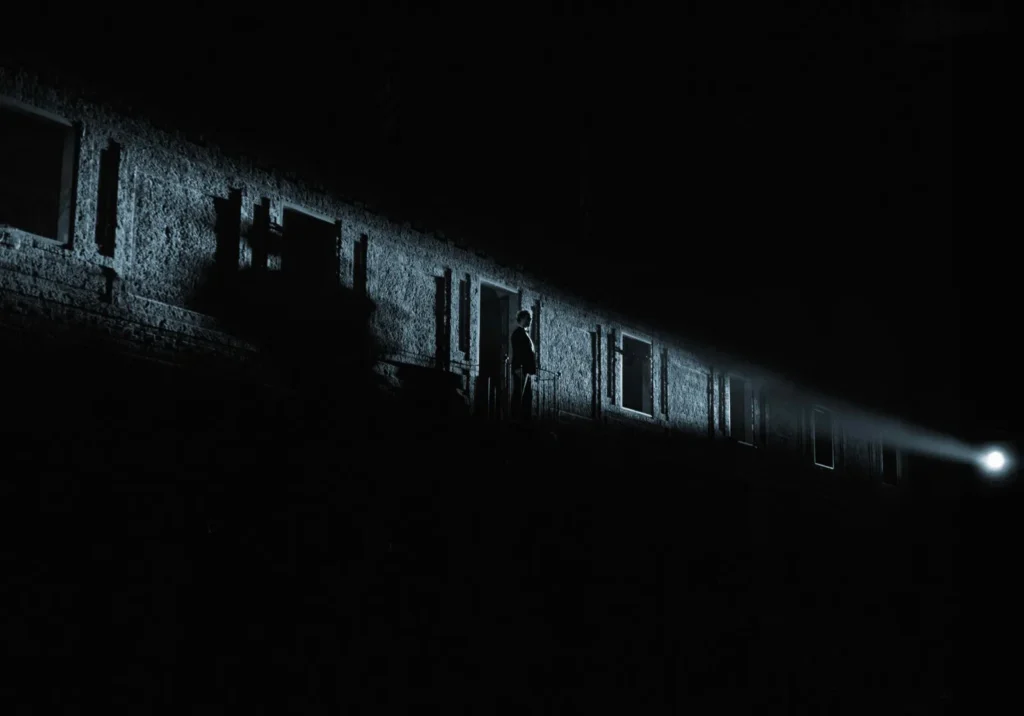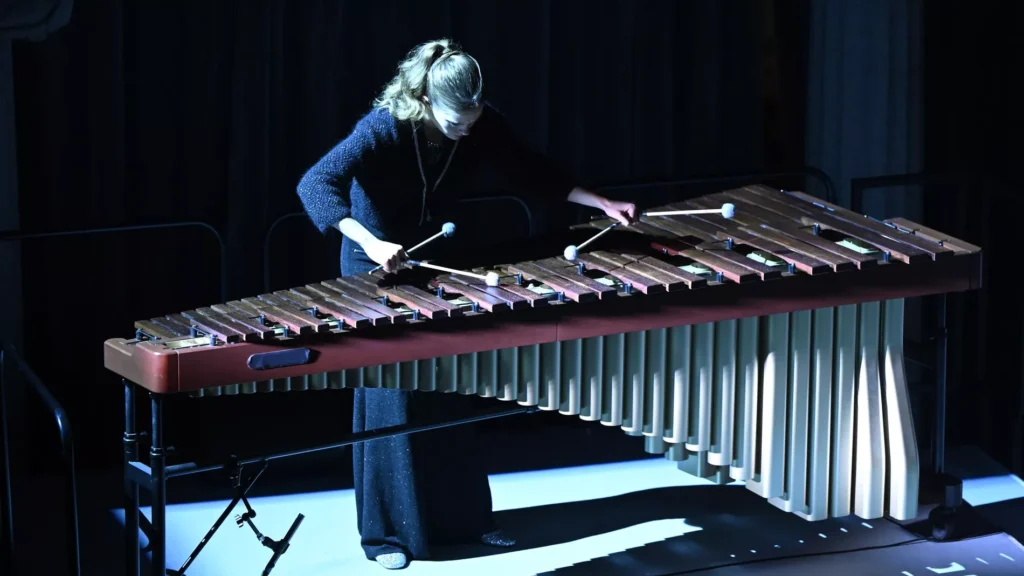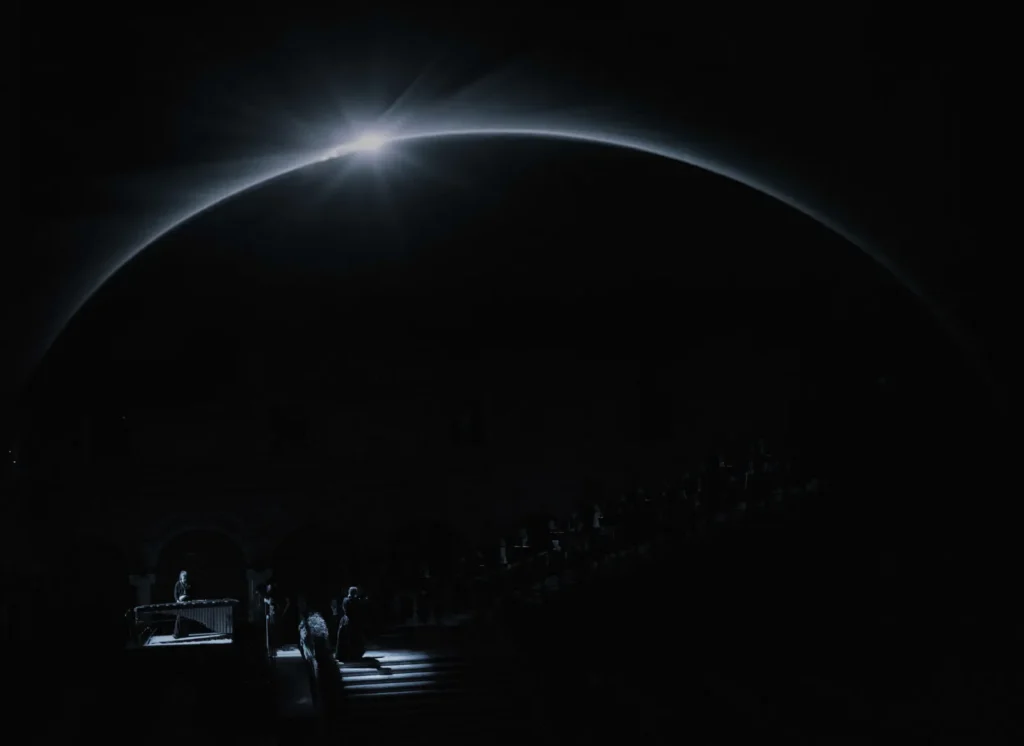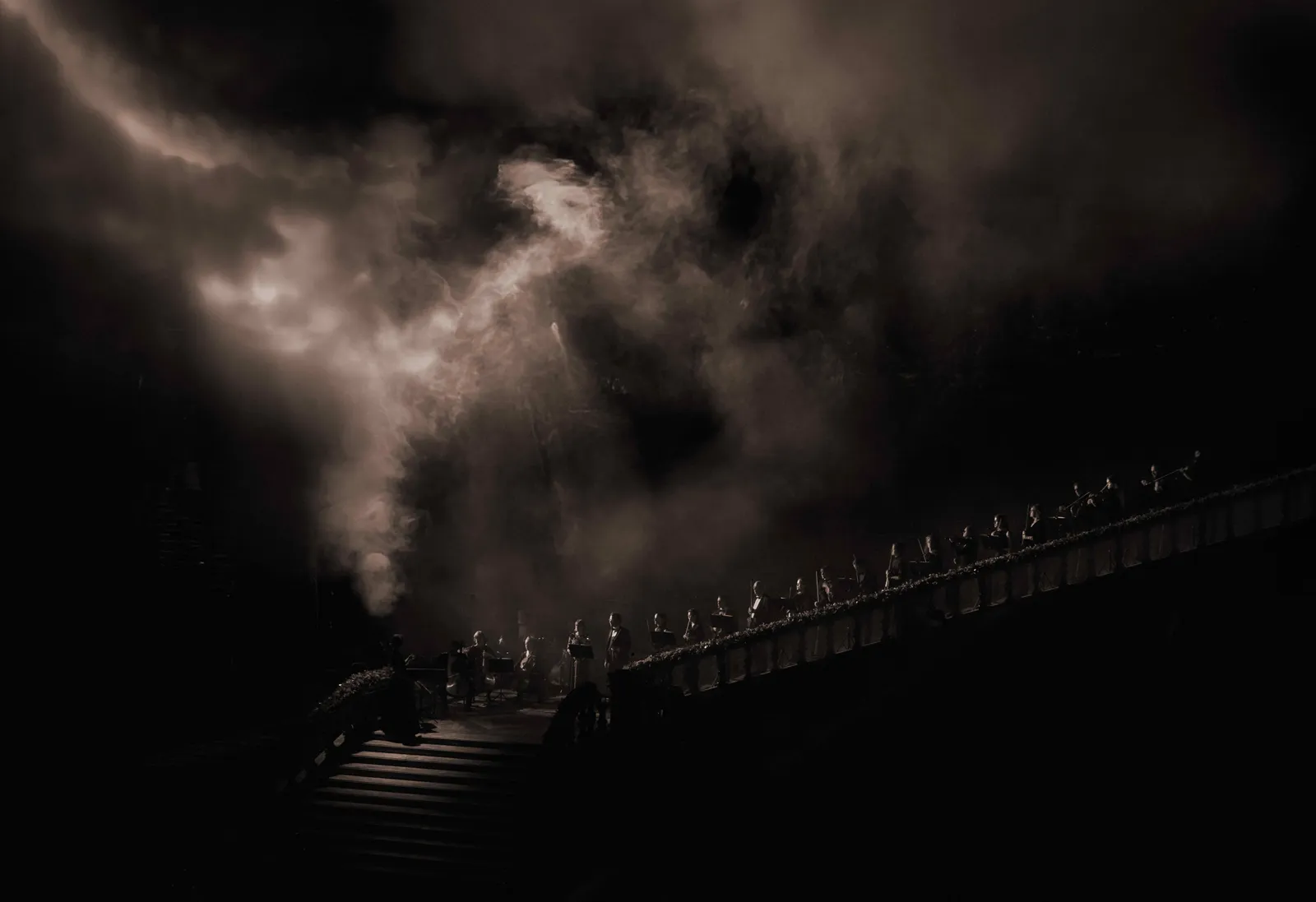
Held on December 10th, 2025 at Stockholm City Hall, this year’s Nobel Prize Banquet unfolded as an immersive work of art, redefining the scenography of one of the world’s most storied ceremonies. The annual gathering, traditionally rooted in formality and protocol, was reimagined through a contemporary creative lens—transforming the banquet into a living dialogue between music, light, architecture, and meaning.
From the outset of the evening, the Nobel Prize Banquet revealed an ambition to transcend mere decoration. Instead, the entire experience was conceived as a single, continuous artwork that invited guests to journey through space and time, both emotionally and perceptually.
A concept of bridging worlds
The guiding idea behind the 2025 banquet was Bridging Worlds: between tradition and innovation, science and spirituality, intimacy and monumentality. Composer Jacob Mühlrad and visual artist Alexander Wessely, long-time collaborators, were entrusted with shaping both the musical and visual identity of the evening. Rather than working in parallel, the duo developed a unified vision in which sound and light constantly responded to one another.
The works presented: four acts of experience
The evening was structured into four acts, each shifting the mood and scale of the experience. It opened on a spiritual note, moving from sacred vocal music rooted in ancient traditions into orchestral works that bridged past and present. The second act brought a warmer, more lyrical tone, revealing the hall’s rhythm and intimacy through a closer dialogue between music and space.
A dramatic release followed in the third act, where Mühlrad introduced a new composition inspired by quantum physics. Built on layered, intersecting patterns, it culminated in a bold orchestral reimagining of Swedish House Mafia’s One, transforming the club track into a cinematic statement while preserving its melodic essence. The final act eased the intensity, dissolving into an ambient soundscape that receded into the background, inviting conversation and reflection as the evening drew to a close.
For the first time, the Nobel Prize Banquet was treated as a live artwork rather than a set ceremonial format. Wessely’s scenography, defined by restraint, rhythm and ritual, combined with Mühlrad’s emotionally structured compositions to create an experience that felt both reverent and forward-looking.