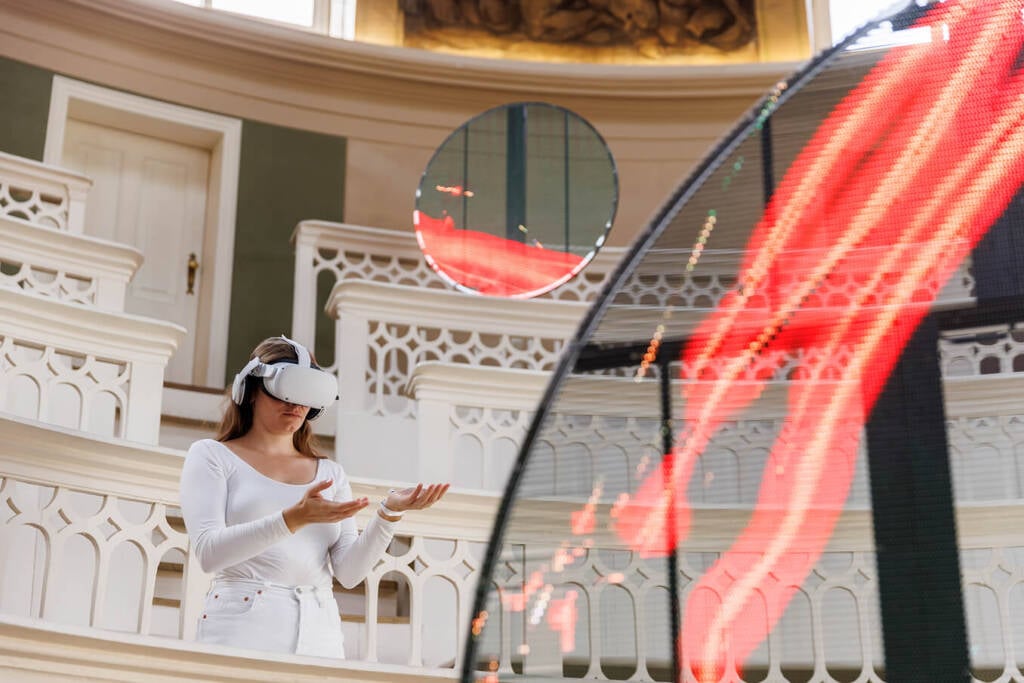
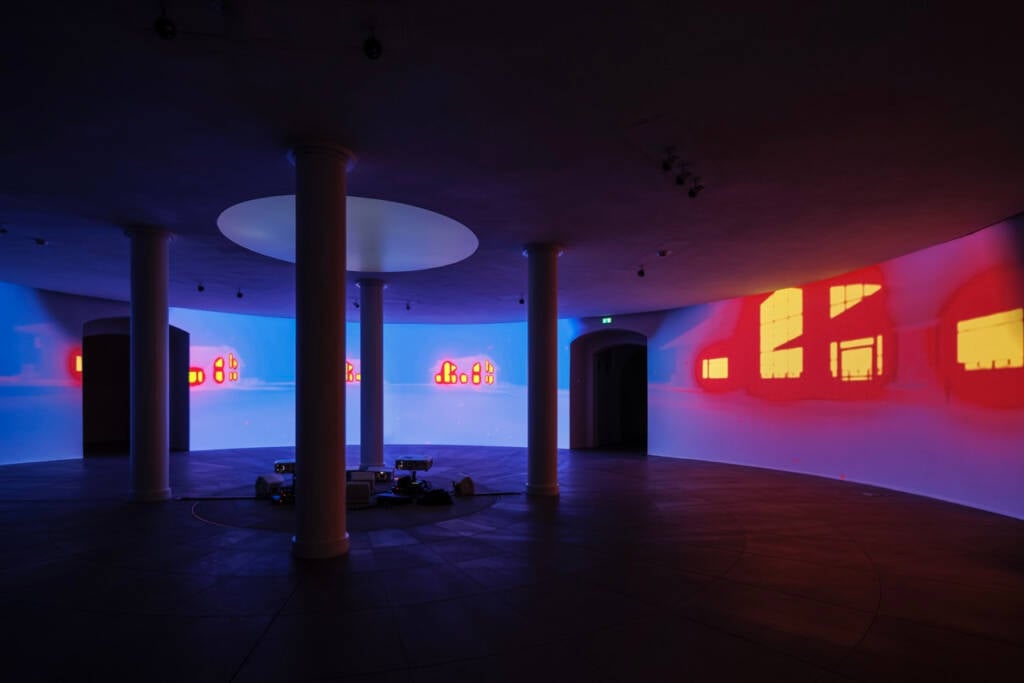
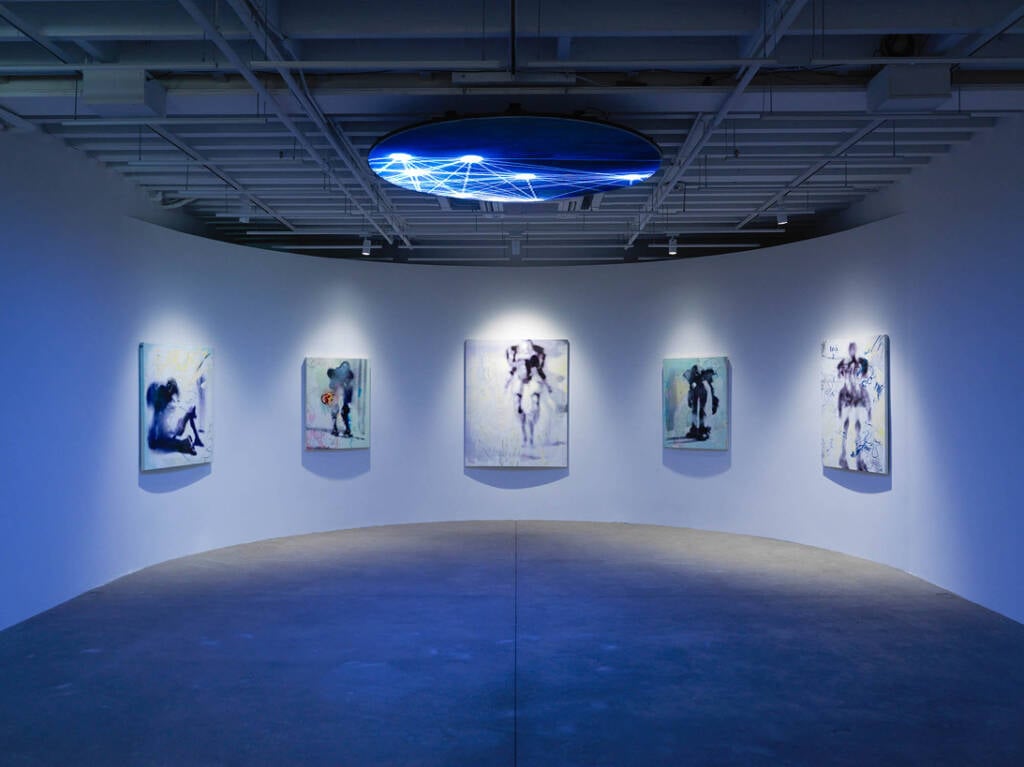
New York-based artist Rachel Rossin joined our call from her studio, a pocket of paint and canvas suspended above the chaos of Times Square. Inside, the space hums with its own kind of disorder, with works and technologies feeding off the restless energy that seems to radiate from the artist herself. A self-taught programmer and researcher as much as she is a painter, Rossin operates at the intersection of art and technology, collapsing the boundaries between code and canvas in search of beauty in the sublime and the rare. In this conversation, she speaks about teaching herself AlphaFold, the technology used to predict protein structures, the lingering influence of Ghost in the Shell, and making art with her twelve-year-old self.
hube: Hi Rachel, can you hear me?
Rachel Rossin: Oh hi, yes, I can hear you now. Sorry, I have a new phone and had to set permissions.
h: No worries. Thanks for making the time.
RR: Of course. I’m on deadline, so it’s that kind of fun chaos. I have lots of ideas flying around.
h: When you’re on deadline, are you locking yourself in or following some kind of routine?
RR: It’s pretty quarantined. I’m not very social during that time. I don’t take in much outside input, maybe just some music without lyrics, or strange electronic stuff like dubstep. Mostly, I’m surrounded by my own notes and sketches. I draw every day, make small preparatory paintings, and just live inside the work.
h: Much of your work deals with virtual and augmented realities. How does the physical labor of painting coexist with that digital sphere?
RR: Painting uses the whole body, and that feels like a reflection of how we live now, constantly oscillating between physical and digital realities. Sometimes I’m very literal, painting “en plein air” inside game engines or VR mockups. But I’m also interested in the vapor between the two, exploring what’s lost or gained in that exchange. When I make physical work, I’m the reporter from that space, translating what that experience feels like.
h: How do you maintain a sense of embodiment when so much of your process happens online?
RR: I definitely lose it sometimes. When I’m building large-scale or virtual installations, I can lose the tether to my body completely. It’s similar to that feeling when you’ve been scrolling too long, that disembodied drift. I have to actively practice mindfulness to stay sober in that process.