At the beginning of the twentieth century, the body became a laboratory. Artists dressed it, concealed and extended it, and subjected it to unfamiliar forms of movement, as though the human figure itself had become a material ready to be remade. In his ebullient 1917 Manifesto of Futurist Dance, Italian poet and editor F. T. Marinetti demanded “we must imitate with gestures the movements of motors,” calling for a fusion of “man and the machine” and the eventual “metallisation of the Futurist dance.” Performers were transformed into pistons, propellers and mechanical components; fabric, metal, light and movement no longer accompanied the body but reorganised it. Elsewhere, modernity took on more elusive forms. In American dancer Loïe Fuller’s Serpentine Dance, first performed in the 1890s, enormous lengths of silk were manipulated with concealed rods and illuminated by coloured light. Fuller’s body disappeared inside a constantly mutating field of matter; a flower becoming a flame, a wave metaphorising into a wing. Insisting in the 1910’s that her art was as much “sentiment”, as it was “imagination and expression”. The costume was no longer something worn by the performer, it became an event in itself; an unstable, mobile sculpture capable of absorbing and exceeding the human being inside it. The same impulse ran through Futurism, Surrealism, and the theatre of the Bauhaus, movements that treated costume as an instrument of transformation. The Italian painter Giacomo Balla wanted to eliminate “static lines” from conventional clothing, in favour of brilliant colour, and dynamic contours. Surrealist artists used disguise and masquerade to dislocate identity, turning the dressed body into an irrational composite of human, animal and object. At the Bauhaus, grounded on the idea of creating a Gesamtkunstwerk or comprehensive artwork, German painter and sculptor Oskar Schlemmer’s seminal Triadic Ballet 1922, encased two male and one female dancer in spheres, cones, hoops, metallic surfaces and padded volumes. Their costumes weren’t intended to illustrate movement, on the contrary, they managed, as much as manipulated it. Some years later Schlemmer going on to write “the history of the theatre is the history of the transfiguration of the human form”. For him, the body onstage could become a mechanism, a geometric construction or what German-American architect Walter Gropius later described as “moving architecture.”
It is against, and beyond, this history of material transformation that Sanna Namin’s work takes shape. A Swedish–Iranian multidisciplinary artist born in Stockholm and based in London, she works between sculpture, textiles, costume and performance, constructing objects that appear neither entirely autonomous nor conventionally wearable. Made from stretch fabrics, foam, metal and industrial components, they operate as props, prostheses, shields and temporary architectures. They can envelop the body, exaggerate it, or compel it to discover unfamiliar postures. Material is never a passive vehicle for an already determined idea. It applies pressure, offers resistance, and establishes the conditions through which an action can occur.
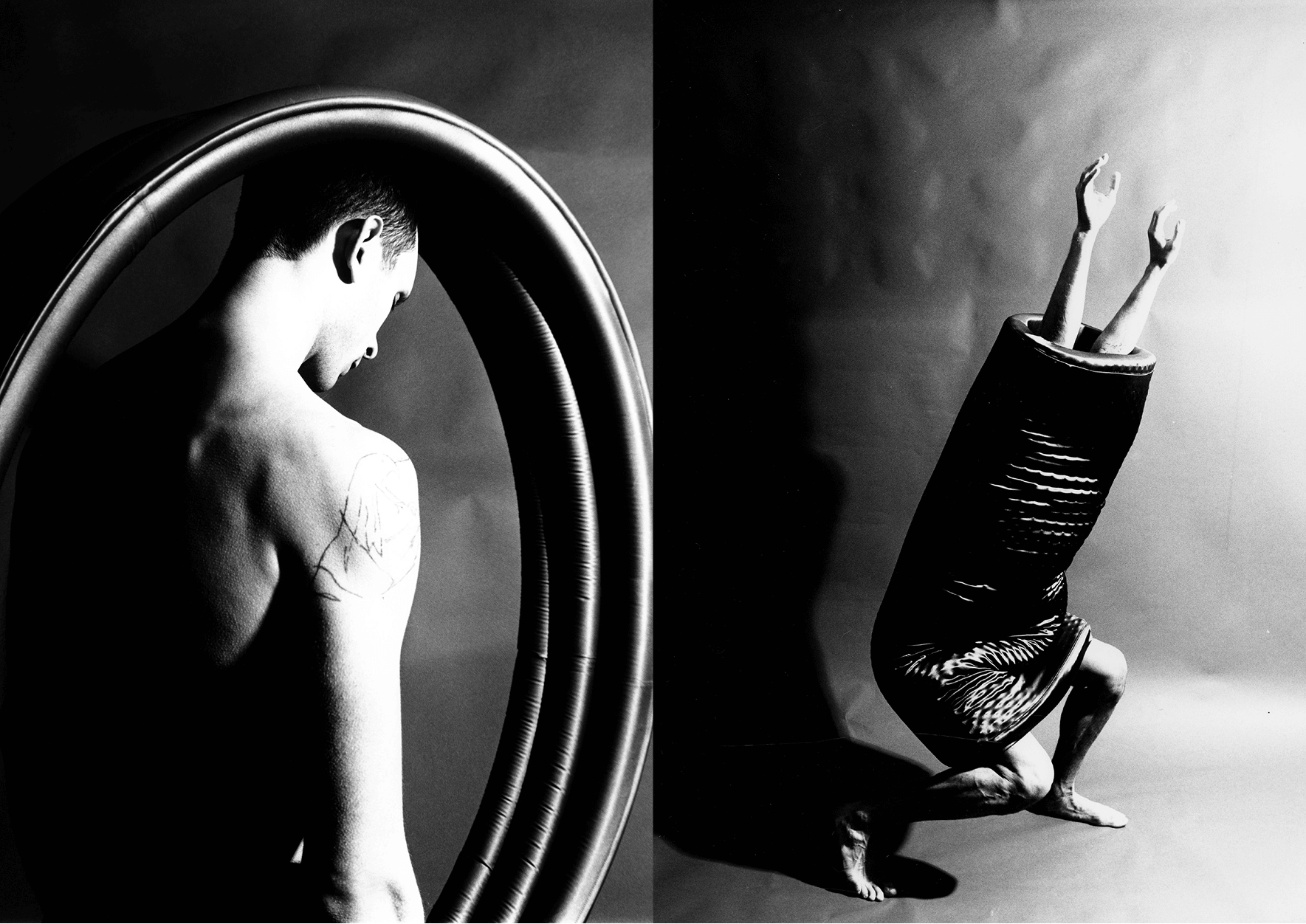
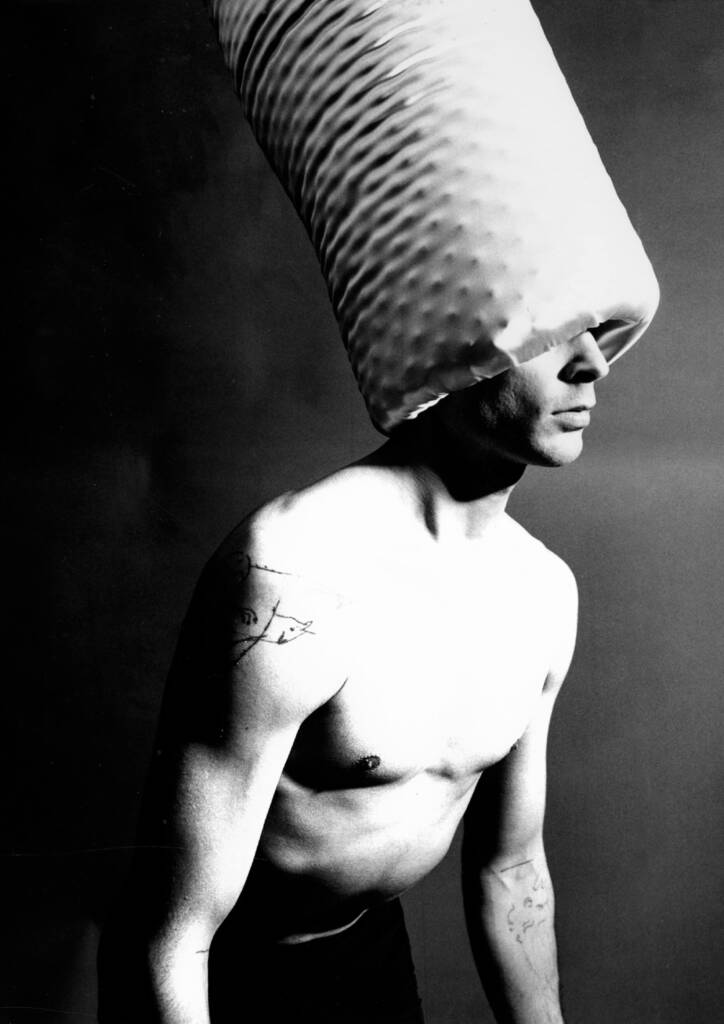
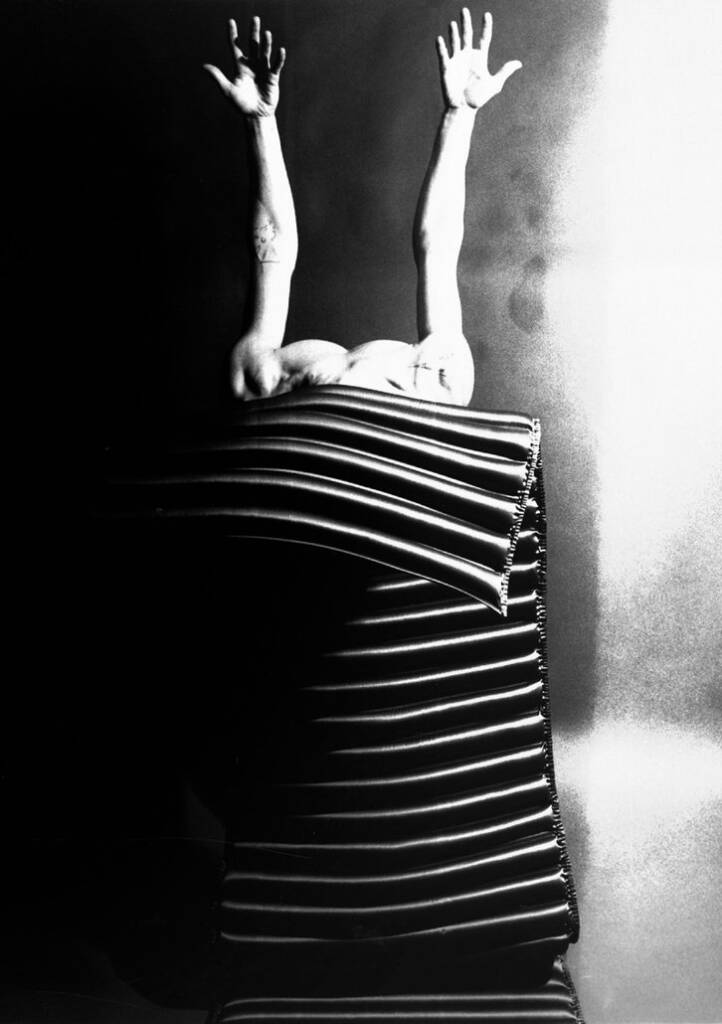
This is especially evident in Sculpting Self, a series of wearable works that remain deliberately incomplete until inhabited. Once a performer enters them, their folds, tensions, and extensions become a form of choreography. The distinction between object and performer begins to collapse: the body animates the sculpture, but the sculpture also redirects the body. As Namin explains, she understands this relationship as “a negotiation rather than a support system.” Her materials “register movement and force,” yet they also “resist and set limits.” Like the transformative costumes of the historical avant-garde, these works produce new bodies rather than merely decorating existing ones. Unlike Futurism’s aggressive fantasy of mechanisation, however, Namin does not seek to make the body more efficient, metallic or uniform. Her forms protect ambiguity. They make room for vulnerability, difference, and the possibility of becoming otherwise. That possibility is inseparable from her exploration of identity. Moving between Swedish and Iranian cultural reference points, Namin resists the expectation that identity should assume a single, legible form. Her sculptures instead suggest the self as something assembled, negotiated and continually revised. Their softness is therefore more than a material quality; it becomes a refusal of rigidity, whether the strictness of monumental sculpture, inherited categories or fixed ideas of gender and belonging. Foam bends; fabric stretches; metal holds and constraints. Each material carries its own behaviour, and each encounter between material and body creates another provisional version of the work.
Namin extended this enquiry through Softening the Edges, the exhibition she curated at The Koppel Project, bringing together women artists whose practices approached soft sculpture as a space of touch, experimentation and embodied knowledge. Its title might equally describe the larger operation of her practice, softening the borders between sculpture and clothing, object and prop, maker and performer, protection and restriction. What results is not sculpture made mobile, but sculpture understood as an encounter, something that happens between materials, bodies and the space through which they move. If the early avant-gardes imagined costume as a means of manufacturing the modern body, Namin asks what such a body might become now. Her answer is neither fixed nor singular. It emerges through pressure, resistance, and play; a body enlarged by what it wears, a material awakened by being touched, and an identity given the freedom to manifest before it is manipulated.
hube: As a Swedish–Iranian artist, in what ways does your heritage and cultural identity inform or shape your designs and artistic practice?
Sanna Namin: My work has always been shaped by my heritage, even when I didn’t have the language to articulate it. Being Swedish–Iranian affects how I think, edit and communicate visually. I’m drawn to clarity and minimalism, and to expressing complex ideas with as little as possible. This is something I connect to a Swedish design sensibility.
More recently, I’ve allowed myself to work more consciously with both of my reference banks. Persian culture has always surrounded me, especially while growing up. It was subtle but constant. Engaging with it more directly has opened new ways of thinking and making in my practice.
Much of my practice is about searching for identity and communicating in a way that feels honest and grounded. If you do not work on your own terms, the work can easily become applied rather than lived. Bringing these references together has turned my practice into an ongoing exploration of both the work and myself.
h: In your work, you engage with industrial materials such as fabric, foam, and metal — materials that are activated through touch, tension, and gesture. What draws you to these particular mediums, and how do you envision their relationship with the human body?
SN: I am drawn to industrial materials like fabric, foam, and metal because they respond clearly to touch, tension and pressure. Working with them is physical and intuitive, and through that process they reveal both their possibilities and their limits.
I see their relationship to the human body as a negotiation rather than a support system. The materials register movement and force, but they also resist and set limits. Even when the body is not physically present, it remains a reference point for scale, tension and gesture, shaping how the work is experienced.
Sculpting Self
Photography by JESSE GLAZZARD
Sculpting Self
Photography by JESSE GLAZZARD
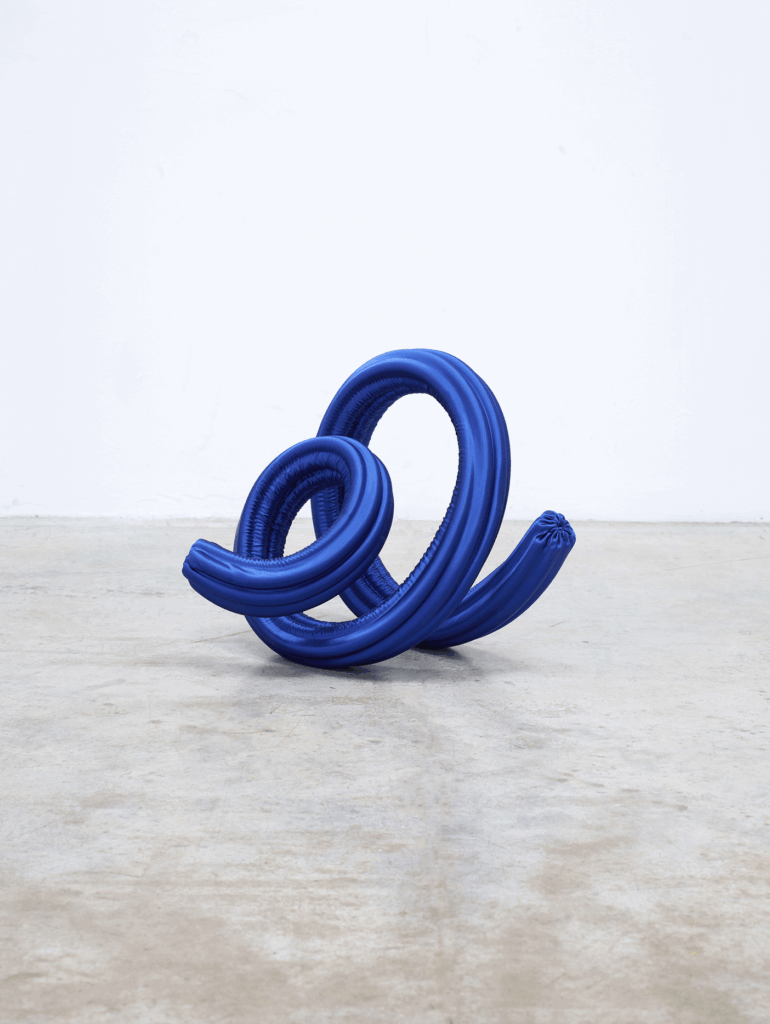
Photography by OPPENHEIM STUDIOS
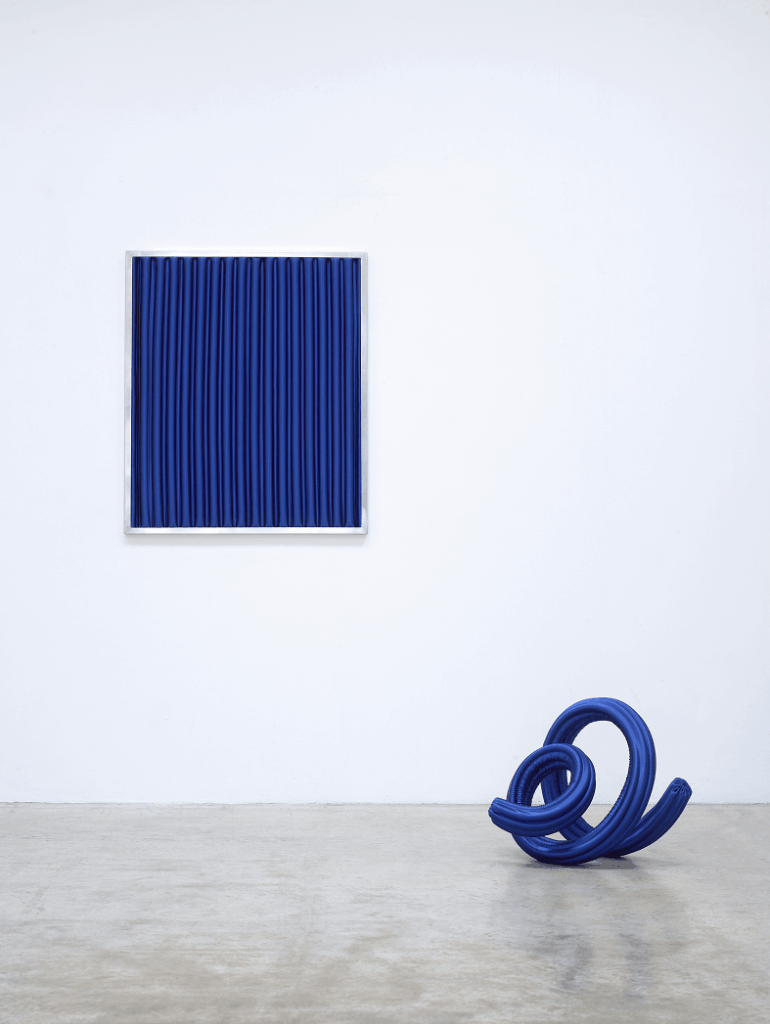
Photography by OPPENHEIM STUDIOS
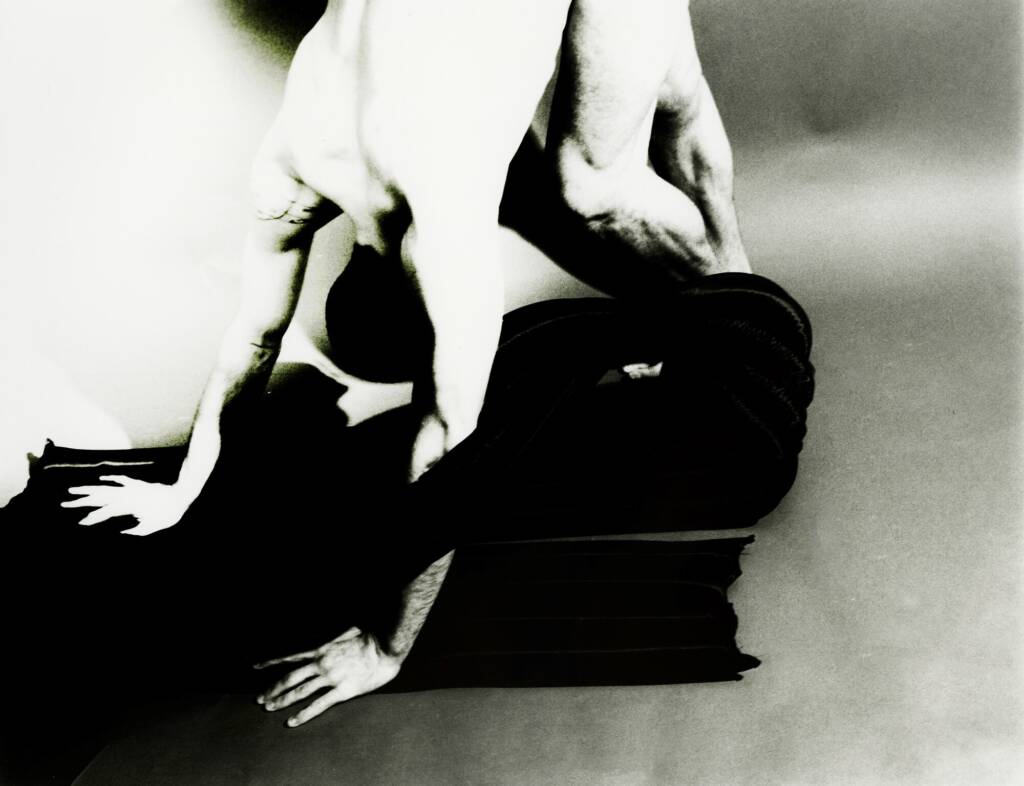
Sculpting Self
Photography by JESSE GLAZZARD
h: When beginning a new project or body of work, where do you start? Could you describe your creative process and how an idea evolves into a finished piece?
SN: I usually begin with a strong instinct about what I want to make or say. I often work with several ideas at once, and practical constraints such as budget play a real role in determining which ones move forward.
My process is material-driven. I rarely draw and instead work through making. I produce many samples, working hands-on with materials to explore their possibilities, resistance and tension. Ideas develop through touch rather than planning, and scale becomes central to how the work is experienced.
In my wearable pieces, a work feels finished when a body enters and activates it. Allowing the work to be completed through activation has helped me release control. In my more recent sculptural work, where that activation is absent, I’ve had to reconsider when a piece isfinished. Often a work ends because of deadlines or limits rather than resolution. I’m rarely fully satisfied, but continuing would mean overworking it. That discomfort has become part of the process, and I often understand the work more clearly later, once some distance has formed.
h: How do you define authorship in works that are activated by others? At what point does the viewer become a co-creator?
SN: I’m not especially invested in authorship as a question of ownership – who owns what, or who gets the credit. I think we’re overly obsessed with that. In fashion and art in particular, we often act as if a single name contains an entire production, when in reality a body of work is the result of many people. The idea that one creative director “owns” all of that feels like a fiction we collectively agree to.
In my own practice, I’m more interested in responsibility than ownership. I see my role as setting the conditions of the work – the objects, the invitation, the framework – and taking responsibility for how those conditions are shaped and presented. Others then inhabit the work in their own way. In my wearable works, the piece comes into being when a body steps into it. Viewers engage with the work through that activation, shaping its meaning. Without activation, the work doesn’t fully exist. I’m comfortable with that decentralisation of authorship.
For me, authorship doesn’t disappear; it shifts. After the invitation is set, my role is to select, edit, and frame – to decide which moments to carry forward. The work is collaborative, but I remain accountable for the craft and the choices that shape it.
h: In your project Sculpting Self, you explore the relationship between sculpture and the human body, with the works acting as catalysts for self-exploration through interaction. Within this context, how did you approach the surrounding environment—the space enveloping the body—and what role does it play in your broader practice?
SN: In Sculpting Self, I wanted the surrounding space to remain passive so that only the relationship between the body and the object was present. By removing visual and spatial distractions, the environment allows the wearer to focus entirely on their own body, the material and the sensations produced through interaction.
This approach carries into my broader practice. I often work with simple, stripped back spaces because they do not compete with the work. Whether I am making wearable pieces or fixed sculptures, I use space as a neutral setting that lets material, form and movement speak for themselves.
h: Many artists explore the theme of the human body and its interaction with the surrounding environment. Which contemporary artists do you find particularly compelling or inspiring?
SN: I’m compelled by Carolee Schneemann for her focus on the body as lived experience, and by Pina Bausch for the way she choreographs bodies in space to create emotionally and physically charged environments.
h: How important is the element of risk in your work—whether physical, emotional, or conceptual?
SN: Risk is essential to my work, but not only in a physical sense. For me, risk is closely tied to instinct. Acting on instinct means making decisions before they are fully justified or explained.
I am not interested in risk as spectacle. I am interested in the kind of risk that requires trust. Trusting a gesture, trusting a situation and standing by it even when the outcome is not fully predictable. That is where the work feels alive to me.
h: In an era of digital mediation, your work insists on corporeal presence and tactile experience. Is this a deliberate response to virtual culture?
SN: Yes, I think it is a deliberate response. I’m not very interested in screens, AI or virtual spaces, and my work naturally leans toward physical presence, materiality and craft. I’m drawn to making and experiencing work in real space and time, where touch, weight and resistance matter.
As more of our experience is mediated through screens, we’re constantly exposed to images and events we can’t physically digest – especially in relation to war and conflict. Being connected to something so real through a screen creates a sense of distance, even when the connection itself is necessary. Working through materials and making is my way of grounding that experience and holding onto a direct, human form of connection.
h: What role does color play in your practice? Do you see it more as a semiotic structure, or is it connected to personal perception and experience?
SN: Color carries a lot of meaning. I am aware that colors are never neutral and always come with cultural, emotional and personal associations.
I often use a very intense blue in my work. It is the color of my football team growing up, so it is tied to memory and identity. I also associate it with Nazar blue, a color linked to protection. In that sense, it sits between personal experience and shared symbolism.
I do not use color as a fixed semiotic system. It is more intuitive. Color is something I feel first and understand later, and because it carries so much meaning, I use it sparingly and deliberately.
h: We live in a world defined by constant and rapid transformation. How does this condition of perpetual change manifest in your work? Do broader global shifts influence your practice, and how do you position yourself within this ongoing flux?
SN: I am very aware of the apathy and escapism that mark much of the current cultural climate. Given the scale of what is happening in the world, turning away is understandable, but it is something I am increasingly trying to resist, both personally and in my work. For me, it is important to position myself within this context rather than outside it.
Broader global shifts shape my practice as something to respond to rather than escape from. This constant state of flux has made me want to make work that feels more meaningful and necessary. There is also a lot of anger in me in response to what is happening, and making becomes a way of processing that and giving it form. Continuing to work feels like a way of staying present and taking responsibility within ongoing change.
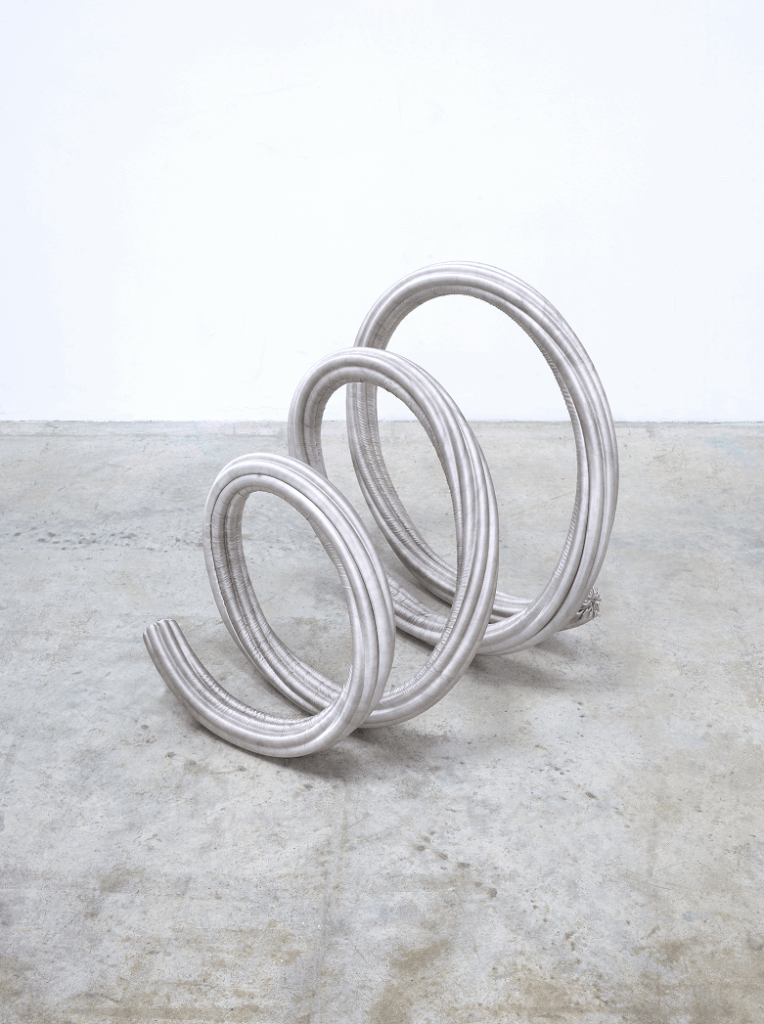
Photography by OPPENHEIM STUDIOS
Words: RAJESH PUNJ