Vincenzo de Bellis Art Basel art market institutional leadership
Courtesy of ART BASEL

Vincenzo de Bellis on shaping the art market and global platforms

Vincenzo de Bellis
Art Basel
art market
institutional leadership
VINCENZO DE BELLIS
Chief Artistic Officer & Global Director Art Basel Fairs
Courtesy of ART BASEL, photography by JINANE ENNASRI
Vincenzo de Bellis
Art Basel
art market
institutional leadership
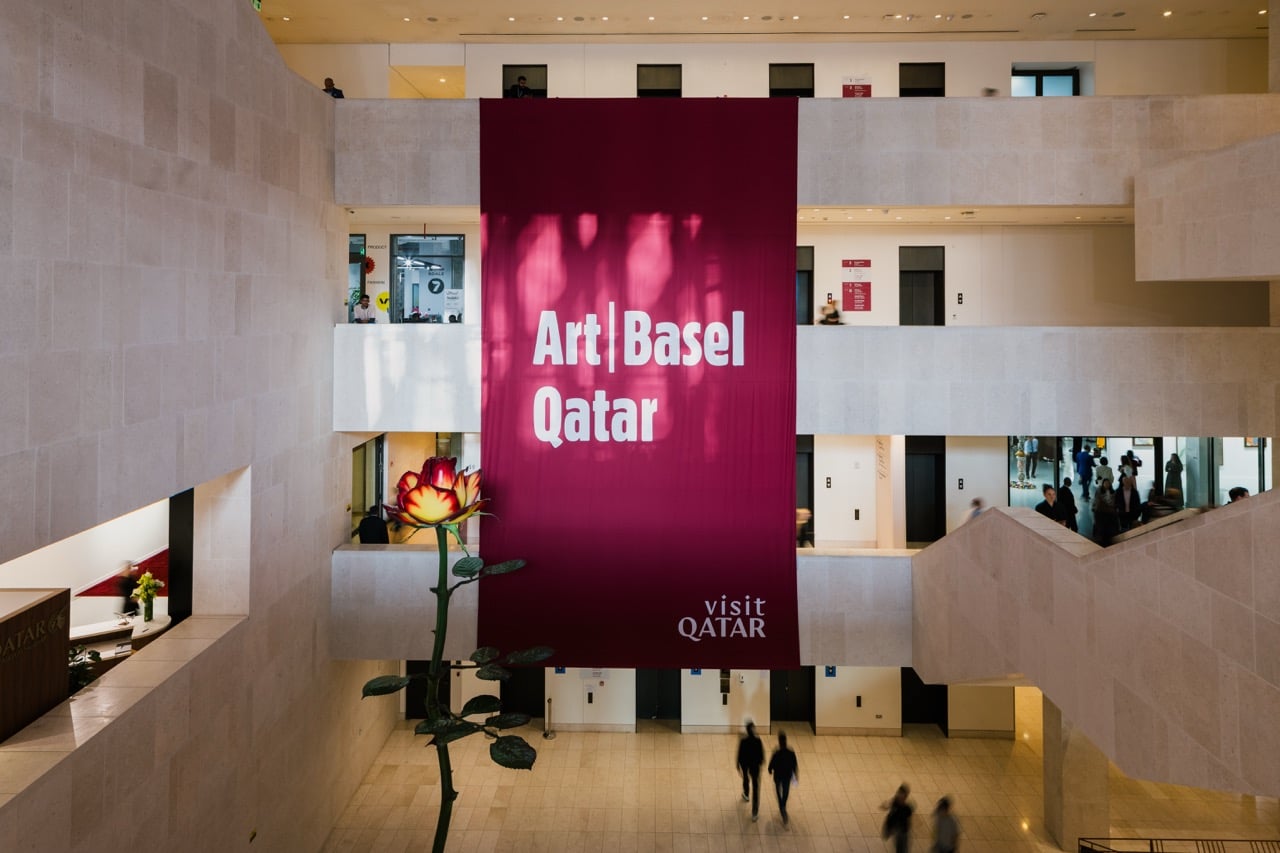
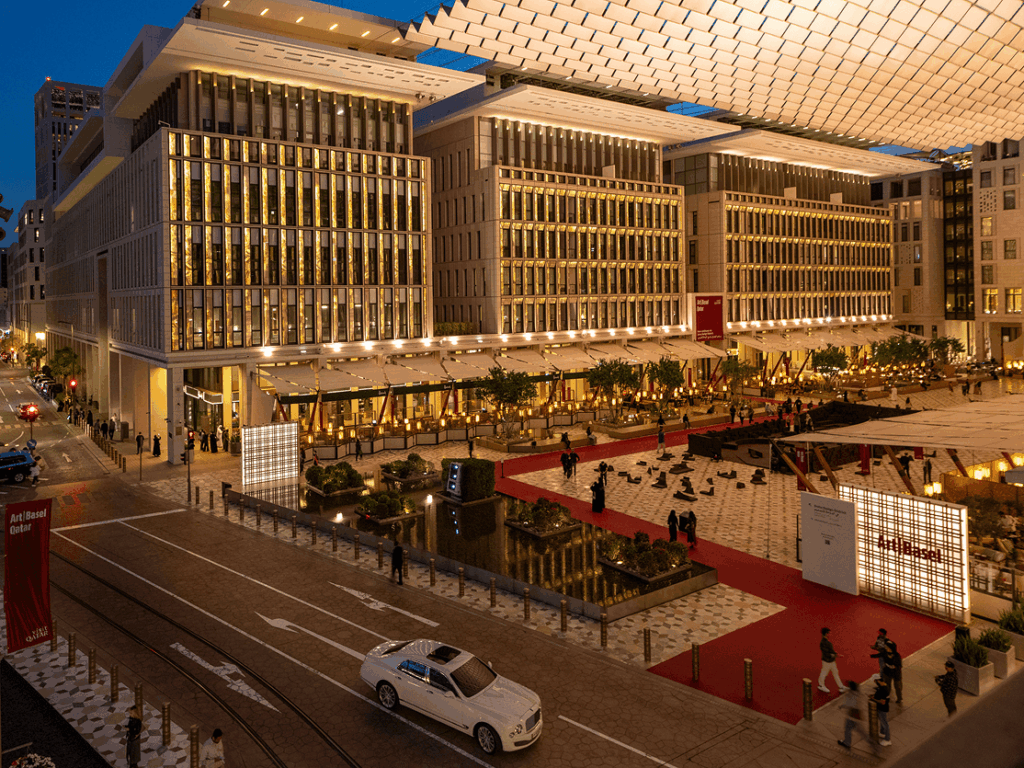
Art Basel Qatar 2026
Courtesy of ART BASEL

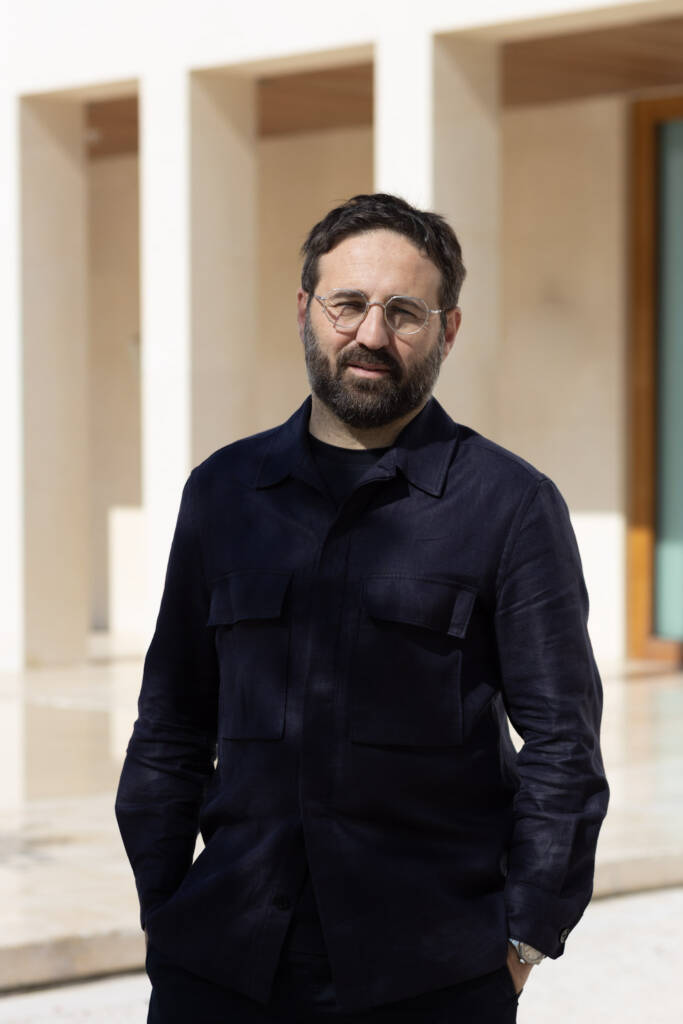
Vincenzo de Bellis, Chief Artistic Officer and Global Director of Art Basel Fairs, is one of the most influential figures shaping the contemporary art world today, guided by the belief that “Art Basel should not only mirror the art world but actively help shape its present and its future.” With a deep understanding of the art market and a commitment to institutional leadership, he has consistently shaped how galleries, collectors, and major institutions interact in contemporary art.

After leaving his home region of Puglia, de Bellis attended Bard College in New York, where he graduated in 2008 with a Master of Arts in Curatorial Studies. He later distinguished himself in Milan, where he co-founded Peep-Hole, an experimental space devoted to platforming overlooked and emerging voices in contemporary art. In 2012, he became the youngest director ever appointed to MIART, the Milan International Fair of Modern and Contemporary Art, where he was instrumental in repositioning the fair on the global stage. He later joined the Walker Art Center as Curator and Associate Director of Program, Visual Arts, before moving to Art Basel in 2022, where he assumed the role of Global Director of Fairs and Exhibition Platforms and oversaw the fairs in Basel, Paris, Hong Kong, Miami Beach, and Qatar.

Since stepping into this expanded role, de Bellis has led the development of several strategic initiatives, including Art Basel Qatar, inaugurated in February 2026, and the Art Basel Awards, while guiding how Art Basel positions itself within the rapidly evolving global art ecosystem.

hube: Your career has moved fluidly between curatorial practice and institutional leadership. How has this dual perspective reshaped the way you now think about authorship, responsibility, and influence within large-scale art platforms?

Vincenzo de Bellis: At Art Basel, my position sits squarely at the intersection of these two worlds. Our mission is to ensure that each show, in every geography, resonates with both local and global audiences while generating long-term cultural and market impact. In this sense, the curatorial and the institutional are inseparable. Delivering operational excellence across our global shows requires deep institutional understanding and leadership. At the same time, creating distinct presentations in each region, grounded in their specific contexts yet globally relevant, demands strong curatorial rigor.

A platform like Art Basel is not about singular authorship. It is about building the framework within which many voices can operate simultaneously.

It is not about individual authorship, but about creating the conditions for many voices to be heard. My role is to help shape and guide the platform responsibly, so that different perspectives can thrive within a strong and thoughtful framework.
h: When a global art fair enters a new geography, what do you think truly shifts first: the curatorial logic, the audience’s expectations, or the underlying power structures of the art world?

VdB: Before entering a new region, our priority is always to understand the conditions of the ecosystem we are joining. That means taking the time to study the institutional landscape, the collector base, the gallery community, the artists, and the expectations of wider audiences. Without that depth of understanding, it is impossible to build something that feels meaningful or sustainable.

Art Basel Qatar is a good example. We had been interested in the MENASA region for quite some time, particularly because of the exceptional cultural infrastructure that has developed there. However, it took a while before we took that step. We wanted to understand not only the vision of the institutions, but also the needs of galleries, collectors, artists, and the broader public. That listening process was essential.

This research directly informed the format we developed. In Qatar, the focus on solo artist presentations by each gallery emerged from both the regional context and our broader knowledge of how the global art market is evolving. The format allows for depth, clarity, and stronger artistic statements, which felt aligned with the ecosystem we are now part of. At the same time, nothing is fixed. Entering a new geography is not a one-time decision, but an ongoing process of recalibration. We continue to learn from the feedback of the galleries, artists, collectors, and institutions we serve, and that dialogue shapes how the platform evolves over time.

h: Looking back at the inaugural edition of Art Basel Qatar, did you sense a fair still in the process of articulating its identity, or one that had already found a distinct voice shaped by its context?

VdB: It was both, but I would emphasize that it had a distinct voice from the outset because we made structural decisions that defined its identity early on. Appointing Wael Shawky as Artistic Director and framing the edition around a thematic, curated format were not branding gestures. They were foundational choices about how the fair should operate.

The first edition already established a distinct tone—one that places artistic practices and the vitality of the region’s production at the center. At the same time, that tone  is not fixed. It will inevitably shift and evolve as it responds to the realities of the market and to changes within the artistic landscape itself.

h: Do you feel that today’s art institutions—and fairs in particular—are being asked to perform new social or ethical roles beyond their original mandates? How do you personally navigate those expectations?

VdB: Expectations have certainly expanded. Fairs are no longer seen purely as commercial convenings, but as cultural platforms with significant visibility and influence. With that visibility comes a broader responsibility:  not only to the market, but to the ecosystems and publics that these platforms shape.

I try to approach that responsibility structurally rather than rhetorically. The key questions are whether we are creating formats that allow depth, distributing visibility thoughtfully, and entering new contexts through genuine partnership. Scrutiny is not a burden; it is a productive pressure that pushes clarity about values and operations.

h: Art Basel carries a strong institutional legacy. How do you negotiate that legacy while allowing a new edition—especially in a region like the Gulf—to develop its own cultural syntax?

VdB: Legacy should function as a standard of quality, not as a rigid template. Our task in Qatar was to uphold the rigor and quality associated with Art Basel while allowing the local context to shape the form and rhythm of the fair. That meant thinking spatially, embedding the edition within the city, and adopting a thematic structure that prioritized depth over scale.

Working closely with regional voices and partners was essential. The goal was not to import an international conversation wholesale, but to create a platform where local intellectual and cultural realities meaningfully shape the global dialogue.

h: To what extent can an art fair operate as a space for critical thought and discourse today?

VdB: A fair can and should hold critical thought precisely because it is one of the most concentrated environments for encountering what is emerging right now. I do not see curatorial rigor and market vitality as opposites; they are interdependent. Strong curatorial vision creates context and depth, and a healthy market enables artists and galleries to sustain ambitious practices.

If the structure is thoughtful, commercial exchange and intellectual risk can reinforce one another rather than compete.

Vincenzo de Bellis
Art Basel
art market
institutional leadership
Courtesy of ART BASEL
Vincenzo de Bellis
Art Basel
art market
institutional leadership
SUMAYYA VALLY
Courtesy of ART BASEL
Vincenzo de Bellis
Art Basel
art market
institutional leadership
AMIR NOUR’S artworks at the LAWRIE SHABIBI
Courtesy of ART BASEL
Vincenzo de Bellis
Art Basel
art market
institutional leadership
MERIAM BENANI at the LODOVICO CORSINI & FRANÇOIS GHEBALY
Courtesy of ART BASEL
Vincenzo de Bellis
Art Basel
art market
institutional leadership
NOUR JAOUDA
Courtesy of ART BASEL
Vincenzo de Bellis
Art Basel
art market
institutional leadership
JENNY HOLZER
SONG, 2026, Light projection and drones
MUSEUM OF ISLAMIC ART, Doha How Far Is Far by MAHMOUD DARWISH. Used with permission, © 2026 by the MAHMOUD DARWISH FOUNDATION.
© 2026 JENNY HOLZER, member ARTISTS RIGHTS SOCIETY (ARS), NY
Photography courtesy of ART BASEL
Vincenzo de Bellis
Art Basel
art market
institutional leadership
SHIRIN NESHAT at the LIA RUMMA
Courtesy of ART BASEL
Vincenzo de Bellis
Art Basel
art market
institutional leadership
JANNIS KOUNELLIS at the CARDI GALLERY
Courtesy of ART BASEL
Vincenzo de Bellis
Art Basel
art market
institutional leadership
ABRAHAM CRUZVILLEGAS
Courtesy of ART BASEL
Vincenzo de Bellis
Art Basel
art market
institutional leadership
RAYYANE TABET
Courtesy of ART BASEL

h: Qatar sits at a crossroads between regional specificity and global ambition. How consciously did this tension shape decisions around scale, programming, and tone?

VdB: For the first edition, we prioritized resonance over scale, allowing the format to breathe and giving artists and galleries the conditions to present work with clarity. We were also thrilled by the level of interest and ultimately exceeded our initial expectations for the number of participating galleries.

Our decision to partner with Qatar was grounded in a strong conviction that the cultural infrastructure already in place, developed over the past fifty years and significantly strengthened in the last two decadescreated the right conditions for a meaningful collaboration. We were entering a context with a substantial institutional vision that aligns with our own long-term ambitions.

We are deeply inspired by the vision of Her Excellency Sheikha Al Mayassa bint Hamad bin Khalifa Al Thani, Chairperson of Qatar Museums, particularly her commitment to the long-term, sustainable development of the arts ecosystem. We also knew that partnering with QSI and QC+ would provide the right framework to shape the fair’s programming into something that is truly resonant for the region while maintaining a global outlook.

h: After witnessing the first edition unfold, what challenged your assumptions the most?

VdB: What was most exciting was the depth of engagement from audiences. We expected curiosity, but what we experienced was a real appetite for sustained encounters with the work. Visitors spent time with the work. They asked rigorous questions. There was a level of intellectual engagement that confirmed the decision to prioritize clarity and artistic focus over spectacle.

It also reinforced that assumptions formed from a distance rarely capture the complexity of a place. Being on the ground, in dialogue with galleries, artists, collectors, and institutions, revealed nuances in how the ecosystem operates that only become visible through lived experience.

h: At this stage in your career, what feels most urgent to you?

VdB: Building cultural platforms that are both ambitious and responsible. The art world is expanding rapidly across geographies, and with that expansion comes a need for greater care, deeper research, and long-term thinking.

We are increasingly focused on sustainability not only environmentally, but also structurally and culturally. How do we create models that support artists and galleries in durable ways? How do we ensure that growth does not come at the expense of rigor or relevance? Those questions feel central.

h: Ten years from now, what would you hope Art Basel Qatar has evolved into—and what should remain open or contested?

VdB: I would hope it becomes an indispensable platform for the region—one that artists and galleries feel belongs to them and that the international community recognizes as essential. A fair must continue to evolve in response to context, balancing market vitality with intellectual risk and public meaning. If that tension remains alive, the platform remains relevant.

h: What advice would you give to the next generation of curators and cultural producers?

VdB: Be rigorous about context and resist the shortcut of generic globality. In a moment of digital acceleration and instant visibility, depth of research and sustained relationships matter more than ever.

Global circulation should not replace local understanding. Accountability—to artists, to the public, and to the places in which you work—remains fundamental.

Vincenzo de Bellis
Art Basel
art market
institutional leadership
Courtesy of ART BASEL

Words: ISABELLA MICELI

ISSUE 7

The new edition is here