
From July 17th, 2026, to February 7th, 2027, Haus der Kunst in Munich presents Ancestral Futures, the largest exhibition in Germany by Tomás Saraceno. Bringing together his pioneering research in Aerocene and Arachnophilia, the exhibition turns the museum into a living landscape where art, architecture, science, and Indigenous knowledge intersect. Through large-scale installations, ecological interventions, and collaborative projects, Saraceno invites visitors to envision new ways of sharing the planet.
More than human: rethinking coexistence through air, water, and living ecosystems
For over two decades, Tomás Saraceno has developed an interdisciplinary practice spanning art, science, and environmental activism. His work examines the interconnected lives of humans, animals, plants, and atmospheric systems, proposing ecological models grounded in cooperation instead of extraction.
Two major research platforms anchor Ancestral Futures. Founded in 2015, Aerocene explores emission-free flight through solar-powered airborne sculptures sustained only by sunlight and air currents. Alongside them are multispecies habitats, participatory environments, and Towards the Sanctuary of Water (2026), a new installation created with Indigenous communities of the Red Atacama network in northern Argentina. Developed in response to the environmental impact of lithium mining, the project also extends beyond the museum as a permanent land artwork protecting fragile water resources and supporting local communities.
Throughout the exhibition, Saraceno presents ecology as a web of reciprocal relationships linking water, air, landscapes, and all living beings.
Spider web installation: invisible architectures of connection
The exhibition also expands Saraceno’s long-running Arachnophilia research through delicate spider web installations that reveal the extraordinary complexity of arachnid ecosystems. New works, including Webs of At-tent(s)ion, Algo-r(h)i(y)thms, and Sounding the Air, elevate nearly invisible webs into intricate spatial compositions, encouraging visitors to view the world through non-human perspectives.
Elsewhere, the collaborative Museo Aero Solar project—built from repurposed plastic bags during public workshops—continues Saraceno’s exploration of collective creativity and sustainable futures, culminating in the launch of a solar-powered sculpture. Outdoor works, including Cloud Cities: Species of Spaces and the new Community Garden Ostwiese, further dissolve the boundary between museum and landscape, creating shared habitats for birds, insects, spiders, and even dogs.
Through airborne sculptures, multispecies environments, and collaborations with scientists and Indigenous communities, Ancestral Futures offers a vivid vision of coexistence, inviting visitors to reconsider humanity’s place within the intricate networks that sustain life.
Explore our Tomás Saraceno interview to discover how art and science converge, why interconnectedness matters, and what spider webs can teach us about rethinking our place in the world.
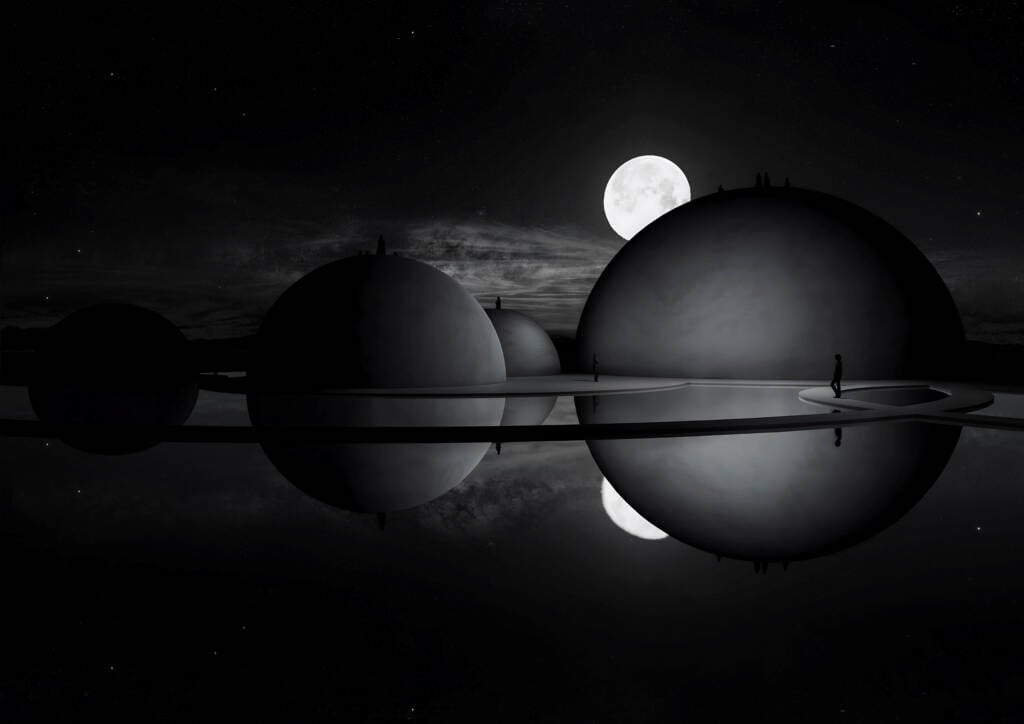
The Sanctuary of Water, 2026
The Sanctuary of Water was conceived by artist TOMÁS SARACENO, following a direct request by the INDIGENOUS COMMUNITIES OF SALINAS GRANDES AND LAGUNA DE GUAYATAYOC, northern Argentina, for a permanent sculpture to facilitate community-based rural tourism. It is being constructed with the support of STUDIO TOMÁS SARACENO, THE AEROCENE FOUNDATION, RED ATACAMA, HAUS DER KUNST in Munich, and many more, among them LISL SCHÖPFLIN, STEFAN VILSMEIER and SERGIO LINHARES, and FREUNDE HAUS DER KUNST. © Photography by STUDIO TOMÁS SARACENO
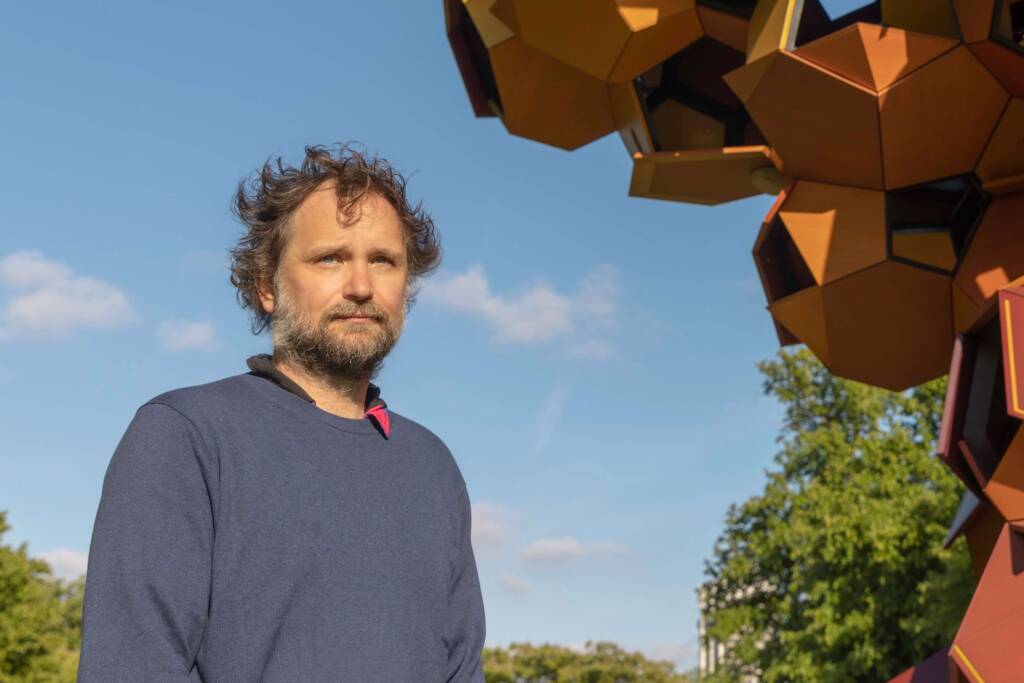
Courtesy the artist. Photography by DARIO J LAGANÀ, 2023
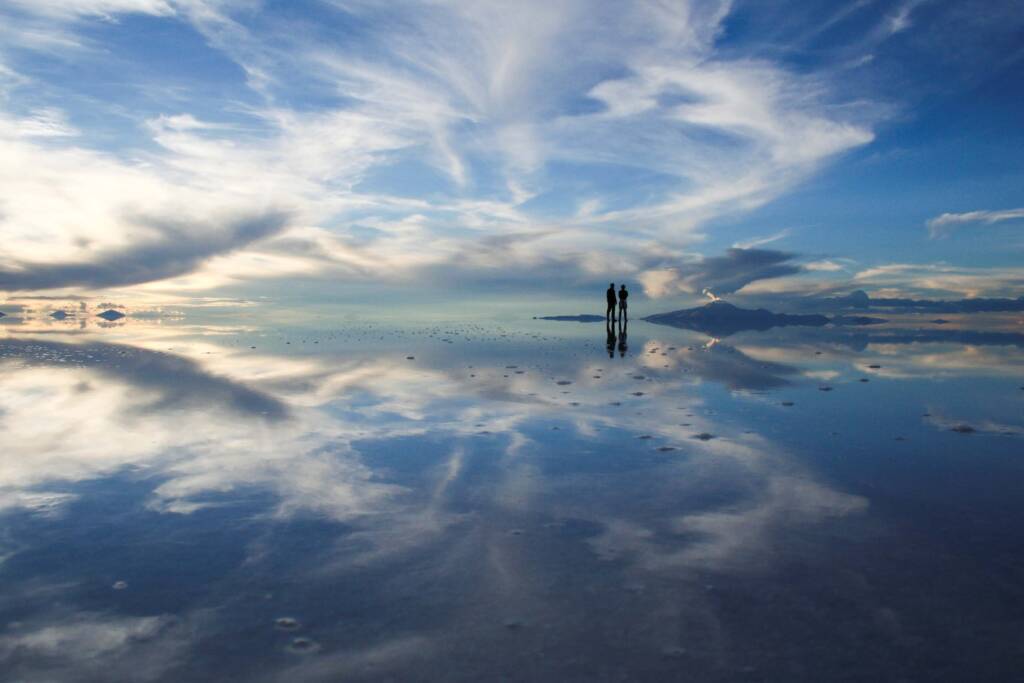
endless big, 2006
Courtesy the artist, NEUGERRIEMSCHNEIDER, Berlin, TANYA BONAKDAR GALLERY, New York; ANDERSEN’S CONTEMPORARY, Copenhagen; RUTH BENZACAR, Buenos Aires, AND PINKSUMMER CONTEMPORARY ART, Genoa.
Photography by STUDIO TOMÁS SARACENO
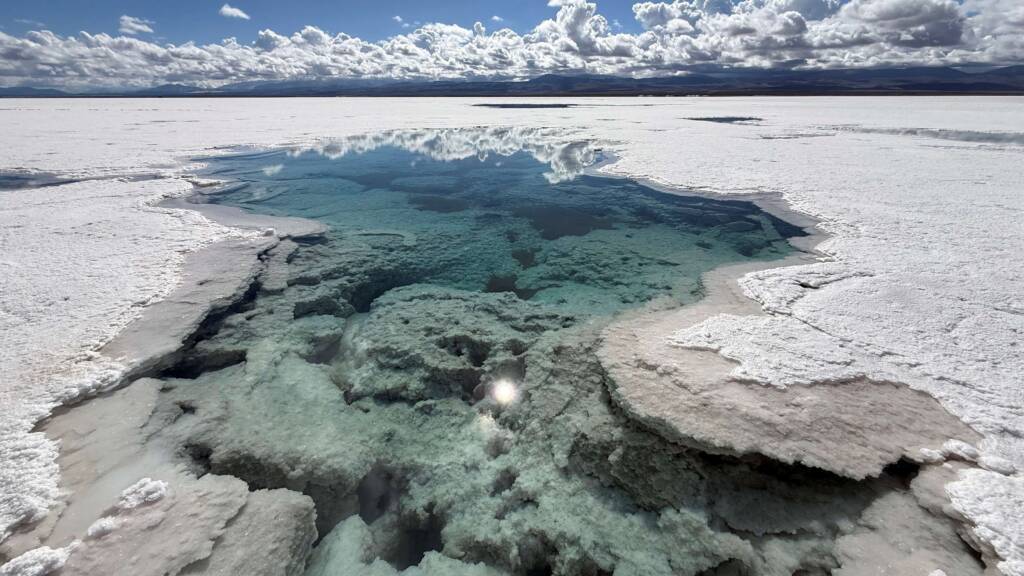
Salinas Grandes, northern Argentina, 2026
Photography by STUDIO TOMÁS SARACENO